
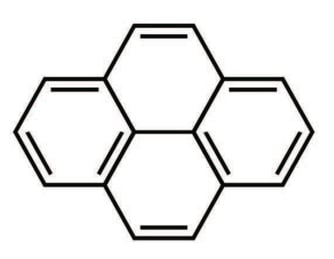
 Figure 1. Structure of Pyrene
Introduction
This application note describes the extraction of polyaromatic hydrocarbons (PAHs) from natural waters with a high concentration of humic acids, which can be problematic during analysis.
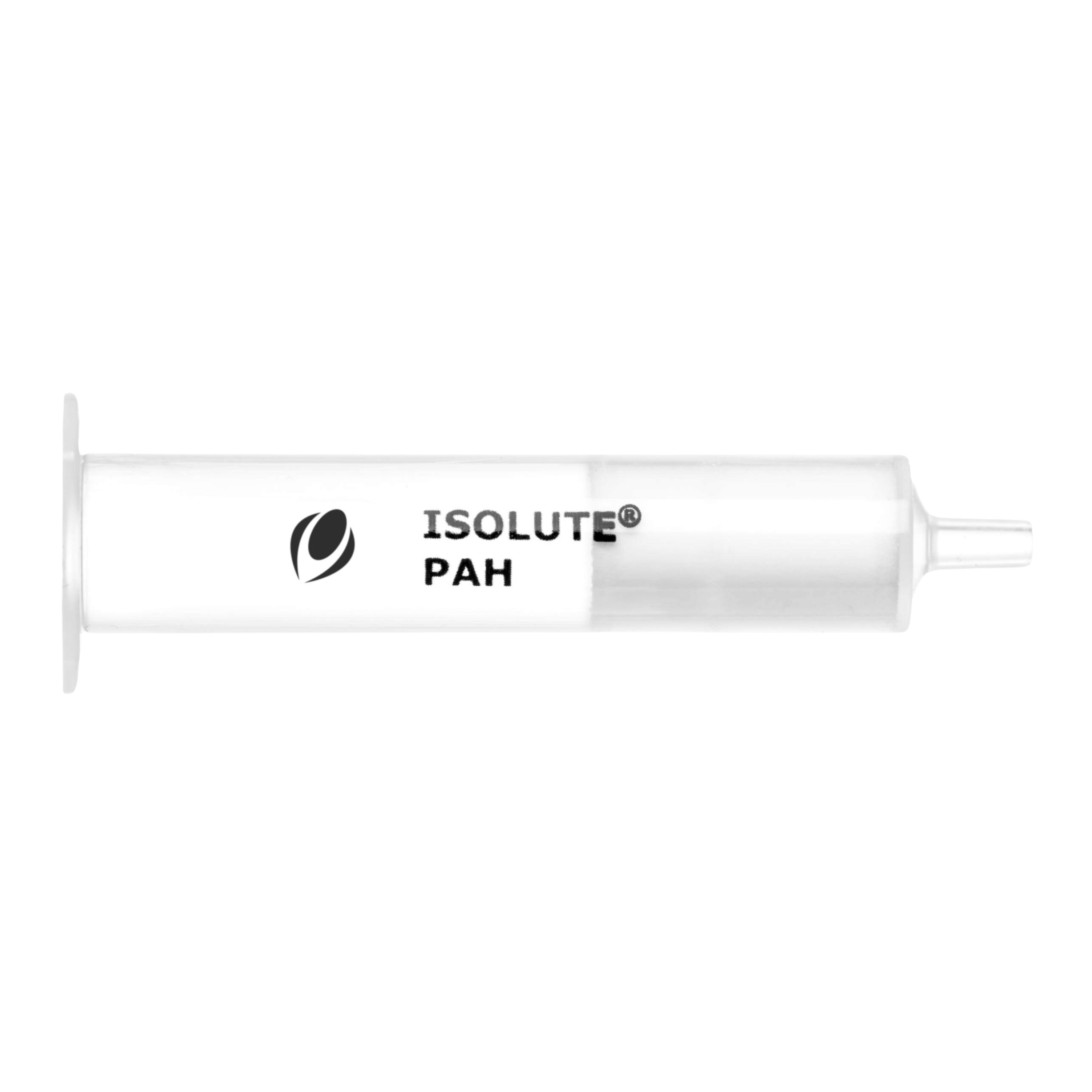
The ISOLUTE® PAH cartridge contains C18 sorbent for retention of the PAHs, plus a layer of aminopropyl (NH2) sorbent which acts as a scavenger and prevents humic interferences from contaminating the extract.
Extracts are suitable for analysis by GC or LC based techniques.
Analytes
Polyaromatic Hydrocarbons
Sample preparation procedure
Format
ISOLUTE® PAH 1.5 g/6 mL Part number 927-0150-C
Sample pre-treatment
To a 1L water sample, add 10% isopropanol (v/v), and mix thoroughly. If an internal standardis to be used, add at this stage.
Solvation
Solvate the cartridge with isopropanol (5 mL) at a flow rate of 5 mL/min.
Equilibration
Equilibrate the cartridge with deionized water containing 2% (v/v) isopropanol (5 mL) at a flow rate of 5 mL/min.
Sample application
Load the sample (1 L) at a flow rate of 20 mL/min. Rinse the sample bottle with acetone (10 mL) dilute this to 100 mL with deionized water, apply to the extraction cartridge. Repeat this step if necessary to prevent losses of the analytes to the walls of the sample bottle.
Interference elution
Rinse the cartridge with 90:10 (v/v) deionized water:isopropanol (5 mL). Dry the cartridge thoroughly by vacuum aspiration for 15–20 mins (use -20”Hg vacuum). If losses of the more volatile PAHs are found at this stage, consider drying the cartridge by centrifugation.
Analyte elution
Elute analytes with 2 x 3 mL THF/hexane (50:50, v/v). Use a soak step of up to 2 min between aliquots to maximize recoveries of the analytes.
Evaporate the extract at low temperature under nitrogen to concentrate further if required to improve detection limit. Care should be taken at this stage to prevent losses of the more volatile analytes, the extract should NOT be taken to dryness. A keeper solvent may be of use in this situation.
General comments
- Dichloromethane is a suitable alternative elution solvent. The THF/hexane elution solvent was developed and optimized in order to replace dichloromethane as necessary.
- These compounds are very non-polar and the smaller PAHs can be extremely volatile. These properties of the analytes can lead to problems during extraction and analysis. Losses of the analytes can occur during loading of the sample, as analytes can remain on the walls of the sample container, and during concentration of the sample during evaporation.
- This method can be scalled down for use with a lower sample volume, using ISOLUTE® PAH 750 mg/ 3 mL SPE cartridges.
Literature Number: IST1025
