
Introduction
Drinking water is a significant source of environmental exposure, especially for small children. Countries around the world have put regulations in place to monitor drinking water quality for a wide range of hazardous compounds. Methods such as SL 392-2007 in China, the EN methods in Europe and US methods such as method 525.2 cover a large suite of analytes of concern. They can be effectively extracted using solid phase extraction (SPE) disks and using GC/MS for detection.
Chinese Method SL-392-2007 describes a procedure to determine a full suite of low concentration semi volatile organic compounds in drinking water using solid phase extraction (SPE) using a cartridge format.1 The same sorbent material is avail- able in disk format and provides advantages for larger water volumes and whole water, which may contain particulates.
Because of the increased surface area as shown in Figure 1, the water passes through the disk more quickly and particles do not clog the system as easily. This application note will demonstrate the performance that can be obtained using a disk-based SPE method and following the requirement’s of method SL 392-2007.
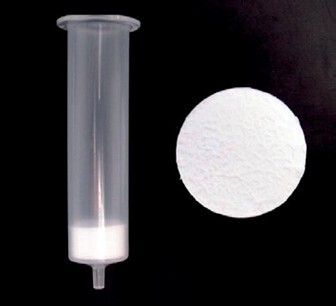
Figure 1. Disk and Cartridge formats next to each other
Instrumentation
- Biotage® Horizon 5000 Automated Extractor
- DryVap™* Concentration System
- DryDisk® Separation Membranes
- Atlantic® C18 High Capacity Disk
The Biotage® Horizon 5000 was used for extraction of the analytes from the water samples. The Biotage® Horizon 5000 is an automated system that conditions the solid phase extraction disk, loads the sample through the disk, rinses the sample bottle and elutes the sample all without user intervention. The 47-mm disk holder was used with C18 disks . High capacity disks were used because some of the more water soluble compounds are better retained and suffer less breakthrough with this disk. Ethyl acetate and methylene chloride were used for elution.
The method run on the Biotage® Horizon 5000 is shown in Table 1. The method information, run time, sample identification and other information are stored in a file when the sample is run. This can be printed in a report or exported to the laboratory LIMS for archiving.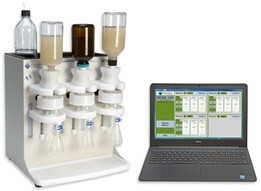
Figure 2. Biotage® Horizon 5000 Automated Extractor
*The DryVap™ system has been discontinued. We recommend using the TurboVap® evaporation systems for achieving equivalent results.
Table 1. Extraction Method
|
Step |
Solvent |
Solvent Volume (mL) |
Purge Time (s) |
Pump Rate (#) |
Sat. Time (s) |
Soak Time (s) |
Drain Time (s) |
|
|
1. Condition SPE Disk |
Methylene Chloride |
15 |
60 |
2 |
1 |
20 |
30 |
|
|
2. Condition SPE Disk |
Ethyl Acetate |
11 |
60 |
2 |
1 |
20 |
30 |
|
|
3. Condition SPE Disk |
Methanol |
11 |
60 |
2 |
1 |
60 |
2 |
|
|
4. Condition SPE Disk |
Reagent Water |
9 |
30 |
2 |
1 |
5 |
5 |
|
|
5. Condition SPE Disk |
Reagent Water |
9 |
60 |
2 |
1 |
30 |
0 |
|
|
Step |
Sample Flow Rate (#) |
|
|
Done Loading Sample Delay (s) |
|
|||
|
6. Load Sample |
|
2 |
|
|
|
45 |
|
|
|
Step |
Dry Time (s) |
|
Pump Rate (#) |
|
N2 Blanket |
|
||
|
7. Air Dry Disk Timer |
60 |
|
|
6 |
|
|
Off |
|
|
Step |
Solvent |
Solvent Volume (mL) |
Purge Time (s) |
Pump Rate (#) |
N2 Blanket |
Sat. Time (s) |
Soak Time (s) |
Elute Time (s) |
|
8. Elute Sample Container |
Ethyl Acetate |
8 |
60 |
2 |
Off |
1 |
30 |
45 |
|
9. Elute Sample Container |
Methylene Chloride |
8 |
15 |
2 |
Off |
1 |
30 |
45 |
|
10. Elute Sample Container |
Methylene Chloride |
8 |
15 |
2 |
Off |
1 |
30 |
45 |
|
11. Elute Sample Container |
Methylene Chloride |
8 |
15 |
6 |
Off |
2 |
30 |
60 |
|
Gas Chromatography Mass Spectrometry System |
|||
|
Cartridge |
ZB Semi-volatiles, 30 m x 0.35 mm i.d., 0.25 μm film thickness (Phenomenex) |
||
|
Flow Rate |
9 psig helium ramped up with the oven temperature to maintain a constant flow |
||
|
Temperature Ramp |
|||
|
|
Temperature (°C) |
Rate (°C/min) |
Hold (min) |
|
|
60 |
0 |
2.00 |
|
|
270 |
20 |
0.00 |
|
|
320 |
6 |
3.00 |
Method summary
- Obtain six 1-liter samples of drinking water.
- Add dechlorinating agent to each 1-liter sample.
- Acidify each 1-liter water sample to pH <2 using concentrated HCl.
- Add surrogate and internal standard compounds into samples.
- Start extraction method shown in Table 1 and collect extract (≈32 mL).
- Add extract to the DryDisk® holder and start automated drying and concentration process on the DryVap™ system (the DryVap™ system automatically dries and concentrates extract to 0.9 mL).
- Quantitatively bring extract volume to 1.0 mL using methylene chloride once the extracts are evaporated to less than 1 mL.
- Add external standard into the 1-milliliter extract.
- Transfer the extract to a 2.0 mL GC vial.
- Analyze by GC/MS.
The GC/MS used was a 6890 GC with a 5973 MSD (Agilent).
Total Run Time: 23.83 minutes
Injection Method: 1.0 μL injected, Temperature 280°C , Pulsed splitless
- Inlet pulse pressure 25.0 psi for 1.00 min
- Purge flow to split vent 50 mL/min for @2.00 min
Results and discussion
Six replicate laboratory fortified blanks (LFBs) were extracted as described in Chinese method SL 392-2007, following the procedure in the method summary in this note. Drinking water was spiked with standards and surrogates at a concentration of 5 μg/L.
The results are shown in Table 2 for each of the six replicate samples.
Table 2. Recoveries of Spiked Analytes in Drinking Water
|
Compound |
Sample 1 (% Rec) |
Sample 2 (% Rec) |
Sample 3 (% Rec) |
Sample 4 (% Rec) |
Sample 5 (% Rec) |
Sample 6 (% Rec) |
AVG |
RSD |
|
Acenaphthene d10 |
70.0 |
73.0 |
77.6 |
81.0 |
75.0 |
76.8 |
75.6 |
5.06 |
|
Phenanthrene d10 |
75.6 |
84.2 |
88.0 |
95.4 |
84.4 |
85.8 |
85.6 |
7.49 |
|
Chrysene d12 |
77.0 |
83.8 |
90.2 |
98.2 |
84.0 |
86.0 |
86.5 |
8.25 |
|
2,4-Dinitrotoluene |
113 |
112 |
109 |
110 |
112 |
109 |
111 |
1.44 |
|
2,6-Dinitrotoluene |
113 |
112 |
108 |
109 |
113 |
107 |
110 |
2.49 |
|
2-Nitro-m-xylene |
95.6 |
95.6 |
90.0 |
87.0 |
98.0 |
94.6 |
93.5 |
4.41 |
|
4,4’-DDD |
94.4 |
93.8 |
94.0 |
90.4 |
94.0 |
93.6 |
93.4 |
1.58 |
|
4,4’-DDE |
91.4 |
89.8 |
92.8 |
87.2 |
90.4 |
89.6 |
90.2 |
2.09 |
|
4,4-DDT |
94.4 |
93.8 |
94.0 |
90.4 |
94.0 |
93.6 |
93.4 |
1.58 |
|
a-BHC |
99.2 |
95.2 |
97.8 |
93.8 |
98.4 |
96.6 |
96.8 |
2.11 |
|
Acenaphthene |
110 |
109 |
101 |
105 |
109 |
106 |
107 |
3.08 |
|
Acenaphthylene |
95.6 |
95.6 |
93.8 |
90.2 |
98.0 |
97.0 |
95.0 |
2.91 |
|
Acetochlor |
108 |
109 |
104 |
103 |
107 |
108 |
106 |
2.11 |
|
a-Chlordane |
92.8 |
91.4 |
93.4 |
88.8 |
93.0 |
92.0 |
91.9 |
1.83 |
|
Alachlor |
99.8 |
97.0 |
99.0 |
95.2 |
98.8 |
98.4 |
98.0 |
1.70 |
|
Aldrin |
85.0 |
81.6 |
84.6 |
81.2 |
82.4 |
83.6 |
83.1 |
1.90 |
|
Ametryn |
98.6 |
95.2 |
96.8 |
93.8 |
98.0 |
96.4 |
96.5 |
1.84 |
|
Atrazine |
104 |
98.0 |
100 |
96.6 |
98 100 |
99.4 |
2.48 |
|
|
b-BHC |
99.0 |
96.8 |
98.6 |
96.0 |
99.6 |
97.0 |
97.8 |
1.46 |
|
Benz(a)anthracene |
89.2 |
87.6 |
89.0 |
85.4 |
88.6 |
88.8 |
88.1 |
1.63 |
|
Benzo(a)pyrene |
73.8 |
74.0 |
76.2 |
70.4 |
74.8 |
75.4 |
74.1 |
2.72 |
|
Benzo(b)fluoranthene |
95.0 |
93.8 |
95.4 |
89.0 |
92.0 |
92.0 |
92.9 |
2.56 |
|
Benzo(ghi)perylene |
95.0 |
93.0 |
95.2 |
91.4 |
93.0 |
93.2 |
93.5 |
1.52 |
|
Benzo(k)fluoranthene |
91.0 |
88.8 |
91.8 |
89.0 |
92.2 |
92.4 |
90.9 |
1.76 |
|
Bis(2-ethylhexyl)adipate |
95.4 |
92.6 |
93.4 |
90.8 |
94.4 |
94.2 |
93.5 |
1.73 |
|
Bis(2-ethylhexyl)phthalate |
96.0 |
94.0 |
95.0 |
92.4 |
94.8 |
95.4 |
94.6 |
1.34 |
|
Bromacil |
105 |
103 |
104 |
100 |
104 |
102 |
103 |
1.81 |
|
Butaclor |
98.0 |
98.4 |
97.6 |
92.6 |
100 |
97.4 |
97.4 |
2.61 |
|
Butyl benzyl phthalate |
100 |
99.0 |
98.6 |
93.4 |
101 |
99.0 |
98.5 |
2.69 |
|
Butylate |
103 |
101 |
101 |
97.0 |
104 |
101 |
101 |
2.41 |
|
Caffeine |
82.4 |
88.8 |
77.2 |
78.0 |
84.8 |
79.0 |
81.7 |
5.52 |
|
Chlorobenzilate |
101 |
101 |
99.2 |
95.4 |
104 |
102 |
100 |
2.84 |
|
Chloroneb |
112 |
110 |
114 |
111 |
113 |
109 |
111 |
1.62 |
|
Chlorothalonil |
107 |
105 |
106 |
101 |
107 |
105 |
105 |
1.91 |
|
Chlorpropham |
125 |
122 |
119 |
122 |
122 |
121 |
122 |
1.56 |
|
Chlorpyrifos |
101 |
95.0 |
101 |
96.2 |
98.6 |
98.2 |
98.3 |
2.45 |
|
Chrysene |
92.8 |
90.8 |
92.8 |
89.2 |
91.8 |
91.6 |
91.5 |
1.49 |
|
cis-Permethrin |
97.8 |
96.4 |
96.4 |
94.4 |
95.8 |
96.0 |
96.1 |
1.14 |
|
Cyanazine |
104 |
99.4 |
101 |
98.2 |
101 |
100 |
101 |
1.93 |
|
Cycloate |
113 |
111 |
110 |
110 |
113 |
110 |
111 |
1.32 |
|
Dacthal |
99.0 |
96.4 |
98.6 |
95.2 |
99.6 |
97.8 |
97.8 |
1.71 |
|
d-BHC |
99.6 |
97.6 |
101 |
96.0 |
100.2 |
97.4 |
98.6 |
1.86 |
|
Diazinon |
92.8 |
89.8 |
90.2 |
88.0 |
91.6 |
91.0 |
90.6 |
1.82 |
|
Dibenz(ah)anthracene |
92.2 |
91.6 |
92.2 |
92.8 |
91.6 |
95.6 |
92.7 |
1.62 |
|
Dichlorvos |
119 |
115 |
110 |
112 |
119 |
115 |
115 |
3.11 |
|
Dieldrin |
95.6 |
95.2 |
95.0 |
90.2 |
95.8 |
93.6 |
94.2 |
2.25 |
|
Diethyl phthalate |
115 |
114 |
113 |
112 |
114 |
111 |
113 |
1.34 |
|
Dimethoate |
81.0 |
90.0 |
72.8 |
77.2 |
82.2 |
80.0 |
80.5 |
7.11 |
|
Dimethyl phthalate |
109 |
107 |
107 |
106 |
109 |
105 |
107 |
1.32 |
|
Di-n-butyl phthalate |
101 |
98.8 |
100 |
95.0 |
99.6 |
98.2 |
98.9 |
2.20 |
|
Di-n-octyl phthalate |
99.6 |
96.0 |
98.6 |
94.8 |
97.6 |
97.4 |
97.3 |
1.78 |
|
Diphenamid |
101 |
98.0 |
98.8 |
95.4 |
100 |
97.6 |
98.5 |
2.05 |
|
Disulfoton |
96.4 |
92.8 |
96.2 |
91.8 |
97.4 |
97.4 |
95.3 |
2.54 |
|
Disulfoton sulfone |
102 |
103 |
99.6 |
97.4 |
105 |
102 |
102 |
2.64 |
|
Endosulfan I |
97.8 |
92.8 |
97.0 |
93.4 |
97.0 |
93.4 |
95.2 |
2.37 |
|
Compound |
Sample 1 (% Rec) |
Sample 2 (% Rec) |
Sample 3 (% Rec) |
Sample 4 (% Rec) |
Sample 5 (% Rec) |
Sample 6 (% Rec) |
AVG |
RSD |
|
Endosulfan II |
96.6 |
97.6 |
98.8 |
92.2 |
98.6 |
95.2 |
96.5 |
2.58 |
|
Endosulfan Sulfate |
99.2 |
99.8 |
98.8 |
95.4 |
101 |
100 |
99.1 |
2.06 |
|
Endrin |
115 |
111 |
110 |
105 |
114 |
111 |
111 |
3.13 |
|
Endrin Aldehyde |
88.8 |
88.4 |
84.4 |
81.6 |
89.4 |
84.8 |
86.2 |
3.60 |
|
Endrin Ketone |
97.6 |
97.6 |
98.8 |
91.8 |
101 |
98.2 |
97.5 |
3.19 |
|
EPTC |
107 |
104 |
99.4 |
99.4 |
107 |
104 |
103 |
3.24 |
|
Ethoprop |
119 |
119 |
112 |
116 |
118 |
115 |
117 |
2.28 |
|
Etridiazole |
107 |
107 |
105 |
103 |
110 |
106 |
106 |
2.27 |
|
Fenamiphos |
116 |
119 |
108 |
109 |
119 |
117 |
115 |
4.45 |
|
Fenarimol |
104 |
104 |
96.6 |
96.8 |
102 |
103 |
101 |
3.28 |
|
Fluoranthene |
98.2 |
95.2 |
97.8 |
93.8 |
96.6 |
95.2 |
96.1 |
1.77 |
|
Fluorene |
104 |
104 |
102 |
100 |
105 |
103 |
103 |
1.73 |
|
Fluridone |
110 |
113 |
103 |
104 |
112 |
110 |
109 |
3.65 |
|
g-Chlordane |
90.6 |
89.4 |
90.8 |
88.2 |
91.4 |
90.2 |
90.1 |
1.27 |
|
Heptachlor |
96.4 |
91.0 |
95.6 |
92.6 |
94.2 |
94.8 |
94.1 |
2.12 |
|
Heptachlor epoxide A |
96.8 |
92.2 |
95.2 |
91.0 |
93.8 |
92.4 |
93.6 |
2.29 |
|
Heptachlor epoxide B |
96.2 |
95.2 |
98.0 |
92.6 |
96.8 |
94.0 |
95.5 |
2.05 |
|
Hexachlorobenzene |
92.0 |
87.2 |
91.0 |
87.2 |
89.8 |
91.0 |
89.7 |
2.29 |
|
Hexazinone |
100 |
100 |
98.0 |
94.6 |
101 |
100 |
99.1 |
2.49 |
|
Indeno(1,2,3-cd)pyrene |
94.0 |
94.4 |
95.2 |
91.0 |
92.6 |
93.4 |
93.4 |
1.59 |
|
Isophorone |
109 |
101 |
96.6 |
97.4 |
107 |
100 |
102 |
4.91 |
|
Lindane (g-BHC) |
99.4 |
95.6 |
99.8 |
95.2 |
99.4 |
96.4 |
97.6 |
2.17 |
|
Malathion |
117 |
116 |
108 |
110 |
115 |
117 |
114 |
3.43 |
|
Merphos |
93.4 |
90.6 |
104 |
101 |
108 |
108 |
101 |
7.32 |
|
Methoxychlor |
100 |
99.8 |
98.6 |
94.2 |
99.2 |
97.8 |
98.3 |
2.22 |
|
Methyl paraoxon |
98.8 |
97.2 |
97 |
93.8 |
94.6 |
93.4 |
95.8 |
2.27 |
|
Metolachlor |
102 |
99.4 |
100 |
97 |
102 |
99.4 |
100 |
1.98 |
|
Metribuzin |
100 |
96.4 |
96.2 |
94.6 |
99.4 |
97 |
97.3 |
2.22 |
|
Mevinphos |
127 |
124 |
116 |
122 |
126 |
122 |
123 |
3.24 |
|
MGK-264-A |
96.0 |
94.6 |
95.8 |
92.6 |
97.2 |
96.0 |
95.4 |
1.66 |
|
MGK-264-B |
96.0 |
94.6 |
95.8 |
92.6 |
97.2 |
96.0 |
95.4 |
1.66 |
|
Molinate |
111 |
109 |
108 |
107 |
111 |
107 |
109 |
1.64 |
|
Naphthalene |
89.6 |
89.8 |
86.8 |
80.2 |
92.0 |
90.4 |
88.1 |
4.81 |
|
Napropamide |
102 |
101 |
98.6 |
94.2 |
103 |
100 |
99.8 |
3.09 |
|
Norflurazon |
99.6 |
100 |
96.8 |
93.8 |
102 |
99.6 |
98.7 |
2.93 |
|
Pebulate |
108 |
106 |
104 |
102 |
109 |
105 |
105 |
2.50 |
|
Pentachlorophenol |
106 |
104 |
105 |
102 |
108 |
107 |
105 |
1.98 |
|
Perylene-d12 |
79.2 |
78.4 |
81.4 |
76.6 |
79.4 |
80.6 |
79.3 |
2.13 |
|
Phenanthrene |
97.4 |
94.2 |
96.0 |
91.4 |
97.4 |
95.8 |
95.4 |
2.39 |
|
Prometon |
79.2 |
76.6 |
79.8 |
73.4 |
75.2 |
77.6 |
77.0 |
3.15 |
|
Prometryn |
99.4 |
95.6 |
97.4 |
94.4 |
97.8 |
97.0 |
96.9 |
1.80 |
|
Pronamide |
100 |
96.6 |
98.8 |
95.4 |
99.4 |
98.0 |
98.0 |
1.79 |
|
Propachlor |
115 |
112 |
112 |
112 |
113 |
110 |
112 |
1.37 |
|
Propazine |
103 |
100 |
100 |
98 |
101 |
100 |
101 |
1.76 |
|
Pyrene |
96.2 |
95.2 |
95.8 |
90.8 |
96.4 |
95.4 |
95.0 |
2.20 |
|
Pyrene-d10 |
95.8 |
94.6 |
95.6 |
90.2 |
96.8 |
93.8 |
94.5 |
2.47 |
|
Simazine |
98.8 |
95.8 |
98.0 |
95.0 |
97.4 |
94.0 |
96.5 |
1.93 |
|
Simetryn |
99.8 |
97.0 |
102 |
99.6 |
98.4 |
102 |
99.9 |
2.07 |
|
Stirofos |
112 |
111 |
105 |
104 |
114 |
114 |
110 |
3.96 |
|
Tebuthiuron |
120 |
121 |
110 |
118 |
120 |
118 |
118 |
3.25 |
|
Terbacil |
119 |
117 |
112 |
111 |
118 |
116 |
115 |
2.96 |
|
Terbufos |
122 |
114 |
121 |
110 |
113 |
106 |
115 |
5.43 |
|
Terbuthylazine |
101 |
98.4 |
98.0 |
96.0 |
99.4 |
98.0 |
98.5 |
1.81 |
|
Terbutryn |
101 |
98.4 |
100 |
96.2 |
100.6 |
99.6 |
99.3 |
1.74 |
|
Terphenyl-d14 |
130 |
119 |
111 |
102 |
119 |
116 |
116 |
7.97 |
|
Compound |
Sample 1 (% Rec) |
Sample 2 (% Rec) |
Sample 3 (% Rec) |
Sample 4 (% Rec) |
Sample 5 (% Rec) |
Sample 6 (% Rec) |
AVG |
RSD |
|
Thiobencarb |
101 |
99.6 |
95.4 |
96.8 |
98.6 |
99.8 |
98.6 |
2.16 |
|
trans-Nonachlor |
92.6 |
92.0 |
92.6 |
89.4 |
92.8 |
91.2 |
91.8 |
1.42 |
|
trans-Permethrin |
94.4 |
92.0 |
94.2 |
90.0 |
93.2 |
92.4 |
92.7 |
1.76 |
|
Triademefon |
102 |
99.4 |
97.2 |
92.6 |
98.6 |
97.0 |
97.8 |
3.25 |
|
Tricyclazole |
99.6 |
98.4 |
88.8 |
89.6 |
97.6 |
95.2 |
94.9 |
4.88 |
|
Trifluralin |
110 |
108 |
107 |
107 |
108 |
107 |
108 |
1.11 |
|
Triphenylphosphate |
101 |
101 |
99.0 |
95.0 |
102 |
101 |
99.8 |
2.58 |
|
Vernolate |
106 |
105 |
101 |
100 |
109 |
104 |
104 |
3.09 |
The recoveries are within 70—130% in all cases for the more than 100 compounds measured. The precision was excellent and the relative standard deviations ranged between 2-3% for most of the analytes. Table 3 compares selected analyte data from method SL 392-2007 with the data obtained in this work. I t can be seen that the data obtained with the Biotage® Horizon and the C18 disk are equivalent or better in terms of spike recoveries and relative standard deviation.
Table 3. Comparison of Data from the Method to that Acquired Here
|
|
SL 392-2007 |
C18 HC Disk Biotage® Horizon 5000 |
||
|
|
% Recovery |
%RSD |
% Recovery |
% RSD |
|
2,4-Dinitrotoluene |
99.3 |
2.94 |
111 |
1.44 |
|
Benzo(k)fluoranthene |
83.1 |
2.17 |
90.9 |
1.76 |
|
Chrysene |
85.8 |
1.00 |
91.5 |
1.49 |
|
Dichlorvos |
121 |
3.01 |
115 |
3.11 |
|
Dieldrin |
81.9 |
7.37 |
94.2 |
2.25 |
|
Heptachlor epoxide B |
77.7 |
7.87 |
95.5 |
2.05 |
|
Pyrene |
80.2 |
6.02 |
95.0 |
2.20 |
Conclusion
The Atlantic high-capacity C18 disks provided excellent recovery of the large suite of compounds extracted in water. The compounds included in the method had excellent performance and an average recovery of 98.8% was achieved with a 5 μg/L spike. The spike recovery criterion of 70-130% was achieved in all cases.
The Biotage® Horizon 5000 system provided uniform performance and a hands-off approach to the extraction step. The reproducibility of the six runs was excellent and the average of the relative standard deviation values was 2.6%. The Atlantic high-capacity C18 disk allowed even more water soluble compounds, such as caffeine, to be successfully retained with good recovery, further demonstrating the utility of solid phase extraction. In combination with the Biotage® Horizon 5000, the samples were reliably extractedwith excellent precision. This data demonstrates that the equipment used in this study is capable of fully automating disk SPE technology for Chinese Environmental Method SL 392-2007 and that the resulting data is both accurate and precise.
References
- China Method SL 392-2007, Determination of Semi volatile Organic Compounds in Water by Solid Phase Extraction- Gas Chromatography (GC/MS).
Literature number: AN116-HOR
