
By Admin
Maintaining the quality of synthetic oligonucleotides is essential to ensure their reliable, high performance in downstream applications. There are a number of dangers associated with poor quality oligonucleotides, including:
- Inaccurate data: Poorly synthesized oligos can give rise to inaccurate data, which can in turn skew your results. This can be disastrous if you’re relying on that data to make important decisions about your next steps.
- Failed assays: In some cases, poor quality oligos can cause entire assays to fail. This not only wastes time and money but can also set back your research by weeks or even months.
- Poor reproducibility: If you’re unable to reproduce your results, it casts doubt on the validity of your entire experiment. This could mean starting from scratch or, even worse, having to abandon your project altogether.
Producing highly pure oligonucleotides becomes increasingly difficult with increasing oligonucleotide length. Biotage specialize in the synthesis of highly pure oligonucleotides of all lengths. We are committed to meticulous control of our manufacturing process to ensure perfectly reproducible synthesis of top quality oligos. Biotage have developed special proprietary methods to enable the delivery of long oligonucleotides of 100–200 bases in length with unparalleled purity. Every variable is precisely controlled and we rigorously analyze each oligo before it is released to our customers. Here is some example QC data for a 26mer, a 50mer, a 100mer and a 201mer illustrating the consistent quality of Biotage oligos.
Quality control methodology
The samples were all run on a ACQUITY Premier Oligonucleotide C18 Column using a Waters H-Class Bio UPLC/ G2-XS QtoF Xevo MS with a column temperature of 60 oC and a PDA detector.
Buffers were A – 400mM HFIP (hexafluoroisopropanol), 15mM TEA (Triethylamine), prepared in H2O and B – 400mM HFIP, 15mM TEA, prepared in 50% v/v H2O/MeOH (Methanol), with a flow rate of 0.25 mL per minute. The samples were analyzed using a long, shallow gradient designed to give maximum resolution of impurities.
Results
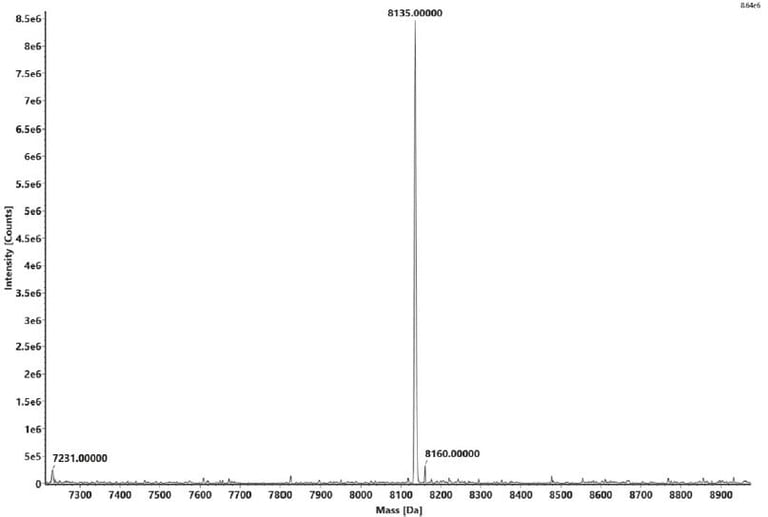
Figures 1 and 2: QC data for an unmodified 26mer oligonucleotide. Biotage delivered a 26mer of high purity. A high level of care and attention to detail goes into every oligonucleotide synthesis at Biotage, even for shorter, ‘simpler’ sequences.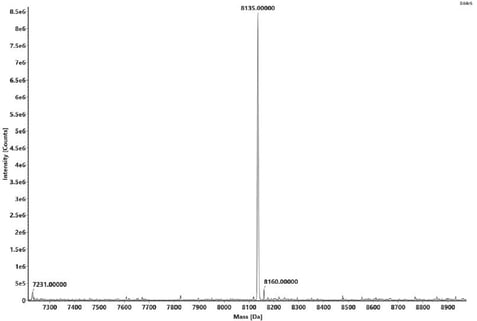 Figure 1.
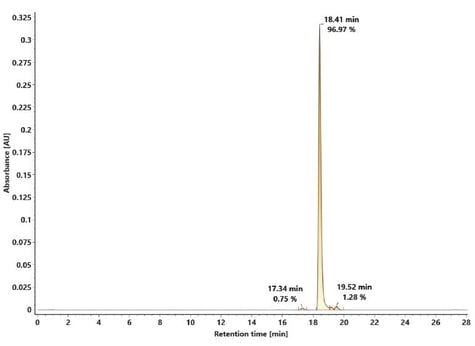 Figure 2.
Figures 3 and 4: QC data for an unmodified 50mer oligonucleotide. Biotage delivered a highly pure 50mer. This once again demonstrates the dedication to quality that is evident in every Biotage oligonucleotide synthesis.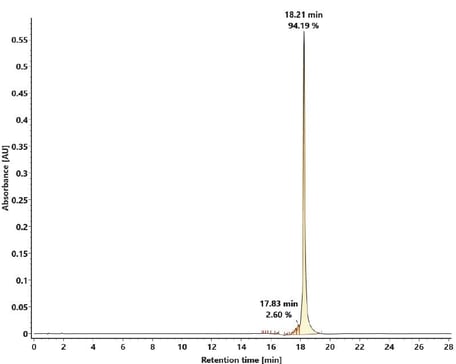 Figure 3.
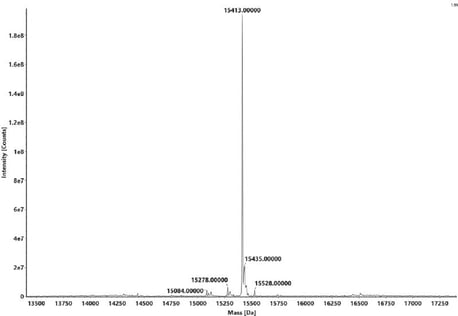 Figure 4.
Figures 5 and 6: QC data for an unmodified 100mer oligonucleotide. As the length of the oligonucleotide increases, the purity is maintained, illustrating Biotage’s expertise in
the production of challenging sequences with consistent high quality.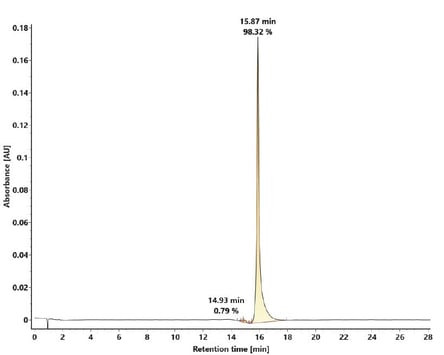 Figure 5.
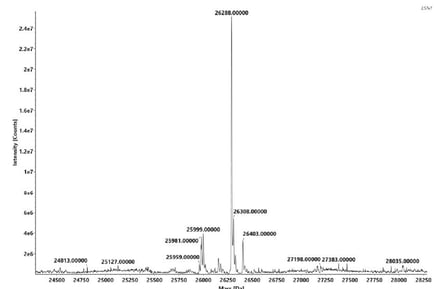 Figure 6.
Figures 7 and 8: QC data for an unmodified 201mer sequence. Despite the complexity of the synthesis, Biotage delivered a high purity product by drawing on our specialist expertise and employing unique proprietary methodology. Biotage can be trusted to deliver oligonucleotides of unparalleled quality, no matter the length or complexity of the sequence.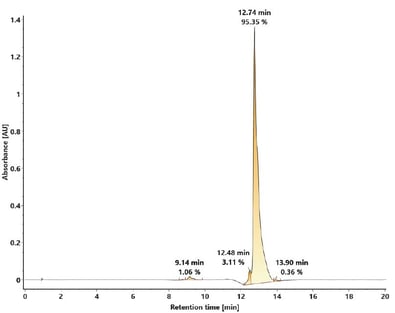 Figure 7.
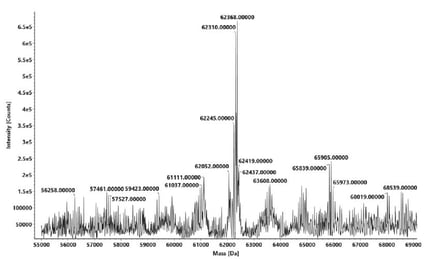 Figure 8.
Conclusion
These QC data illustrate the consistent level of quality achieved by Biotage in the synthesis of oligonucleotides. Customers can be confident that they will always receive products of the highest purity. So, when you order from us, you can be sure that you’re getting the highest quality product available on the market.
Literature Number: AN983
