
One of Japan’s innovative pharmaceutical companies uses Isolera™ flash purification systems and Biotage® Initiator+ microwave synthesizers in the development of new prescription drugs. Modern lab instruments contribute to efficient use of time and resources at Kissei Pharmaceutical.
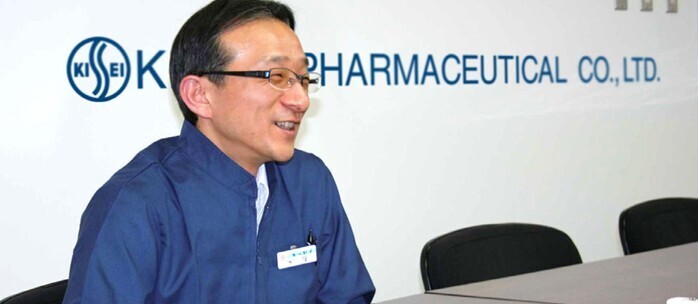
Figure 1: Shigeru Yonekubo is Senior Scientist in the Kissei Drug Discovery Research Department.
We spoke with Mr. Shigeru Yonekubo, Senior Scientist in the Drug Discovery Research Department of Kissei Pharmaceutical Co., Ltd. in Japan.
Tell us about your research.
“Our vision is to be a research and development oriented company which develops innovative pharmaceuticals for the people of the world. We develop new prescription drugs and provide them at the forefront of medical care, in particular for our primary areas of research: the urinary system, kidneys and dialysis, metabolism and endocrine system, gynaecology, ophthalmology, and our recent entry into the central nervous system and yet unmet medical needs.”
How did you first start using Biotage products?
“Our first purification system was the old Biotage Quad. Before that, we were doing manual open silica column purification by hand. When we first got the Quad, it wasn’t used that frequently and only by a small number of people. Since then we have become more automated, transitioning to the SP1 system and then the Isolera, which is our main instrument in use now. We have several systems in the Isolera series, including the Isolera Spektra.”
What differences do you notice between the systems?
“With Isolera, I find that the gradient function has improved. It was also very beneficial to our company that the flow rate could be increased to 200 mL/min. We use the spare time it creates to run other experiments, come up with new designs for compounds and other research and development.”
Reducing time and solvent
Purification is a post-processing step. It seems reasonable to not spend too much time and money on it.
“That’s correct. When I entered the company and we did about 20 purifications a day with the open column method, it took over half a day to complete. Now with the automated purification systems it can all be completed in two to three hours. It only takes about five minutes per purification, and saving time is very important for researchers. Each purification takes time to set up, time to run, and time to check. With these instruments, it is ready almost immediately. The purification and fraction collection are automatic as long as you set up the method, and it can show detection results at the same time.
It also reduces the amount of solvent used significantly, which is becoming increasingly important for companies recently.
It doesn’t matter how low the initial costs are if the running costs are high. Spending our budget on running costs limits the resources we need for other research, and prevents us from acquiring better technology. Reducing our impact on the environment is also an important responsibility. The key reasons we transitioned to automation are that each purification is completed in a short time, and we can reduce the amount of solvent used.”
What is the reason Isolera has become your first choice?
“The quality is good. It has good gradient accuracy, the flow rate for the pump itself is stable, and there are few pulsations in the flow. In addition, Isolera allows for real-time monitoring, so we can see the chromatogram on our computers over the intranet. It’s really convenient to monitor the progress while doing other work, and then get the compound when it elutes.
Our researchers want a system that operates and performs well under pressure. We don’t just repeat the same reactions. We can’t get a patent for the same compound twice – that would make our work pointless. Instead, we need to keep creating things that no one else in the world has done before. So we are always trying something new, that is how we spend every day. We need a system that does what we expect. If I change A, then I want B to happen. In this sense, Isolera is extremely good, it is easy for us to run purifications under our specific conditions. I think hardly any of our researchers use Isolera on
the default settings, everyone customizes it based on their own experience.”
How do you use the Spektra software features?
“Honestly, our hopes weren’t high when we added Spektra, but after using it I think it’s great. We didn’t understand how good it was until we tried it. Pharmaceuticals are becoming more complex with three-dimensional structures, and many of them have very weak UV absorption. Even with substances that have a broad peak with normal UV, Spektra’s all-wavelength monitoring lets us detect sharp peaks and collect fractions.”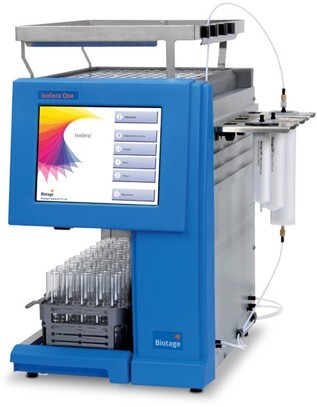
Figure 2: The Isolera™ flash purification system automatically detects UV at all
wavelengths.
Leveraging microwaves
When did you first start using microwave synthesis?
“We implemented microwaves quite some time ago. There were a lot of reports on microwave research at conferences and in papers, so we wanted to try it out. We were using oil baths for organic synthesis that took all night, so it was really interesting to hear it could be done in less than an hour. Not everyone at our department rushed straight to microwaves as soon as we introduced it though, but the number of users increased as people realized how much time they could save, and that difficult reactions with conventional heating worked better with microwaves.”
What are the advantages of microwave synthesis?
“The shorter reaction times obviously. We can do in about an hour what used to take all night. If a synthesis took 10 hours, we’d start the process in the afternoon, and it would be ready the next day. Now it’s all done in the same day.
For high-temperature reactions we previously needed to use solvents with high boiling points such as DMSO. These solvents are hard to evaporate after the reaction. With microwaves we can do high-temperature reactions at 150 or 180°C with common solvents that are easily evaporated afterwards.
The Initiator is also very easy to operate. Usually we would need to include a recirculation device, which takes up space and needs time to warm up. Microwaves are more convenient, you just set it up and it automatically heats the reaction to the right temperature, keeps track of the time, and finishes. Nobody at our lab hesitates to use microwaves for organic reactions, it allows you to finish the same reaction quicker. On busy days, the next reaction is always lined up and ready to go as soon as one reaction finishes.”
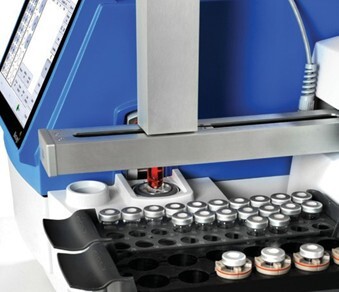
Figure 3: Biotage® Initiator+ organic microwave synthesizer speeds up discovery workflow. The Biotage® Robot 60 accessory automates the process.
Your Initiators are all equipped with robots for automation.
“Yes, they are useful when synthesizing several compounds in sequence. For example, we often synthesize ten compounds with the same substrate and different substituents. In those cases, the robots are convenient because we can prepare ten vials and process them under the same conditions. You just set it up and everything is synthesized automatically.
I also like that we can do multiple reactions over night. Or if we have a meeting, we can set up the process and leave, and it is done when we come back. Since we introduced the Initiators, the reactions we run and the number of new compounds we synthesize throughout the year has increased by 50%. We can use our time much more effectively.”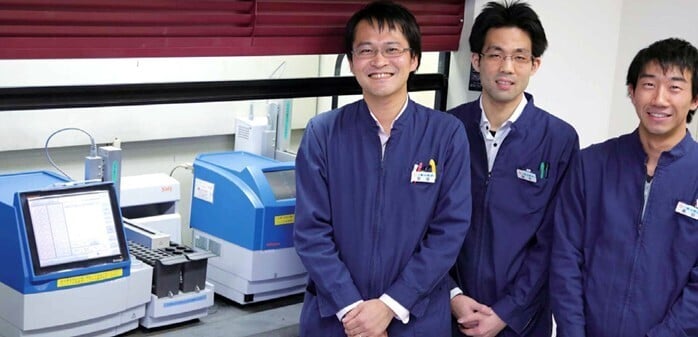
Figure 4: Kissei Pharmaceutical have installed a Biotage® Initiator+ organic microwave synthesizer with Robot 60 in their Drug Discovery Research Department.
Saving money with maintenance service
You have a service contract on the Isolera.
“Right, we didn’t ask for it at the beginning, but when we looked into it, we found out that the cost was about the same as having someone come in for repairs, so we decided to enroll. Our instruments are used all the time, so having one of them down for a few days would have a major impact on our business. We need to run at full performance, so having someone come immediately if we run into some trouble is critical. In the end, the service contract saves us money.
Also, when a service engineer arrives, they can often take a look at the Initiator as well. In that way it’s convenient to have our systems from the same manufacturer, they’ll make any adjustments we need when they come in.”
Is that unusual for an overseas company?
“It is great that they do maintenance as a foreign company. Manufacturers with only agency offices in Japan would have to send the instrument to its country of origin. Repairs could take several months. It is helpful to have issues dealt with quickly, despite being a foreign manufacturer.”
Is there anything you would like to see from our products?
“We have asked around, but it seems that no one offers a purification system which handles three-solvent gradients. Some polar compounds with poor solubility don’t separate well with only two solvents, and they can precipitate in the elution. We are using an additive solvent as the third liquid, and it can be a bit annoying to calculate the ratios. It would be convenient if it were incorporated into the gradient. We might be the only ones who want something like this, though.”
Kissei Pharmaceutical Co., Ltd.
Established in 1946 in Matsumoto, Nagano as the Tachibana Seikagaku Laboratory. Chuo Laboratory established in 1969. Moved to Azumino, its current location, in 1990. Listed on the first section of the Tokyo Stock Exchange in 1991. Currently has 1,600 employees. 12 branches nationwide with 46 sales offices and a subsidiary in the United States. Based on a corporate philosophy of "contributing to society through pure, high quality pharmaceuticals," and "serving society through company employees," Kissei endeavours to conduct research and development on innovative new drugs to contribute to people's health.
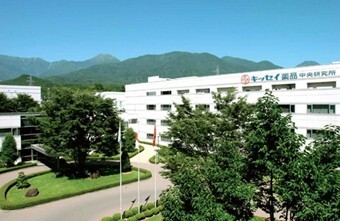 Figure 5: Kissei Pharmaceutical Co., Ltd.
Literature Number: PPS376
