
Introduction
Flash chromatography is the de facto purification technique for organic and medicinal chemists. Standard flash chromatography equipment incorporates a built-in UV, or UV-VIS detector to “see” compounds as they elute from the column and trigger the fractionation.
The reaction product and its byproducts often lack chromo- phores that absorb UV radiation effectively or may even lack them altogether. To detect these compounds, employing a specific wavelength or range of wavelengths can enhance sensitivity. However, this becomes problematic when the solvents used for purification absorb UV light within the same wavelength range as the reaction mixture components.
To address this issue, using an in-line evaporative light- scattering detector (ELSD) helps to detect most of those reaction mixture components that would be otherwise difficult to find, or miss completely.
In this application note, we show improved reaction mixture detection with Biotage® Selekt Enkel flash chromatography system equipped with an evaporative light-scattering detector, Biotage® Selekt ELSD.
Materials and methods
|
Synthesis |
|
|
System: |
Biotage® Initiator+ |
|
Scale: |
0.5 mmole |
|
Reagents: |
Cyclohexylamine, 50 mg |
|
Benzaldehyde, 53 mg |
|
|
MP-Cyanoborohydride (MP-CNBH4), 2.5 eq |
|
|
Solvent: |
Dichloromethane, 4 mL |
|
Catalyst: |
Acetic acid, 150 µL |
|
Temperature: |
110 °C |
|
Time: |
7 minutes |
|
Purification |
|
|
System: |
Biotage® Selekt Enkel |
|
ELSD: |
Biotage® Selekt ELSD |
|
Column: |
Biotage® Sfär HC silica column, 5 gram |
|
Solvent A: |
Heptane |
|
Solvent B: |
Ethyl acetate |
|
Gradient: |
0-25% B over 10 column volumes (CV) |
|
Flow rate: |
18 mL/min |
|
UV: |
λ-all 200-300 nm, UV1 200 nm, UV2 210 nm |
|
ELSD: |
Acetone, 36 °C, 1.5 bar N2 |
Results and discussion
For this application, a reductive amination reaction was performed in dichloromethane (DCM) (Figure 1).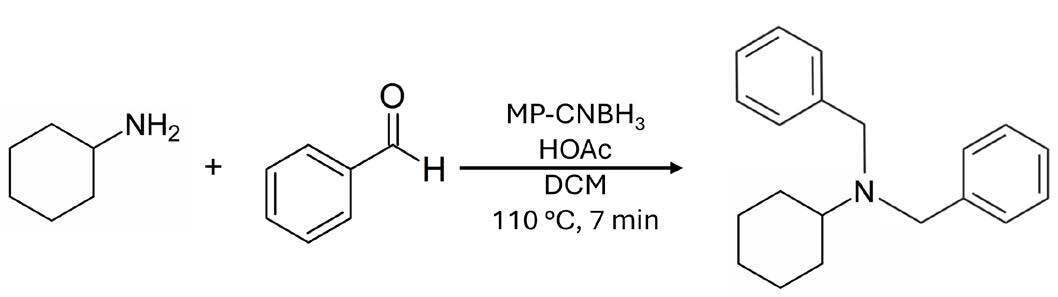
Figure 1. Reductive amination reaction used in the application note.
The reaction mixture was purified using normal phase flash chromatography with a heptane/ethyl acetate gradient, UV detection, and a silica column (Figure 2). Figure 2. The heptane/ethyl acetate reaction mixture flash purification did not detect many compounds using focused UV detection.
Although both benzyl alcohol (a side product from benzalde- hyde’s reduction) and the reaction product possess an aromatic ring, signifying likely UV absorption, minimal UV signals were seen.
As a result, determining the product peak of the eluting compounds is challenging. When the ELSD functionality was included in the purification, the reaction product was clearly visible (Figure 3).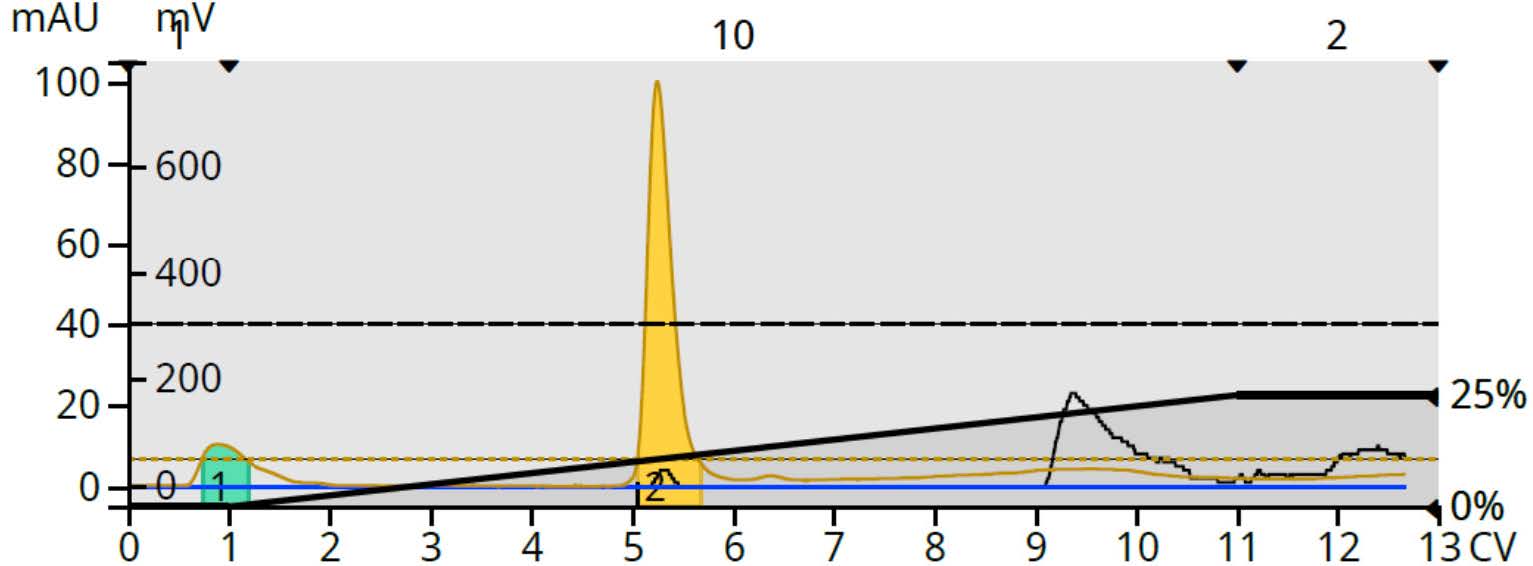 Figure 3. Normal phase flash chromatography of the reaction mixture using both UV and ELS detection found and fractionated the reaction product (yellow peak).
Mass analysis of fraction 2 verified it was the desired product, Figure 4.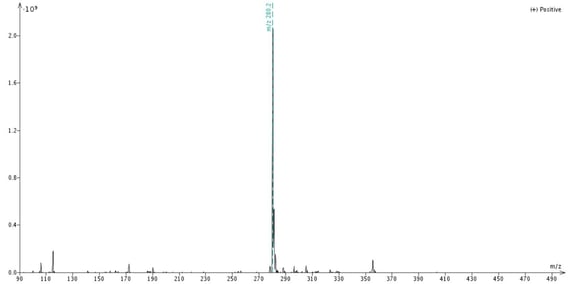 Figure 4. Mass analysis of the purified reaction product.
Conclusions
Many aromatic compounds exhibit their strongest UV light absorption at wavelengths below 254 nm, as observed in this case. The UV detection of the compounds in the reaction mixture was masked by the stronger UV absorption of ethyl acetate, which absorbs UV within the range of 220 to 252 nm, even with baseline correction. The use of Biotage® Selekt ELSD with the Biotage® Selekt flash system facilitated easy detection and collection of the product in a single fraction tube.
Part Number: AN997
