
 Figure 1: Biotage Syro I automated peptide synthesizer
The potential of non-standard peptides in the search for new pharmaceuticals
The development of pharmaceutical products currently focuses on organic small molecules and proteins (antibodies), but significant problems are associated with both. Organic small molecules can be administered orally, are non-immunotoxic, and can be produced at a relatively low cost, but they can also cause side effects. There has been progress in developing protein drugs, but the administration of protein drugs and their high production cost have prevented their widespread use as pharmaceuticals.
To address the problems of incorporating non standard amino acids into growing peptide chains, Prof. Hiroaki Suga at RCAST, University of Tokyo, developed the RaPID synthesis technology for producing non-standard peptides. RaPID is based on his ground-breaking Flexizyme technology that enables the insertion of non-natural amino acids into polypeptide chains using a cell-free translation system. The Suga Laboratory is now conducting joint research with industry into developing non-standard peptidic compounds based on the RaPID synthesis technology, and is making significant progress in constructing libraries of non-standard peptides. Up to now, constructing such libraries was considered difficult.
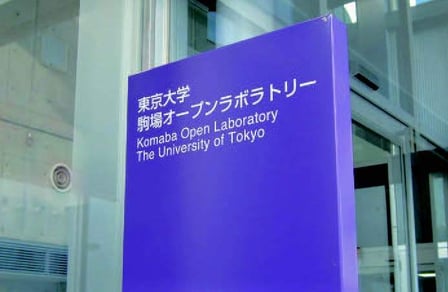
Figure 2: Professor Suga’s laboratory is located in the Komaba open Laboratory, University of Tokyo.
Prof. Suga notes that there is interest in using non-standard peptides that have relatively low molecular weight and low production costs as next-generation replacements for protein agents, including antibodies. He says that using the Flexizyme and RaPID synthesis technologies in joint research with industry can significantly advance the development of non-standard peptide agents.
Flexible synthesis scale: Ideal for non-standard peptide synthesis
Prof. Suga says one reason for selecting the Syro I peptide synthesizer was the ability to synthesize small quantities of many different peptides on a flexible scale. In particular, for the non-standard peptides obtained using the RaPID synthesis technology, a certain degree of scale-up is necessary. Therefore, a flexible, adjustable-scale synthesizer is essential.
In its standard configuration, the Syro I is equipped with a reactor block that can use 2, 5, or 10 mL reactor vessels. It is also able to synthesize on an even smaller scale with the
optional Tip Synthesis. Selecting the right reactor vessel size for a specific need enables low-waste peptide synthesis, and synthesizing the exact quantity required can help reduce the environmental impact of peptide research. Researchers using the Syro I peptide synthesizer report reduced reagent consumption and solvent waste, and also lowered running costs. They also express their trust in the stability and durability of the Syro I. The Suga Laboratory researchers note that they were only able to synthesize 100 peptides in three years with their previous synthesizer, but have already synthesized more than 100 peptides in the first three months following adoption of the Syro I. These researchers intend to synthesize up to 100 peptides per month in the future.
The Syro I, with its ability to efficiently synthesize small quantities of a large number of peptides, is the ideal peptide synthesizer for non-standard peptides and other compounds resulting from advanced peptide research.
Ease of use and excellent customer support makes peptide synthesis a pleasure
Researchers who use the Syro I appreciate its ease of operation. They speak highly of the Syro I, noting that reagent and reactor vessel setup is smooth and easy, and that the software is easy to understand. They also express surprise at the high accuracy of Syro I pipetting, as well as the exact match between calculated and actual reagent quantities.
Moreover, Biotage customer support is highly rated with Japanese researchers, and they appreciate the ease and convenience of being able to ask questions in Japanese over the phone when they need help understanding how to operate the Syro I. However, using the Syro I will soon be even easier. Biotage Japan prepared a simplified operations manual based on actual peptide syntheses to complement the detailed Syro I manual. With this manual, users can familiarize themselves with the operation, including application of the basics in about a week. Biotage supports researchers so that they can concentrate on their original studies by working to improve the usability of Syro I.
Biotage is committed to continuing its support of on-site research efforts for advanced peptide synthesis with the Syro I.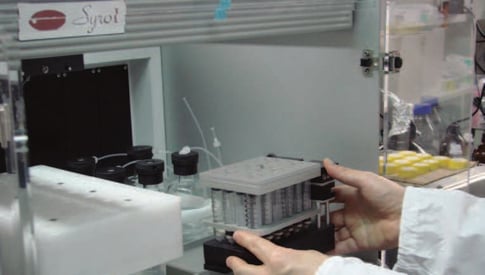
Figure 3: Fully Automated Parallel Peptide Synthesizer Syro I
Fully automated computer controlled peptide synthesizer based on a one arm pipetting robot. Syro I is equipped with one type-U reactor block that can accept 2, 5 and 10 mL reactors. A variable vortexer guarantees an optimal mixing of the reactants.
Figure 4: Suga Laboratory RCAST, University of Tokyo
The Suga Laboratory combines two disciplines. It actively applies the ideas and technologies of chemistry to those of biology in order to tackle problems unable to be solved using the ideas and technologies of either discipline alone. It also keeps a balance between science and technology. Scientific findings from the Suga Laboratory are driving new developments in biotechnology and drug discovery. The scientists in the Suga Laboratory are committed to learning through their research and to developing into highly creative, internationally-minded individuals.
Literature number: PPS633
