
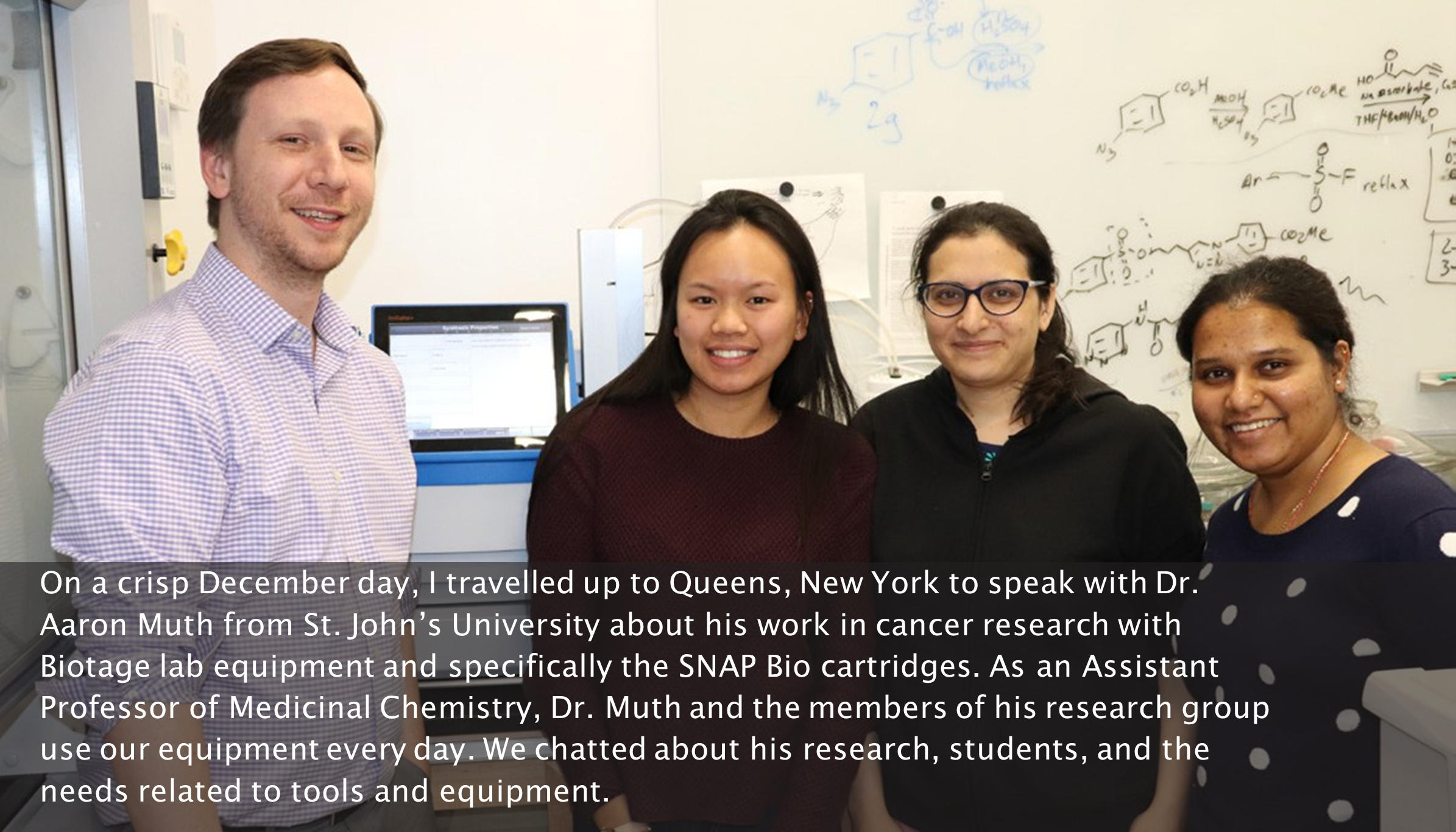
Figure 1: Dr. Muth together with some of his graduate students, from left to right, Pamela Farrales (2nd year Master’s student in Pharamcology), Dipti Kanabar (2nd year Master’s student in Medicinal Chemistry), and Tejashri Chavan (1st year Ph.D. student in Medicinal Chemistry).
Not Pictured: Abbas Kabir (2nd year Ph.D. student in Pharmacology) and Daniel Juang (2nd year Master’s student in chemistry)
Can you describe your current area of research?
“That’s a dangerous question to ask a professor, we could talk about it for hours. We are interested in developing small molecules that can be used in the treatment of certain cancers. Specifically, we are looking at specific protein-protein interactions, which control cell growth, proliferation, metastasis, all things cancer related. We aim to synthesize small molecules that prevent those proteins from physically coming into contact with each other, shutting down that biochemical pathway and inhibiting cancer cell growth. We do that from a small molecule standpoint and from a peptide standpoint, by designing and synthesizing peptides that mimic the surface of a specific protein, ultimately preventing another protein from binding.
Beyond that, we look at not only treating the disease, but at chemical tools to help us better understand and study that particular disease. So it might not always be about curing that disease, but also finding more information about the underlying biology behind the disease.”
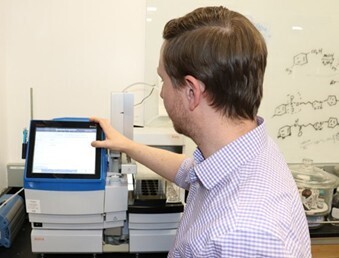
Figure 2: Biotage® Initiator+ Alstra™ has become the go-to synthesizer for peptides in the lab of Dr. Muth.
You have Biotage flash platforms as well as peptide synthesizers on your bench. What drove your decision-making and what was your most important priority?
“Mostly by word-of-mouth. I had already heard about others’ experience with the Biotage Isolera so I knew we needed to get one of those in the lab. We were updating the labs and the Isolera was one of the first things I requested. I knew it was easy to use and would be great for purifying our lengthy peptides. After that, we discussed adding the Initiator+ Alstra to complement the Isolera. What a huge difference from using manual processes, it’s so much more productive.”
How has your workflow been impacted by these tools?
“The ease of use and the throughput played a big role. When I first got here I didn’t have any graduate students in my lab, so I was training a group of undergraduates. They only have these small blocks of time where they can come in and contribute.
They were fantastic, but time was a big factor. The thought was ‘how can I take a two hour purification using old-school chromatography, and shorten it?’ By using the Biotage Isolera, I could take it down to 10 or 15 minutes, which is great for the time that students are able to give me. They would be able to set up a peptide and let it run overnight, and also perform purifications in the allotted time. Now that I have graduate students in the lab, it has made their life a lot easier, their productivity is a lot better, and they are happier. They can make more peptides more quickly and find something that works for their research, rather than crossing their fingers, saying a silent prayer and hoping the one they make over the next month works out. Instead, they can make a bunch of peptides, which is extremely helpful for them.”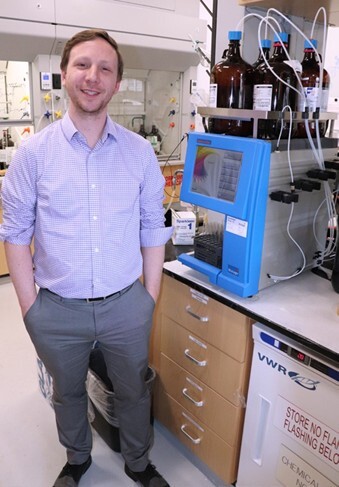
Figure 3: Dr. Aaron Muth next to his Isolera™ One flash chromatography system.
How did you determine to use a high performance flash platform instead of the more common HPLC system? Also, how did you determine which columns to use?
“We didn’t want to reinvent the wheel. I wanted to use the products that are created by the company that makes our equipment. Once I knew I wanted to use Biotage cartridges, it was just a matter of testing out the different types until we realized SNAP Bio was the one for our projects.
Using flash chromatography for peptide purification is a new approach to me. It took some time to learn how to address our project’s needs, and then to configure the Isolera and SNAP Bio cartridges to properly preform the separation we needed. However, a little learning curve is a great teaching tool for students. We also took advantage of Elizabeth Denton’s [Applications chemist at Biotage] webinars and blogs. I started watching and reading a lot of those, and while it did not give us the direct answer right away, I able to narrow things down like what gradient to use. It probably reduced the time to get productive from a month of figuring it out, to maybe a few days or a week. I spoke with Elizabeth, who is fantastic, and she helped us out a great deal in the beginning.”
How often are you using Biotage equipment in your day-to-day activities?
“Every day.”
In a university setting, how do you work with students in your research and specifically with Biotage products?
“Dipti (see photo on page 1) and I were both here for the Isolera training, and I was able to teach her how to use the Initiator+ Alstra, and then between the two of us we teach the other students. Luckily, since they’re both easy to use, it doesn’t take the students long to learn how to use the equipment.”
We looked on your website and noticed a lot of your publications. Have any of those been using our products?
“We’re hoping to submit a publication in the spring/summer time-frame where Dipti used normal phase with the Isolera in her research. She was able to double-up and use the Isolera and manual columns to increase her productivity on her research. Pamela was then able to evaluate these compounds to determine their bioactivity. ”
What is next on your wish list for enable further efficiency gains and general success with your research projects?
“Easy, a Biotage V-10 Touch Evaporator. And then maybe another Isolera.”
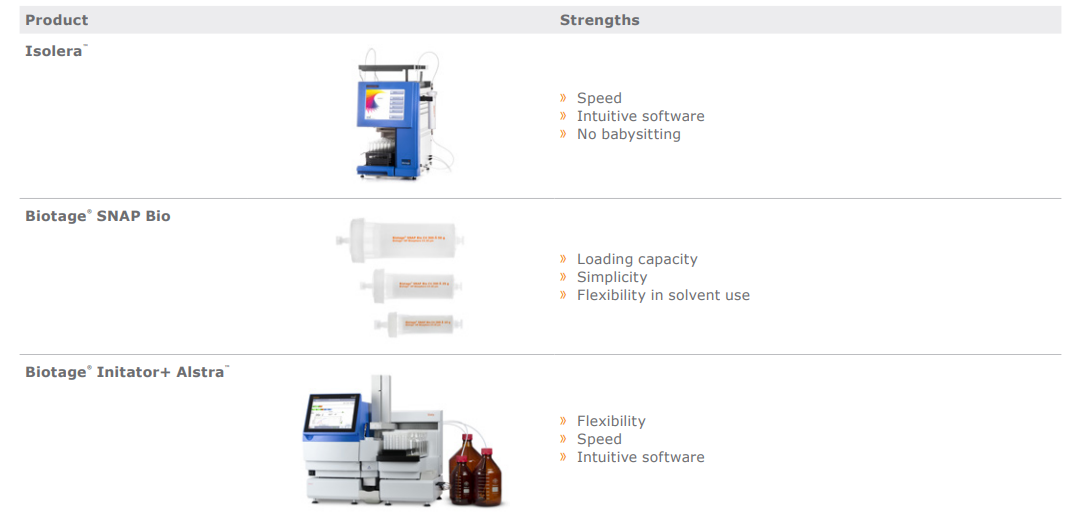
Dr. Muth’s guide to the strengths of Biotage products
Literature number: PPS57
