
Summary
Unbiased screening technologies have opened the door to expanded repertoires of peptides that can quickly and easily be screened in early lead identification programs, making this a much more attractive modality in a drug discovery pipeline. Once hit compounds are identified in the preliminary screen, secondary peptide synthesis for validation and preliminary structure-activity relationship (SAR) characterization is readily achieved with high- throughput automated peptide synthesis platforms. However, traditional downstream processing approaches introduce a variety of bottlenecks that slow delivery of the compound library for evaluation in downstream assays. An alternative strategy, Solid Phase Extraction (SPE), can be used to increase the purity of crude peptide libraries to an acceptable level for preliminary activity assays with predictable recovery behavior in an expeditious, parallel and automated manner. When combined, automated high throughput synthesis and SPE-based cleanup enable the most efficient peptide library delivery for downstream evaluation.
Peptide therapeutics coming to the forefront of discovery programs
Chemists focused on identifying new compounds for therapeutic effect have never in history had more options of compound modalities to choose from. Improvements in
screening technologies have enabled unbiased production of millions of compounds for preliminary biological evaluation, improving the initial hit identification process and expanding the possible chemical space in which to explore. Peptide modalities have principally benefitted from the screening technology improvements, leading to the discovery of multiple, orally bioavailable peptide therapies advancing though clinical trials.1,2
The ability to preliminarily screen millions of compounds generally improve both the rate and quality of hits identified. With peptides as the therapeutic modality of choice though, the medicinal chemistry efforts required to generate an SAR library of compounds for secondary screening/validation is significant. Unfortunately, the existing workflows designed to produce, manage, and evaluate hundreds of thousands of peptides have not yet been fully optimized for efficiency.
As peptide chemists, we are most often trained that high purity is required for any compounds tested in a biological assay. As a result, HPLC purification is often the default approach. However, this comes at an extreme cost in terms of time, solvent usage, and waste generated that is unnecessary in most cases. To avoid this significant bottleneck and slowing of a discovery program, crude compound testing has become more mainstream. While this eliminates the significant purification bottleneck, the wide variety of impurities in crude samples can dramatically affect subsequent assay results – potentially leading to false positives as well as false negatives. Although there are procedures in place to protect against false negatives, false positives can lead to wasted efforts in subsequent lead optimization.
Small scale production using high throughput synthesizer configurations offers opportunities for maximal chemical diver- sity while minimizing reagent consumption before compounds are subjected to a qualitative, comparative assay. Fortunately, these assays typically require moderate sample purity to characterize deviations in efficacy from the parent compound, Table 1.
Table 1. Recommended compound purity for typical assays.3
|
Minimum Purity |
Application |
|
Crude (>60%) |
• Initial screening |
|
• Sequence optimization |
|
|
• Qualitative target binding experiments |
|
|
• Mutation screening |
|
|
Immuno grade (>75%) |
• Peptide arrays |
|
• Polyclonal antibody production |
|
|
• Antigens for affinity purification |
|
|
Biochemistry grade (>85%) |
• in vitro biological assays |
|
• Semi-quantitative enzymatic activity |
|
|
• Coupling to resins for affinity chromatography |
|
|
High Purity (>95%) |
• in vitro bioassays |
|
• Quantitative binding studies |
|
|
• Quantitative inhibition studies |
|
|
Industrial grade (>99%) |
• GMP peptides for drug studies |
|
• Clinical trials |
|
|
• Cosmetic peptides |
With the shortcomings and associated bottlenecks of the current peptide library production protocols, there is an opportunity for alternative technologies that can provide the requisite peptide libraries with sufficient quantity and purity for downstream assays. Partnering a new capability with automated high throughput parallel peptide synthesis in a single format simplifies readying samples for biological evaluation. Ultimately, standardizing on a single configuration for automated synthesis, simultaneous isolation, and parallel purification for peptide libraries, dramatically reduces the manual efforts required for chemists during the early discovery programs and makes peptides a more attractive therapeutic modality.
We describe herein an advanced, single format workflow for peptide library synthesis, isolation and purification designed thoughtfully and intentionally to facilitate rapid delivery of milli- gram quantities of high purity compounds for assay evaluation.
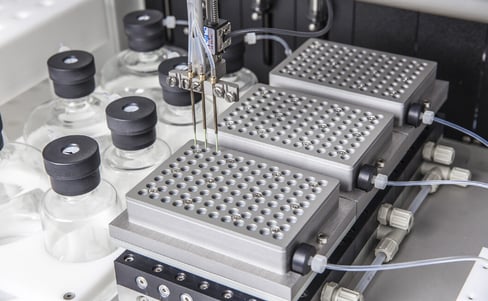 Syro II parallel peptide synthesizer. Configured with optional Tip Synthesis reactor blocks and inert gas.
Improving high-throughput peptide library synthesis
Despite the bottlenecks created by various purification strategies, a high-quality synthetic strategy can also be of immense value. High-throughput peptide synthesis is often perceived to require plate- or tip-based formats. While commercially avail- able automated peptide synthesizers exist that are compatible with these formats, synthesis success can be limited due to reduced mixing and heating efficiency. To facilitate synthesis success under these mechanical constraints, double coupling and amino acid pre-activation are typically required, which together dramatically increases synthesis time and reagent consumption.
The frequency and diversity of unnatural amino acids incorpo- rated into therapeutic peptide libraries continues to increase which often decreases in crude purity and yield. Biotage® have developed a solution that enables both high yielding and high purity synthesis results while maintaining high-throughput capabilities and reducing overall reagent consumption.
To demonstrate this utility, a 96-compound scanning library based on an 18 amino acid parent “hit” peptide sequence was synthesized using several different synthesis strategies and instrument configurations, Table 2.
These data demonstrate that small scale library synthesis using active mixing and heated coupling reactions, even without optimization, generated the highest average crude purity and consumed the least amount of reagents with the shortest synthesis time, Figure 1.
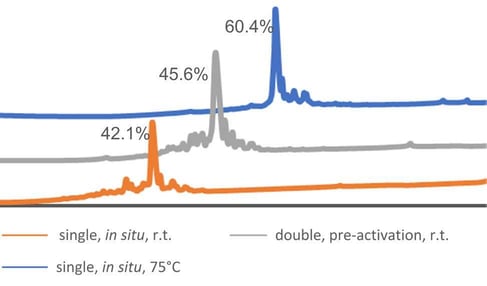
Figure 1. Representative chromatograms for a single library member synthesized using each of the three described conditions above.
Table 2. Crude synthesis purity and system configuration parameters for high-throughput peptide synthesis conducted at 5 μmol scale using standard peptide workflow strategies.
|
Synthesis strategy |
Reactor vial type |
Resin amount (mg) |
Synthesis time (h) |
Total system solvent required (mL) |
Average Library crude purity (UV, total AUC) |
|
Single coupling, in situ activation, r.t. |
Tip, 0.4 mL |
8 |
34.6 |
2865.2 |
44.4 ± 8.5% |
|
Double coupling, pre- activation, r.t. |
Tip, 0.4 mL |
8 |
56.6 |
4785.4 |
54.6 ± 8.8 |
|
Single coupling, in situ activation, 75°C |
2 mL |
8 |
32.1 |
2641.5 |
59.03 ± 13.2% |
As expected, the library synthesized using single couplings, in situ amino acid activation and no active mixing produced the lowest average library purity. Importantly though, the decline in crude purity was not as dramatic as one may have predicted under this type of synthesis conditions. Given the significant time and solvent savings using this strategy, some research programs could view this as a viable synthesis approach.
While this library is principally composed of peptides that contain only natural amino acids, four members of the library contained an aminoisobutyric acid (Aib) substitution for the native Ala residue(s). This unnatural amino acid, while commonly incorporated into therapeutic peptides, is often associated with low yielding coupling reactions and low crude purities. This is exemplified in Table 3, where the crude purity of these individual peptides is specifically highlighted.
Table 3. Crude purity comparison for library sequences that contain Aib
(X) substitutions.
|
Tip reactor, single coupling, in situ activation |
Tip reactor, double coupling, pre-activation |
Fritted column reactor, single coupling, in situ activation, heated |
|
|
DWLKXFYDKVXEKLQEXF |
24.06 |
51.86 |
71.8 |
|
DWLKXFYDKVAEKLQEAF |
23.75 |
47.04 |
70.37 |
|
DWLKAFYDKVXEKLQEAF |
19.25 |
66.45 |
64.8 |
|
DWLKAFYDKVAEKLQEXF |
50.39 |
63.45 |
73.8 |
It is well established that heating the coupling reaction improves crude peptide purity, but it has become even more critical as the diversity of amino acids being incorporated into peptides has expanded. These library members highlight the significant synthetic improvements that can be achieved by leveraging simple operational changes to the instrumentation that can be readily translated to peptides containing other unnatural amino acids. Unnatural amino acids are often associated with greater cost, so achieving acceptable crude purity for downstream assays while simultaneously minimizing amino acid consumption is critical for an efficient and successful validation and SAR program.
Efficiency improvements beyond general synthesis strategies
While the actual synthesis of peptide library production is largely automated, the initial preparation and post-synthesis handling steps require significant manual efforts. There are several resin transfer methodologies commonly used to transfer resin from bulk storage into reactor vials. Individually weighing dry resin into each reactor vial is obvious, but also the most time-consuming method which can also lead to anomalous synthesis outcomes due to differences in resin weight per reactor vial. This becomes a substantial issue when considering the setup of potentially hundreds of reactor vials. A moderately more efficient strategy involves suspending the resin in a solvent, or combination of solvents, and then volumetrically transfer the resin suspension into each reactor vial. While significantly faster than the previously mentioned method, this strategy can result in significant reactor vial variability if the resin is not evenly suspended in the solvent.
Biotage® have recognized this step as a significant time investment required for setting up a high throughput synthesis run and developed the most efficient method though enables resin transfer into 96 reactor vials simultaneously. With a range of resin loading accessories, resin transfer in preparation for a library synthesis across a wide scale range (~1 μmol up to ~25 μmol) and minimal variation across each reactor vial position, is now possible in minutes, Figure 2.
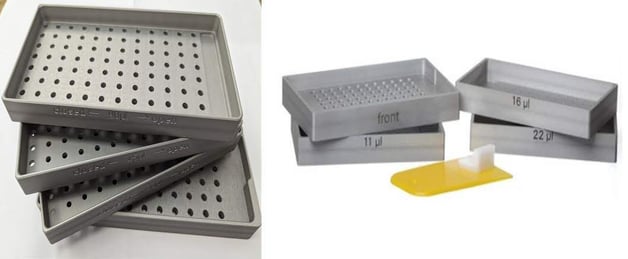
Figure 2. Resin loading tools for 96 x 2 mL heating blocks (left) and 0.4 mL Tip reactor vials (right).
Once the synthesis is completed, a similar issue presents itself – how to safely manage, annotate, and inventory each of potentially hundreds of reactor vials and the corresponding collection vessels that will contain the cleaved peptide solution. Complementary Syro system accessories have been developed that safely allow the transfer of the cleaved peptide solution into a series of collection vessels in minutes, Figure 3.
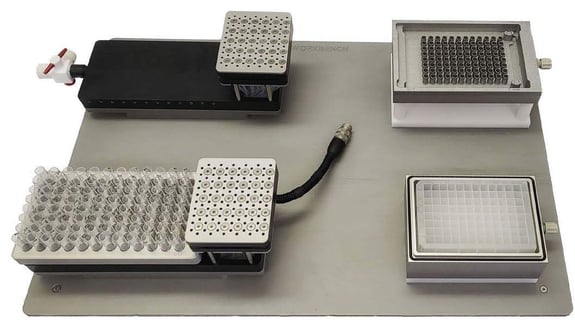
Figure 3. Cleavage transfer unit enabling simultaneous transfer of 96 peptides synthesized in 2 mL reactor vials into a 96 position deep well plate for post-synthesis handling.
Depending on the scale of synthesis and reactor block configuration, the collection vessel can even be a 96-well plate, further simplifying peptide library handling for downstream evaluation. Most importantly though, the collection vessel is designed such that the position of each peptide remains consistent with the position of the synthesis position on the reactor block. Keeping these two components aligned facilitates straightforward management of the new vessels that contain the peptide solution.
Improving peptide library purity in parallel
High-throughput library synthesis is most often required in early stages of the drug discovery process – validating hits identified in the initial screening efforts but will also include some preliminary SAR efforts. Under these conditions, peptide library members are simply being evaluated in a comparative manner with respect to the initial hit compound which minimizes assay repetitions and peptide quantity requirements. Minimizing these requirements for final product (and thereby solvent consumption) is critical at this stage, given that most compounds produced will fail to meet the improvement standard set forth to move forward in the program. Importantly, the assays used at this phase of the discovery pipeline require lower purity than functional assays utilized further into the discovery pipeline.
Considering the lower purity requirements, sequential HPLC-based purification is not an appealing workflow option for multiple reasons. Using HPLC to purify hundreds of compounds sequentially comes with substantial cost and creates a bottleneck for delivery of peptide libraries to downstream assays. In a time when companies are closely monitoring the volume of organic solvent consumed during their medicinal chemistry efforts, the seemingly unnecessary and massive amount of acetonitrile required for these purifications can now be called into question. As a result of these issues, many teams screen their peptide libraries as crude sample mixtures instead. As peptide complexities have evolved, so have the crude sample mixtures; becoming more complex and often containing additional reagents that now need to be removed from the solution before proceeding with downstream assays, especially at small scale, demanding new technologies that can maintain a plate-based format and improve sample purity while minimizing time and solvent consumption.
Alternative purification strategies already exist in formats enabling automated, parallel, and plate-based compound handling that can be employed to remove the above-mentioned sample impurities. Solid Phase Extraction (SPE), Figure 4, is one such technique commonly used in analytical laboratories while treating complex biological samples prior to LCMS evaluation.
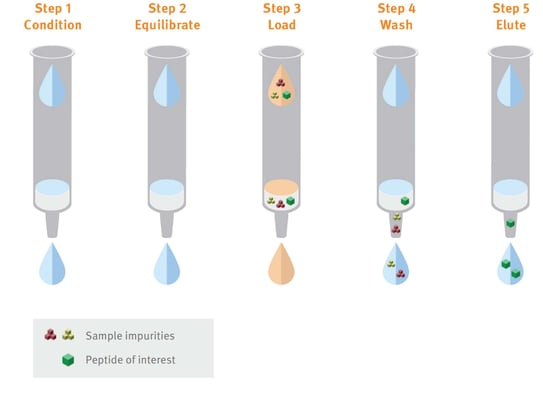 Figure 4. Generic scheme detailing the basic principles of SPE purification methods.
Groups facing small scale high-through put synthesis efforts have recently reported SPE as a strategy to improve the purity of crude synthetic peptide samples, demonstrating the viability of this technique.4,5
When considering an alternative strategy to improve plate- based library purity, especially one that will be automated, there are two critical variables that must be satisfied:
- Predictability of compound elution
- Sample recovery
To recognize the time savings of a parallel process when compared to sequential HPLC-based purification, the technique must behave with a peptide library in a predictable manner. All time savings will be lost if multiple collection plates require analysis to first locate each compound in the library, to be followed by fraction consolidation into a single assay evaluation plate. Additionally, the entire sample should be eluted from the sorbent in a single treatment to maximize recovery. This reduces the evaporation time demands and, more importantly, the need to combine samples from multiple plates back into a single plate for general handling.
It is well established that media parameters, specifically particle and pore size, impact purification efficiency regard- less of the purification strategy employed. To address these
demands, and those imposed by synthetic compound libraries (mg loading amounts) rather than traditional analytical samples (ng-μg loading amounts), Biotage evaluated multiple commer- cially available sorbents with several purified and crude peptide samples, Table 4.
Table 4. Comparison of sorbents evaluated for peptide clean up using SPE.
|
|
PeptiRen-96 C18 |
Wide-pore C18 |
“Standard” SPE C18 |
|
Particle size, μm |
30 |
20 |
50 |
|
Pore size, Å |
100 |
300 |
60 |
|
Bed mass, mg |
500 |
500 |
100 |
Different peptides, varying primarily in size, were utilized during the sorbent evaluation. The peptides all behave similarly chromatographically, eluting from a C18 HPLC column with similar concentrations of acetonitrile. This type of comparison distinguishes observed differences in behavior to the media itself, rather than the peptides, Figure 5.
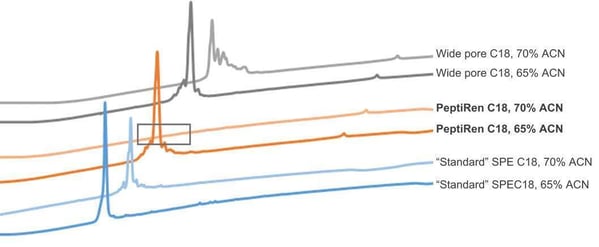
Figure 5. Representative chromatograms generated during the comparison of elution efficiency for an 18 amino acid peptide applied to each of three commercially available SPE C18 medias. Only PeptiRen C18 eluted the sample fully at the desired treatment condition (black box).
These data demonstrate that judicious sorbent selection is required to successfully implement an automated SPE purification workflow for synthetic peptide libraries. Biotage® PeptiRen-96 C18 media is the only media that enables reliable and complete (>85% sample recovery on average) elution of a single peptide sample using an optimized automated SPE protocol. This behavior is reproducible across multiple plate positions, Figure 6, and has been confirmed at multiple sample loading levels (data not shown) as well as entire peptide libraries.
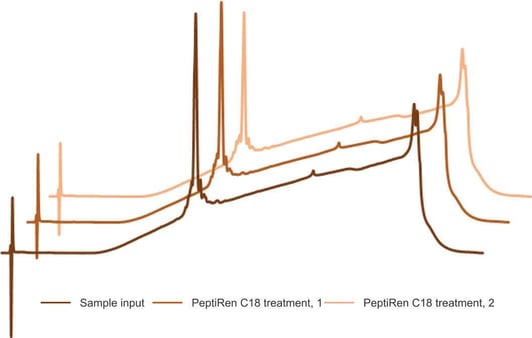
Figure 6. Compounds are eluted completely and reproducibly from PeptiRen-96 C18 media. A minimum of 80% recovery of the initial sample load is typically observed.
Method optimization to automate library clean-up of a 96-well plate of different compounds requires a broad chromatographic approach to achieve the above mentioned goals. There are multiple steps during an SPE-based separation, but minimal optimization is required regardless of the properties of the peptide library. The elution step, specifically the concentration of acetonitrile selected, requires the most optimization during method development when applying this strategy to a library of peptides. This step should utilize a mobile phase acetonitrile concentration high enough to elute all library members from the media, but not so high that any residual protecting groups are also eluted. This “sweet spot” acetonitrile concentration was determined to be 70% ACN(aq) experimentally when using TFA modified solvent systems.
The purity of peptides subjected to PeptiRen-96 C18 SPE clean up are as pure or slightly purer than those just simply ether precipitated, Figure 7.
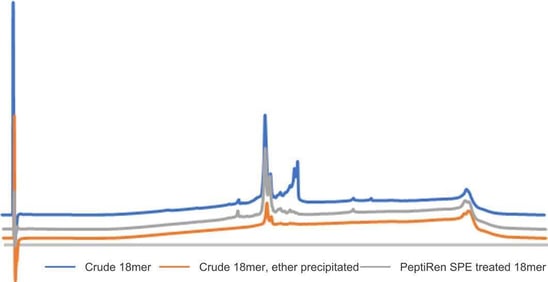
Figure 7. Representative chromatogram of a hydrophobic 18 amino acid peptide demonstrating efficacy of SPE cleanup when compared to ether precipitation.
Performing ether precipitation in plate format is a much more onerous task than when performed on larger scale. Due to volume limitations in the plate containing the cleaved peptides, the cleavage cocktail must be concentrated prior to ether addition, adding an additional step to the workflow. Once precipitated the ether supernatant must be aspirated manually rather than just decanted as with a larger peptide pellet. With the well-defined boundary separating peptidic sample components from protecting groups and scavengers in hand, eliminating ether precipitation as a component of the workflow can be readily implemented.
The utility of this technology is demonstrated with a 96-compound library of peptides based on an 18 amino acid parent sequence. The library was generated by performing single amino acid substitutions with Ala, Glu, Lys, Trp and Ile at every position across the native sequence. Additionally, each of the three native Ala residues were replaced with Aib, both individually and then simultaneously to round out the library. The information presented in Table 5 highlights the dynamic range for specified physiochemical properties that a single amino acid substitution can cause relative to a native peptide sequence. It also informs the SPE method design – specifically the ACN concentration selected for wash and elution steps. Much of this information can be determined theoretically based on the sequence of the peptide, reducing the demand for crude library analysis.6,7,8,9
Table 5. Range of physicochemical properties that contribute to chromatographic behavior for a scanning peptide library based on the parent sequence DWLKAFYDKVAEKLQEAF-NH2.
|
|
Minimum |
Maximum |
|
ACN elution concentration |
33% |
56% |
|
cLogP |
-6.06 |
-5.1 |
|
Isoelectric point |
4.18 |
8.38 |
If an HPLC purification approach were selected, this library would require over 56 hours (35 min per peptide), consuming greater than 50 L of mobile phase to purify. Comparatively, the automated purification of 96 compounds simultaneously using the Biotage® Extrahera™-Peptide equipped with PeptiRen-96 C18 well plates required approximately 90 minutes, consuming 1 liter of total mobile phase solvent and improved the average library purity from 36.5% (±11.2%) to 54.5% (±13.4%), mirroring the purity achieved by incorporating an ether precipitation step in the production workflow, Figure 8.
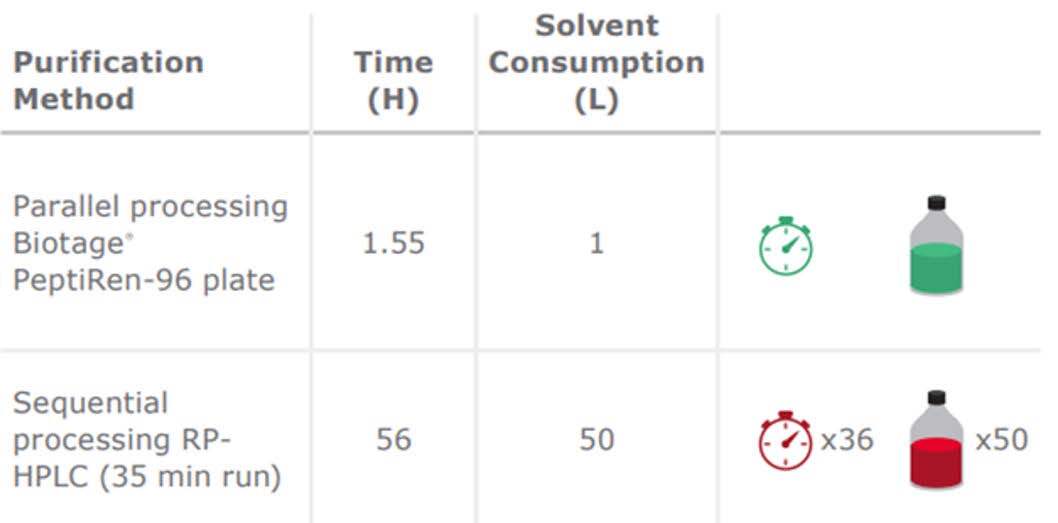
Figure 8. Comparison of purification options for peptide libraries
Importantly, no peptides were eluted prematurely, despite an intervening wash step and all peptides were eluted completely in the desired fraction. By incorporating an automated SPE cleanup step after synthesis, improving the purity of a 96-compound library can be achieved with a 98% solvent savings compared to HPLC purification. Additional time and solvent savings are also realized by eliminating ether precipitation from the workflow, improving the safety profile of peptide library production.
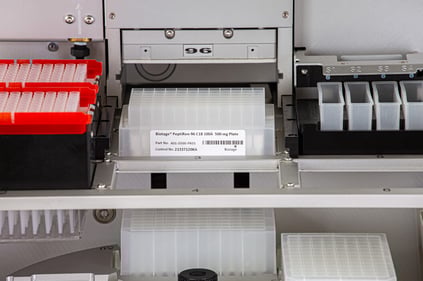 Biotage® Extrahera™- Peptide equipped with PeptiRen-96 C18 plate
Biotage® Solutions enable efficient peptide library delivery
Plate based strategies have long been employed to simplify handling, evaluating, and documenting small molecule compounds in early-stage discovery programs during the design-make-test cycle. Ideally these workflows would be emulated for peptidic modalities. Combining the individual Biotage® technologies into a single compound handling workflow as described herein, a truly efficient peptide discovery machine expedites the delivery of a vast number of compounds, in a format readily transferable to downstream assays for evaluation, Figure 9.
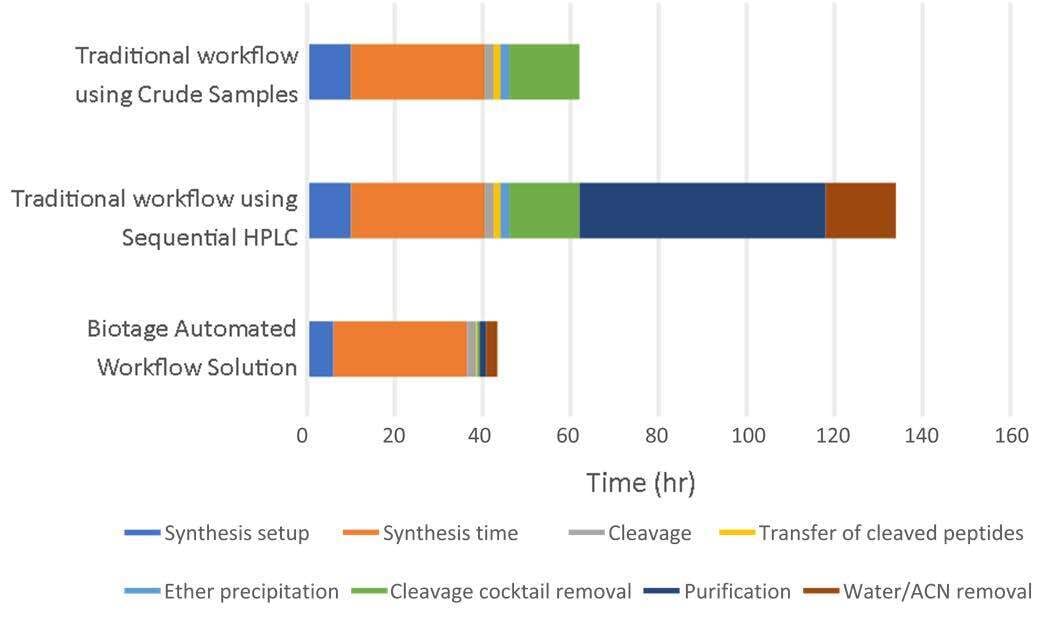
Figure 9. Timeline to prepare 96 compounds with the Biotage® peptide library workflow tools compared to traditional methods. Compounds were purified sequentially using a 35 min optimized HPLC gradient or in parallel using automated SPE.
Even with standardizing on a single synthesis strategy, this data demonstrates that peptide library delivery times can be significantly improved by incorporating pre- and post-synthesis compound handling accessories, eliminating ether precipitation, and incorporating an SPE-based purification strategy into the library workflow.
Conclusion
A highly efficient and practical compound delivery workflow is very much sought after for companies engaged in drug discovery. Ideally, the platforms of choice minimize reagent consumption, both for synthesis and purification, while simultaneously enabling timely delivery of compounds for downstream assay evaluation. The parallel workflow described herein utilizes automation purposefully designed for peptide library discovery programs as follows:
- The Syro family of parallel peptide synthesizers provide optimized heating and mixing capabilities resulting in highly pure crude peptide libraries.
- The Syro accessories provide a simplified and organized pre- and post-synthesis peptide handling process compatible with 96-well format requiring minimal human intervention.
- Biotage® Extrahera™-Peptide allows for fully automated, plate-based purification strategies that take advantage of optimized SPE protocols that, when combined with PeptiRen-96 C18, will generate libraries with improved purity, eliminating the need for arduous plate-based ether precipitation.
When utilized together, these tools make up the backbone of a truly efficient peptide library discovery program.
References
- Tucker, T.J. et al. J. Med. Chem. 2021, 64, 16770-16800.
- Brousseau, M.E. et al. Cell Chem. Bio. 2022, 29, 249-258.
- Recommended Peptide Purity Guidelines (genscript.com)
- Cepeda, D.S.I. et al. Molecules 2019, 24, 1215-1223.
- Bennet, R. et al. Anal. Chim. Acta 2021, 1142, 10-18.
- Muroz, L.; Käll, L. Mass Spectrometry Reviews 2016, 36, 615-623.
- Bouwmeester, R. et al. Nat. Methods 2021, 18, 1363-1369.
- Guo, D.; Mant, C.; Taneja, A.; Hodges, R. J. Chrom. A. 2001, 359, 519-532.
- Samuelsson, J. et al. J. Chrom. A. 2019, 1598, 92-100.
Literature Number: PPS717
