
Introduction
ISOLUTE® EPH SPE cartridges and associated methodologies have been optimized to efficiently fractionate EPHs into aliphatic and polycyclic aromatic (PAH) fractions (C8–C40 aliphatics, C10–C22 aromatics).
The principle is similar to the approach taken by the Massachusetts Department of Environmental Protection (MADEP) and TPH criteria working group (TPHCWG) methods. However, compared to these methods, the ISOLUTE® EPH fractionation cartridge has been significantly reduced in size and the sorbent has been optimized. This allows an automation- compatible method of fractionation which overcomes the common problem of PAH breakthrough into the aliphatic fraction, in addition to reduced solvent volumes.
This application note describes the operating conditions for the automated fractionation of EPH into aliphatic and PAH fractions using the ISOLUTE® EPH cartridge in conjunction with the Biotage® Extrahera™ automation system.
Application analytes
|
octane |
eicosane |
dotriacontane |
|
decane |
docosane |
tetratriacontane |
|
dodecane |
tetracosane |
hexatriacontane |
|
tetradecane |
hexacosane |
octatriacontane |
|
hexadecane |
octacosane |
tetracontane |
|
octadecane |
triacontane |
|
|
naphthalene |
fluoranthene |
benzo(a)pyrene |
|
acenaphthalene |
pyrene |
indeno(123,c,d)pyrene |
|
acenaphthene |
benz(a)anthracene |
dibenz(ah)anthracene |
|
fluorene |
chrysene |
benzo(ghi)perylene |
|
phenanthrene |
benzo(b)fluoranthene |
|
|
anthracene |
benzo(k)fluoranthene |
Method overview
Soil and water extraction procedures
Any of the MADEP or TPHCWG approved soil or water extraction procedures can be used with the ISOLUTE EPH method.
The only requirements for successful fractionation are that the final solvent containing the extract should be either pentane or hexane. The presence of any polar modifier in the final extract will compromise the fractionation process. For example, if the soil or water sample is extracted using dichloromethane, this solvent must be exchanged for hexane or pentane prior to fractionation. Up to 1 mL soil or water extract in hexane or pentane can be loaded onto the ISOLUTE EPH cartridges.
Sample preparation procedure
Format
ISOLUTE® EPH 1.45g/3 mL, part number 928-0145-B.
Sample
Soil or water extract in hexane or pentane.
Cartridge conditioning
6 mL Hexane (4 x 1.5 mL).
Sample loading
1 mL Hexane or Pentane extract. Collect cartridge eluate.
Aliphatic elution
1.5 mL Hexane. Add to cartridge eluate from load step.
Aromatic elution
4.5 mL DCM (3 x 1.5 mL). Collect in a separate tube to the aliphatic elution.
Post elution
Gently vortex and homogenize both fractions for each sample and transfer 1 mL of each fraction to separate GC vials for analysis
GC conditions
Instrument
Agilent 7890A with QuickSwap
Column
Agilent J&W DB-5, 30 m x 0.25 mm ID x 0.25 μm
Carrier
Helium 1.2 mL/min (constant flow)
Inlet
300 °C, Splitless, purge flow: 50 mL/min at 1.0 min
Injection
2 µL
Wash solvents
Methanol and DCM
Oven temperature
Described in Table below:
|
Aliphatics |
Aromatics |
|---|---|
|
Initial temperature 45 °C, hold for 1 minute |
Initial temperature 45 °C, hold for 1 minute |
|
Ramp 35 °C to 115 °C |
Ramp 10 °C to 350 °C |
|
Ramp 70 °C to 350 °C, hold for 6.5 minutes |
Post run
Backflush for 2.4 minutes (3 void volumes)
Transfer line
300 °C
Mass spectrometry conditions
Instrument
Agilent 5975C
Source
230 °C
Quadrupole
150 °C
MSD mode
SIM
SIM parameters
Ions were acquired in the Selected Ion Monitoring (SIM) mode.
Aliphatic ions acquired: 41, 43, 57, 71, 85
Aromatic ions acquired displayed in Table below:
|
SIM Group |
Analyte |
Target (Quant) Ion |
Target (Quant) Ion 1 |
Target (Quant) Ion 2 |
|
1 |
Naphthalene |
128 |
102 |
126 |
|
2 |
Acenaphthalene |
152 |
76 |
150 |
|
3 |
Acenaphthene |
153 |
76 |
154 |
|
4 |
Fluorene |
166 |
163 |
165 |
|
5 |
Phenanthrene |
178 |
152 |
176 |
|
5 |
Anthracene |
178 |
152 |
176 |
|
6 |
Fluoranthene |
202 |
101 |
200 |
|
6 |
Pyrene |
202 |
101 |
200 |
|
7 |
Benz(a)anthracene |
228 |
113 |
226 |
|
7 |
Chrysene |
228 |
113 |
226 |
|
8 |
Benzo(b)fluoranthene |
252 |
126 |
250 |
|
8 |
Benzo(k)fluoranthene |
252 |
126 |
250 |
|
8 |
Benzo(a)pyrene |
252 |
126 |
250 |
|
9 |
Indeno(123,c,d)pyrene |
276 |
137 |
138 |
|
9 |
Dibenz(a,h)anthracene |
278 |
139 |
|
|
9 |
Benzo(ghi)perylene |
276 |
137 |
138 |
Results
The optimized ISOLUTE® EPH protocol on Biotage® ExtraheraTM provided typical recoveries of EPH in soil as demonstrated in Figures 1 and 2, with RSD values <10% for all analytes.

Figure 1. Chart demonstrating typical recoveries of aliphatic analytes in the hexane fraction
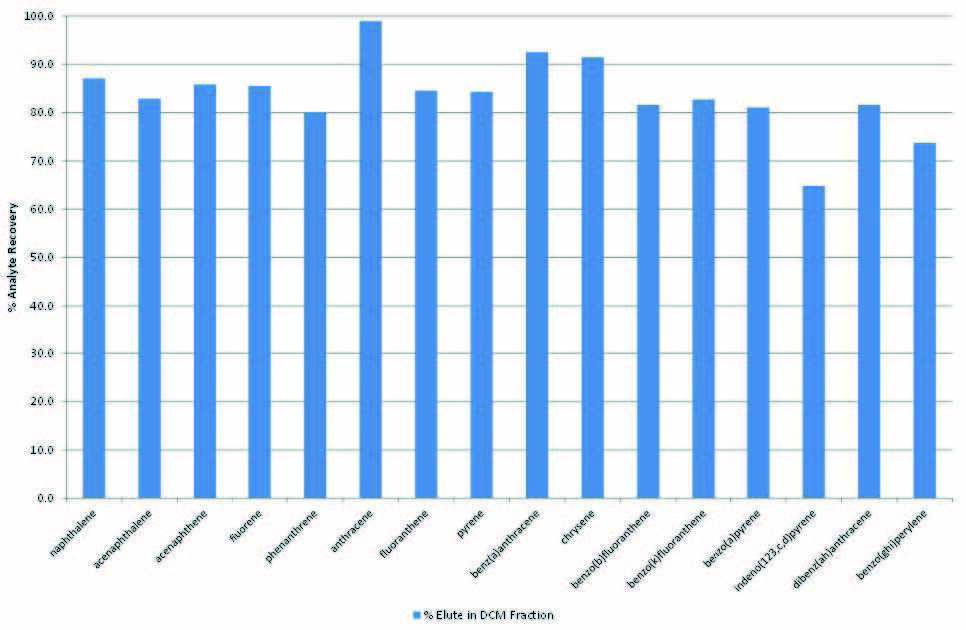
Figure 2. Chart demonstrating typical recoveries of aromatic analytes in the dichloromethane fraction

Figure 3. Total Ion Chromatogram of aliphatic analytes in the hexane fraction.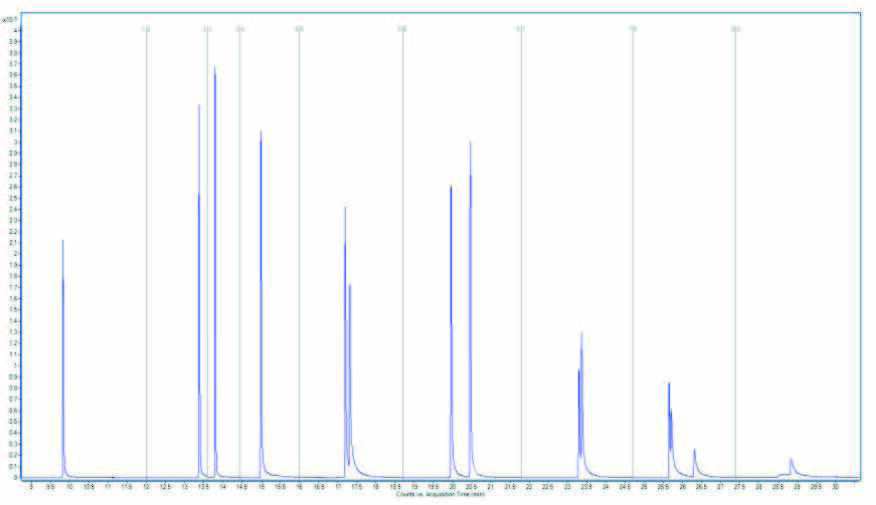
Figure 4. Total Ion Chromatogram of aromatic analytes in the dichloromethane fraction.
Reduction in solvent consumption
ISOLUTE® EPH cartridges allow a significant reduction in solvent consumption compared to the existing MADEP or TPHCWG procedures as is illustrated in the following Table:
|
Method |
Hexane/Pentane (mL) |
Dichloromethane (mL) |
|---|---|---|
|
ISOLUTE EPH |
7.5 mL |
4.5 mL |
|
MADEP |
50 mL |
20 mL |
|
TPHCWG |
32 mL |
30 mL |
Additional information
» All solvents were HPLC grade.
» For fully automated workflow, an additional 12x75mm x 24 position collection rack (part 414511SP) is required to collect separate fractions.
Ordering information
|
Part Number |
Description |
Quantity |
|
928-0145-B |
ISOLUTE® EPH 1.45 g/3 mL |
50 |
|
For Automated Processing |
||
|
414001 |
Biotage® Extrahera |
1 |
|
414008 |
Configuration Kit 24 positions |
1 |
|
414511SP |
Collection Rack 12 x 75 mm, 24 positions |
1 |
Appendix
Biotage® Extrahera™ settings
The method described in this application note was automated on the Biotage® Extrahera™. This appendix contains the software settings required to configure Extrahera to run this method. When two collection racks are present, sample processing and fractionation can be fully automated and 24 samples can be processed in a total of 42 min 30 secs.
Method Name: Hydrocarbon Fractionation by ISOLUTE® EPH 1.45 g/3 mL
Sample Plate/Rack: 12 x 75 mm Test Tubes EPH
Extraction Media: ISOLUTE® EPH 1.45 g/3 mL


Literature number: AN877
