
This application note outlines the extraction of five organophosphate compounds monocrotophos, diazinon, malathion, EPN, and methamidophos using one solid phase extraction method with one pre-treatment step of sodium chloride (NaCl) using Biotage automated or manual SPE solutions and DryVap™* Concentrator System. The first section will highlight the use of the Biotage® Horizon 5000 fully automated extraction system and the method used for this application. Additionally, there will be an Application Modification section that will highlight the use of the Biotage® VacMaster™ Disk for this application.
Introduction
Monocrotophos, diazinon, malathion, EPN, and methamidophos are commonly used pesticides for the control of insects and aquatic pests in rice production, other agricultural production, and fish aquaculture in parts of the world. Methamidophos
in particular is used in great quantities in rice fields in China where rice–fish culture is common as well as in many other rice-producing countries (e.g., Thailand, Malaysia, and the Philippines). Given their prevalent use throughout Asia, residues of monocrotophos, diazinon, malathion, EPN, and methamidophos show up in many food sources and are
commonly monitored in wastewater and drinking water in these regions. As a result, many analytical methodologies have been created to monitor these compounds in the environment.
The traditional extraction methods employed use solid phase extraction (SPE) for monocrotophos, diazinon, malathion, EPN and a separate liquid-liquid extraction (LLE) method for methamidaophos. Methamidophos is problematic to extract in traditional SPE and LLE methodologies due to its extreme hydrophilic nature making exchange into a non-polar solvent or absorption onto a solid phase sorbent very difficult, resulting in extremely low recoveries of this compound. In the separate LLE method it is necessary to add a quantity of salt (NaCl) in order to decrease Metamidophos’s affinity for the water phase making it partition more easily into the organic phase. This technique, Salting-out Liquid-Liquid Extraction (SALLE)1, has been employed for many years when trying to extract extremely hydrophilic polar molecules from aqueous matrices. Extraction of all five of these compounds takes time as two separate extraction methodologies must be used.
*The DryVap™ system has been discontinued. We recommend using the TurboVap® evaporation systems for achieving equivalent results.
Instrumentation
» Biotage® Horizon 5000 Automated Extraction System with OnePass Kit
» Atlantic® HLB-H SPE Disk (47 mm)
» One-Pass Carbon Cartridge Max Detect, 20 cc
» DryVap™ Concentrator System
» DryDisk® Solvent Drying System
Method summary
HLB fraction elution
- Adjust a 1 L aqueous sample to pH 2 with HCl and add 100 grams of NaCl (+ 80 mesh, reagent grade, less than or equal to 98% purity, Sigma-Aldrich), cap the bottle and mix.
- Spike organophosphate pesticide (OPP) Standard mix (100 µg/mL in MeOH) into any control or matrix spike samples.
- Screw sample bottle on to the water inlet valve and place on the Biotage® Horizon 5000.
- Load the disk holder with the Atlantic® HLB-H 47 mm disk and connect the carbon cartridge to the OnePass sample lines, placing it in the perch.
- Place a clean VOA vial or equivalent receiver onto the extractor.
- Start the extraction method detailed in Table 1.
- The software will pause and come up with a message alerting you that the HLB fraction is complete.
- Collect the sample extract (approximately 30 mL).
- Label and cap the flask to indicate that it contains the HLB fraction.
|
Step |
Select Solvent |
Volume (mL) |
Purge (s) |
Vacuum |
Saturate (s) |
Soak (s) |
Drain/ Elute (s) |
Sample Delay (s) |
|
Pause with Message |
Part 1 of 2: Have the HLB-H disk in the 47 mm disk holder with any prefilters. Detach the waste lines from one another and attach the carbon cartridge in-line on the OnePass lines. Press "Continue" to begin part 1. |
|||||||
|
Condition SPE Disk |
Dichloromethane |
15 |
60 |
2 |
1 |
30 |
30 |
|
|
Condition SPE Disk |
Acetone |
11 |
60 |
2 |
1 |
30 |
30 |
|
|
Condition SPE Disk |
Reagent water |
15 |
60 |
2 |
1 |
10 |
4 |
|
|
Condition SPE Disk |
Reagent water |
15 |
60 |
2 |
1 |
10 |
4 |
|
|
Load Sample |
|
|
|
3 |
|
|
|
45 |
|
Air Dry Disk |
|
|
|
6 |
|
|
60 |
|
|
Elute Sample Container |
Acetone |
8 |
15 |
2 |
1 |
180 |
40 |
|
|
Elute Sample Container |
Dichloromethane |
8 |
15 |
2 |
1 |
180 |
40 |
|
|
Elute Sample Container |
Dichloromethane |
8 |
15 |
2 |
1 |
60 |
40 |
|
|
Elute Sample Container |
Dichloromethane |
8 |
15 |
2 |
1 |
60 |
40 |
|
|
Elute Sample Container |
Dichloromethane |
8 |
15 |
2 |
1 |
60 |
120 |
|
|
Pause with Message |
Part 2 of 2: Detach the carbon cartridge and reattach the OnePass lines together. Using the plunger, plunge once to remove the excess water and reseat the frit. Remove the disk holder from the platform and replace it with the cartridge and 20 cc funnel adapter. Press "Continue" to begin part 2. |
|||||||
|
Air Dry Disk |
|
|
|
6 |
|
|
600 |
|
|
Elute Sample Container |
Acetone |
8 |
15 |
2 |
1 |
60 |
0 |
|
|
Elute Sample Container |
Acetone |
8 |
15 |
2 |
1 |
60 |
120 |
|
|
Elute Sample Container |
Dichloromethane |
8 |
15 |
2 |
1 |
60 |
40 |
|
|
Elute Sample Container |
Dichloromethane |
8 |
15 |
2 |
1 |
180 |
40 |
|
|
Elute Sample Container |
Dichloromethane |
8 |
15 |
2 |
1 |
60 |
40 |
|
|
Elute Sample Container |
Dichloromethane |
8 |
15 |
6 |
1 |
60 |
120 |
|
Carbon cartridge elution
- Remove the 47 mm Disk Holder from the Biotage® Horizon 5000.
- Disconnect the lines from the Carbon Cartridge and remove it from the perch.
- Reconnect the lines removed from the Carbon Cartridge.
- Using a 20 cc syringe, plunge the carbon cartridge with air through the cap adapter to reset the carbon bed on the frit.
- Remove the cap from the Carbon Cartridge and install the funnel in its place.
- Install the Carbon Cartridge / funnel assembly onto the Biotage® Horizon 5000.
- Attach a 125 mL flask onto the extractor.
- Selecting each individual station, resume the extraction method to begin the carbon elution phase.
- Label the flask to indicate that it contains the carbon fraction. The extraction is now complete.
* Due to the high salt content, it is necessary to rinse the liquid flow path of the Biotage® Horizon 5000 system to remove the salt residue. This is accomplished by rinsing the flow path with a sample bottle of warm water placed on the Biotage® Horizon 5000 and running the sample drain method on the software, this is followed by running a purge method with reagent water, acetone, and methylene chloride.
Extract concentration
- Assemble the DryDisk® reservoir with a DryDisk® Separation Membrane.
- Load the DryDisk reservoir onto the DryVap™ and set the conditions as detailed in Table.
PARAMETER
SETTING
Dry Volume
20
Heat Power
5
Auto Rinse Mode
OFF
Heat Timer
OFF
Nitrogen Sparge
20 psi
Vacuum
-7 in. Hg
- Start the concentration process by adding the OPP HLB fraction into the DryDisk tube.
- Allow the OPP HLB fraction extract to filter through the DryDisk into the concentration tube.
- Manually rinse the OPP HLB fraction 40 mL VOA vial with methylene chloride adding this to the DryDisk reservoir. Allow the rinse solvent to process through the DryDisk. Do this three times.
- Follow steps 4 and 5 for the carbon fraction. If DryVap™ transitions to heat stage press the stop button on the control panel and then press restart.
- Once the OPP HLB fraction and carbon fractions filter through the DryDisk, manually rinse the DryDisk reservoir with methylene chloride.
- Once the methylene chloride has filtered into the concentration tube, allow the station to transition to the heat stage.
- Concentrate the extract to less than 1.0 mL. For enhanced recoveries of methamidaphos carry out the steps in the optional LLE extraction method following this section.
- Rinse the sides and heater of the concentrator tube with methylene chloride and bring the extract up to a 1.0 mL final volume.
- Transfer the extract to a GC vial.
- Add 5 µg terphenyl-d14 as an internal standard.
- Analyze by GC/MS using the conditions detailed in Table 3.
* Due to the high salt content, it is necessary to thoroughly rinse the sparge tube of the DryVap™ to remove all salt residues. Accomplish this by processing 100 mL of warm water followed by acetone and methylene chloride through the DryDisk tube into the evaporator tube.
Optional LLE Extraction for methamidaphos
- Transfer the retained water from the top of the DryDisk membrane in the previous concentration step to a 40 mL VOA vial (approximately 10 mL)
- Add 2–2.5 grams of NaCl to each vial.
- Add 20 mL of methylene chloride:acetone (80:20) to each vial, cap and shake vigorously.
- Pour the contents into a DryDisk tube and press start on the DryVap™ control panel until all 20 mL of solvent have been pulled through the DryDisk. When all solvent is through and only residual water remains on the DryDisk press the stop bottom on the DryVap™ control panel.
- Transfer the retained water to VOA vial and repeat steps 3, 4, and 5 two more times.
- Manually rinse the DryDisk reservoir with methylene chloride
- Once the methylene chloride has filtered into the concentra- tion tube, allow the station to transition to the heat stage.
- Concentrate the extract to less than 1.0 mL.
- Rinse the sides and heater of the concentrator tube with methylene chloride and bring the extract up to a 1.0 mL final volume.
- Transfer the extract to a GC vial.
- Analyze by GC/MS using the conditions in Table 3.
* Due to the high salt content, it is necessary to thoroughly rinse the sparge tube of the DryVap™ to remove all salt residues. Accomplish this by processing 100 mL of warm water followed by acetone and methylene chloride through the DryDisk tube into the evaporator tube.
|
Parameter |
Setting |
|
Oven |
|
|
Initial Temperature |
60 °C |
|
Initial Time |
2 minutes |
|
Ramps: |
Rate Final Temp Final Time 20.00 270 °C 0.00 6.00 320 °C 2.00 |
|
Run Time |
22.83 minutes |
|
Inlet |
|
|
Mode |
Pulsed Splitless |
|
Initial Temperature |
280 °C |
|
Pressure |
8.24 psi |
|
Pulsed Pressure |
25 psi |
|
Pulsed Time |
1.00 minutes |
|
Purge Flow |
50 mL/min |
|
Purge Time |
2.00 minutes |
|
Mass Spectrometer |
|
|
Acquisition Mode |
SIM |
|
Solvent Delay |
5 minutes |
|
Group 1 |
5–9 minutes, ions 94 and 141 |
|
Group 2 |
9–12 minutes, ions 127, 192, 179, 137, 173, 125 |
|
Group 3 |
12 minutes–end, ions 244, 122, 157, 169 |
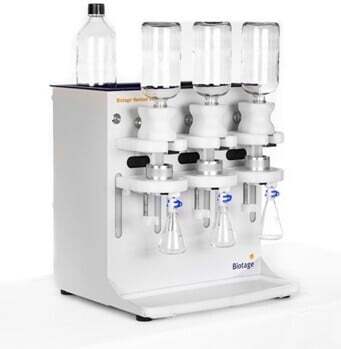
Figure 1: Biotage® Horizon 5000 Automated Extraction System.

Figure 2: DryVap™ Concentrator System.
Acknowledgements
- Ronald E Majors LC GC North America , July 1 2009 Salting-out Liquid-Liquid Extraction (SALLE)
Biotage® VacMaster™ Disk method summary
- Repeat the following steps for each active Biotage® VacMaster Disk station.
- Setup the VacMaster Disk manifolds ensuring all waste lines and vacuum lines are attached. Set the vacuum pump to -24”Hg.
- Prepare the disk holder assembly (47mm): ensure the support screen is flat in the centre of the disk holder. Place the Atlantic® HLB-H Disk on top of the support screen with the ripples of the disk on top and add any prefilters on top of the disk. Place the disk holder assembly on the VacMaster Disk manifold ensuring there is a tight seal with the Luer fitting.
- Detach the water waste one-pass lines from each other. Attach the carbon cartridge cap to the Carbon Cartridge Max Detect, put the carbon cartridge in-line with the water waste line using the one-pass kit lines, and place the cartridge upright to prevent channelling in the carbon media. (Please note: the sample will flow from the bottom of the cartridge to the top of the cartridge and to waste).
- If using the multifunnel, place onto the disk holder assembly. If not using the multifunnel, omit those directions throughout the method.
- Condition the SPE Disk.
- Guide for each conditioning step in Table 4 below:
- Measure the appropriate VOLUME of SOLVENT into a graduated cylinder and pour into the disk holder assembly.
- Using a Nalgene Wash Bottle (phthalate free), rinse the multifunnel and disk holder in a circle for about 3 seconds using the same SOLVENT (approximately 5 additional mL).
- SATURATE the disk for the time indicated (in SECONDS). (Saturate means: quickly turn the knob to the appropriate waste destination and back to the “OFF” position. This brings the solvent into the disk media bed).
- SOAK the disk for the time indicated (in SECONDS).
- DRAIN to the appropriate waste destination for the time indicated (in SECONDS). Switch to the “OFF” position.
Solvent
Volume (mL)
Saturate (sec.)
Soak (sec.)
Waste Destination
Drain (sec.)
Methylene Chloride
15
1
30
Organic
30
Acetone
11
1
30
Organic
30
Reagent Water
15
1
10
Organic
4
Reagent Water
15
1
10
Organic
4
- Guide for each conditioning step in Table 4 below:
- Load the Sample:
- For multifunnel: quickly and efficiently angle the bottle to rest on the multifunnel upside-down.
- For no multifunnel: pour a portion of the sample into the disk holder.
- Adjust the vacuum between -10”Hg and -15”Hg for sample load (please note, if the sample is flowing too slowly, the vacuum can be increased). Drain the sample to “AQUEOUS” waste. Continue to pour the sample into the disk holder ensuring the disk does not go dry or overflow for the duration of sample load.
- Air Dry the SPE Disk:
- Return the vacuum to -24”Hg and continue to air dry the SPE disk to “AQUEOUS” waste for an additional 60 SECONDS. Switch to the “OFF” position.
- Remove the sample bottle from the multifunnel if it was used.
- Elute the SPE Disk: (Please note: the elution solvent will go into the collection flask inside the chamber, not to waste containers).
- Place a clean 125 mL 24/40 tapered Erlenmeyer flask into the Biotage® VacMaster™ Disk collection chamber. Place the cover on the chamber. Remove the disk holder assembly and place the disk holder assembly into the Luer fitting on top of the collection chamber. Attach the Luer fitting of the collection chamber assembly onto the manifold.
- Guide for each elution step in ”Table 5. Disk Elution” on page 6:
- Measure the appropriate VOLUME of SOLVENT into a graduated cylinder, pour into the sample bottle, and swirl around. Pour the solvent in the sample bottle into the disk holder assembly.
- Using a Nalgene Wash Bottle (phthalate free), rinse the multifunnel and disk holder in a circle for about 3 seconds using the same SOLVENT (approximately 5 additional mL).
- SATURATE the disk for the time indicated (in SECONDS) to “ORGANIC”.
- SOAK the disk for the time indicated (in SECONDS).
- DRAIN to “ORGANIC” for the time indicated (in SECONDS). Switch to the “OFF” position.
- Remove the chamber lid to release the vacuum from inside the chamber.
Solvent
Volume (mL)
Saturate (sec.)
Soak (sec.)
Waste Destination
Elute (sec.)
Acetone
8
1
180
Organic
40
Methylene Chloride
8
1
180
Organic
40
Methylene Chloride
8
1
60
Organic
40
Methylene Chloride
8
1
60
Organic
40
Methylene Chloride
8
1
60
Organic
120
- Air Dry the SPE Cartridge:
- Air dry the cartridge to “AQUEOUS” waste for an additional 600 SECONDS. Switch to the “OFF” position.
- Complete the elution following the guidelines from step 9 and elution procedure shown in Table 6 for the cartridge and cartridge adapter funnel.
Solvent
Volume (mL)
Saturate (sec.)
Soak (sec.)
Waste Destination
Elute (sec.)
Acetone
8
3
60
Organic
0
Acetone
8
3
60
Organic
120
Methylene Chloride
8
3
60
Organic
40
Methylene Chloride
8
3
180
Organic
40
Methylene Chloride
8
3
60
Organic
40
Methylene Chloride
8
3
60
Organic
120
Literature number: AN078
