
This application note will outline optimized methods for the extraction of polycyclic aromatic hydrocarbon (PAH) compounds from aqueous samples using Biotage automated or manual SPE solutions and DryVap™* Concentrator System. The first section will highlight the use of the Biotage® Horizon 5000 fully automated extraction system and the method used for this application. Additionally, there will be an Application Modification section that will highlight the use of the Biotage® VacMaster™ Disk for this application.
Introduction
Polycyclic aromatic hydrocarbons (PAHs) are ubiquitous environmental contaminants, naturally occurring in coal, crude oil, gasoline, and their byproducts (e.g. coal tar or creosote). In addition, PAHs are formed in the incomplete combustion processes of all organic materials, such as wood or fossil fuels. Consequently, the EU water framework directive (WFD) lists in its annex X the whole group of PAHs as priority hazardous substances.
The traditional extraction solvents used for solid phase extraction (SPE) methods involving PAH compounds are dichloro- methane (DCM) and acetone. DCM has been used in the past because of its excellent solvating properties and its low boiling point which results in higher yields after extraction, drying, and concentration. DCM however is dangerous to work with as it has been proven to be a carcinogen at very low exposure levels. As such, many laboratories have now mandated that solvent extractions in environmental methods do not use any halogenated solvents, particularly DCM.
Previous work, done by Frederick Weres1, has demonstrated good extraction efficiencies using acetone as the eluting solvent.
However, acetone creates a problem with residual water in the final extracts due to its miscibility with water. The restriction placed on the types of solvents used has given rise to a need for an extraction method which makes use of a non-halogenated, non-polar solvent for the extraction of PAH compounds. This solvent must achieve excellent recoveries when using traditional SPE methods.
This application note was developed to demonstrate the extraction of 16 PAH compounds listed by the US Environmental Protection Agency (EPA) as priority pollutants, including all PAHs listed in the content of the EU WFD, using the Biotage® Horizon 5000 automated extraction system. It will show the efficiency of the extraction while demonstrating the excellent recoveries of PAH compounds using hexane and minimal amounts of acetone. Methods were developed and results are shown using Atlantic® C18 47 mm disks. This study examined aqueous samples with and without particulates, containing dissolved PAH compounds. The water samples with particulates were extracted using the Fast Flow Sediment Disk Holder (FFSDH). The FFSDH allows the whole sample to be extracted (including particulates and other debris in the water) without having to separately filter the water samples first.
*The DryVap™ system has been discontinued. We recommend using the TurboVap® evaporation systems for achieving equivalent results.
Instrumentation
» Biotage® Horizon 5000 Automated Extraction System
» DryVap™ Concentrator System
» DryDisk® Separation Membrane
» Atlantic® C18 Disk (47 mm)
» Atlantic® Fast Flow Prefilter (Fine and Coarse)
» 47 mm Disk Holder
» Fast Flow Sediment Disk Holder (FFSDH)
Method summary
Extraction of particulate free aqueous samples (using standard 47 mm Disk holder)
- Adjust a 1 L aqueous sample to pH 2 with HCl, cap the bottle and mix.
- Spike PAH Standard mix (100 µg/mL in MeOH) into samples (use 200 µL for a 20 µg spike).
- Place the sample bottle on the Biotage® Horizon 5000 Extraction System and place the Atlantic® C18 disk in the standard 47 mm disk holder. Attach collection vessels to the system.
- Start the PAH extraction method detailed in Table 2 and collect the sample extract (approximately 30 mL).
- Dry and concentrate the extract on the DryVap™ Concentrator
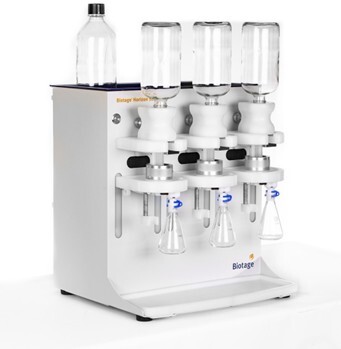
Figure 1: Biotage® Horizon 5000 Automated Extraction System
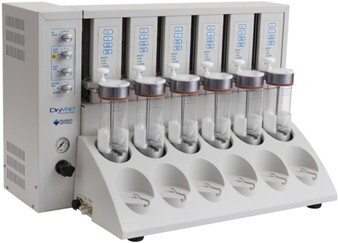 Figure 2: DryVap™ Concentrator System
Extraction of aqueous samples with particulates (using the Fast Flow Sediment Disk Holder (FFSDH))
- Adjust a 1 L aqueous sample to pH 2 with HCl, cap the bottle and mix.
- Spike PAH Standard mix (100 µg/mL in MeOH) into samples (use 200 µL for a 20 µg spike).
- Load the FFSDH with an Atlantic® C18 47 mm disk, a Fine Atlantic® Prefilter and Coarse Atlantic® Prefilter.
- Place the sample bottle on the Biotage® Horizon 5000 Extraction System and attach collection vessels to the system.
- Start the PAH extraction method detailed in Table 3 and collect the sample extract (approximately 80 mL).
- Dry and concentrate the extract on the DryVap™ Concentrator System using the parameters listed in Table 1.
- Analyze sample extracts by GC/MS.
|
PARAMETER |
SETTING |
|
Dry Volume |
100 |
|
Heat Power |
5 |
|
Auto Rinse Mode |
OFF |
|
Heat Timer |
OFF |
References
- Friedrich Werres, Peter Balsaa, Torsten C. Schmidt, Journal of Chromatography A, 1216 (2009) 2235–2240
|
Step |
Select Solvent |
Volume (mL) |
Purge (s) |
Vacuum |
Saturate (s) |
Soak (s) |
Drain/Elute (s) |
Sample Delay (s) |
|
Condition SPE Disk |
Methanol |
11 |
60 |
2 |
1 |
120 |
10 |
|
|
Condition SPE Disk |
Reagent water |
15 |
60 |
2 |
1 |
120 |
10 |
|
|
Condition SPE Disk |
Reagent water |
15 |
60 |
2 |
1 |
30 |
4 |
|
|
Load Sample |
|
|
|
2 |
|
|
|
45 |
|
Air Dry Disk |
|
|
|
6 |
|
|
120 |
|
|
Elute Sample Container |
Acetone |
8 |
15 |
2 |
1 |
120 |
240 |
|
|
Elute Sample Container |
Hexane |
8 |
15 |
2 |
1 |
120 |
240 |
|
|
Elute Sample Container |
Hexane |
8 |
15 |
2 |
1 |
60 |
120 |
|
|
Elute Sample Container |
Hexane |
8 |
15 |
6 |
1 |
60 |
120 |
|
|
Step |
Select Solvent |
Volume (mL) |
Purge (s) |
Vacuum |
Saturate (s) |
Soak (s) |
Drain/Elute (s) |
Sample Delay (s) |
|
Condition SPE Disk |
Methanol |
20 |
60 |
2 |
1 |
120 |
10 |
|
|
Condition SPE Disk |
Reagent water |
20 |
60 |
2 |
1 |
120 |
10 |
|
|
Condition SPE Disk |
Reagent water |
20 |
60 |
2 |
1 |
30 |
4 |
|
|
Load Sample |
|
|
|
2 |
|
|
|
45 |
|
Air Dry Disk |
|
|
|
6 |
|
|
120 |
|
|
Elute Sample Container |
Acetone |
20 |
15 |
2 |
1 |
120 |
240 |
|
|
Elute Sample Container |
Hexane |
20 |
15 |
2 |
1 |
120 |
240 |
|
|
Elute Sample Container |
Hexane |
20 |
15 |
2 |
1 |
60 |
120 |
|
|
Elute Sample Container |
Hexane |
20 |
15 |
6 |
1 |
60 |
120 |
|
Biotage® VacMaster™ Disk methods
Biotage® VacMaster™ Disk method summary (using a Standard 47mm Disk Holder with 47 mm Disk)
- Repeat the following steps for each active Biotage® VacMaster™ Disk station.
- Set up the VacMaster™ Disk manifolds ensuring all waste lines and vacuum lines are attached. Set the vacuum pump to -24”Hg.
- Prepare the disk holder assembly (47 mm): ensure the support screen is flat in the centre of the disk holder. Place the Atlantic® C18 Disk on top of the support screen with the ripples of the disk on top and add any prefilters on top of the disk. Place the disk holder assembly on the VacMaster Disk manifold ensuring there is a tight seal with the Luer fitting.
- If using the multifunnel, place onto the disk holder assembly. If not using the multifunnel, omit those directions throughout the method.
- Condition the SPE Disk.
- Guide for each conditioning step in Table 4 below:
- Measure the appropriate VOLUME of SOLVENT into a graduated cylinder and pour into the disk holder assembly.
- Using a Nalgene Wash Bottle (phthalate free), rinse the multifunnel and disk holder in a circle for about 3 seconds using the same SOLVENT (approximately 5 additional mL).
- SATURATE the disk for the time indicated (in SECONDS). (Saturate means: quickly turn the knob to the appropriate waste destination and back to the “OFF” position. This brings the solvent into the disk media bed).
- SOAK the disk for the time indicated (in SECONDS).
- DRAIN to appropriate waste destination for the time indicated (in SECONDS). Switch to the “OFF” position.
Solvent
Volume (mL)
Saturate (sec)
Soak (sec)
Waste Destination
Drain (sec)
Methanol
11
1
120
Organic
5
Reagent Water
15
1
60
Organic
8
Reagent Water
15
1
60
Organic
5
- Guide for each conditioning step in Table 4 below:
- Load the Sample:
- For multifunnel: quickly and efficiently angle the bottle to rest on the multifunnel upside-down.
- For no multifunnel: pour a portion of the sample into the disk holder.
- Adjust the vacuum between -10”Hg and -15”Hg for sample load (please note, if the sample is flowing too slowly, the vacuum can be increased). Drain the sample to “AQUEOUS” waste. Continue to pour the sample into the disk holder ensuring the disk does not go dry or overflow for the duration of sample load.
- Air Dry the SPE Disk:
- Return the vacuum to -24”Hg and continue to air dry the SPE disk to “AQUEOUS” waste for an additional 120 SECONDS. Switch to the “OFF” position.
- Remove the sample bottle from the multifunnel if it was used.
- Elute the SPE Disk: (Please note: the elution solvent will go into the collection flask inside the chamber, not to waste containers).
- Place a clean 125 mL 24/40 tapered Erlenmeyer flask or 40 mL VOA vial (using the VOA vial insert) into the VacMaster™ Disk collection chamber. Place the cover on the chamber. Remove the disk holder assembly and place the disk holder assembly into the Luer fitting on top of the collection chamber. Attach the Luer fitting of the collection chamber assembly onto the manifold.
- Guide for each elution step in Table 5 below:
- Measure the appropriate VOLUME of SOLVENT into a graduated cylinder, pour into the sample bottle, and swirl around. Pour the solvent in the sample bottle into the disk holder assembly.
- Using a Nalgene Wash Bottle (phthalate free), rinse the multifunnel and disk holder in a circle for about 3 seconds using the same SOLVENT (approximately 5 additional mL).
- SATURATE the disk for the time indicated (in SECONDS) to “ORGANIC”.
- SOAK the disk for the time indicated (in SECONDS).
- DRAIN to “ORGANIC” for the time indicated (in SECONDS). Switch to the “OFF” position.
- Remove the chamber lid to release the vacuum from inside the chamber.
|
Solvent |
Volume (mL) |
Saturate (sec) |
Soak (sec) |
Waste Destination |
Elute (sec) |
|
Acetone |
8 |
1 |
120 |
Organic |
240 |
|
Hexane |
8 |
1 |
120 |
Organic |
240 |
|
Hexane |
8 |
1 |
60 |
Organic |
120 |
|
Hexane |
8 |
1 |
60 |
Organic |
40 |
Biotage® VacMaster™ Disk method summary (using a Fast Flow Sediment Disk Holder with 47 mm Disk)
- Repeat the following steps for each active Biotage® VacMaster™ Disk station.
- Set up the VacMaster™ Disk manifolds ensuring all waste lines and vacuum lines are attached. Set the vacuum pump to -24”Hg.
- Prepare the disk holder assembly (FFSDH): place the Atlantic® C18 Disk into the narrow part on the bottom of the FFSDH disk holder so the ripples of the disk are on the top, then place the riser with the SPE disk support screen under the disk, and attach the 47 mm ring cap to create a seal. On the wider portion of the disk holder, place the support screen (ensuring it is flat and in the centre of the disk holder) and add any prefilters on top of the screen that will be used. Place the disk holder assembly onto the VacMaster™ Disk manifold ensuring there is a tight seal with the Luer fitting.
- If using the multifunnel, place onto the disk holder assembly. If not using the multifunnel, omit those directions throughout the method.
- Condition the SPE Disk.
- Guide for each conditioning step in Table below:
- Measure the appropriate VOLUME of SOLVENT into a graduated cylinder and pour into the disk holder assembly.
- Using a Nalgene Wash Bottle (phthalate free), rinse the multifunnel and disk holder in a circle for about 3 seconds using the same SOLVENT (approximately 5 additional mL).
- SATURATE the disk for the time indicated (in SECONDS). (Saturate means: quickly turn the knob to the appropriate waste destination and back to the “OFF” position. This brings the solvent into the disk media bed).
- SOAK the disk for the time indicated (in SECONDS).
- DRAIN to appropriate waste destination for the time indicated (in SECONDS). Switch to the “OFF” position.
Solvent
Volume (mL)
Saturate (sec)
Soak (sec)
Waste Destination
Drain (sec)
Methanol
20
1
120
Organic
5
Reagent Water
20
1
60
Organic
8
Reagent Water
20
1
30
Aqueous
5
- Guide for each conditioning step in Table below:
- Load the Sample:
- For multifunnel: quickly and efficiently angle the bottle to rest on the multifunnel upside-down.
- For no multifunnel: pour a portion of the sample into the disk holder.
- Adjust the vacuum between -10”Hg and -15”Hg for sample load (please note, if the sample is flowing too slowly, the vacuum can be increased). Drain the sample to “AQUEOUS” waste. Continue to pour the sample into the disk holder ensuring the disk does not go dry or overflow for the duration of sample load.
- Air Dry the SPE Disk:
- Return the vacuum to -24”Hg and continue to air dry the SPE disk to “AQUEOUS” waste for an additional 120 SECONDS. Switch to the “OFF” position.
- Remove the sample bottle from the multifunnel if it was used.
- Elute the SPE Disk: (Please note: the elution solvent will go into the collection flask inside the chamber, not to waste containers).
- Place a clean 125 mL 24/40 tapered Erlenmeyer flask into the VacMaster™ Disk collection chamber. Place the cover on the chamber. Remove the disk holder assembly and place the disk holder assembly into the Luer fitting on top of the collection chamber. Attach the Luer fitting of the collection chamber assembly onto the manifold.
- Guide for each elution step in Table below:
- Measure the appropriate VOLUME of SOLVENT into a graduated cylinder, pour into the sample bottle, and swirl around. Pour the solvent in the sample bottle into the disk holder assembly.
- Using a Nalgene Wash Bottle (phthalate free), rinse the multifunnel and disk holder in a circle for about 3 seconds using the same SOLVENT (approximately 5 additional mL).
- SATURATE the disk for the time indicated (in SECONDS) to “ORGANIC”.
- SOAK the disk for the time indicated (in SECONDS).
- DRAIN to “ORGANIC” for the time indicated (in SECONDS). Switch to the “OFF” position.
- Remove the chamber lid to release the vacuum from inside the chamber.
|
Solvent |
Volume (mL) |
Saturate (sec) |
Soak (sec) |
Waste Destination |
Elute (sec) |
|
Acetone |
20 |
1 |
120 |
Organic |
240 |
|
Hexane |
20 |
1 |
120 |
Organic |
240 |
|
Hexane |
20 |
1 |
60 |
Organic |
120 |
|
Hexane |
20 |
1 |
60 |
Organic |
40 |
Literature number: AN072
