
Introduction
This application note describes the use of the Biotage® VacMaster™ Disk to extract n-hexane-extractable material (HEM) from wastewaters per EPA Method 1664B. The procedure outlined in this document was used to generate a minimum level of quantitation (ML) and an initial demonstration of capability (IDC). Data for those studies is presented below.
Experimental overview
All results presented in this document were generated using an extraction setup consisting of 8 VacMaster Disk stations daisy-chained together on a single vacuum pump. All stations were set up with a 90 mm reusable disk holder assembly and a 125 mL Erlenmeyer collection flask.
All 8 VacMaster Disk stations were used to process 1 L samples to satisfy the QC requirements for EPA Method 1664B. Four blank samples were processed simultaneously to calculate a minimum level of quantitation (ML). Following the ML study, 7 laboratory fortified blank samples were processed simultaneously to allow a method detection limit (MDL) to be calculated. Each blank sample was fortified with a spike containing hexadecane and stearic acid with a final concentration of 2 mg/L. Finally, 4 replicate spiked reagent water samples were processed simultaneously, to calculate the average percent recovery and a standard deviation of the percent recovery. Each reagent water sample was spiked such that it contained 20 mg/L each of hexadecane and stearic acid. The results for the MDL, the percent recovery and the standard deviation of the percent recovery satisfied the requirement for the initial precision and recovery (IPR).
Reagents & equipment
» Graduated cylinder, 50 mL – glass (Qty of 3)
» Timer or stopwatch
» Anhydrous sodium sulphate, ACS Grade
» n-Hexane – 85% min purity
» Methanol – ACS grade (suggested)
» Hydrochloric acid, ACS grade

Figure 1. Biotage® VacMaster™ Disk standard assembly.
» Standards
- Hexadecane – 98% minimum purity
- Stearic acid – 98% minimum purity
- Acetone – ACS grade, residue <1 mg/L (0.0001% max)
»Squirt bottle filled with n-hexane
Equipment preparation
1. Assemble the VacMaster Disk unit inside a fume hood (if being stored outside the hood when not in use). Refer to the Getting Started Guide for setup instructions, if needed.
2. Set vacuum pump to -24 inches Hg (maximum of -26 inches Hg).
Extraction prep procedure for 90 mm Disks
Sample pre-treatment
1. Acidify each 1 L sample with a solution of hydrochloric acid in water [1:1] until the pH <2.
2. Add spikes as appropriate for ML and IDC studies.
Disk conditioning & equilibration
1. Assemble each workstation with a 90 mm disk holder (P/N 50-0809-01, Figure 2) with a 90 mm Pacific® Premium O&G disk (P/N 1664-100-PHT).
2. Remove the elution chamber from the VacMaster Disk Unit and place the disk holder directly onto the base of the system.
3. With the valve in the “OFF” position, add 10 mL of n-hexane to the disk assembly and soak for 30 seconds.
4. After soaking, switch the valve to the “ORGANIC” position and dry the disk for 60 seconds.
5. Switch the valve to the “OFF” position and add 10 mL of methanol to the disk assembly. Soak the disk for 30 seconds then switch the valve to “ORGANIC” and allow all the methanol to completely pass through the disk.
Sample loading
1. Turn the valve to the “AQUEOUS” position, and slowly load the entire 1L sample into the disk assembly under vacuum.
2. Once the sample has completely passed through the disk, allow the disk to dry for 10 minutes under vacuum.
3. Select the “OFF” position and remove the disk holder from the VacMaster Disk system. Place a 125 mL Erlenmeyer collection flask into the elution chamber and place the chamber onto the VacMaster Disk base. Secure the lid onto the chamber and place the disk assembly on top of the lid.
Analyte elution
1. To your sample bottle, add 30 mL of n-hexane. Cap the bottle, invert it and swirl to thoroughly rinse all the interior surfaces of the bottle. Transfer its contents to the disk holder assembly and soak for 30 seconds.
2. Turn the valve to the “ORGANIC” position and collect the n-hexane eluent.
3. Rinse the sidewalls of the disk assembly with n-hexane using a squirt bottle and collect the eluent in the 125 mL Erlenmeyer.
4. Repeat steps 1 through 3 under Analyte Elution an additional 2 times, with 20 mL of n-hexane instead of 30 mL. This will result in 3 elutions and a total of 70 mL of n-hexane.
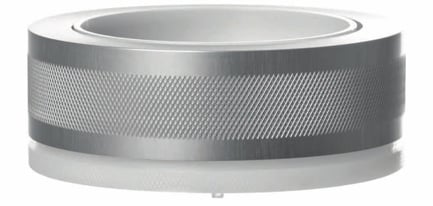
Figure 2. SPE Disk Holder, 90 mm, PN 50-0809-01.
5. After collecting 70 mL of n-hexane, switch the valve to the “OFF” position and remove the elution chamber and reinstall the disk assembly to the VacMaster Disk unit.
6. Using a graduated cylinder, measure 15 mL of methanol and pour it into the sample bottle. Cap the bottle, shake it vigorously, then uncap it and pour the methanol into the disk holder.
7. Allow the disk to soak in the methanol for 30 seconds.
8. Switch the valve to “ORGANIC” and dry the disk for 2 minutes under vacuum. After drying, switch the valve to the “OFF” position and reassemble the elution chamber as in step 3 under Sample Loading.
9. Using a graduated cylinder, add 20 mL of n-hexane to the disk assembly. NOTE: do not pour the n-hexane into the sample bottle before pouring it onto the disk.
10. Turn the valve to the “ORGANIC” position and collect the n-hexane from step 9. Rinse the sidewalls of the disk assembly as in step 3 under Analyte Elution and allow it to pass through the disk.
11. After collecting the n-hexane rinse in step 10, switch the valve to the “OFF” position and remove the disk holder assembly and Erlenmeyer flask from the elution chamber.
Sample drying
1. Carefully pour your extract over anhydrous sodium sulphate.
2. Rinse the Erlenmeyer flask with enough n-hexane to rinse the inside walls of the flask. Pour this n-hexane rinse over sodium sulphate and collect it in the same Erlenmeyer flask.
3. Repeat step 2 an additional 2 times for a total of 3 n-hexane washes.
4. Transfer the dried extract into a pre-weighed aluminium pan.
5. Carefully evaporate the solvent using a SpeedVap® IV Evaporation System (P/N 200-1000-04) at 40˚C until only a thin layer of solvent remains in the pan.
6. Transfer the pan to a desiccator to finish the evaporation before weighing. NOTE: over drying will result in low recoveries.
7. Weigh sample and record the weight difference. Report the result as mg/L of HEM.
|
Replicate |
HEM Conc (mg/L) |
Calculated ML (mg/L) |
ML Acceptance Criteria per Method 1664B (mg/L) |
|
1 |
0.2 |
0.3 |
|
|
2 |
0.5 |
|
|
|
3 4 |
0.4 0.1 |
5.0 |
|
|
Average |
0.3 |
|
|
Results
Method 1664B requires an Initial Demonstration of Capability (IDC) to be completed before samples can be processed. Before proceeding with the IDC, the minimum level of quantitation (ML) was established. The ML is based on a series of measured blank samples and determines the lowest concentration at which the laboratory can measure and report. The ML was calculated as an average measured HEM concentration, based on the measurement of 4 replicate blank samples. The results for the measured blank samples are listed in Table 1, along with the minimum level of quantitation required for compliance with Method 1664B.1
After completion of the ML calculation, the IDC was completed. The IDC requires the following studies to be completed:
- method detection limit (MDL)
- matrix spike (MS) recovery
- initial precision and recovery (IPR)
The MDL study was completed in compliance with the procedure outlined in 40 CFR Part 136, Appendix B.2 Briefly, 7 replicate blank samples were spiked such that each contained 4 mg/L of hexadecane and stearic acid. A standard deviation was calculated for these 7 replicate measurements and the standard deviation was multiplied by the appropriate Student’s t value for the 99% confidence interval. Results for the MDL study are reported in Table 2 in units of mg/L.
|
Replicate |
HEM Conc (mg/L) |
Calculated MDL (mg/L) |
MDL Acceptance Criteria per Method 1664B (mg/L) |
|
1 |
2.7 |
0.47
|
|
|
2 |
2.7 |
|
|
|
3 |
2.5 |
|
|
|
4 |
2.7 |
|
|
|
5 6 |
2.7 2.8 |
1.4 |
|
|
7 |
3.0 |
|
|
|
Std Dev |
0.15 |
|
|
|
MDL (mg/L) |
0.47 |
|
|
The IPR study was based on the measurement of 4 replicate spiked reagent water samples, calculated as an average percent recovery and a standard deviation of the percent recovery.
Each replicate was spiked such that it contained 20 mg/L each of hexadecane and stearic acid, and all results are reported in Table 3, in units of percent. These values correspond to the “X” and “s” values, respectively, in Method 1664B.
Conclusions
The VacMaster Disk produces results that are compliant with EPA Method 1664B, in a compact, easy-to-use format. Connecting multiple units provides the flexibility to process multiple samples simultaneously. The blank measurements reported in Table 1 indicate that there is no significant HEM contribution from the blank samples or the extraction process, and establishes a minimum quantitation level that is well-below the accepted criteria outlined in Method 1664B of 5.0 mg/L. Results in Table 2 demonstrate the calculated MDL is well below the regulatory required concentration of 1.4 mg/L. Results for the IPR study (Table 3) indicate that the average recovery is within the required limits of 83–101% and the standard deviation of the recovery values was below the required limit of 11%.
|
Replicate |
Measured Results |
Acceptance Criteria per EPA Method 1664B1 |
||
|
Recovery (%) |
Avg Recovery (%) Std Deviation (%) |
Recovery (%) |
Std Deviation (%) |
|
|
1 |
93.00 |
|
|
|
|
2 3 |
90.00 87.00 |
89.56 2.6 |
83–101 |
≤11 |
|
4 |
88.25 |
|
|
|
References
- EPA Method 1664, Revision B, February 2010 revision. Available at: https://www.epa.gov/sites/production/ files/2015-08/documents/method_1664b_2010.pdf
- 40 CFR Appendix B to Part 136 – Definition and Procedure for the Determination of the Method Detection Limit – Revision 1.11. Available at: https://www.govinfo.gov/content/pkg/ CFR-2011-title40-vol23/pdf/CFR-2011-title40-vol23-part136- appB.pdf
Ordering information
To order consumables in-line with those that were used to generate this application note, refer to the table below :
|
Part No. |
Description |
Qty |
|
VMD-0250 |
Biotage® VacMaster™ Disk |
1 |
|
50-0300-02 |
Two (2) Place Waste Line kit |
1 |
|
50-0300-01 |
Vacuum Regulator Assembly |
1 |
|
50-0809-01 |
SPE Disk Holder, 90 mm |
1 |
|
1664-100-PHT |
Pacific® Premium Disk, O&G, 90 mm |
50 |
|
50-002-02-HT |
Oil & Grease Aluminium Weighing Pans, 105 mm, 125 mL |
100 |
|
200-1000-04 |
SpeedVap® IV Solvent Evaporation System, 120V |
1 |
|
50-021-HT |
Standards, 40 mg |
20 |
|
50-003-HT |
Oil & Grease Standards, 26 mL |
4 |
Literature number: AN920
