
Dr. Simon Hammann is Postdoctoral Researcher at the Department of Anthropology and Archaeology, University of Bristol. By combining chemistry with archaeological research, he is able to look back in time and has produced the first direct chemical evidence for dietary cereal processing among Romans.
After the domestication of wild cereal ancestors in the so-called Fertile Crescent of the Near East over 10,000 years ago, agriculture and farming spread westwards. By about 3,000 BC, farming had reached almost every part of Europe and gave rise to some of the most fundamental socio-economic shifts in later human history. Yet, based on the existing data there are still consider- able ambiguities in many regions about exact timing and mode of transition towards an agricultural society.
Identifying the marker
In our research we developed a new method to trace the dietary use of cereals based on Organic Residue Analysis. This approach is based on the requisite that lipids and other constituents are absorbed into the ceramic matrix during food preparation, and can potentially be preserved there for millennia. This enables archaeologists to reconstruct past human diets.
To make cereals visible with this approach we first conducted a series of reference experiments. We analyzed modern cereal lipids to identify potential biomarkers using GC-MS. We also simulated cooking experiments and microbial degradation experiments to estimate if these compounds are absorbed into the ceramic matrix, and whether they have the potential to survive there over archaeological timescales.
In our reference experiments we identified alkylresorcinols (AR) and plant sterols as potential marker compounds. Trace amounts (<1 µg/g ceramics) of these compounds were absorbed into the pots in our cooking experiments, and they proved to be relatively resilient against microbial degradation.
The historic analysis
When we analyzed archaeological samples from the Roman forts at Vindolanda for these compounds we expected a further enrichment of AR to be necessary to enable their detection.
Therefore, the total lipids extracted from ten samples were cleaned using an ISOLUTE® NH2 SPE cartridge to isolate the AR from more abundant concomitant lipids. This enrichment step allowed us to detect tiny traces of AR (<1ng/g) together with plant sterols in two of the ten samples, providing for the first time evidence for the dietary use of cereals at this site.
Simon Hammann
Dr. Simon Hammann has a Diploma in Food Chemistry from the University of Hohenheim, Germany. His PhD on the analysis of minor lipids was in the research group of Prof. Walter Vetter at the University of Hohenheim, where he developed methods for the isolation and analysis of special fatty acids, sterols, steryl esters or tocopherols using chromatographic and mass spectrometry techniques. He joined the Department of Anthropology and Archaeology at Bristol University in 2016, where he is part of a NERC-funded project to trace cereal agriculture in archaeology using lipid biomarkers.
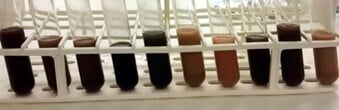
Figure 1: Raw samples with extracts from Roman pots, containing lipid residues which provide insights on the Romans’ diets.
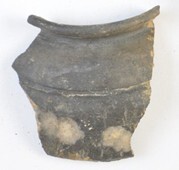
Figure 2: Sample of a Roman clay cooking pot from Vindolanda
Literature number: PPS484
