
Mar 24, 2026, 7:41:32 PM
By Evan Walters

Environmental laboratories analyzing contaminated soils, groundwater, and wastewater face a common challenge: polar matrix interferences that compromise accurate hydrocarbon quantitation.
Total Petroleum Hydrocarbon (TPH) analysis in environmental matrices may require selective cleanup to remove polar compounds while preserving nonpolar hydrocarbon components for accurate quantitation. Silica gel cleanup for TPH analysis, aligned with EPA Method 3630 (Silica Gel Cleanup), remains one of the most effective approaches for preparing extracts prior to GC analysis under EPA Method 8015 (Nonhalogenated Organics by GC/FID).
Regulatory framework:
EPA Method 3630C describes the use of activated silica gel to remove polar compounds from sample extracts before gas chromatographic analysis (Figure 1). The method is widely applied in petroleum hydrocarbon workflows to eliminate:
- Fatty acids
- Humic and fulvic acids
- Oxygenated degradation products
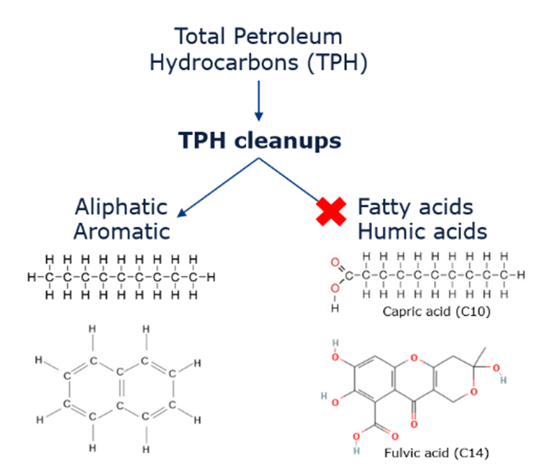
Figure 1: Removal of polar compounds for TPH cleanups
Following cleanup, hydrocarbon quantitation is typically performed under EPA Method 8015 using GC/FID. This method is routinely used to measure (Figure 2):
- Diesel Range Organics (DRO): C10–C28
- Motor Oil Range Organics (MRO): C17–C44
- Broader TPH carbon ranges (C6–C44)
Effective silica cleanup directly influences 8015 data quality by removing naturally derived polar constituents that are not representative of the petroleum sample.
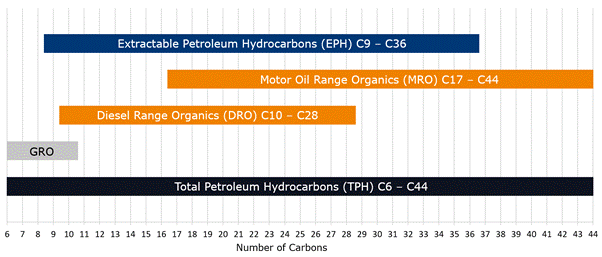
Figure 2: Hydrocarbon ranges based on number of carbons. TPH=C6–C44; DRO=C10–C28; MRO=C17–C44; EPH=C9–C36
Matrix complexity and the need for selectivity
Environmental extracts from soils, groundwater, wastewater, and biosolids frequently contain co-extracted polar organic material. These matrix components can:
- Elevate GC/FID baseline
- Interfere with DRO/MRO integration
- Bias quantitation if not adequately removed
ISOLUTE® SI SPE cartridges provide strong retention of polar compounds via hydrogen bonding and dipole interactions (Figure 3). Nonpolar hydrocarbons elute readily with nonpolar solvents such as pentane or hexane. This polarity-driven selectivity forms the chemical basis for Silica Gel Cleanup for TPH Analysis under EPA 3630 principles.
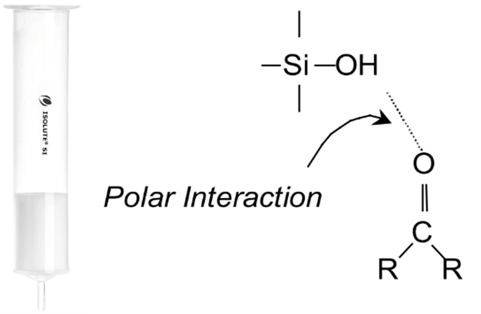
Figure 3: Polar interactions using ISOLUTE® SI SPE cartridges
High-throughput automation of silica gel cleanups
Dual flow positive-pressure SPE improves reproducibility, flow control, and throughput while maintaining equivalent chemical selectivity.
The Biotage® Extrahera™ Classic (Figure 4) utilizes low & high flow pressures:
- Low flow:
- Nitrogen flow at 50 mL/min
- Pressure = 0.1–5.0 bar: for effective polar analyte–sorbent interaction
- High flow:
- Nitrogen flow at 600 mL/min
- Pressure = 5.0 bar: to remove residual solvent from SPE
Controlled low flow minimizes channeling and improves recovery reproducibility across C10–C44 carbon ranges. The high-flow drying step minimizes the volume of solvents required for effective silica cleanups.
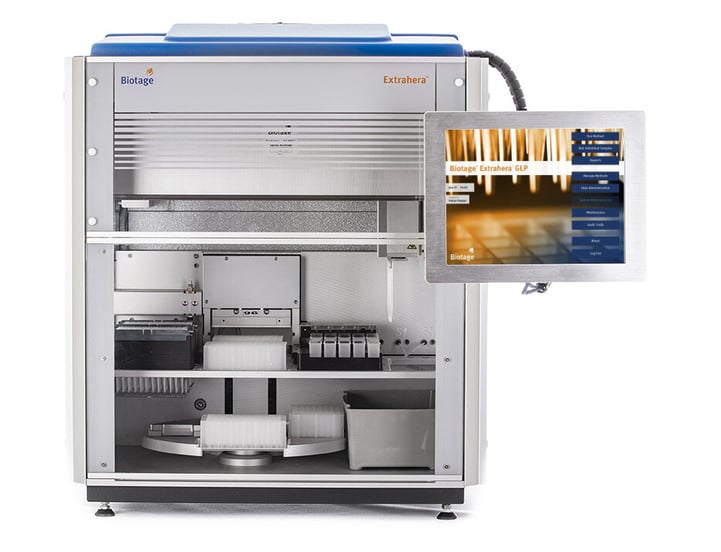
Figure 4: Biotage® Extrahera™ Classic automated sample preparation workstation
Solvent reduction and method performance
EPA 3630 does not mandate fixed elution volumes, allowing flexibility for optimization. A key objective was reducing solvent consumption without compromising recovery. Figure 5 compares pentane and dichloromethane solvent consumption for traditional silica cleanups to that of the optimized Biotage® Extrahera™ protocol. These volumes correspond to the amount required to process a full batch of 24 extracts (i.e. 4 QC + 20 samples). Significantly less solvent is required for the optimized protocol with at least a 20x reduction in pentane and dichloromethane when compared to the traditional technique.
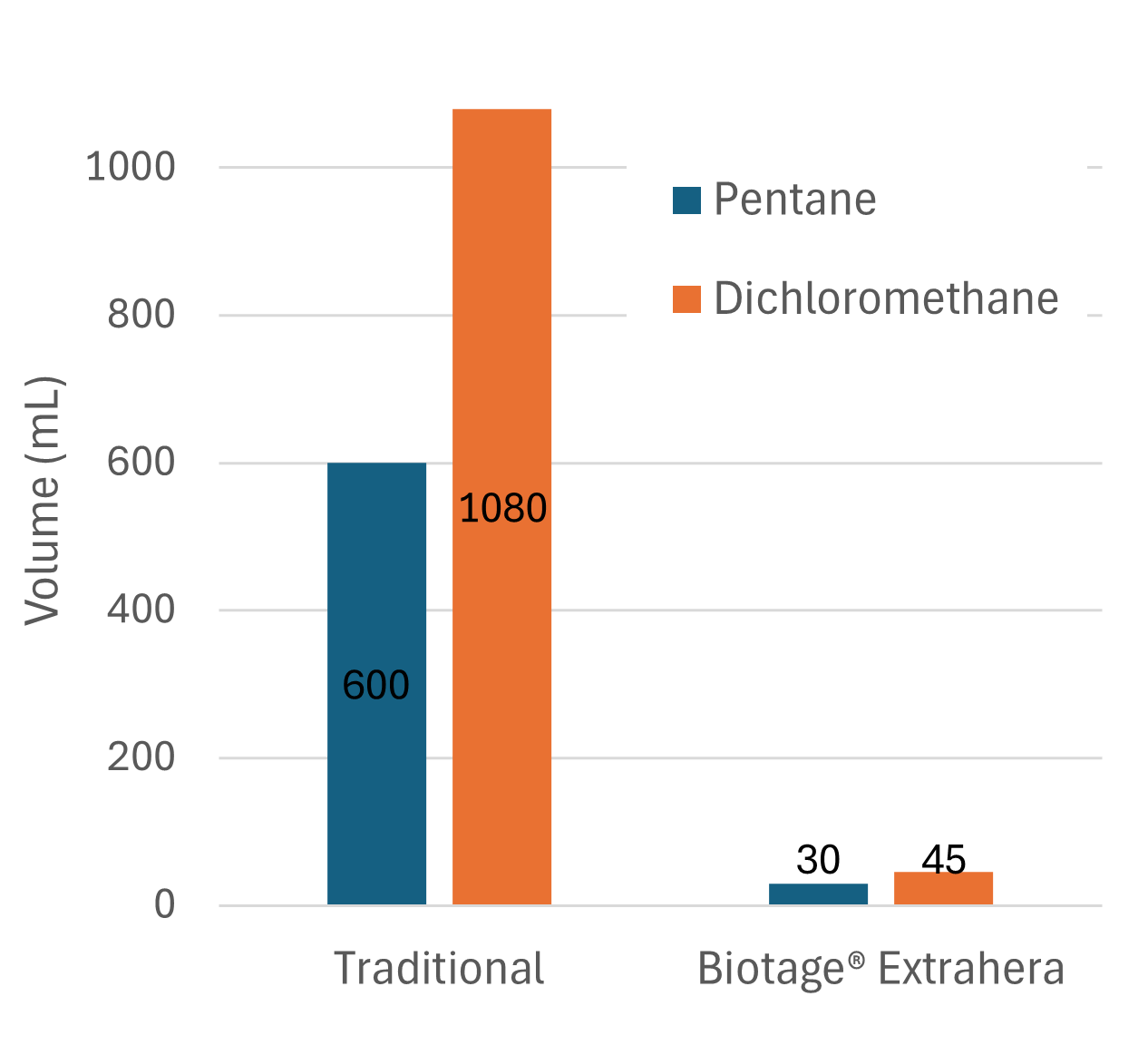
Figure 5: Pentane & dichloromethane consumption for traditional and Biotage® Extrahera™ techniques
In addition to solvent reduction the Biotage® Extrahera™ protocol demonstrates excellent recoveries across DRO and MRO ranges:
- Average DRO recoveries = 95%
- Average MRO recoveries = 109%
- Average surrogate (n-octacosane) recoveries = 98%
Achieving low method blank background contamination is critical for compliance with regional reporting limits. Average background levels for method blanks were 1.2 ppm for DRO (C10 – C28) and 4.1 ppm for TPH (C6 – C44) ranges, demonstrating acceptable background levels across a broad range of hydrocarbons. These results confirm that reduced solvent volumes can be implemented without sacrificing analytical performance.
Sorbent capacity evaluation
A reverse surrogate (decanoic acid, DA) is added to verify polar compound removal. Retention must exceed 99% (breakthrough <1%) of spiked DA concentration. To evaluate robustness under high loading conditions, ISOLUTE® SI 500 mg/3 mL cartridges were challenged with:
- Reverse surrogate (DA) concentrations
- Moderate = 5,000 ppm DA
- High = 10,000 ppm DA
- Extreme = 20,000 ppm DA
- DRO spike mix (C10–C28) = 400 ppm
- Surrogate (n-octacosane (C28)) = 50 ppm
The ISOLUTE® SI 500 mg/3 mL cartridges demonstrated sufficient capacity and selectivity to retain polar interferences (DA) while allowing quantitative recovery (> 87%) of DRO hydrocarbons and n-octacosane surrogate. No breakthrough of decanoic acid into the hydrocarbon fraction was observed.
These findings confirm that optimized silica SPE is suitable for heavily contaminated site extracts while maintaining regulatory compliance.
Conclusion
Compared to traditional column-based implementations of EPA 3630, optimized positive-pressure silica SPE demonstrated:
- Up to 40× solvent reduction
- 20× reduction in SPE sorbent waste
- Approximately 8× increase in productivity
These improvements support laboratory sustainability initiatives while maintaining data quality and compliance with established methodologies. For laboratories conducting high-throughput environmental TPH testing, optimized silica cleanup provides a compliant, efficient, and analytically rigorous solution.
Learn more in our on-demand webinar: Overcoming the technical hurdles of environmental SVOC analysis
