
Application note scope
The purpose of this application note is to outline an automated extraction method utilizing the Atlantic™ DVB SPE Disk and the Biotage automated and manual SPE solutions for the extraction of organic compounds in drinking water. The first section will highlight the use of the Biotage® Horizon 5000 fully automated extraction system and the method used for this application. Additionally, there will be an Application Modification section that will highlight the use of the Biotage® Horizon 4790 (with data and discussion) and Biotage® VacMaster™ Disk for this application.
IntroductionIn the June 28, 2012 issue of the Federal Register, the EPA announced the approval of alternate testing methods for use in measuring the levels of contaminates in drinking water and for determining compliance with national primary drinking water regulations. The Safe Drinking Water Act (SDWA) authorizes the EPA to approve the use of alternative testing methods through publication in the Federal Register. The EPA used this streamline authority to make 10 additional methods available for analyzing drinking water samples required by regulation. This expedited approach provides public water systems, laboratories, and primacy agencies with more timely access to new measurement techniques and greater flexibility in the selection of analytical methods. This authority and flexibility helps reduce monitoring costs while maintaining public health protection.
One of the methods approved by this action is Method 525.3 for the determination of semi-volatile organic compounds in finished drinking water. The method analytes are extracted and concentrated from the water using solid phase extraction.
Extracts are injected onto a capillary GC cartridge and analysed using mass spectrometry. Method 525.3 is similar in many ways to its predecessor, method 525.2 (Rev 2.0 – 1995), however there are significant changes which make the newer 525.3 a vastly improved method. Several of the major changes are
as follows:
- The sorbent material has been changed from C18 to DVB (divinylbenzene). This yields better recoveries over a wider pH range.
- The preservation/dechlorination scheme has changed from HCl and sodium sulfite, to ascorbic acid, EDTA, and citric acid. This is safer for field sampling crews and allows bottles to be shipped with preservatives pre-added.
- The internal standard is added to the final extract, not prior to the extraction as with 525.2.
- The use of SIM mode is an option for regulated compounds that have difficulty reaching detection limits.
- The surrogate perylene-d12 has been dropped.
- Pentachlorophenol-C13 is now used as an internal standard for pentachlorophenol.
One of the key points to be aware of with method 525.3, is that during the development of the method, the EPA found that several brands of styrene-divinylbenzene (SDVB) and modified SDVB media in cartridge format did not provide satisfactory performance. Therefore, this method specifically identifies those sorbent materials which can be used. Where method modifications are proposed, the analyst must perform the procedures outlined in the initial demonstration of capability (IDC, Sect 9.2), verify that all QC acceptance criteria in this method (Sect. 9) are met, and that method performance in
real samples matrices is equivalent to that demonstrated for Laboratory Fortified Sample Matrices (LFSMs) in Sect. 17.
This application note will describe the use of the Biotage® Horizon 5000 automated extractor system, and the Atlantic® DVB SPE disk for the extraction of water samples, as specified in method 525.3.
Instrumentation
Biotage instruments:
Biotage® Horizon 5000 Automated Extraction System
Atlantic® DVB SPE Disk (47 mm)
Organomation
N-Evap Concentrator
Restek
Rxi-5Sil MS 30 m, 0.25 mm ID, 0.25 um df
Agilent
6890 Gas Chromatograph
5973 Inert MSD
7683B Autosampler
Method summary
Preservation and dichlorination
- Sample bottles are prepared using 0.10 g/L L-Ascorbic acid, 0.35 g/L trisodium EDTA, and 9.4 g/L potassium dihydrogen citrate (Section 8).
- A one-litre sample should be collected in this bottle and its pH should be less than or equal to 4.
Extraction
- Verify that the sample pH is less than or equal to 4.
- Add surrogate to each sample.
- Load the sample onto the Biotage® Horizon 5000 extractor and start the extraction process using the method given in Table 1.
- When complete, remove the collected extract (16–20 mL).
- Pour the extract through a tube containing 10 g of anhydrous sodium sulphate.
- Rinse the sodium sulphate using 5 mL of dichloromethane (DCM).
- Using the N-Evap Concentrator (or equivalent), concentrate the extract to a volume of 0.7 mL using a gentle stream of nitrogen and a water bath temperature of 40 °C.
- Bring the final volume up to 1 mL, making sure to rinse the concentrator tube with ethyl acetate (EtOAc).
- Transfer the extract to an autosampler vial and analyse by GC/MS.
|
Step |
Select Solvent |
Volume |
Purge |
Vacuum |
Saturate |
Soak |
Drain/Elute |
Sample |
|
|
|
(mL) |
(s) |
|
(s) |
(s) |
(s) |
Delay (s) |
|
Condition SPE Disk |
Ethyl Acetate |
11 |
60 |
2 |
1 |
60 |
30 |
|
|
Condition SPE Disk |
Dichloromethane |
11 |
60 |
2 |
1 |
60 |
30 |
|
|
Condition SPE Disk |
Methanol |
11 |
60 |
2 |
1 |
60 |
5 |
|
|
Condition SPE Disk |
Reagent water |
11 |
60 |
2 |
1 |
5 |
5 |
|
|
Load Sample |
|
|
|
2 |
|
|
|
45 |
|
Wash Sample Container |
Reagent water |
10 |
30 |
2 |
1 |
10 |
30 |
|
|
Air Dry Disk |
|
|
|
6 |
|
|
60 |
|
|
Elute Sample Container |
Ethyl Acetate |
8 |
30 |
2 |
1 |
90 |
30 |
|
|
Elute Sample Container |
Dichloromethane |
13 |
15 |
2 |
1 |
90 |
30 |
|
|
Elute Sample Container |
Dichloromethane |
13 |
15 |
6 |
1 |
90 |
60 |
|
Application modifications
Biotage® Horizon 4790 method summary
- Verify that the sample pH is less than or equal to 4.
- Add surrogate to each sample.
- Load the sample onto the Biotage® Horizon 4790 Extraction System and start the extraction process using the method given in Table 1.
- When complete, remove the collected extract (16–20 mL).
- Pour the extract through a tube containing 10 g of anhydrous sodium sulphate.
- Rinse the sodium sulphate using 5 mL of DCM.
- Using the N-Evap Concentrator (or equivalent), concentrate the extract to a volume of 0.7 mL using a gentle stream of nitrogen and a water bath temperature of 40 °C.
- Bring the final volume up to 1 mL, making sure to rinse the concentrator tube with EtOAc.
- Transfer the extract to an autosampler vial and analyse by GC/MS.
|
Step |
Solvent |
Soak Time (s) |
Dry Time (s) |
|
Prewet 1 |
Ethyl Acetate |
60 |
30 |
|
Prewet 2 |
Dichloromethane |
60 |
30 |
|
Prewet 3 |
Methanol |
60 |
0 |
|
Prewet 4 |
Reagent Water |
5 |
0 |
|
Sample Process |
|
|
|
|
Air Dry |
|
|
60 |
|
Rinse 1 |
Ethyl Acetate |
90 |
30 |
|
Rinse 2 |
Dichloromethane |
90 |
30 |
|
Rinse 3 |
Dichloromethane |
90 |
30 |
|
Rinse 4 |
Dichloromethane |
60 |
20 |
*The data shown in this Application Note was generated using this method. However, EPA recommends the addition of two reagent water wash steps each with 10 sec. soak times and 30 sec. dry times.
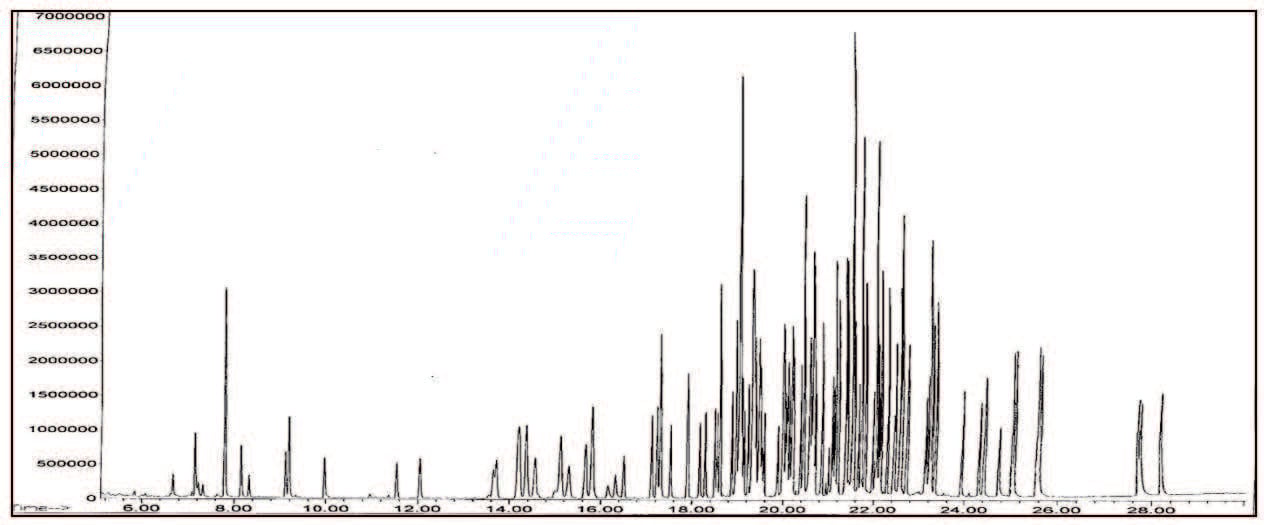
Figure 1: Chromatogram on EPA Method 525.3 Analysis
Results and discussion
Table 3 shows the precision and accuracy data obtained from method analytes fortified in reagent water at three concentrations and extracted using the Biotage® Horizon 4790 Extraction System and the Atlantic® DVB SPE disk. The concentrations were 0.25, 2.0, and 5.0 ug/L. The mean recovery values and RSD’s are shown.
Table 4 shows the precision and accuracy data obtained for method analytes fortified in finished drinking water from ground and surface water sources and extracted using the same setup, as above. The fortified concentration was 2.0 ug/L. The mean recovery values and RSD’s are shown for both synthetic hard water and for surface water.
Recoveries and deviations from both sets are excellent, indicating the Biotage® Horizon 4790 and Atlantic® disk are a viable option for those laboratories looking to increase sample throughput, and reduce labour costs.
|
Analyte |
Fortified Conc. 0.25 µg/L |
Fortified Conc. 2.0 µg/L |
Fortified Conc. 5.0 µg/L |
|||
|---|---|---|---|---|---|---|
|
Mean % Recovery |
RSD |
Mean % Recovery |
RSD |
Mean % Recovery |
RSD |
|
|
acenaphthylene |
87.3 |
3.4 |
86.6 |
1.7 |
90.5 |
1.3 |
|
acetochlor |
92.3 |
4.0 |
93.4 |
2.6 |
95.6 |
1.4 |
|
alachlor |
87.2 |
3.2 |
84.2 |
2.0 |
94.6 |
1.2 |
|
aldrin |
95.6 |
1.2 |
94.7 |
5.7 |
94.1 |
1.2 |
|
ametryn |
91.4 |
5.1 |
88.0 |
2.0 |
89.9 |
1.4 |
|
anthracene |
87.2 |
4.6 |
90.2 |
2.2 |
92.9 |
1.4 |
|
atraton |
93.2 |
3.4 |
90.9 |
2.3 |
92.8 |
1.3 |
|
atrazine |
94.5 |
7.4 |
92.9 |
2.9 |
95.0 |
1.9 |
|
benzo[c]anthracene |
93.4 |
5.2 |
91.0 |
3.1 |
91.3 |
3.0 |
|
benzo[g,h,i]perylene |
88.9 |
3.5 |
85.8 |
3.0 |
88.2 |
3.9 |
|
benzo[b]fluoranthene |
87.9 |
3.6 |
85.1 |
3.0 |
89.0 |
4.0 |
|
benzo[k]fluoranthene |
88.3 |
4.2 |
79.8 |
3.9 |
84.5 |
3.8 |
|
benzo[a]pyrene |
91.1 |
3.1 |
88.5 |
2.7 |
89.6 |
3.2 |
|
BHT |
89.8 |
5.0 |
94.9 |
1.5 |
96.7 |
1.2 |
|
bromacil |
96.5 |
1.8 |
88.4 |
3.5 |
96.6 |
3.6 |
|
butachlor |
94.9 |
5.0 |
91.5 |
2.8 |
93.0 |
2.4 |
|
butylate |
86.9 |
2.4 |
88.0 |
2.4 |
91.5 |
1.5 |
|
butylbenzylphthalate |
104.0 |
9.0 |
89.5 |
3.5 |
93.6 |
1.2 |
|
chlordane, cis |
92.1 |
6.5 |
89.2 |
4.9 |
89.7 |
2.5 |
|
chlordane, trans |
91.6 |
6.5 |
88.4 |
4.5 |
88.9 |
2.3 |
|
chlorfenvinphos |
89.1 |
7.7 |
94.0 |
4.3 |
95.3 |
2.4 |
|
chlorobenzilate |
86.0 |
4.0 |
93.8 |
4.6 |
92.4 |
1.9 |
|
chloroneb |
89.0 |
4.2 |
90.9 |
1.4 |
93.6 |
1.3 |
|
chlorothalonil |
89.7 |
4.8 |
94.3 |
2.3 |
97.3 |
1.2 |
|
chlorpropham |
93.7 |
7.7 |
92.5 |
2.3 |
95.8 |
0.8 |
|
chlorpyrifos |
89.1 |
2.6 |
91.1 |
3.5 |
95.4 |
1.4 |
|
chrysene |
90.7 |
2.3 |
92.0 |
2.6 |
90.9 |
1.4 |
|
cyanazine |
101.0 |
8.6 |
108.0 |
3.3 |
114.0 |
3.7 |
|
cycloate |
90.0 |
4.9 |
89.6 |
1.7 |
92.4 |
0.3 |
|
dacthal (DCPA) |
93.9 |
3.3 |
94.3 |
2.1 |
96.0 |
1.6 |
|
DDD, 4,4'- |
91.0 |
3.4 |
91.8 |
4.5 |
88.3 |
1.0 |
|
DDE, 4,4'- |
89.3 |
4.3 |
87.9 |
6.8 |
96.5 |
3.0 |
|
DDT, 4,4'- |
88.8 |
6.8 |
88.3 |
4.2 |
86.4 |
2.4 |
|
DEET |
91.6 |
5.5 |
92.9 |
2.0 |
94.5 |
0.8 |
|
di(2-ethylhexyl)adipate |
84.1 |
6.8 |
75.3 |
2.3 |
76.5 |
3.1 |
|
di(2-ethylhexyl)phthalate |
ND* |
11.0 |
77.0 |
2.7 |
72.7 |
2.8 |
|
dibenzo[a,h]anthracene |
85.3 |
5.0 |
79.6 |
2.7 |
81.5 |
3.5 |
|
dibutyl phthalate |
ND |
6.4 |
111.0 |
2.2 |
95.0 |
1.0 |
|
dichlorvos |
93.2 |
2.6 |
86.7 |
2.1 |
86.3 |
1.3 |
|
dieldrin |
93.6 |
5.2 |
91.3 |
6.2 |
91.1 |
2.8 |
|
diethylphthalate |
93.3 |
4.4 |
91.0 |
2.2 |
94.2 |
0.9 |
|
dimethipin |
36.0 |
13.0 |
32.8 |
25.0 |
28.4 |
9.6 |
|
dimethylphthalate |
89.4 |
15.3 |
90.0 |
1.0 |
92.6 |
1.0 |
|
Analyte |
Fortified Conc. 0.25 µg/L |
Fortified Conc. 2.0 µg/L |
Fortified Conc. 5.0 µg/L |
|||
|---|---|---|---|---|---|---|
|
Mean % Recovery |
RSD |
Mean % Recovery |
RSD |
Mean % Recovery |
RSD |
|
|
DIMP |
89.9 |
5.3 |
83.9 |
2.7 |
86.8 |
1.8 |
|
dinitrotoluene, 2,4- |
88.6 |
5.8 |
92.1 |
1.4 |
97.0 |
1.3 |
|
dinitrotoluene, 2,6- |
89.3 |
5.7 |
91.3 |
2.1 |
94.0 |
0.7 |
|
diphenamid |
93.8 |
3.2 |
94.7 |
2.1 |
96.2 |
1.4 |
|
disulfoton |
71.0 |
5.6 |
77.4 |
4.9 |
77.8 |
4.2 |
|
endosulfan I |
87.9 |
9.2 |
89.6 |
3.3 |
91.1 |
1.4 |
|
endosulfan II |
98.4 |
4.8 |
91.5 |
6.9 |
90.6 |
3.0 |
|
endosulfan sulfate |
95.1 |
4.8 |
93.4 |
2.7 |
93.4 |
1.7 |
|
endrin |
88.1 |
1.2 |
92.5 |
4.7 |
93.0 |
1.3 |
|
EPTC |
85.8 |
3.5 |
86.2 |
1.0 |
90.5 |
1.8 |
|
ethion |
96.1 |
4.3 |
93.5 |
3.9 |
92.7 |
2.8 |
|
ethoprop |
91.0 |
4.1 |
92.1 |
2.7 |
95.7 |
0.7 |
|
ethyl parathion |
92.9 |
7.8 |
88.8 |
3.1 |
93.4 |
2.8 |
|
etridiazole |
84.6 |
6.7 |
88.2 |
1.4 |
92.3 |
1.1 |
|
fenamiphos |
90.4 |
13.0 |
89.1 |
2.8 |
92.4 |
1.7 |
|
fenthion |
99.8 |
5.9 |
95.9 |
3.7 |
100.0 |
3.4 |
|
fluorene |
86.6 |
4.4 |
88.1 |
1.2 |
92.5 |
0.5 |
|
fluridone |
95.4 |
8.2 |
96.1 |
5.9 |
101.0 |
4.6 |
|
HCCPD |
72.6 |
6.9 |
73.5 |
2.4 |
76.5 |
4.4 |
|
HCH, alpha |
91.5 |
5.9 |
91.1 |
1.3 |
93.3 |
0.7 |
|
HCH, beta |
96.1 |
6.1 |
94.4 |
2.8 |
97.0 |
2.3 |
|
HCH, delta |
88.5 |
5.7 |
90.6 |
3.4 |
93.4 |
1.5 |
|
HCH, gamma (lindane) |
89.4 |
4.0 |
92.1 |
3.0 |
92.3 |
0.9 |
|
heptachlor |
91.9 |
9.9 |
89.8 |
3.2 |
92.6 |
0.3 |
|
heptachlor epoxide |
91.0 |
3.3 |
91.3 |
5.2 |
92.8 |
2.4 |
|
hexachlorobenzene |
86.8 |
6.1 |
89.5 |
1.9 |
90.5 |
1.1 |
|
hexazinone |
90.5 |
3.8 |
97.8 |
1.8 |
100.0 |
1.7 |
|
indeno[1,2,3-c,d]pyrene |
85.3 |
5.5 |
80.2 |
3.7 |
86.1 |
4.3 |
|
isophorone |
88.2 |
6.0 |
87.4 |
1.3 |
87.1 |
1.5 |
|
methoxychlor |
94.1 |
3.0 |
92.6 |
2.6 |
92.2 |
1.6 |
|
methyl parathion |
90.3 |
3.8 |
93.6 |
3.1 |
95.4 |
0.4 |
|
metolachlor |
90.0 |
5.0 |
93.9 |
3.2 |
96.6 |
1.6 |
|
metribuzin |
93.3 |
4.7 |
94.8 |
1.5 |
95.4 |
2.0 |
|
mevinphos |
90.1 |
3.6 |
89.4 |
1.6 |
93.2 |
0.9 |
|
MGK 264(a) |
87.5 |
4.0 |
92.3 |
2.6 |
94.5 |
1.5 |
|
MGK 264(b) |
86.3 |
7.9 |
94.4 |
3.9 |
96.3 |
2.5 |
|
molinate |
90.5 |
6.9 |
89.2 |
1.1 |
91.6 |
1.4 |
|
napropamide |
97.3 |
7.6 |
93.3 |
3.2 |
92.9 |
1.2 |
|
nitrofen |
90.4 |
5.1 |
94.4 |
3.3 |
94.0 |
1.3 |
|
nonachlor, trans |
86.7 |
4.2 |
86.8 |
2.4 |
86.0 |
3.8 |
|
norflurazon |
90.0 |
3.8 |
95.1 |
2.3 |
98.9 |
3.3 |
|
oxyfluorfen |
94.3 |
5.2 |
93.2 |
4.5 |
92.9 |
1.9 |
|
pebulate |
90.5 |
3.1 |
88.4 |
1.6 |
90.9 |
2.0 |
|
pentachlorophenol |
93.0 |
4.4 |
97.4 |
3.9 |
94.8 |
3.4 |
|
Analyte |
Fortified Conc. 0.25 µg/L |
Fortified Conc. 2.0 µg/L |
Fortified Conc. 5.0 µg/L |
|||
|---|---|---|---|---|---|---|
|
Mean % Recovery |
RSD |
Mean % Recovery |
RSD |
Mean % Recovery |
RSD |
|
|
permethrin, cis |
87.7 |
2.0 |
79.8 |
1.3 |
80.9 |
3.5 |
|
permethrin, trans |
89.3 |
3.2 |
82.3 |
2.2 |
83.2 |
2.0 |
|
phenanthrene |
88.6 |
3.9 |
90.1 |
2.2 |
92.6 |
1.7 |
|
phorate |
83.7 |
4.2 |
88.8 |
2.3 |
91.1 |
1.0 |
|
phosphamidon |
93.4 |
1.0 |
95.3 |
3.6 |
95.5 |
2.0 |
|
profenofos |
92.0 |
8.6 |
93.7 |
3.2 |
94.7 |
4.2 |
|
prometon |
90.0 |
3.8 |
93.9 |
3.2 |
96.0 |
0.8 |
|
prometryn |
94.0 |
2.0 |
93.7 |
2.5 |
102.0 |
2.2 |
|
pronamide |
92.3 |
4.0 |
93.5 |
1.7 |
96.1 |
1.9 |
|
propachlor |
88.8 |
5.2 |
91.5 |
2.8 |
94.7 |
0.9 |
|
propazine |
95.5 |
3.3 |
93.5 |
2.6 |
95.7 |
0.6 |
|
pyrene |
92.2 |
4.3 |
91.6 |
3.8 |
92.3 |
2.1 |
|
simazine |
93.9 |
3.8 |
94.2 |
1.8 |
98.7 |
2.9 |
|
simetryn |
95.1 |
2.1 |
93.8 |
2.5 |
95.4 |
1.0 |
|
tebuconazole |
93.2 |
5.3 |
94.7 |
2.0 |
97.0 |
2.3 |
|
tebuthiuron |
96.5 |
1.1 |
94.1 |
3.5 |
95.6 |
2.9 |
|
terbacil |
91.4 |
6.1 |
94.5 |
1.9 |
96.2 |
2.9 |
|
terbutryn |
96.6 |
5.1 |
93.7 |
3.0 |
95.0 |
1.5 |
|
tetrachlorvinphos |
95.5 |
4.9 |
92.5 |
3.1 |
93.0 |
2.8 |
|
triadifemon |
94.5 |
2.4 |
96.1 |
3.3 |
96.7 |
2.6 |
|
tribufos |
82.0 |
5.2 |
85.2 |
4.4 |
93.7 |
1.6 |
|
trifluralin |
91.0 |
5.8 |
91.2 |
2.1 |
95.9 |
0.8 |
|
vernolate |
87.3 |
2.5 |
87.0 |
1.1 |
90.7 |
1.8 |
|
vinclozolin |
94.3 |
8.5 |
94.7 |
4.6 |
94.9 |
2.2 |
|
Analyte |
Fortified Conc. 0.25 µg/L |
Fortified Conc. 2.0 µg/L |
Fortified Conc. 5.0 µg/L |
|||
|---|---|---|---|---|---|---|
|
Mean % Recovery |
RSD |
Mean % Recovery |
RSD |
Mean % Recovery |
RSD |
|
|
2-chlorobiphenyl (1) |
85.3 |
5.2 |
87.2 |
1.8 |
90.0 |
0.5 |
|
4-chlorobiphenyl (3) |
88.2 |
4.0 |
91.3 |
1.2 |
92.0 |
1.1 |
|
2,4′-dichlorobiphenyl (8) |
87.1 |
5.8 |
90.8 |
2.0 |
92.5 |
0.4 |
|
2,2′,5-trichlorobiphenyl (18) |
89.4 |
2.5 |
91.2 |
2.9 |
92.0 |
0.5 |
|
2,4,4′-trichlorobiphenyl (28) |
84.4 |
6.8 |
90.6 |
3.1 |
90.8 |
0.4 |
|
2,2′,3,5-tetrachlorobiphenyl (44) |
87.2 |
7.5 |
89.6 |
2.8 |
90.3 |
1.7 |
|
2,2′,5,5′-tetrachlorobiphenyl (52) |
89.4 |
5.3 |
88.2 |
2.2 |
89.4 |
2.7 |
|
2,3,4,5′-tetrachlorobiphenyl (70) |
87.8 |
8.4 |
88.5 |
5.0 |
89.4 |
1.7 |
|
2,2′,3,4′,6-pentachlorobiphenyl (110) |
87.1 |
3.2 |
90.6 |
4.1 |
88.5 |
3.4 |
|
2,3′,4,5′,5-pentachlorobiphenyl (118) |
85.5 |
3.4 |
89.0 |
4.3 |
84.3 |
4.1 |
|
2,2′,3,4,4′,5′-hexachlorobiphenyl (138) |
85.9 |
5.7 |
86.5 |
3.9 |
86.4 |
2.8 |
|
2,2′,3,4,5,6′-hexachlorobiphenyl (149) |
84.3 |
6.6 |
88.0 |
4.5 |
86.7 |
3.6 |
|
2,2′,4,4′,5,5′-hexachlorobiphenyl (153) |
83.1 |
4.4 |
87.7 |
4.7 |
85.1 |
4.6 |
|
2,2′,3,4,4′,5,5′-heptachlorobiphenyl (180) |
81.9 |
|||||
|
Analyte |
Fortified Conc. (µg/L) |
Synthetic Hard Water |
Surface Water |
||
|---|---|---|---|---|---|
|
Mean % Recovery |
RSD |
Mean % Recovery |
RSD |
||
|
acenaphthylene |
2.0 |
90.9 |
2.2 |
92.1 |
1.8 |
|
acetochlor |
2.0 |
98.7 |
0.5 |
97.0 |
2.6 |
|
alachlor |
2.0 |
96.9 |
1.2 |
95.0 |
1.6 |
|
aldrin |
2.0 |
93.3 |
3.4 |
93.2 |
2.9 |
|
ametryn |
2.0 |
90.8 |
4.2 |
90.0 |
3.2 |
|
anthracene |
2.0 |
95.3 |
2.2 |
94.8 |
2.4 |
|
atraton |
2.0 |
85.8 |
5.7 |
88.2 |
4.5 |
|
atrazine |
2.0 |
92.2 |
3.2 |
93.3 |
0.8 |
|
benzo[a]anthracene |
2.0 |
92.1 |
2.4 |
91.9 |
1.7 |
|
benzo[b]pyrene |
2.0 |
79.1 |
1.6 |
78.4 |
6.1 |
|
benzo[e]fluoranthene |
2.0 |
85.7 |
3.6 |
85.8 |
3.0 |
|
benzo[g,h,i]perylene |
2.0 |
79.1 |
1.6 |
78.4 |
6.1 |
|
benzo[k]fluoranthene |
2.0 |
87.9 |
3.3 |
85.1 |
3.5 |
|
BHT |
2.0 |
82.6 |
1.6 |
93.8 |
2.4 |
|
bromacil |
2.0 |
95.4 |
4.2 |
96.1 |
2.7 |
|
butachlor |
2.0 |
93.5 |
3.6 |
93.4 |
2.1 |
|
butylate |
2.0 |
95.0 |
2.0 |
95.8 |
3.4 |
|
butylbenzylphthalate |
2.0 |
92.8 |
3.2 |
92.5 |
1.9 |
|
chlordane, cis |
2.0 |
89.0 |
1.7 |
89.8 |
2.3 |
|
chlordane, trans |
2.0 |
89.7 |
1.6 |
90.3 |
1.3 |
|
chlorfenvinphos |
2.0 |
95.2 |
4.1 |
95.1 |
2.3 |
|
chlorobenzilate |
2.0 |
94.3 |
4.1 |
93.2 |
1.7 |
|
chloroneb |
2.0 |
95.6 |
1.2 |
95.6 |
1.5 |
|
chlorothalonil |
2.0 |
97.1 |
1.9 |
97.8 |
1.6 |
|
chlorpropham |
2.0 |
97.1 |
1.4 |
97.4 |
2.0 |
|
chlorpyrifos |
2.0 |
95.2 |
2.5 |
95.0 |
2.2 |
|
chrysene |
2.0 |
94.8 |
2.7 |
91.8 |
2.3 |
|
cyanazine |
2.0 |
98.7 |
7.1 |
97.4 |
5.4 |
|
cycloate |
2.0 |
94.4 |
2.3 |
94.5 |
2.0 |
|
dacthal (DCPA) |
2.0 |
97.5 |
1.7 |
98.0 |
0.6 |
|
DDD, 4,4′- |
2.0 |
86.5 |
3.5 |
87.5 |
1.4 |
|
DDE, 4,4′- |
2.0 |
83.6 |
1.7 |
84.2 |
2.6 |
|
DDT, 4,4′- |
2.0 |
82.4 |
2.1 |
82.5 |
0.6 |
|
DEET |
2.0 |
99.3 |
2.4 |
99.3 |
2.9 |
|
di(2-ethylhexyl)adipate |
2.0 |
72.1 |
1.4 |
73.4 |
2.0 |
|
di(2-ethylhexyl)phthalate |
2.0 |
73.0 |
3.6 |
74.7 |
3.1 |
|
dibenzo[a,h]anthracene |
2.0 |
75.8 |
2.1 |
75.2 |
6.3 |
|
dibutyl phthalate |
2.0 |
116.0 |
2.3 |
114.0 |
1.0 |
|
dichlorvos |
2.0 |
90.0 |
3.6 |
91.4 |
2.2 |
|
dieldrin |
2.0 |
90.4 |
4.9 |
88.3 |
1.8 |
|
diethylphthalate |
2.0 |
96.7 |
2.3 |
96.4 |
1.1 |
|
dimethipin |
2.0 |
45.0 |
24.0 |
34.8 |
17.0 |
|
dimethylphthalate |
2.0 |
94.8 |
1.8 |
95.2 |
0.9 |
|
DIMP |
2.0 |
84.6 |
3.5 |
88.3 |
5.1 |
|
Analyte |
Fortified Conc. (µg/L) |
Synthetic Hard Water |
Surface Water |
||
|---|---|---|---|---|---|
|
Mean % Recovery |
RSD |
Mean % Recovery |
RSD |
||
|
dinitrotoluene, 2,4- |
2.0 |
93.4 |
5.6 |
98.2 |
3.0 |
|
dinitrotoluene, 2,6- |
2.0 |
92.9 |
3.3 |
95.5 |
1.1 |
|
diphenamid |
2.0 |
95.5 |
2.6 |
95.2 |
1.8 |
|
disulfoton |
2.0 |
80.0 |
5.1 |
73.4 |
10.0 |
|
endosulfan I |
2.0 |
68.1 |
2.7 |
59.4 |
7.7 |
|
endosulfan II |
2.0 |
90.6 |
6.2 |
89.7 |
4.8 |
|
endosulfan sulfate |
2.0 |
92.6 |
3.2 |
92.1 |
2.4 |
|
endrin |
2.0 |
90.6 |
3.4 |
93.0 |
2.5 |
|
EPTC |
2.0 |
93.0 |
2.0 |
94.6 |
2.0 |
|
ethion |
2.0 |
92.8 |
3.2 |
89.3 |
1.1 |
|
ethoprop |
2.0 |
99.1 |
2.1 |
98.7 |
2.6 |
|
ethyl parathion |
2.0 |
95.4 |
1.9 |
96.3 |
6.8 |
|
etridiazole |
2.0 |
96.1 |
2.6 |
95.1 |
2.8 |
|
fenamiphos |
2.0 |
90.3 |
4.4 |
91.8 |
2.9 |
|
fenarimol |
2.0 |
98.7 |
4.5 |
94.4 |
1.8 |
|
fluorene |
2.0 |
93.3 |
1.7 |
93.0 |
2.4 |
|
fluridone |
2.0 |
89.1 |
6.1 |
87.0 |
10.0 |
|
HCCPD |
2.0 |
83.8 |
2.7 |
85.4 |
3.8 |
|
HCH, alpha |
2.0 |
95.2 |
2.6 |
96.4 |
3.6 |
|
HCH, beta |
2.0 |
99.6 |
3.1 |
98.5 |
2.9 |
|
HCH, delta |
2.0 |
94.8 |
3.3 |
94.2 |
2.4 |
|
HCH, gamma (lindane) |
2.0 |
92.8 |
1.8 |
94.1 |
2.8 |
|
heptachlor |
2.0 |
90.5 |
3.7 |
91.4 |
3.7 |
|
heptachlor epoxide |
2.0 |
95.4 |
4.5 |
92.3 |
3.0 |
|
hexachlorobenzene |
2.0 |
93.6 |
1.3 |
92.8 |
1.8 |
|
hexazinone |
2.0 |
95.1 |
1.6 |
94.9 |
4.4 |
|
indeno[1,2,3-c,d]pyrene |
2.0 |
80.6 |
2.7 |
80.6 |
6.3 |
|
isophorone |
2.0 |
90.9 |
2.3 |
91.9 |
1.4 |
|
methoxychlor |
2.0 |
93.4 |
3.6 |
93.8 |
1.8 |
|
methyl parathion |
2.0 |
95.4 |
2.6 |
98.3 |
4.9 |
|
metolachlor |
2.0 |
97.0 |
1.6 |
98.0 |
1.6 |
|
metribuzin |
2.0 |
93.7 |
1.0 |
93.6 |
1.5 |
|
mevinphos |
2.0 |
95.0 |
2.5 |
95.6 |
1.3 |
|
MGK 264(a) |
1.6 |
95.7 |
2.3 |
93.9 |
2.2 |
|
MGK 264(b) |
0.4 |
98.4 |
3.6 |
98.1 |
4.0 |
|
molinate |
2.0 |
93.9 |
2.2 |
94.5 |
1.7 |
|
napropamide |
2.0 |
91.3 |
4.4 |
93.1 |
4.3 |
|
nitrofen |
2.0 |
93.2 |
3.3 |
95.6 |
1.8 |
|
nonachlor, trans |
2.0 |
86.7 |
3.7 |
86.3 |
2.9 |
|
norflurazon |
2.0 |
97.1 |
3.1 |
96.0 |
1.5 |
|
oxyfluorfen |
2.0 |
93.5 |
3.2 |
95.3 |
0.8 |
|
pebulate |
2.0 |
92.8 |
2.3 |
94.3 |
2.4 |
|
pentachlorophenol |
8.0 |
96.8 |
2.7 |
96.6 |
2.2 |
|
permethrin, cis |
2.0 |
77.7 |
3.1 |
77.3 |
2.1 |
|
permethrin, trans |
2.0 |
80.1 |
2.9 |
79.1 |
1.8 |
|
Analyte |
Fortified Conc. (µg/L) |
Synthetic Hard Water |
Surface Water |
||
|---|---|---|---|---|---|
|
Mean % Recovery |
RSD |
Mean % Recovery |
RSD |
||
|
phenanthrene |
2.0 |
93.8 |
1.2 |
94.3 |
2.3 |
|
phorate |
2.0 |
92.0 |
1.5 |
93.0 |
4.1 |
|
phosphamidon |
2.0 |
92.7 |
5.3 |
94.6 |
1.7 |
|
profenofos |
2.0 |
94.2 |
2.9 |
95.7 |
2.0 |
|
prometon |
2.0 |
87.4 |
6.1 |
86.1 |
3.6 |
|
prometryn |
2.0 |
93.3 |
4.5 |
91.5 |
2.8 |
|
pronamide |
2.0 |
95.5 |
2.3 |
96.3 |
3.0 |
|
propachlor |
2.0 |
97.1 |
2.8 |
96.3 |
1.3 |
|
propazine |
2.0 |
93.8 |
1.8 |
93.0 |
3.0 |
|
pyrene |
2.0 |
93.0 |
2.5 |
93.7 |
1.4 |
|
simazine |
2.0 |
91.8 |
2.7 |
92.9 |
2.7 |
|
simetryn |
2.0 |
88.4 |
3.8 |
89.6 |
3.4 |
|
tebuconazole |
2.0 |
97.0 |
2.3 |
96.8 |
2.4 |
|
tebuthiuron |
2.0 |
97.7 |
6.1 |
98.8 |
8.0 |
|
terbacil |
2.0 |
96.1 |
2.0 |
96.5 |
2.6 |
|
terbutryn |
2.0 |
92.4 |
5.4 |
89.6 |
4.2 |
|
tetrachlorvinphos |
2.0 |
91.7 |
3.9 |
91.8 |
3.1 |
|
triadimefon |
2.0 |
97.6 |
3.9 |
93.8 |
4.2 |
|
tribufos |
2.0 |
95.2 |
3.7 |
93.5 |
2.3 |
|
trifluralin |
2.0 |
100.0 |
1.8 |
99.1 |
2.0 |
|
vernolate |
2.0 |
92.6 |
2.4 |
94.0 |
2.5 |
|
vinclozolin |
2.0 |
97.5 |
1.1 |
97.6 |
3.9 |
|
PCB Congener |
Fortified Conc. (µg/L) |
Synthetic Hard Water |
Surface Water |
||
|---|---|---|---|---|---|
|
Mean % Recovery |
RSD |
Mean % Recovery |
RSD |
||
|
2-chlorobiphenyl (1) |
2.0 |
90.8 |
2.0 |
92.0 |
2.4 |
|
4-chlorobiphenyl (3) |
2.0 |
91.8 |
2.3 |
92.4 |
3.2 |
|
2,4'-dichlorobiphenyl (8) |
2.0 |
94.9 |
2.0 |
95.0 |
2.7 |
|
2,2',5-trichlorobiphenyl (18) |
2.0 |
95.2 |
2.2 |
94.4 |
1.8 |
|
2,4,4'-trichlorobiphenyl (28) |
2.0 |
93.5 |
1.9 |
92.9 |
3.4 |
|
2,2',3,5-tetrachlorobiphenyl (44) |
2.0 |
94.4 |
3.8 |
92.1 |
2.1 |
|
2,2',5,5'-tetrachlorobiphenyl (52) |
2.0 |
91.1 |
3.6 |
91.4 |
2.5 |
|
2,3,4,5'-tetrachlorobiphenyl (70) |
2.0 |
87.8 |
1.2 |
89.4 |
1.2 |
|
2,3,3',4,6-pentachlorobiphenyl (110) |
2.0 |
86.6 |
3.5 |
88.0 |
1.8 |
|
2,3,4,4',5-pentachlorobiphenyl (118) |
2.0 |
83.3 |
2.9 |
86.9 |
1.7 |
|
2,2',3,4,4',5-hexachlorobiphenyl (138) |
2.0 |
85.5 |
3.9 |
84.7 |
2.2 |
|
2,2',3,4,5,6'-hexachlorobiphenyl (149) |
2.0 |
82.5 |
2.0 |
85.9 |
2.8 |
|
2,2',4,4',5,5'-hexachlorobiphenyl (153) |
2.0 |
81.5 |
1.8 |
83.4 |
2.9 |
|
2,2',3,4,4',5,5'-heptachlorobiphenyl (180) |
2.0 |
79.3 |
2.6 |
81.3 |
1.6 |
|
Surrogate |
Fortified Conc. (µg/L) |
Synthetic Hard Water |
Surface Water |
||
|---|---|---|---|---|---|
|
Mean % Recovery |
RSD |
Mean % Recovery |
RSD |
||
|
1,3-dimethyl-2-nitrobenzene |
2.0 |
88.7 |
2.9 |
90.6 |
3.8 |
|
benzo[b]pyrene-d₁₂ |
2.0 |
94.1 |
2.4 |
93.4 |
3.2 |
|
triphenyl phosphate |
2.0 |
92.2 |
1.8 |
92.4 |
1.7 |
Biotage® VacMaster™ Disk method summary
- Repeat the following steps for each active Biotage® VacMaster™ Disk station.
- Set up the VacMaster Disk manifolds ensuring all waste lines and vacuum lines are attached. Set the vacuum pump to -24”Hg.
- Prepare the disk holder assembly (47 mm): ensure the support screen is flat in the centre of the disk holder. Place the Atlantic® DVB Disk on top of the support screen with the ripples of the disk on top and add any prefilters on top of the disk. Place the disk holder assembly on the VacMaster Disk manifold ensuring there is a tight seal with the luer fitting.
- If using the multifunnel, place onto the disk holder assembly. If not using the multifunnel, omit those directions throughout the method.
- Condition the SPE Disk:
- Guide for each conditioning step in table 5 below:
- Measure the appropriate volume of solvent into a graduated cylinder and pour into the disk holder assembly.
- Using a Nalgene Wash Bottle (phthalate free), rinse the multifunnel and disk holder in a circle for about 3 seconds using the same SOLVENT (approximately 5 additional mL).
- SATURATE the disk for the time indicated (in SECONDS). (Saturate means: quickly turn the knob to the appropriate waste destination and back to the “OFF” position. This brings the solvent into the disk media bed).
- SOAK the disk for the time indicated (in SECONDS).
- DRAIN to the appropriate waste destination for the time indicated (in SECONDS). Switch to the “OFF” position.
Reagent
Volume (mL)
Saturate (sec.)
Soak (sec.)
Waste Destination
Drain (sec.)
Ethyl Acetate
11
1
60
Organic
30
Dichloromethane
11
1
60
Organic
30
Methanol
11
1
60
Organic
5
Reagent Water
11
1
5
Organic
5
- Guide for each conditioning step in table 5 below:
- Load the Sample:
- For multifunnel: quickly and efficiently angle the bottle to rest on the multifunnel upside-down.
- For no multifunnel: pour a portion of the sample into the disk holder.
- Adjust the vacuum between -10”Hg and -15”Hg for sample load (please note, if the sample is flowing too slowly, the vacuum can be increased). Drain the sample to “AQUEOUS” waste. Continue to pour the sample into the disk holder ensuring the disk does not go dry or overflow for the duration of sample load.
- Wash Sample Container:
- Guide for each wash step in table 6 below:
- Measure appropriate volume of REAGENT into a graduated cylinder, pour into the sample bottle, and swirl around. Pour the solvent in the sample bottle into the disk holder assembly.
- Using a Nalgene Wash Bottle (phthalate free), rinse the multifunnel and disk holder in a circle for about 3 seconds using the same REAGENT (approximately 5 additional mL).
- SATURATE the disk for the time shown (IN SECONDS).
- SOAK the disk for the time shown (IN SECONDS).
- DRAIN to “AQUEOUS” waste for the time shown (in SECONDS). Switch to the “OFF” position.
Reagent
Volume (mL)
Saturate (sec.)
Soak (sec.)
Waste Destination
Drain (sec.)
Reagent Water
10
1
10
Aqueous
30
- Guide for each wash step in table 6 below:
- Air Dry the SPE Disk:
- Return the vacuum to -24”Hg and continue to air dry the SPE disk to “AQUEOUS” waste for an additional 60 SECONDS. Switch to the “OFF” position.
- Remove the sample bottle from the multifunnel.
- Elute the SPE Disk: (Please note: the elutions will go into the collection flask inside the chamber, not to waste containers)
- Place a clean 125 mL 24/40 tapered Erlenmeyer flask or 40 mL VOA vial using the VOA vial insert into the VacMaster Disk collection chamber. Place the cover on the chamber. Remove the disk holder assembly and place the disk holder assembly into the luer fitting on top of the collection chamber. Attach the luer fitting of the collection chamber assembly onto the manifold.
- Guide for each elution step in table 7 below:
- Measure appropriate volume of solvent into
a graduated cylinder, pour into the sample bottle, and swirl around. Pour the solvent in the sample bottle into the disk holder assembly. - Using a Nalgene Wash Bottle (phthalate free), rinse the multifunnel and disk holder in a circle for about 3 seconds using the same SOLVENT (approximately 5 additional mL).
- SATURATE the disk for the time indicated (in SECONDS) to “ORGANIC”.
- SOAK the disk for the time indicated (in SECONDS).
- DRAIN to “ORGANIC” for SECONDS. Switch to the “OFF” position.
- Remove the chamber lid to release the vacuum from inside the chamber.
- Measure appropriate volume of solvent into
|
Solvent |
Volume (mL) |
Saturate (sec.) |
Soak (sec.) |
Waste Destination |
Elute (sec.) |
|---|---|---|---|---|---|
|
Ethyl Acetate |
8 |
1 |
90 |
Organic |
30 |
|
Dichloromethane |
13 |
1 |
90 |
Organic |
30 |
|
Dichloromethane |
13 |
1 |
90 |
Organic |
60 |
Literature number: AN081-HOR
