
Introduction
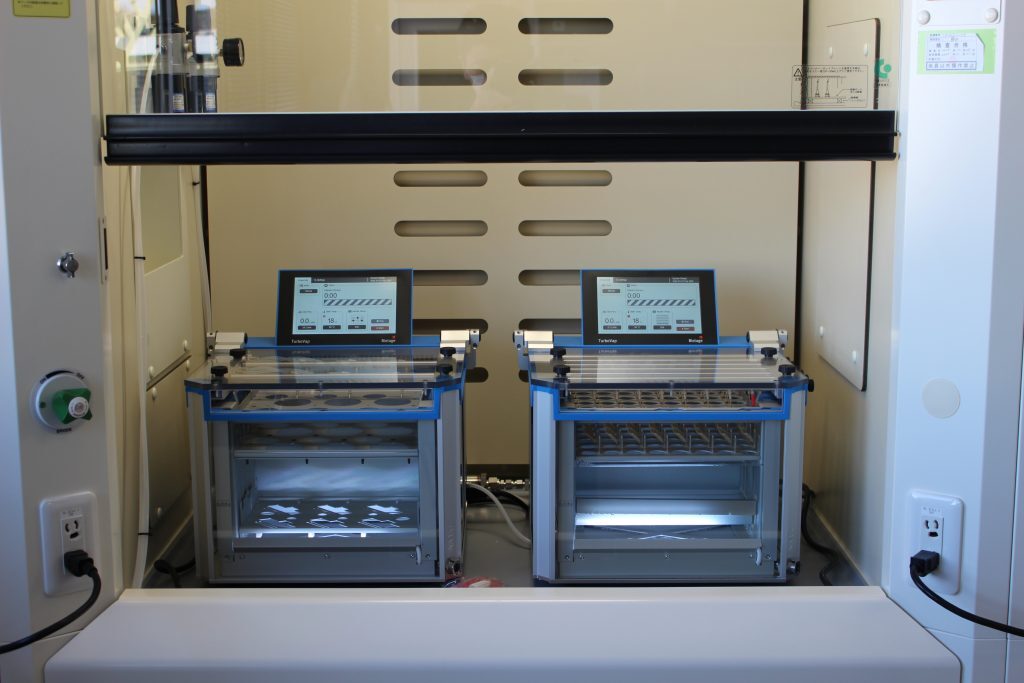
Eurofins Nihon Kankyo K.K. has been providing environmental analysis services, including environmental measurement certification and environmental consulting such as environmental impact assessments, for >50 years. Leveraging the network of the Eurofins Group, which has a globally recognized track record in PFAS analysis, they became the first in Japan to introduce EPA Method 1633 and obtain internationally recognized ISO 17025 accreditation. For sample preparation in environmental PFAS analysis, they have adopted the nitrogen blow-down high-throughput evaporators TurboVap® LV and TurboVap® II to perform simultaneous concentration of multiple samples.
We spoke with Ms. Megumi Monden, manager of the PFAS Team in the POPs Group of the Laboratory Division, about sample preparation for PFAS analysis and the background behind adopting TurboVap®.
Customer case
To begin with, could you tell us about your company's business and services?
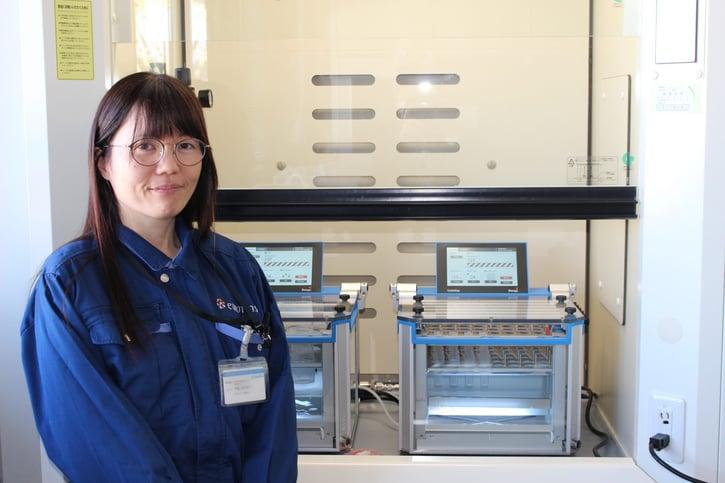
Ms. Monden: We are Eurofins Nihon Kankyo K.K., a Japanese subsidiary of the global Eurofins Group. The Eurofins Group provides analysis and testing services across a wide range of fields including food, products, environment, and pharmaceuticals on a global scale. Eurofins Nihon Kankyo K.K. joined the Eurofins Group in 2012 and currently has approximately 320 employees. We provide analytical services for environmental samples such as water, soil, and gas, conducting analyses covering thousands of parameters per day. Ms Monden
Could you tell us about your own work?
Ms. Monden: I am responsible for PFAS (per- and polyfluoroalkyl substances) analysis in environmental samples, including water, soil, exhaust gas, and waste. We work according to SOPs (Standard Operating Procedures) to maintain consistent quality.
You handle PFAS analysis, which has been increasingly featured in mainstream news recently. Your company is placing significant emphasis on PFAS analysis—would you say that is correct?
Ms. Monden: Yes. In addition to keeping an eye on developments within Japan, we also monitor global trends and information shared by other companies within the Eurofins Group. Based on this, we became the first in Japan to implement the U.S. Environmental Protection Agency’s official method, EPA Method 1633, and to obtain ISO 17025 accreditation. We also place strong emphasis on information dissemination, enhancing the resources available on our website and actively distributing email newsletters.
We understand that the recent introduction of TurboVap® was part of your laboratory expansion. Has the number of PFAS samples you analyze been increasing?
Ms. Monden: Yes, the number of samples has been increasing. Accordingly, we separate laboratories based on the PFAS concentration levels in the samples being handled. We have also optimized the laboratory workflow and layout to improve efficiency.
Are there any particular points you pay attention to during PFAS sample preparation?
Ms. Monden: The most important point we pay attention to in PFAS analysis is blank control. When analyzing only PFOS or PFOA, it is not such a major issue; however, under overseas regulations such as EPA methods, up to 40 PFAS compounds are targeted for analysis.
Because PFAS may be present in coatings, laboratory gloves, and other equipment used in experiments, blank contamination can easily occur if sufficient care is not taken during the analytical process.
We have prepared an application note that verifies the background levels when TurboVap® is used for PFAS sample preparation.
Ms. Monden: Yes, the availability of that application note was one of the key factors in our decision to adopt TurboVap®.
Could you tell us about the evaporation equipment and methods you used before introducing TurboVap® ?
Ms. Monden: Until now, we had been using a block heater–type nitrogen blowdown evaporator. Because the test tubes were inserted into an opaque black block heater, it was impossible to visually monitor the solvent level during concentration, making it difficult to determine when the process was complete.
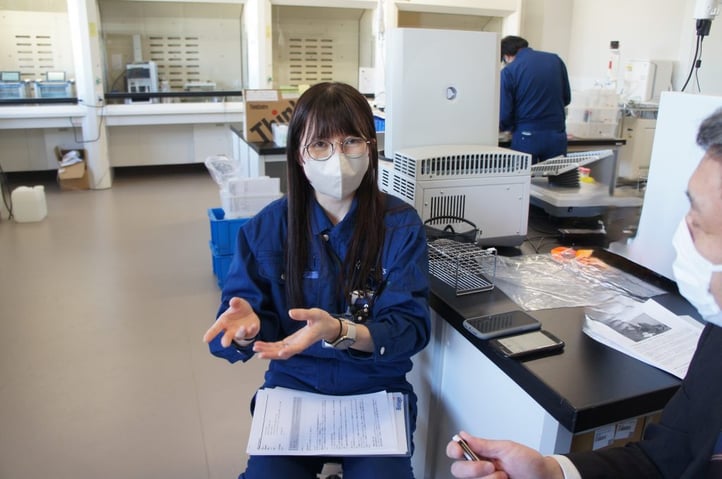
Since we had to avoid evaporation to dryness, we had to frequently check the concentration progress and adjust the nozzle height, which was labor-intensive and inefficient. It also tended to introduce variability between operators, so we were looking to improve this situation.
In addition to the block heater–type nitrogen blowdown evaporator, we had also been concentrating 50–100 mL methanol solutions using a rotary evaporator, one sample at a time, which was extremely time-consuming.
Ideally, we wanted to avoid using glass containers because of the risk of PFAS adsorption or contamination. However, the block-heater system was not compatible with 50 mL polypropylene (PP) tubes, giving us no choice. In any analytical workflow, the time required for concentration had been a major bottleneck.
With the standard rack on the TurboVap® LV, it can accommodate 50 mL polypropylene (PP) tubes. How did you first hear about our TurboVap® series?
Ms. Monden: We were using a block‑heater‑type nitrogen evaporator, and it took about two hours to concentrate methanol solutions. The instrument was also getting old, so while looking into possible replacements, I came across the water‑bath‑type TurboVap® . The gas vortex shearing mechanism, where gas is blown in a spiral pattern, also seemed like it would improve the evaporation efficiency.
What was the deciding factor in choosing the system?
Ms. Monden: The key point was that once we loaned a demo unit from Biotage Japan, we could confirm that it really did concentrate samples efficiently.
Another major factor was that, compared with block‑heater‑type nitrogen evaporators, it supports a wider variety of containers, including test tubes and PP tubes that we couldn’t use before. And of course, we confirmed it had no issues with PFAS background, which was also an important point.
Could you tell us what benefits you’ve experienced since introducing the system?
Ms. Monden: First, we can now use large‑diameter containers that were not compatible with our block‑heater‑type nitrogen evaporator. Previously, concentrating 50–100 mL of methanol solution took more than two hours, but by using the TurboVap® together with larger‑diameter containers, we can now finish the concentration in under 20 minutes. This means we no longer carry over the concentration work to the next day; we can complete the measurements on the same day.
In addition, since the TurboVap® supports various sizes of evaporation vessels, we no longer need to use glass containers, which can cause PFAS adsorption or contamination.
With the TurboVap® , you can now visually monitor the solvent level during concentration. How has that been for you?
Ms. Monden: Yes, being able to see it clearly is great. It’s much easier to check the remaining volume and to adjust the intensity and positioning of the nitrogen blow‑down.
TurboVap® has three modes: manual, time, and method. Which of these do you use?
Ms. Monden: For the TurboVap® LV we use method mode, and for the TurboVap® II we use manual mode. In the experiments using the TurboVap® LV, the volumes to be concentrated are generally consistent, so we have created a method that automatically stops the nitrogen blow‑down before the samples dry out completely. We process multiple tubes at once, and they all end up with nearly the same remaining volume, so it’s extremely useful.
Acknowledgements
Thank you Ms. Megumi Monden and her team at Eurofins Nihon Kankyo K.K. (part of the Eurofins Japan group) for their valuable opinions and continued support for the Biotage portfolio of products.
Note: This interview was first published in Japanese in March 2025.
 Literature number: CC02
