
For research use only. NOT for use in diagnostic procedures.
 Figure 1. Structures of norepinephrine, epinephrine, dopamine, normetanephrine, metanephrine, and 3-methoxytyramine.
Introduction
This application note describes the extraction of six catecholamines and metanephrines from human plasma using EVOLUTE® EXPRESS WCX prior to UHPLC-MS/MS analysis.
Our sample preparation procedure using weak cation exchange mixed-mode solid phase extraction delivers high recovery and consistent matrix factors whilst providing limits of quantitation within typical clinical reference ranges for all analytes.
The selection of plasma anticoagulant can have a significant effect on analyte stability and matrix interferences. The robust procedure in this application note has similar extraction characteristics for human plasma treated with commonly used anticoagulants.
Analytes
Norepinephrine (NE), epinephrine (EP), dopamine (DA), normetanephrine (NE), metanephrine (ME), and 3-Methoxytyramine (3MT).
Internal standards
Norepinephrine-D6 (NE-D6), epinephrine-D6(EP-D6), dopamine-D4 (DA-D4), normetanephrine-D3 (NE-D3), and metanephrine-D3 (ME-D3). ME-D3 was used as an internal standard for 3-MT.
Sample preparation procedure
Format
EVOLUTE® EXPRESS WCX 30 mg 96 well plate, part number 602-0030-PX01.
Sample pre-treatment
Centrifuge plasma samples for 10 min at 6,000 x g before processing further. Add 10 µL of working internal standard and 10 µL working standard diluent or working standard solution to 400 µL plasma. Vortex mix using a medium setting for 5 to 10 s. Dilute spiked plasma with 400 μL 10 mM sodium citrate pH 7 and vortex mix using a medium setting for 5 to 10 s.
Manual processing conditions
Plates were processed using a Biotage® PRESSURE+ 96 positive pressure manifold. Each step described below was processed at 1 to 3 psi using the adjustable flow setting.
Drying steps were processed at 40 psi using the maximum flow setting.
Condition
Add methanol (1 mL) to each well.
Equilibration
Add 10 mM ammonium acetate pH 6 (1 mL) to each well.
Sample loading
Add pre-treated plasma (600 µL) to each well.
Wash 1
Add 10 mM ammonium acetate pH 6 (1 mL) to each well to elute aqueous interferences.
Wash 2
Add MeOH:H2O (80:20 , v/v, 1 mL) to each well to elute neutral organic interferences. On completion, dry the bed for 1 minute.
Wash 3
Add dichloromethane (1 mL) to each well to elute lipophilic interferences. On completion, dry the bed for 5 minutes.
Elution
Elute analytes with 400 μL of water: propan-2-ol (85:15, v/v) containing formic acid (0.1% v/v) into a 2 mL collection plate (p/n 121-5203). On completion, purge the bed at 12 psi (adjustable flow setting) for 5 seconds.
Post elution and reconstitution
Dry the extract in a stream of air or nitrogen using a Biotage® SPE Dry 96 at 40 °C using a flow rate of 40 to 60 L min-1 (drying time under these conditions is approximately 80 mins).
Reconstitute evaporated samples with H2O:MeOH (95:5, v/v, 100 µL) containing formic acid (0.1% v/v) and mixed thoroughly.
UHPLC parameters
Instrument
Shimadzu Nexera UHPLC
Column
Avantor® ACE Excel 1.7 C18-PFP (100 mm x 3.0 mm) cartridge (p/n EXL-1710-1003U), with a RESTEK Raptor ARC-18 2.7 µM (5 mm x 2.1 mm ) guard cartridge (p/n 9314A0252).
Mobile phase
A: 2 mM ammonium formate containing formic acid (0.05% v/v) in water.
B: 0.5 mM ammonium fluoride in methanol.
Flow rate
0.5 mL min-1
Column temperature
30 °C
Autosampler temperature
10 °C
Injection volume
10 µL
Table 1. UHPLC gradient
|
Time, min |
% A |
% B |
Divert Valve |
|
0.0 |
98 |
2 |
|
|
0.5 |
98 |
2 |
to MS |
|
3.0 |
70 |
30 |
|
|
3.5 |
5 |
95 |
to waste |
|
5.5 |
5 |
95 |
|
|
6.0 |
98 |
2 |
|
|
9.0 |
98 |
2 |
|
MS parameters
Instrument
AB SCIEX Triple Quad 5500 using a Turbo-V source and TurboIonSpray probe in positive ESI mode
IS Voltage (IS)
2500 V
Source Temperature (TEM)
500 °C
Curtain Gas (CUR)
35 psi
Nebulizer Gas (GS1)
50 psi
Heater Gas (GS2)
60 psi
CAD gas
7
Data acquisition
Scheduled MRM data acquisition, target scan time 0.40 s, detection window 60 s
Table 2. MRM parameters
|
Analyte |
Transition, DA |
DP, V |
EP, V |
CE, V |
CXP, V |
|
NE 1 |
152.1 > 106.9 |
35.0 |
5.0 |
23.5 |
16.5 |
|
NE 2 |
170.1 > 151.9 |
42.0 |
8.0 |
7.6 |
19.9 |
|
NE-D6 |
158.1 > 110.9 |
59.0 |
4.2 |
24.6 |
16.2 |
|
EP 1 |
166.1 > 106.8 |
102.0 |
12.0 |
25.5 |
13.4 |
|
EP 2 |
184.1 > 165.9 |
90.0 |
12.0 |
15.1 |
13.4 |
|
EP-D6 |
190.0 > 172.1 |
90.0 |
12.0 |
15.0 |
17.0 |
|
DA 1 |
154.1 > 90.8 |
60.0 |
10.0 |
31.4 |
11.3 |
|
DA 2 |
154.1 > 137.1 |
60.0 |
10.0 |
14.5 |
20.8 |
|
DA-D4 |
141.3 > 94.9 |
155.0 |
11.0 |
26.7 |
14.8 |
|
NM 1 |
166.1 > 133.9 |
55.5 |
3.2 |
22.0 |
16.0 |
|
NM 2 |
166.1 > 106.0 |
55.5 |
3.2 |
22.0 |
16.0 |
|
NM-D3 |
169.1 > 137.1 |
57.0 |
12.3 |
21.8 |
16.2 |
|
ME 1 |
198.1 > 180.1 |
56.2 |
11.0 |
23.0 |
17.0 |
|
ME 2 |
180.1 > 119.1 |
81.6 |
10.0 |
24.4 |
16.0 |
|
ME-D3 |
183.1 > 121.1 |
81.6 |
12.0 |
25.0 |
14.0 |
|
3MT 1 |
168.2 > 90.9 |
36.0 |
11.5 |
31.5 |
11.9 |
|
3 MT 2 |
151.2 > 119.0 |
88.0 |
11.5 |
19.3 |
13.8 |
Results
Recovery
Extraction recovery was determined using a 200 pg spike. Data are the average of n=7 pre-extraction spikes compared to n=4 post extraction spikes (Figure 2). Recovery was determined for both the analyte and its associated internal standard. Data are tabulated for each matrix.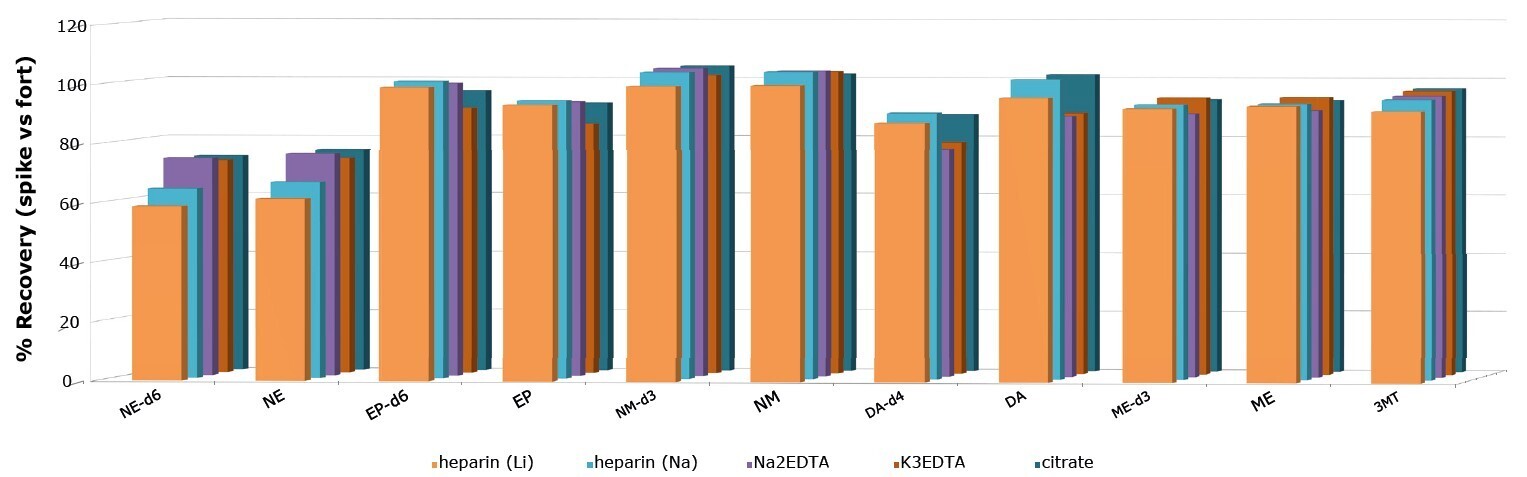 Figure 2. Recovery of catecholamines and metanephrines using the conditions described in this application note. Data is shown for each matrix (plasma containing different anticoagulants).
Table 3. Extraction recovery and precision for typical pooled gender human plasma matrices.
|
Method |
Analyte |
Recovery, % |
Precision, % RSD |
|
Lithium heparin |
NE |
61.4 |
4.3 |
|
EP |
93.0 |
3.3 |
|
|
DA |
95.6 |
3.1 |
|
|
NM |
99.8 |
3.3 |
|
|
ME |
93.0 |
3.1 |
|
|
3MT |
91.2 |
2.7 |
|
|
Sodium heparin |
NE |
66.4 |
4.0 |
|
EP |
94.1 |
1.3 |
|
|
DA |
101.4 |
3.2 |
|
|
NM |
103.8 |
1.7 |
|
|
ME |
93.2 |
2.1 |
|
|
3MT |
94.7 |
1.8 |
|
|
Na2EDTA |
NE |
75.3 |
4.4 |
|
EP |
93.1 |
3.1 |
|
|
DA |
88.4 |
5.5 |
|
|
NM |
103.6 |
4.6 |
|
|
ME |
90.4 |
3.9 |
|
|
3MT |
95.3 |
5.1 |
|
|
K3EDTA |
NE |
73.1 |
7.4 |
|
EP |
85.0 |
2.0 |
|
|
DA |
88.8 |
2.1 |
|
|
NM |
102.8 |
1.1 |
|
|
ME |
94.3 |
1.3 |
|
|
3MT |
96.3 |
2.1 |
|
|
Citrate |
NE |
75.5 |
3.5 |
|
EP |
91.5 |
2.1 |
|
|
DA |
101.3 |
2.5 |
|
|
NM |
101.5 |
3.9 |
|
|
ME |
92.7 |
1.1 |
|
|
3MT |
96.7 |
0.9 |
Linearity and Limit of Quantitation (LOQ)
Extracted analyte linearity was determined using stripped plasma prepared with an in-house procedure, serially diluted in matrix from 500 to 10 pg mL-1 with internal standards at 200 pg mL-1. Calibration range was determined where the calibration coefficient r > 0.9975 (r ² > 0.995). The acceptance criteria used were: accuracy from 90 to 110% (lowest calibrant 80–120%); and precision < 10% RSD (lowest calibrant < 15%). LOQ determined where signal/noise was > 10:1, estimated. Example calibration curves are demonstrated in Figure 3.
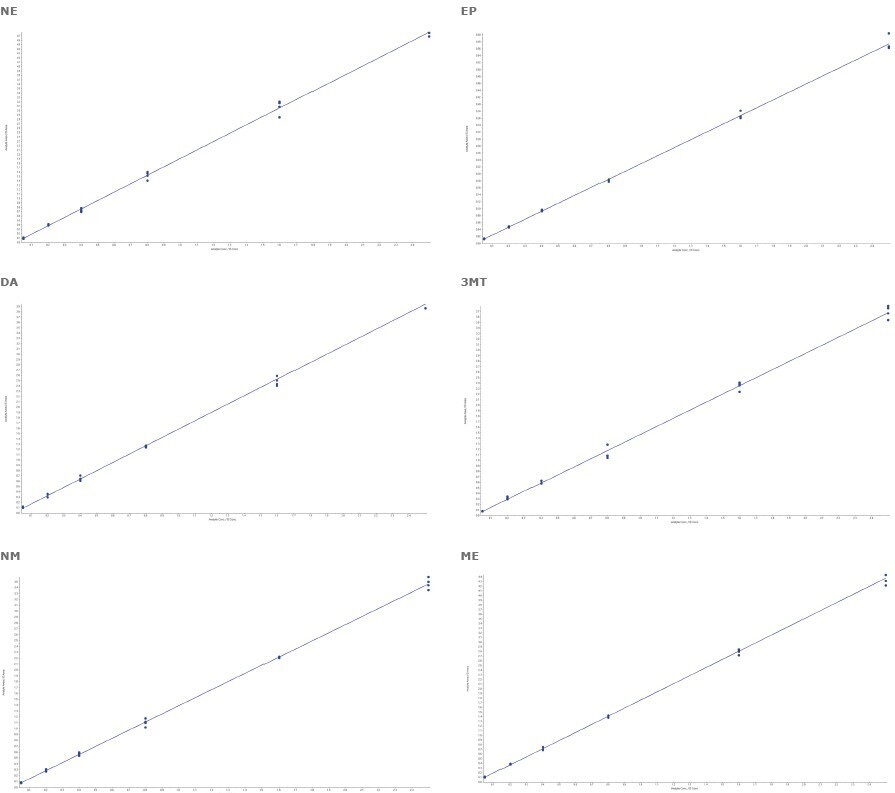
Figure 3. Extracted matrix calibration curves (plasma with lithium heparin anticoagulant) 10 to 500 pg mL-1 (IS 200 pg mL-1).
Extracted ion chromatograms from lithium heparin plasma spiked at 80 pg mL-1 overlaid with the stripped blank are demonstrated in Figure 4.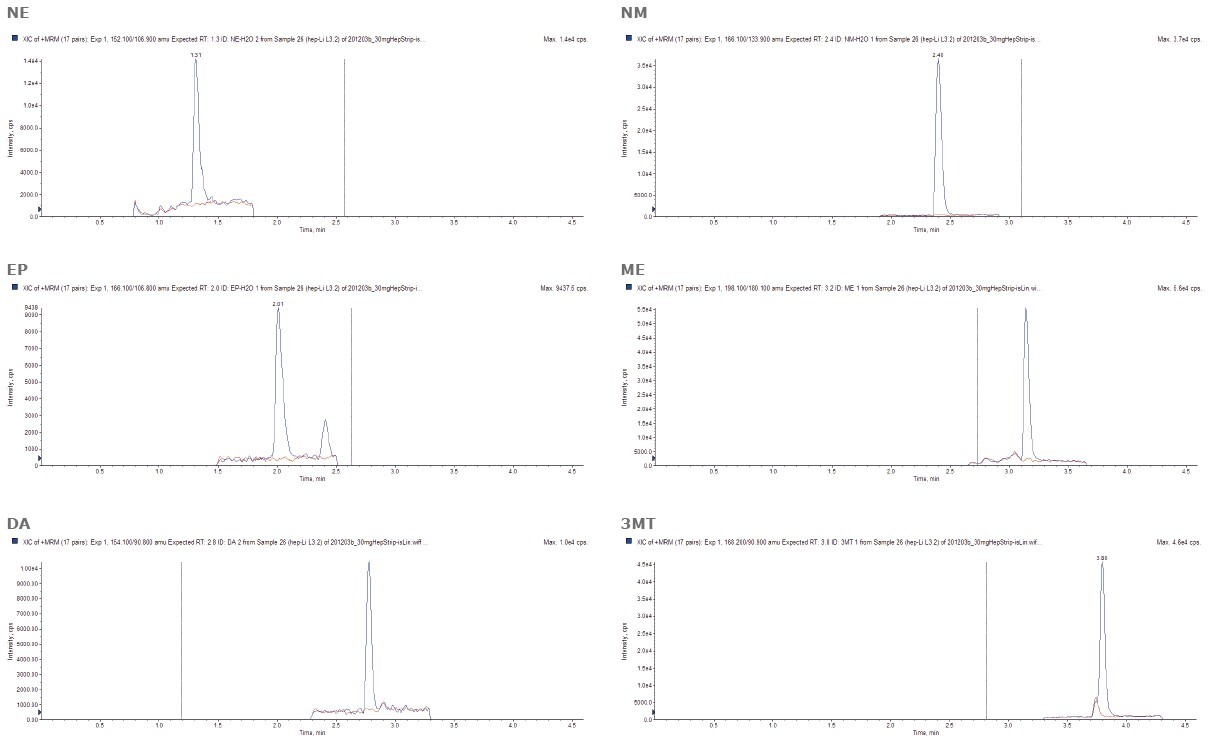
Figure 4. Extracted ion chromatograms, (80 pg mL-1 spiked lithium heparin plasma, overlaid with stripped blank).
Method performance data are tabulated for each matrix (Table 4).
Table 4. Calibration performance data, 10 to 500 pg mL-1 (IS 200 pg mL-1).
|
Matrix |
Analyte |
Coefficient, r |
Accuracy, % |
Precision, % RSD |
Range, pg mL-1 |
Estimated LOQ, pg mL-1 |
|
Li heparin |
NE |
0.9990 |
90-110 |
<15 |
20 |
0.12 |
|
EP |
0.9992 |
90-110 |
<10 |
4.5 |
0.02 |
|
|
DA |
0.9993 |
80-120 |
<15 |
10 |
0.07 |
|
|
NM |
0.9994 |
90-110 |
<10 |
2.9 |
0.02 |
|
|
ME |
0.9992 |
90-110 |
<15 |
4.0 |
0.02 |
|
|
3MT |
0.9986 |
90-110 |
<10 |
0.8 |
<0.01 |
|
|
Na heparin |
NE |
0.9990 |
80-120 |
<15 |
8.3 |
0.05 |
|
EP |
0.9996 |
90-110 |
<10 |
5.6 |
0.03 |
|
|
DA |
0.9987 |
90-110 |
<15 |
9.1 |
0.06 |
|
|
NM |
0.9990 |
90-110 |
<10 |
2.2 |
0.01 |
|
|
ME |
0.9997 |
80-120 |
<10 |
2.0 |
0.01 |
|
|
3MT |
0.9992 |
90-110 |
<10 |
1.3 |
0.01 |
|
|
Na2EDTA |
NE |
0.9981 |
80-120 |
<10 |
8.3 |
0.05 |
|
EP |
0.9992 |
90-110 |
<15 |
5.0 |
0.03 |
|
|
DA |
0.9987 |
90-110 |
<15 |
8.3 |
0.05 |
|
|
NM |
0.9986 |
90-110 |
<10 |
3.3 |
0.02 |
|
|
ME |
0.9990 |
80-120 |
<10 |
1.4 |
0.01 |
|
|
3MT |
0.9986 |
90-110 |
<10 |
1.4 |
0.01 |
|
|
K3EDTA |
NE |
0.9988 |
90-110 |
<10 |
9.1 |
0.05 |
|
EP |
0.9991 |
90-110 |
<15 |
5.0 |
0.03 |
|
|
DA |
0.9988 |
90-110 |
<15 |
9.1 |
0.06 |
|
|
NM |
0.9981 |
90-110 |
<10 |
2.5 |
0.01 |
|
|
ME |
0.9995 |
90-110 |
<10 |
3.3 |
0.02 |
|
|
3MT |
0.9984 |
80-120 |
<10 |
1.1 |
0.01 |
|
|
Na citrate |
NE |
0.9992 |
80-120 |
<10 |
8.3 |
0.05 |
|
EP |
0.9995 |
90-110 |
<15 |
5.0 |
0.03 |
|
|
DA |
0.9990 |
90-110 |
<10 |
5.0 |
0.03 |
|
|
NM |
0.9985 |
80-120 |
<10 |
1.5 |
0.01 |
|
|
ME |
0.9992 |
90-110 |
<10 |
2.2 |
0.01 |
|
|
3MT |
0.9995 |
90-110 |
<10 |
0.8 |
< 0.01 |
Matrix interferences
The sample preparation procedure described in this application note results in final extracts that are low in matrix interferences. Matrix factor, determined as the ratio of post extraction spike/ dilute standard at the same concentration, is shown in Figure 5. Signal factor, determined as the ratio of pre-extraction spike/dilute standard, demonstrates matrix has a minimal effect on analyte response used for recovery (with the exception of norepinephrine) (see Figure 6). The final extract is free from phospholipids as demonstrated in Figure 7.
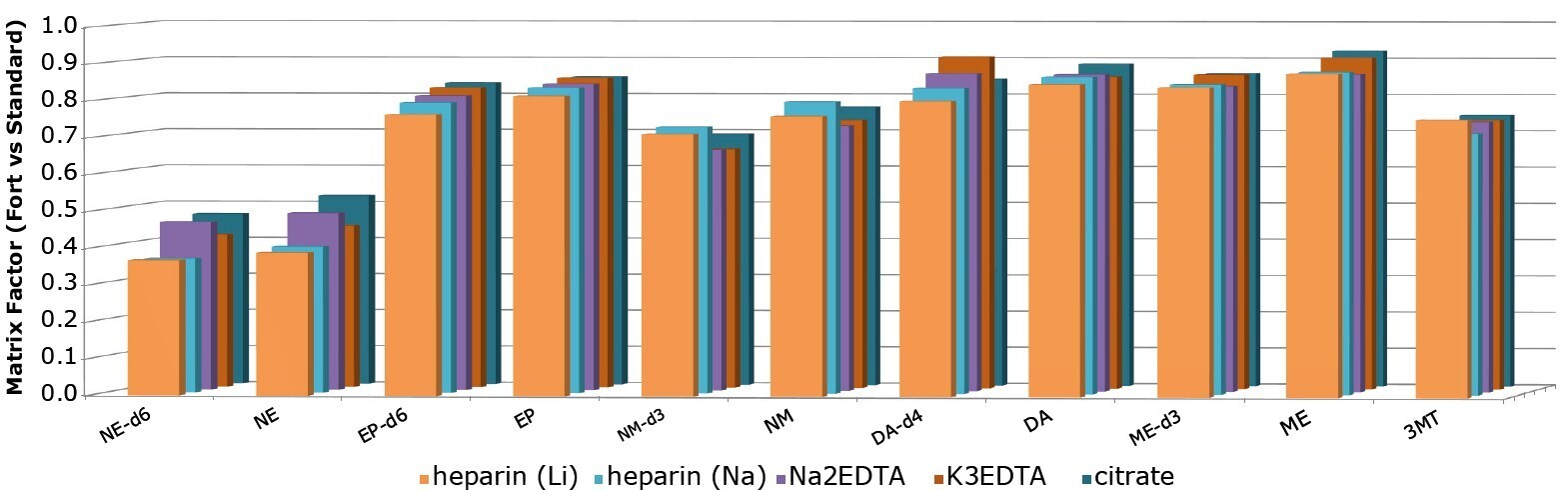
Figure 5. Matrix factors for all matrices (plasma with various anticoagulants).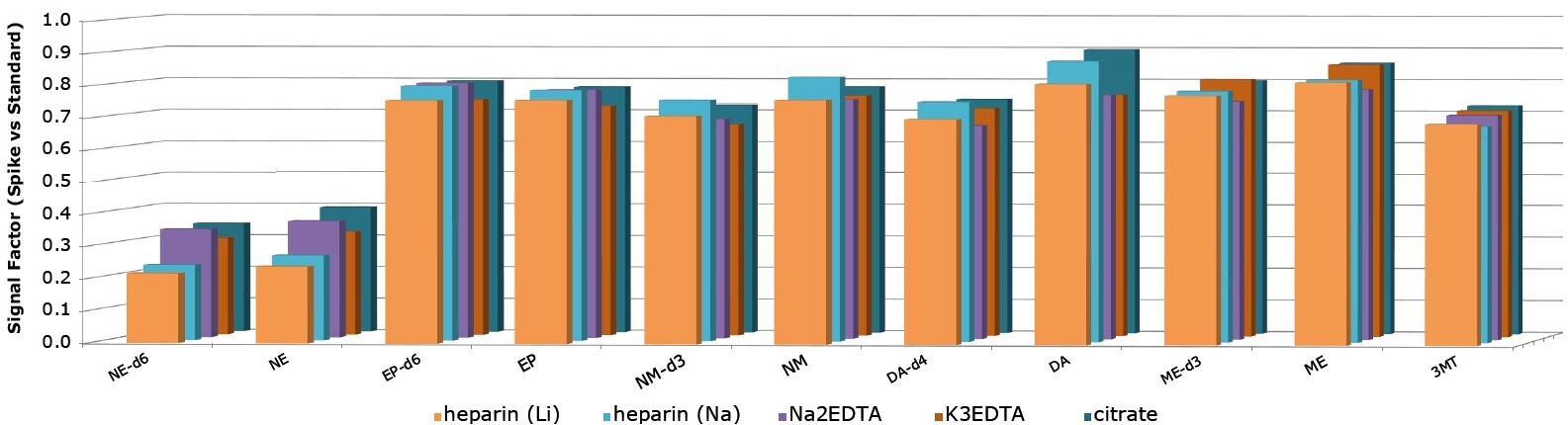
Figure 6. Signal factor for all matrices (plasma with various anticoagulants).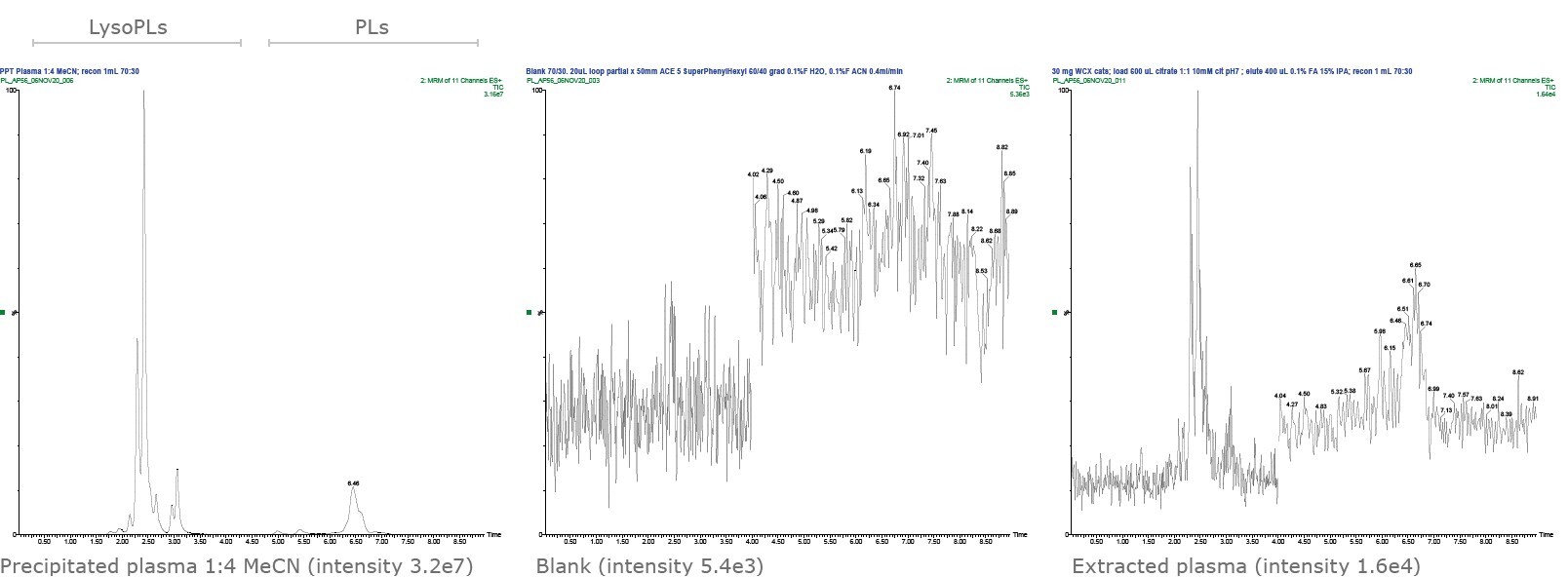
Figure 7. Phospholipid profiles comparing: protein precipitated plasma, blank reconstitution solvent and extracted plasma.
Discussion and conclusion
This method provides high, reproducible recoveries of catechol- amines and metanephrines in human plasma treated with typical clinical anticoagulants.
The sample preparation method performance data above was generated using an elution solvent with high water content and an evaporation-reconstitution workflow. We recommend this approach to minimize matrix effects, e.g. almost zero phospho- lipid breakthrough. The concentration step ensures this method meets clinically relevant reference intervals without needing a cumbersome derivatization step. Evaporation time is typically 80 minutes for a 400 µL elution volume.
Using a more typical high organic content elution or direct injection of the aqueous elution solvent will improve throughput but may have a detrimental effect on performance, respectively increasing the breakthrough of phospholipids in the final elution or raising achievable limits of quantitation. We used 2% formic acid in 80% MeOH (aq) as an alternative elution solvent, evaporation time was typically 40 min. It is possible to directly inject the elution solvent from the method in this application note. However, the injection volume must be reduced to 5 µL so as not to cause peak broadening of early eluting analytes (e.g. norepinephrine).
We demonstrate in previous publications1 that incorporation of additional wash/drying steps enhances assay robustness, reducing system maintenance at the cost of a small increase in turnaround time. During development of this application, cartridge lifespans were typically over 3000 injections (over 500 hours use).
Additional information
Chemicals and reagents
Reagents were purchased from Sigma-Aldrich Company Ltd. (Gillingham UK). LC-MS grade methanol and propan-2-ol (isopropanol) were purchased from Rathburn Chemicals Ltd (Walkerburn UK). Water (18.2 MΩ.cm) was drawn fresh daily from a Milli-Q Direct-Q 5 water purifier (Merck Life Sciences, Gillingham UK).
- Stock standard diluent: ascorbic acid, 0.04% w/v in methanol. Dilute ascorbic acid (39.5 to 40.5 mg) in methanol (100 ± 0.5 mL). Prepare daily immediately prior to use.
- Working standard diluent: ascorbic acid, 0.04% w/v in water. Dilute ascorbic acid (39.5 to 40.5 mg) in deionized water (100 ± 0.5 mL). Prepare daily immediately prior to use.
- Pre-treatment solution: 10 mM sodium citrate pH 7, aq. Dilute trisodium citrate (621 to 625 mg) in deionized water (250 ± 1 mL) and titrate to pH 7.0 using formic acid 10%, aq (approximately 80 µL). Prepare fresh daily.
- Equilibration and aqueous wash solution: 10 mM ammonium acetate pH 6, aq. Dilute ammonium acetate (383 to 387 mg) in deionized water (500 ± 2 mL) and titrate to pH 6.0 using formic acid 10%, aq (approximately 80 µL). Prepare weekly.
Organic wash solution: methanol/water 80:20 v/v. Dilute 20 mL deionized water with 80 mL methanol. - Elution solvent: water/propan-2-ol (85:15, v/v) containing formic acid, 0.1% v/v. Dilute 15 mL propan-2-ol with 85 mL deionized water. Further dilute 0.1 mL formic acid in 99.9 mL of water/propan-2-ol (85:15 v/v).
- Reconstitution solvent: water/methanol (95:5, v/v) containing formic acid (0.1%, v/v). Dilute 5 mL methanol with 95 mL deionized water. Further dilute 0.1 mL formic acid in 99.9 mL of water/methanol (95:5, v/v).
- Mobile phase A: 2 mM ammonium formate containing formic acid, 0.05% v/v in water. Dilute formic acid (500 ± 1 µL) in deionized water (1000 ± 5 mL). Further dilute ammonium formate (124 to 128 mg) in water containing formic acid, 0.05% v/v (1000 ± 5 mL). Prepare every two days or more frequently if needed.
- Mobile phase B: 0.5 mM ammonium fluoride in methanol. Dilute ammonium fluoride (9.2 to 9.7 mg) in methanol (500 ± 2 mL), sonicate for 10 to 15 minutes to aid dissolution. Prepared fresh every two days or more frequently if needed.
Standards
Cerilliant® standards were purchased from Sigma-Aldrich Company Ltd. (Gillingham UK) at 1.0 mg mL-1 in methanol. Deuterated Cerilliant® internal standards were purchased from the same at 100 µg mL-1 in methanol.
Extraction matrices
Gender pooled human plasma was purchased from The Welsh Blood Service (Pontyclun, UK), BioIVT (Burgess Hill, UK), and Golden West Biologicals, Inc. (Temecula, CA). Method linearity and LOQ were determined with plasma prepared using an in-house stripping process. Spike-recovery experiments were performed on unstripped plasma. We recommend plasma is centrifuged for 10 min at 6,000 x g before processing further.
References
- Biotage, 2016. Simultaneous Extraction of Catecholamines and Metanephrines from Plasma Prior to Analysis using LC-MS/MS. Poster P152, presented at MSACL-EU 2016, Salzburg, Austria
Ordering information
|
Part Number |
Description |
Quantity |
|
602-0030-PX01 |
EVOLUTE® EXPRESS WCX 30 mg Plate |
1 |
|
121-5203 |
Collection plate, 2 mL Square |
50 |
|
Manual processing |
||
|
PPM-96 |
PRESSURE+ 96 Positive Pressure Manifold (96 position) |
1 |
|
Evaporation |
||
|
SD-9600-DHS-NA |
Biotage® SPE Dry Sample Concentrator System 220/240 V |
1 |
|
SD-9600-DHS-EU |
Biotage® SPE Dry Sample Concentrator System 100/120 V |
1 |
Literature Number: AN960
