
This application note describes the use of ISOLUTE® HM-N as a support material for pre-adsorption of a reaction mixture prior to flash chromatography. This approach is useful when loading reaction mixtures that are only soluble in polar solvents onto a Biotage® Sfär HC, Sfär or Sfär KP-Amino column.
The problem
Some reaction mixtures are only soluble in a polar solvent such as isopropyl alcohol or acetone. If such a sample is applied to a silica flash column when using normal phase chromatography, the separation will be adversely affected due to the polar nature of the solvent, allowing migration of the components through the column prior to the complete application of the sample. The chromatographic efficiency of the column will be reduced or lost completely.
Traditional method
Traditionally, this problem has been overcome by using silica to pre-adsorb the sample; loose silica is added to the reaction mixture and the solvent subsequently evaporated. However, the silica used can affect the separation if:
- Retention of the compounds on the silica requires a strong solvent for desorption, due to interactions between the silica sorbent and the compounds.
- Silica from a different source to that used in a flash column is used to pre-absorb the sample (different surface pH, surface area etc.).
- There are activity (water content) differences between the silica used to pre-absorb the sample and that packed in the flash column.
The solution
ISOLUTE® HM-N for pre-adsorption
ISOLUTE HM-N is a modified form of diatomaceous earth with an extremely high surface area (Figure 2). The compounds from the reaction mixture are adsorbed onto the surface of the ISOLUTE HM-N. Provided all compounds are soluble in the initial solvent, the compounds will be released from the diatomaceous earth onto the silica flash column. Typically released compounds will re-adsorb onto the silica in a narrow band, effectively pre-concentrating the soluble materials. The result is that compounds are more easily isolated from each other because elution peaks are taller and narrower.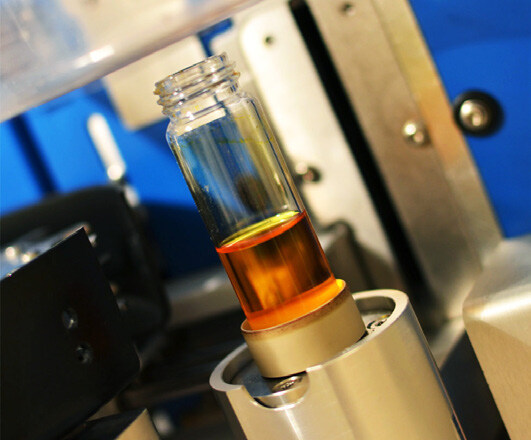
Figure 1. Polar reaction mixtures have long been problematic in normal phase chromatography. Now this problem can easily be overcome using the ISOLUTE® HM-N, greatly improving these separations.
Procedure
ISOLUTE® HM-N is added to the mixture of reaction products and stirred, allowing sufficient time for adsorption of compounds. The solvent is then evaporated or removed as shown using a Biotage® V-10 Touch automated evaporator, or in a gas stream or on a rotary evaporator. Any volatile solvent is suitable; feedback has indicated that dichloromethane, chloroform, acetone and methanol work well. The sample-to-ISOLUTE HM-N ratio is optimal at 2:3. This refers to the mass of dry sample. For a sample mass of 100 mg or less, at least 250 mg of ISOLUTE HM-N is recommended to facilitate easier sample handling.
After solvent evaporation, the ISOLUTE HM-N is dry and free flowing. It can be poured into a Biotage® Sfär-Samplet® or onto the top of a DUO flash column. The column should be gently tapped to evenly distribute the material. An additional frit is then placed onto the ISOLUTE HM-N bed using a frit inserter. It is important to lightly press the frit onto the diatomaceous earth to avoid crushing. If a sealed Biotage® Sfär Column is used the Dry Load Vessels (DLV) option is available for dry loading the sample. The flash chromatography separation can then be carried out as normal.
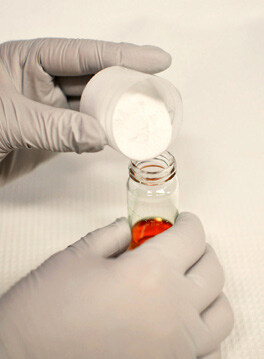
Figure 2. Transfer HM-N to vial for evaporation
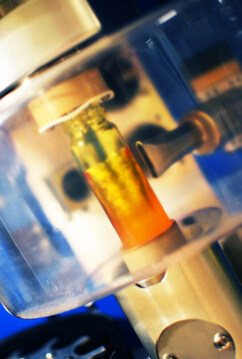
Figure 3. Evaporate solvent
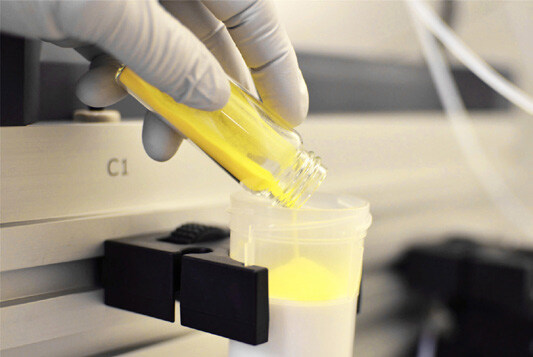
Figure 4. Pour the dried HM-N with adsorbed compounds onto the top of a flash column and gently tap column to evenly distribute the material.
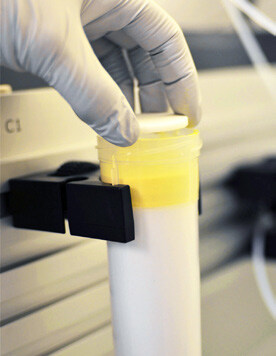
Figure 5. Place an additional frit onto the solvent bed.
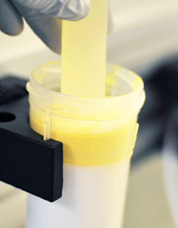
Figure 6. Lightly press the frit onto the diatomaceous earth to avoid crushing.
Ordering information
|
Part Number |
Description |
Quantity |
|
9800-1000 |
ISOLUTE HM-N bulk |
1 kg |
|
9800-5000 |
ISOLUTE HM-N bulk |
5 kg |
|
410497SP |
Sfär 5/10 g Top Frits |
20 pcs |
|
415262SP |
Sfär 25 g Top Frits |
20 pcs |
|
410499SP |
Sfär 50/100 g Top Frits |
20 pcs |
|
415272SP |
Sfär 200/350 g Top Frits |
4 pcs |
|
DLV-0000-0010 |
Biotage® Sfär DLV Empty 10 g Column with frits |
20/cs |
|
DLV-0000-0025 |
Biotage® Sfär DLV Empty 25 g Column with frit |
20/cs |
|
DLV-0000-0050 |
Biotage® Sfär DLV Empty 50 g Column with frit |
20/cs |
|
DLV-0000-0100 |
Biotage® Sfär DLV Empty 100 g Column with frit |
10/cs |
|
DLV-010 |
Biotage® Sfär DLV Plunger for 10 g Column |
1 |
|
DLV-025 |
Biotage® Sfär DLV Plunger for 25 g Column |
1 |
|
DLV-050 |
Biotage® Sfär DLV Plunger for 50/100 g Column |
1 |
|
SFES-0010 |
Biotage® Sfar Empty Samplet® for 5/10 g Column |
20/cs |
|
SFES-0025 |
Biotage® Sfar Empty Samplet® for 25 g Column |
20/cs |
|
SFES-0100 |
Biotage® Sfar Empty Samplet® for 50/100 g Column |
20/cs |
|
SFES-0350 |
Biotage® Sfar Empty Samplet® for 200/350 g Column |
6/cs |
Literature number: AN165
