
Summary
Automation of LC-MS/MS sample preparation enables reliable and reproducible analysis of both cortisol in urine and SDMA in serum. By successfully transferring SLE and PPT workflows to the Biotage® Extrahera™ LV-200, the study demonstrates that automated methods can match manual performance without introducing significant bias. In addition to maintaining analytical quality, automation reduces hands-on time and operator variability. This approach provides clinical laboratories with a scalable solution to meet increasing throughput demands while maintaining consistency across workflows.
Why automation Is critical for clinical LC-MS/MS workflows
Clinical laboratories are under increasing pressure to deliver faster, more reliable results, without increasing workload. Yet many LC-MS/MS workflows still rely on manual sample preparation steps that are time-consuming and prone to variability.
So, how can labs scale efficiently without compromising data quality?
Automated sample preparation is now essential in modern clinical and diagnostic laboratories, driven by demands for higher throughput and consistency. Many assays, including the analysis of biomarkers such as cortisol in urine and symmetric dimethylarginine (SDMA) in serum, still rely heavily on manual workflows.
These workflows often involve:
- Protein precipitation (PPT)
- Supported liquid extraction (SLE)
- Multiple manual handling steps
A recent study carried out at Semmelweis University in Hungary (Figure 1.) explored how automation can address these challenges while maintaining analytical performance. To achieve this, the team transferred both cortisol and SDMA methods (Figure 2.) from manual protocols to the automated system and assessed their performance using LC-MS/MS analysis.
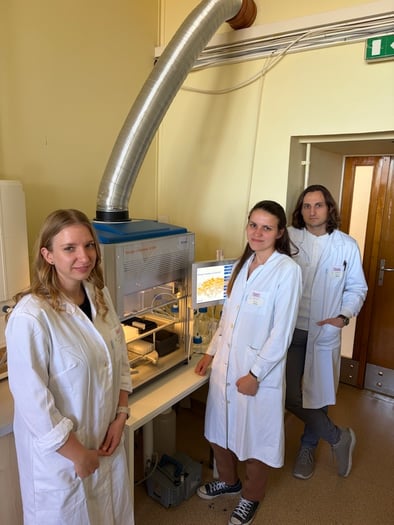 Figure 1. The group of Gellert Karvaly at Semmelweis University.
Automating cortisol analysis in urine using SLE
For cortisol analysis in urine, SLE was used. The automated workflow showed equivalent results when compared to the manual process. Importantly, there was no significant proportional error and the constant error introduced through automation was also negligible. This confirms the automated process reliably reproduces manual performance while reducing hands-on effort.
Automating SDMA analysis in serum using PPT
A similar outcome was observed for SDMA analysis in serum, where PPT was used. Despite a different preparation approach, results were again highly comparable to the manual method. All steps of the sample preparation method were automated, including internal standard addition and precipitation. Therefore, demonstrating the flexibility of the system across different preparation techniques.
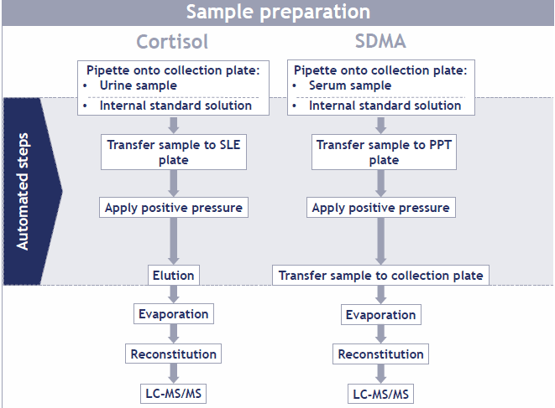
Figure 2. Workflow of sample preparation for urinary cortisol and serum SDMA analysis.
Benefits of automation using the Biotage® Extrahera™ LV-200
By automating these workflows, laboratories can significantly reduce the risk of analyst error and improve batch to batch reproducibility due to laboratory analysts’ skill levels. At the same time, automation frees up valuable analyst time, allowing skilled personnel to focus on higher value tasks rather than repetitive sample preparation steps.
The study also highlights the versatility of the Biotage® Extrahera™ LV-200 platform. Being able to automate both SLE and PPT workflows on the same system is a strong advantage for laboratories handling a wide range of applications. This flexibility supports method standardization across different assays, which is increasingly important in regulated and high-throughput environments.
Biotage® Extrahera™ LV-200 matches manual performance
The results show that laboratories do not need to compromise when moving to automation. Automation with the Biotage® Extrahera™ LV-200 matches traditional performance while improving efficiency, reproducibility, and scalability. For clinical laboratories facing growing sample volumes and increasing pressure for rapid turnaround times, this represents a significant step forward.
The future of clinical sample preparation workflows
Automation will continue to shape the future of laboratory workflows. As demonstrated in this study, platforms like the Biotage® Extrahera™ LV-200 provide a reliable and effective solution for modernizing sample preparation without sacrificing analytical quality. For laboratories considering the move towards automation, this work shows the transition can be seamless and highly beneficial.
Acknowledgements
Biotage would like to acknowledge Orsolya Geda, Éva Csöndör, Róbert Farkas, and Gellért Balázs Karvaly, who carried out the work and generated the results presented in this study at the Laboratory of Mass Spectrometry and Separation Technology, Department of Laboratory Medicine, Faculty of Medicine, Semmelweis University, 4 Nagyvárad Square, 1089 Budapest, Hungary.
