
For research use only. NOT for use in diagnostic procedures.
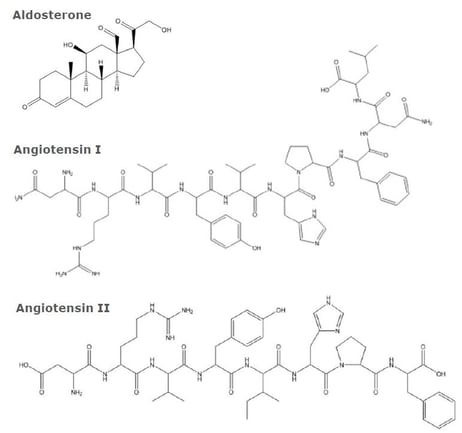 Figure 1. Structures of Aldosterone, Angiotensin I and Angiotensin II .
Introduction
This application note describes the simultaneous extraction of aldosterone and angiotensin from human plasma using the EVOLUTE® EXPRESS ABN Solid Phase Extraction plates prior to LC-MS/MS analysis.
Plasma renin activity (PRA) determination is used in the diagnosis of primary aldosteronism, an important cause of secondary hypertension (high blood pressure). Concomitant measurement of both aldosterone and angiotensin (converted from renin over a time range) in the plasma sample is required. Traditionally the analysis of these species is performed separately. This application note describes the simultaneous extraction of aldosterone at low (< 25pg/mL) concentration and angiotensin I and II from plasma, with the potential to improve throughput and reduce time and costs.
The simple sample preparation procedure delivers clean extracts and analyte recoveries greater than 80% with RSDs lower than 5% for all analytes using LC-MS/MS.
EVOLUTE® EXPRESS solid phase extraction products combine powerful EVOLUTE sorbent chemistry with enhanced ‘EXPRESS’ components. EVOLUTE EXPRESS products dramatically improve flow characteristics, and enhance sample preparation productivity.
Analytes
Aldosterone, Angiotensin I and Angiotensin II
Internal standards
Aldosterone-D4
Sample preparation procedure
Format
EVOLUTE® EXPRESS ABN 30 mg plate, part number 600-0030-PX01
Sample pre-treatment
Spike plasma (250 µL) with ISTD (10 µL at a concentration of 500 pg/mL). Add 50 µL incubation buffer and mix. Incubate at 37 oC for 1hr. Add 10 µL of 10% formic acid (aq) and mix.
Condition
Condition wells with methanol (1 mL).
Equilibration
Equilibrate wells with 0.1% NH4OH (aq) (1 mL).
Sample loading
Load 300 µL of pre-treated plasma and apply positive pressure to achieve approximately 3 mL/minute. Gravity or very low pressure may be sufficient for this step.
Wash 1
Elute interferences with 0.1% NH4OH (aq) (1 mL).
Angiotensin elution
Elute angiotensin with 2% NH4OH in 50/50 (v/v) MeOH/H2O (400 µL). Dry thoroughly before applying the next elution solvent.
Aldosterone elution
Elute aldosterone with ethyl acetate (500 µL).
Elution fractions can be collected separately or combined together in an appropriate 2 mL collection plate.
Post elution and reconstitution
Dry the separate or combined extracts in a stream of air or nitrogen using a SPE Dry at 40 °C, 20 to 40 L/min, for 30 minutes.
For either separate or combined measurement, reconstitute the evaporated samples with 250 µL of 30% Methanol in 0.4% Formic acid and mix well.
UPLC conditions
Instrument
Shimadzu Nexera UHPLC
Column
Restek Biphenyl (50 mm x 2.1 mm, 1.7 µm)
Mobile phase
A: 0.2 mM Ammonium Fluoride (aq) B: Methanol
Flow rate
0.3 mL/min
Injection volume
10 µL
Column temperature
35 °C
Table 1. UHPLC gradient.
|
Time (min) |
%A |
%B |
|
0 |
60 |
40 |
|
1.5 |
60 |
40 |
|
3.5 |
25 |
75 |
|
4 |
20 |
80 |
|
4.1 |
60 |
40 |
MS conditions
Instrument
Shimadzu 8060 Triple Quadrupole MS using ES interface
Nebulizing gas flow
3 L/min
Drying gas flow
5 L/min
Heating gas flow
15 L/min
Interface temperature
400 °C
DL temperature
150 °C
Heat block temperature
500 °C
CID gas flow
300 kPa
Table 2. MS conditions and retention times for target analytes in positive and negative mode. Angiotensin I and II were quantified using the doubly charged ion to maximize sensitivity.
|
Analytes |
MRM Transition |
Collision Energy |
Ion Mode |
|
Angiotensin II |
523.85 > 263.3 |
-17 |
+ |
|
Angiotensin I |
433.0 > 110.0 |
-21 |
+ |
|
433.0 > 647.0 |
|||
|
Aldosterone-D4 |
363.1 > 189.15 |
20 |
- |
|
Aldosterone |
359.1 > 189.15 |
19 |
- |
|
(359.1 > 331.1) |
|||
Results
Removal of phospholipids was demonstrated by monitoring MRM transitions for the common product ion at m/z 184. Figure 3 shows the plasma phospholipid profile comparing lysophospholipids (bottom trace) and larger molecular phospholipids (top trace) extracted using the optimized SPE protocol and compared with 100 µL of serum protein precipi- tated with 400 µL of acetonitrile. The use of a water immiscible organic solvent such as EtOAc for elution of aldosterone eliminated phospholipids compared to more traditional elution solvents such as MeOH or ACN.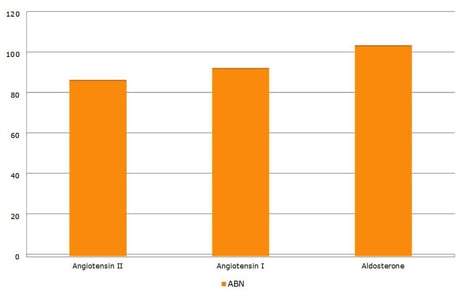 Figure 2. Representative analyte recoveries using the optimized SPE protocol.
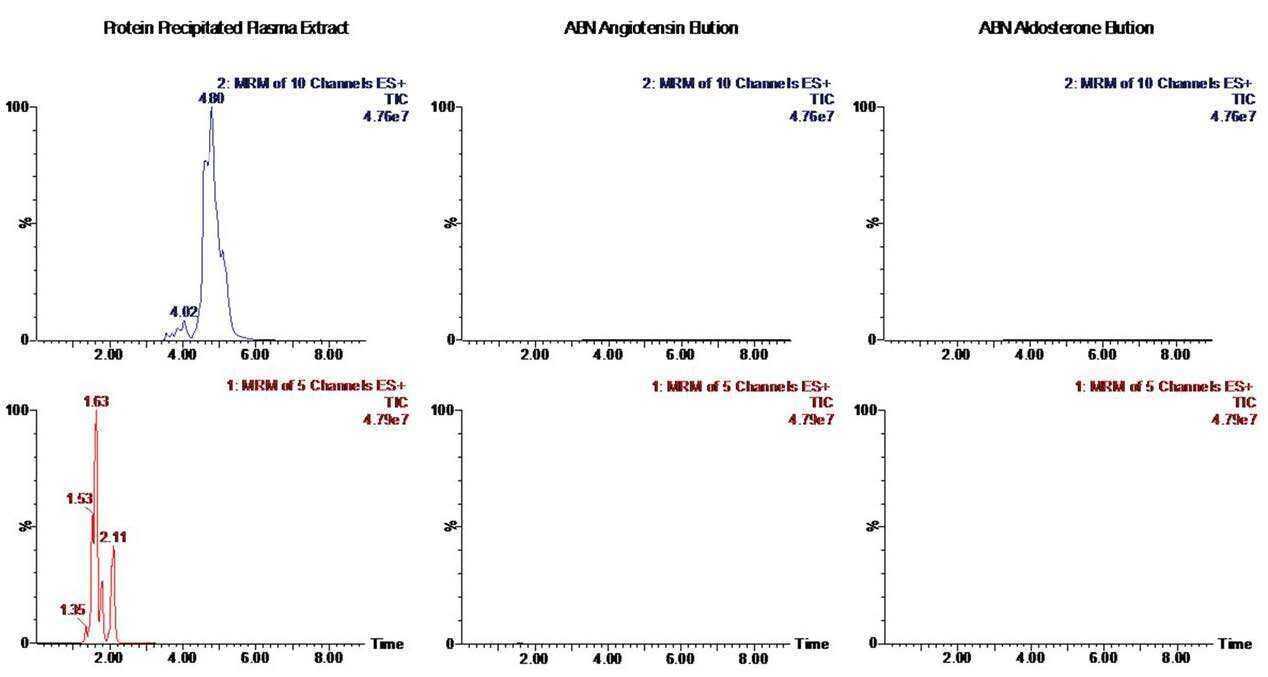 Figure 3. Phospholipid profile comparison between protein precipitated serum and optimized SPE extracts using ethyl acetate and 2% NH4OH in 50/50 (v/v) MeOH/H2O as elution solvents.
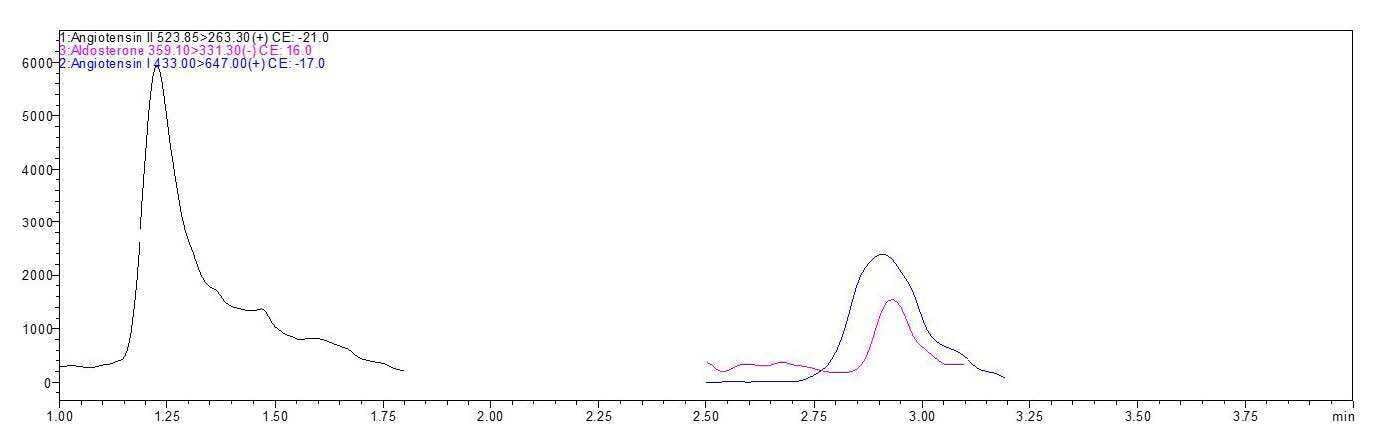 Figure 4. Representative chromatography for analytes spiked at 1 ng/mL.
Calibration curve performance was investigated from plasma spiked between 10–10000 pg/mL. Good linearity was observed for all analytes typically delivering r2 values greater than 0.999. Table 3. details linearity performance and associated LOQ for each analyte.
Table 3. Analyte calibration curve r2 and LOQ performance.
|
Analyte |
r2 |
LLOQ (pg/mL) |
|
Angiotensin I |
0.999 |
10 |
|
Angiotensin II |
0.999 |
10 |
|
Aldosterone |
0.999 |
< 25 |
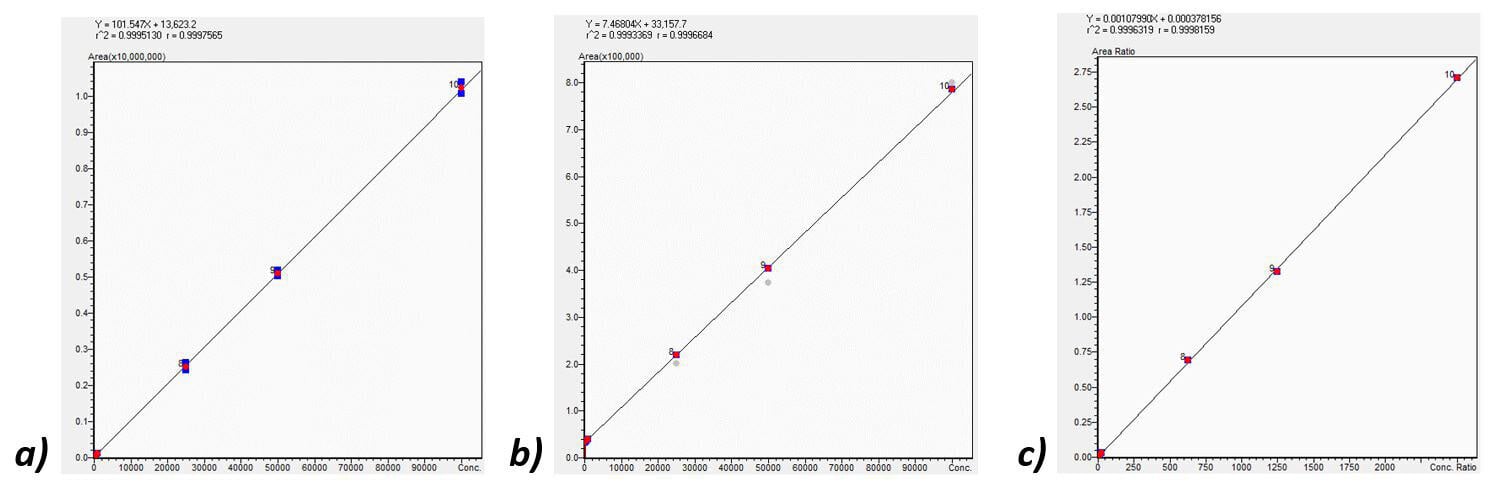
Figure 5. Calibration curves for Angiotensin I (a), Angiotensin II (b), Aldosterone (c) using plasma containing K2 EDTA anti-coagulant.
Additional information
- Internal standard (aldosterone-D4) stock was 100 µg/mL in ACN
- Stock solution was serial diluted with MeOH to obtain the required concentration.
- 10 µL of internal standard solution is added to the sample
- Addition of ‘incubation buffer’ to the sample prevents the natural process of conversion of Angiotensin I to Angiotensin II, allowing accurate quantification of each species. Subsequent 10% Formic Acid (aq) ends the incubation process.
- To make up the incubation buffer:
Stock buffer:
- 1 M Tris (12.1g of Trizma base)
- 0.2M EDTA (7.4 g)
- Dissolve with 80 mL of ultra-pure water
- Adjust to pH 5.5 with acetic acid
- Make up to 100 mL with ultra-pure water and store at +5 °C
Inhibitors:
- 100 mM phenylmethylsulfonyl fluoride (PMSF): 0.174 g in methanol q.s. 10 mL. Store at +5 °C
- Soybean Trypsin inhibitor (SBTI) 30 µg/mL: 0.3g in water q.s. 10 mL. Store at +5 °C
Incubation buffer:
- Add extemporaneously 100 µL of PMSF and SBTI solutions to 10 mL of stock buffer
- LC-MS/MS conditions: Ammonium fluoride increased sensitivity in both positive and negative ion modes.
Ordering information
|
Part Number |
Description |
Quantity |
|
600-0030-PX01 |
EVOLUTE® EXPRESS ABN 30 mg plate |
1 |
|
PPM-96 |
Biotage® PRESSURE+ 96 Positive Pressure Manifold |
1 |
|
SD1-9600-DHS-NA |
Biotage® SPE Dry Sample Concentrator System, 100/120V |
1 |
|
SD1-9600-DHS-EU |
Biotage® SPE Dry Sample Concentrator System, 220/240V |
1 |
Literature Number: AN894
