
QuEChERS is a sample preparation technique commonly used in food safety testing for pesticide residue analysis. This two-stage extraction and clean-up technique was developed to streamline sample processing, making it Quick, Easy, Cheap, Effective, Rugged and Safe. ISOLUTE® cSPE for QuEChERS are pre-packed cartridges designed to further improve the efficiency of the QuEChERS clean-up procedure.
Traditionally, clean-up of QuEChERS extracts for pesticide residue analysis relies on dispersive solid phase extraction (dSPE). The dSPE workflow requires that the sample is shaken with the dSPE media and then centrifuged to separate the clean sample extract. Alternatively, ISOLUTE® cSPE for QuEChERS cartridges are packed with QuEChERS ‘dispersive SPE’ sorbent blends allowing convenient flow-through sample processing using column solid phase extraction (cSPE). In addition, the cSPE workflow can be automated on a Biotage® ExtraheraTM sample preparation workstation leading to increased throughput, reduced errors, and improved data quality.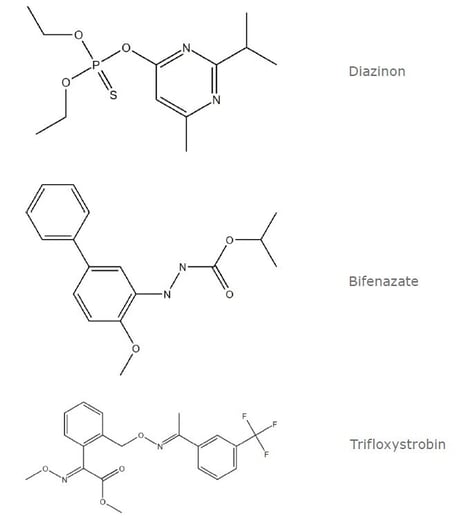
Figure 1. Example of pesticide structures.
Introduction
This application note describes the extraction of a panel of 63 commonly analysed pesticides from spinach using a two-step QuEChERS workflow. Samples are first homogenized and extracted with ISOLUTE® AOAC QuEChERS extraction salts using the Biotage® Lysera™ bead mill homogenizer. Following centrifu- gation, an aliquot of extract is cleaned up using ISOLUTE® cSPE for QuEChERS cartridges, processed using a Biotage® Extrahera™ automated sample preparation workstation. Extracts are evaporated using TurboVap™ Dual 96 and analysis is performed using LC-MS/MS.
This application note includes optimised conditions for homogenization, extraction, extract clean-up, evaporation, and analysis.
Analytes
To demonstrate the versatility of the sample preparation approach, a panel of 63 analytes were selected to reflect a broad range of pesticide classes and chemical characteristics. The pesticides analysed in this application note are listed below.
Propamocarb, Acephate, Methomyl, Methamidophos, Pentachloronitrobenzene, Thiamethoxam, Flonicamid, Flupyradifurone, Sulfoxaflor, Imidacloprid, Thiacloprid, Clothianidin, Dimethoate, Phosdrin, Spiroxamine, Imazalil, Metalaxyl, Carbofuran, Dichlorvos, Oxamyl, Atrazine, Propoxur, Carbaryl, Spinosad, Dimethomorph, Pyridaben, Spirotetramat, Phosmet, Paclobutrazol, Methiocarb, Mandipropamid, Azoxystrobin, Fluopyram, Fluopicolide, Fluxapyroxad, Methoxyfenozide, Penthiopyrad, Boscalid, Propiconazole, Fenbuconazole, Malathion, Iprodione, Kresoxim methyl, Isoprothiolane, Fenamidone, Tebuconazole, Fenhexamid, Fenoxycarb, Systhane, Ethoprophos, Cyflufenamid, Trifloxystrobin, Buprofezin, Pirimiphos methyl, Diazinon, Dibrom, Cyflumetofen, Spirodiclofen, Spiromesifen, Etoxazole, Piperonyl butoxide, Chloropyrifos, Pyriproxyfen.
Sample preparation procedure
Format
Step 1: QuEChERS Extraction: ISOLUTE® AOAC QuEChERS extrac- tion salts (6 g MgSO4 and 1.5 g Na acetate) p/n Q0010-15V
Step 2: cSPE Clean-up: ISOLUTE® AOAC Pigment 150 mg/ 3 mL (Tabless), p/n Q0070-0015-BG
Homogenization
15 g of spinach was weighed into a 50 mL centrifuge tube and frozen. 5 g of ceramic beads were added to the centrifuge tube and three samples were homogenized simultaneously using the Biotage® Lysera and 50 mL tube carriage with the following settings:
- Speed: 5 m/s
- Processing Time: 30 seconds
- Number of Cycles: 3
- Dwell Time: 10 seconds
Note: Freezing the sample aids in a more successful homogeni- sation and reduces the risk of increased temperatures. Many pesticides are thermally sensitive to any heat generated during sample processing which may result in loss of recoveries for these compounds. Use of the Biotage® Lysera with optional Cryo Cooling Unit can prevent increase of sample temperature and may protect heat sensitive samples during homogenization.
Step 1: QuEChERS extraction
15 mL of acetonitrile and the ISOLUTE® AOAC QuEChERS extrac- tion salts were added to the homogenized spinach and shaken using the Lysera with the following settings:
-
Speed: 2.4 m/s
-
Processing Time: 15 seconds
-
Number of Cycles: 1
-
Dwell Time: N/A
The samples were then centrifuged for 5 minutes at 5000 RCF. To evaluate the performance of ISOLUTE® cSPE for QuEChERS clean-up, the supernatant was spiked at a concentration of 32 ppb with a mixture of 63 pesticides (see Additional Information). No internal standards were used.
Step 2: Automated clean-up procedure
An excess of 1 mL of supernatant from step 1 was transferred into 16 x 100 mm test tubes and placed into the upper processing shelf of the Biotage® Extrahera™ HV-5000, (position 4, sample rack 16 x 100 mm, 24 positions). ISOLUTE® AOAC Pigment cSPE cartridges (p/n Q0070-0015-BG) were placed onto the upper processing shelf of the Extrahera™ HV-5000 (position 3, column rack 24 x 3 mL), while collection vials were placed in the lower collection carousel (position B, collection rack 12 x 75 mm). Using the Extrahera™ HV-5000, 1 mL of QuEChERS extract was loaded onto each column. The columns were processed by applying 0.5 bar for 210 seconds, followed by 5 bar for 15 seconds and a 15 second plate dry. An additional 200 µL of acetonitrile was dispensed into the columns and processed by applying 1.2 bar for 90 seconds, followed by 5 bar for 15 seconds and a 15 second plate dry. Extracts and the additional acetoni- trile volume were collected directly into LC vials.
For options to increase batch size and throughput with minimal sample transfer steps, see Appendix 2.
Post extraction
Samples were evaporated using the TurboVap™ 96 Dual with the following parameters:
- 24 Configuration, Single Mode
- Gas Temp: 25 °C
- Plate Temp: 25 °C
- Gas Flow: 25 L/min
- Plate Height: 56 mm
- Time: 30 minutes
Extracts were reconstituted with 20 µL of Methanol plus 380 µL of H2O and vortexed prior to analysis.
Analytical conditions
UHPLC conditions
Instrument
Waters Acquity UPLC
Column
ACE EXCEL C18 100mm 2.1 1.7µ equipped with security guard.
Mobile phase
A: 0.1 % Formic acid in Water B: Acetonitrile
Flow rate
0.3 mL/min
Column temperature
40 °C
Autosampler temperature
10 °C
Injection volume
10 μL (Partial Loop with Needle Overfill)
Table 1. UHPLC gradient.
|
Time (min) |
% A |
% B |
Curve |
|
0 |
95 |
5 |
1 |
|
8 |
5 |
95 |
6 |
| 12 | 5 | 95 | 11 |
| 13 | 95 | 5 | 1 |
Curve settings: 1; 6 linear gradient; 11.
Table 2. MS/MS conditions
|
Instrument |
Waters Quattro Premier XE |
|
Desolvation Gas Flow |
1200 L/hr |
|
Cone Gas Flow |
50 L/r |
|
Source Temp |
150 |
|
Desolvation Temp |
450 |
|
Capillary Voltage |
4 kV |
|
Extractor Voltage |
3V |
The monitored ions for each compound are listed in table 3 below. Ions were acquired using Multiple-reaction monitoring (MRM) in positive ion mode.
Table 3. Ions monitored for each analyte.
|
Propamocarb |
189.2 > 102.1 |
|
Acephate |
184 > 142.9 |
|
Methomyl |
163 > 87.9 |
|
Methamidophos |
142 > 94 |
|
Pentachloronitrobenzene |
292.1 > 211 |
|
Thiamethoxam |
292 > 211 |
|
Flonicamid |
230.1 > 203 |
|
Flupyradifurone |
289.1 > 125.9 |
|
Sulfoxaflor |
278.2 > 174.1 |
|
Imidacloprid |
256 > 175 |
|
Thiacloprid |
253.1 > 126 |
|
Clothianidin |
250.1 > 168.9 |
|
Dimethoate |
230 > 198.8 |
|
Phosdrin |
225.2 > 193.1 |
|
Spiroxamine |
298.3 > 144.1 |
|
Imazalil |
297.2 > 297.2 |
|
Metalaxyl |
280.2 > 220.1 |
|
Carbofuran |
222.2 > 165.1 |
|
Dichlorvos |
221 > 109 |
|
Oxamyl |
220.2 > 192.1 |
|
Atrazine |
216.2 > 174.1 |
|
Propoxur |
210.2 > 111 |
|
Carbaryl |
202.1 > 145 |
|
Spinosad |
732.3 > 142.1 |
|
Dimethomorph |
388.1 > 301.1 |
|
Pyriclaben |
374.1 > 302.2 |
|
Spirotetramet |
374.1 > 330.1 |
|
Phosmet |
318 > 159.9 |
|
Paclobutrazol |
294.3 > 70.1 |
|
Methiocarb |
226.1 > 169 |
|
Mandipropamid |
412.2 > 328.2 |
|
Azoxystrobin |
404.1 > 372 |
|
Fluopyram |
397.2 > 173.2 |
|
Fluopicolide |
383 > 173 |
|
Fluxapyroxad |
382.4 > 362.3 |
|
Methoxyfenozide |
369.4 > 149.1 |
|
Penthiopyrad |
360.1 > 276.1 |
|
Boscalid |
343.1 > 139.9 |
|
Propiconazole |
342 > 158.8 |
|
Fenbuconazole |
337.2 > 70.2 |
|
Malathion |
331.1 > 127 |
|
Iprodione |
330 > 245 |
|
Kresoxim methyl |
314 > 115.9 |
|
Isoprothiolane |
313.2 > 166.9 |
|
Fenamidone |
312.2 > 236.2 |
|
Tebuconazole |
308.1 > 70 |
|
Fenhexamid |
302.1 > 97 |
|
Fenoxycarb |
302.1 > 88 |
|
Systhane |
289.2 > 70.1 |
|
Ethoprophos |
243.1 > 173 |
|
Cyflufenamid |
413.2 > 295.2 |
|
Trifloxystrobin |
409 > 185.9 |
|
Buprofezin |
306.4 > 201.3 |
|
Pirimiphos methyl |
306.2 > 164.1 |
|
Diazinon |
305.2 > 153 |
|
Dibrom |
301.2 > 133 |
|
Cyflumetofen |
448.2 > 173.2 |
|
Sprodiclofen |
411.2 > 71.1 |
|
Spiromesifen |
371.4 > 255.3 |
|
Etoxazole |
360.3 > 141 |
|
Piperonyl butoxide |
356.4 > 177.2 |
|
Chloropyrifos |
350 > 198 |
|
Pyriproxyfen |
322.2 > 95.9 |
Using the automated cSPE procedure described in this application note, a panel of 63 pesticides spiked into spinach extracts were cleaned up using cSPE. Out of 63 pesticides, the majority demonstrated recovery between the acceptable limits of 70-130%, with most being between 80 and 100%. Figure 2 shows recoveries obtained from spinach extract spiked prior to cSPE clean-up at a concentration equivalent to 32 ppb in raw spinach (n=6). Good reproducibility was achieved, from 63 analytes, nearly all demonstrated relative standard deviation (RSD) lower than 20% (n=6). Figure 3 shows %RSD obtained from spinach extract spiked prior to cSPE clean-up at a concentration equivalent to 32 ppb in raw spinach. Automation of the method ensures variation is kept to a minimum. Figure 2. Average analyte % recoveries obtained from spinach extract spiked at a concentration equivalent to 32 ppb in raw spinach (n=6). Analytes shown in order of chromatographic elution.
 Figure 3. % RSDs obtained from spinach extract spiked at a concentration equivalent to 32 ppb in raw spinach (n=6).
Linearity and LOQ
Calibration curves were produced for spinach extract spiked with pesticides, within the concentration range 0.4 ppb to 80 ppb (equivalent in raw spinach).
To ensure that calibration samples reflect real samples as closely as possible, samples were prepared using pooled spinach extract (from QuEChERS step 1). The highest-level spiked sample was prepared at a concentration of 80 ppb. The remaining spiked samples were prepared by a serial dilution of the highest-level spiked sample using additional blank spinach extract. 1 mL of each concentration of calibration samples were then cleaned up using cSPE cartridges.
Calibration curves were generated down to 0.4 ppb. Where analyte sensitivity was below this level, an estimate of LOQ has been determined based on signal to noise ratios (S/N) > 10:1, see table 4 below. Good linearity was observed for most analytes, typically r2 values greater than 0.99.
Table 4. Linearity
|
Compound |
r2 |
LOQ (ppb) |
|
Propamocarb |
0.872 |
<0.01 |
|
Acephate |
0.985 |
1.6 |
|
Methomyl |
0.987 |
<0.1 |
|
Methamidophos |
0.999 |
0.4 |
|
Pentachloronitrobenzene |
0.987 |
0.4 |
|
Thiamethoxam |
0.989 |
0.4 |
|
Flonicamid |
0.998 |
0.4 |
|
Flupyradifurone |
0.997 |
0.4 |
|
Sulfoxaflor |
0.976 |
1.6 |
|
Imidacloprid |
0.999 |
1.6 |
|
Thiacloprid |
0.999 |
1.6 |
|
Clothianidin |
0.999 |
0.4 |
|
Dimethoate |
0.994 |
0.4 |
|
Phosdrin |
0.996 |
0.4 |
|
Spiroxamine |
0.997 |
0. 8 |
|
Imazalil |
0.997 |
0. 8 |
|
Metalaxyl |
0.985 |
0. 8 |
|
Carbofuran |
0.991 |
0.4 |
|
Dichlorvos |
0.913 |
1.6 |
|
Oxamyl |
0.983 |
<0.1 |
|
Atrazine |
0.998 |
0.4 |
|
Propoxur |
0.989 |
0.4 |
|
Carbaryl |
0.995 |
0. 8 |
|
Spinosad |
0.994 |
<0.1 |
|
Dimethomorph |
0.994 |
0.4 |
|
Pyriclaben |
0.991 |
0.4 |
|
Spirotetramet |
0.991 |
0.4 |
|
Phosmet |
0.921 |
0.8 |
|
Paclobutrazol |
0.998 |
0.4 |
|
Methiocarb |
0.995 |
0.4 |
|
Mandipropamid |
0.976 |
0.4 |
|
Azoxystrobin |
0.981 |
0.8 |
|
Compound |
r2 |
LOQ (ppb) |
|
Fluopyram |
0.979 |
0.8 |
|
Fluopicolide |
0.980 |
0.8 |
|
Fluxapyroxad |
0.972 |
0.8 |
|
Methoxyfenozide |
0.993 |
0.8 |
|
Penthiopyrad |
0.994 |
0.8 |
|
Boscalid |
0.992 |
0.4 |
|
Propiconazole |
0.997 |
0.4 |
|
Fenbucanozole |
0.989 |
<0.1 |
|
Malathion |
0.981 |
1.6 |
|
Iprodine |
0.980 |
1.6 |
|
Kresoxim methyl |
0.995 |
0. 8 |
|
Isoprothiolane |
0.928 |
1.6 |
|
Fenamidone |
0.986 |
1.6 |
|
Tebuconazol |
0.992 |
0.8 |
|
Fenhexamid |
0.991 |
1.6 |
|
Fenoxycarb |
0.986 |
1.6 |
|
Systhane |
0.982 |
1.6 |
|
Ethoprophos |
0.975 |
1.6 |
|
Cyflufenamid |
0.985 |
0.4 |
|
Trifloxystrobin |
0.991 |
<0.1 |
|
Buprofezin |
0.987 |
0.4 |
|
Pirimiphos methyl |
0.980 |
0.4 |
|
Diazinon |
0.993 |
0.4 |
|
Dibrom |
0.997 |
0.8 |
|
Cyflumetofen |
0.980 |
0.8 |
|
Sprodiclofen |
0.973 |
0.8 |
|
Spiromesifen |
0.957 |
1.6 |
|
Etoxazole |
0.986 |
0.4 |
|
Piperonyl butoxide |
0.897 |
0.4 |
|
Chloropyrifos |
0.990 |
0.8 |
|
Pyriproxyfen |
0.988 |
0.4 |
*Data generated without the use of internal standards, see additional information.
Calibration curves
Calibration curves for selected pesticides are show in figures 4-7 below.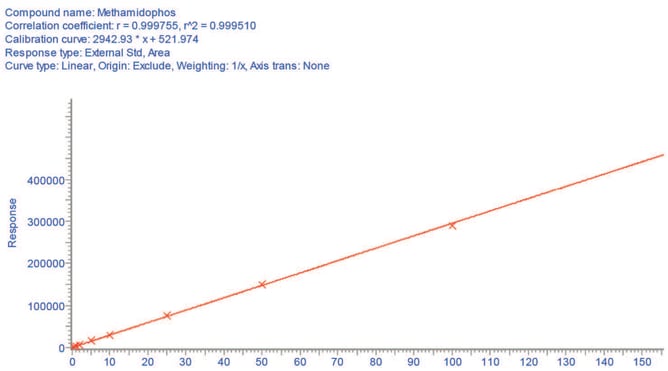 Figure 4. Methamidophos, calibration range 0.4 – 80 ppb
 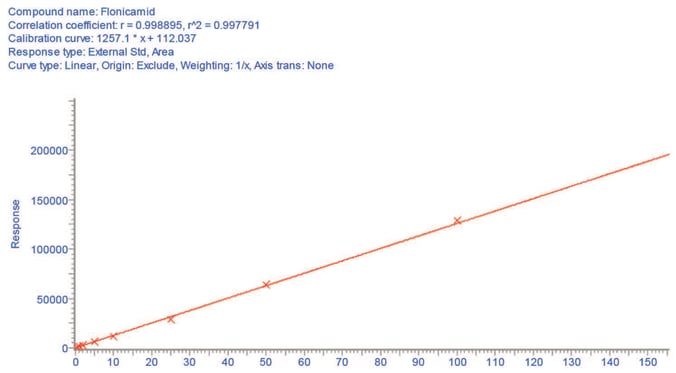 Figure 5. Flonicamid, calibration range 0.4 – 80 ppb
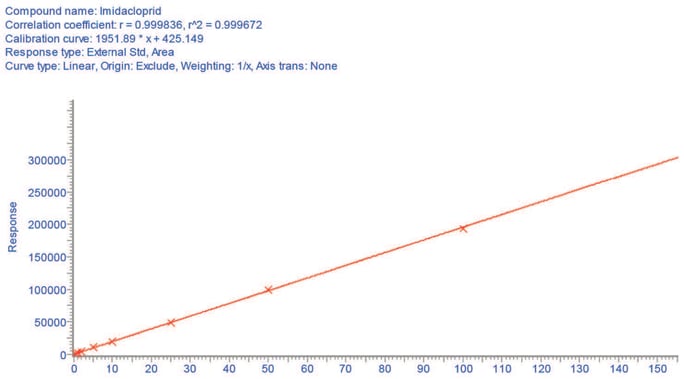 Figure 6. Imidacloprid, calibration range 0.4 – 80 ppb
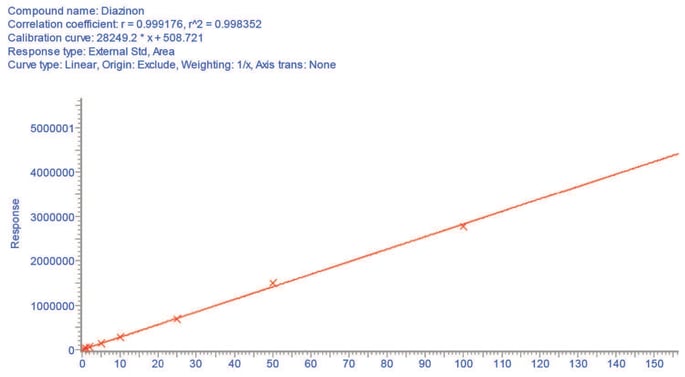 Figure 7. Diazinon, calibration range 0.4 – 80 ppb
Discussion and conclusion
The use of ISOLUTE® cSPE for QuEChERS cartridges provides a simple, robust flow-through clean-up of QuEChERS extracts from spinach samples for pesticide analysis. The cartridges deliver high recoveries, low RSDs, and exceptionally clean extracts.
Good linearity was achieved across a wide calibration range for all analytes, demonstrating that the flow-through cSPE approach provides consistent analyte recovery and matrix removal at all concentration levels, with LOQ typically < 1 ppb.
When automated using the Biotage® Extrahera™ HV-5000, a batch of 24 samples can be processed in 9.2 minutes (13.75 minutes for 48 samples). ISOLUTE® cSPE for QuEChERS cartridges provide a simplified extract clean-up workflow when compared to the dSPE equivalent (see figure 8). This results in fewer manual transfer steps and higher throughput. In comparison, the equivalent dSPE clean-up procedure takes 23.5 minutes for a batch of 24 samples.
Traditionally QuEChERS using dSPE for clean-up does not utilize a concentration step. However, standard QuEChERS methods (AOAC, EN and mini-multiresidue) allow for an evaporative concentration step where solvent exchange from acetonitrile to one that is both beneficial to the LC system and the pesticides. Typically, a concentration factor of x4 is utilized.
To improve our working sample concentration, range we incorporated a post clean-up evaporation and reconstitution step. After cSPE clean-up the extract was evaporated to dryness under highly controlled ambient conditions using the TurboVap® 96 Dual and reconstituted in a total volume of 400 µL of water: methanol (95:5 v/v), from which 10 µL was injected. No signifi- cant evaporative losses were observed. This represents a 2.5 x increase in analyte concentration injected into the LC-MS/MS system, allowing for a more appropriate injection solvent for analysis.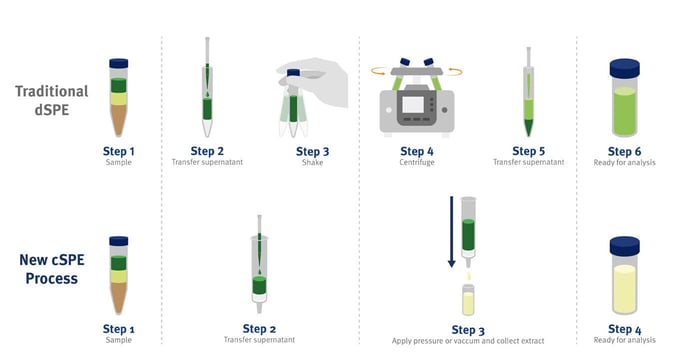 Figure 8. Comparison of dSPE vs cSPE clean-up workflow
Chemicals and reagents
- All pesticide stock solutions were purchased from LGC Ltd. (Middlesex, UK) and stored at -20°C.
- California Pesticide Class 1, Class 2A, Class 2B mixes were purchased at 100 µg/mL. All other compounds were purchased as individual stocks at 1 mg/mL and diluted to 100 µg/mL with acetonitrile.
- A spiking solution was prepared weekly in methanol at a concentration of 4 µg/mL and stored at -20°C.
- Methanol was purchased from Rathburn Chemicals Ltd. (Walkerburn, UK).
- Acetonitrile was purchased from Rathburn Chemicals Ltd. (Walkerburn, UK).
Additional information
Preparation of pooled sample for cSPE evaluation
The focus of this application note is evaluation of the automated clean-up step using cSPE cartridges. Therefore, to provide homogenous samples for comparison purposes, supernatants prepared in step 1 were pooled and spiked appropriately with pesticide standards. 1 mL aliquots of the pooled supernatants were used for evaluation of the cSPE clean-up step.
For recovery testing, the pooled sample was spiked at a concentration of 40 ng/mL which equates to 32 ppb in raw spinach matrix. This is calculated with the assumption that 15 g of spinach matrix with QuEChERS salts results in 12 mL of supernatant for cSPE clean up. Supernatant volumes will be dependent on matrix type and initial QuEChERS salt used.
For determination of linearity and LOQ, the highest-level spiked sample was prepared at a concentration of 80 ppb. The remaining spiked samples were prepared by a serial dilution of the highest-level spiked sample with the pooled blank spinach extract.
Use of internal standards
No internal standardisation was used in this application note, however if used, we would recommend that appropriate internal standards were added to the homogenised matrix along with acetonitrile and QuEChERS salts during step 1, prior to mixing and subsequent centrifugation.
Evaporation and reconstitution
The use of the LC vials (Greyhound p/n 545100-406) for extract collection, evaporation and reconstitution reduces variability by eliminating any transfer steps. Pre-clean up, and pre-and post-evaporation samples vials are illustrated in figure 9 below. Pre-evaporation sample (center) consists of 1 mL of spinach extract in acetonitrile after passing through the cSPE column (Q0070-0015-BG). Post-evaporation sample (right) is the same extract after evaporation to dryness and reconstitution in 400 µL H2O: MeOH 95:5 v/v (2.5 x concentration factor). Direct to LC vial elution eliminates the need for sample transfer for evapora- tion, and further reduces the risk of analyte loss. Figure 9. Pre-cleanup (left), post-clean-up/pre-evaporation (middle) and post evaporation and reconstitution (right) samples. Note the exceptional removal of pigment from the raw spinach extract provided by the flow through ISOLUTE® cSPE cartridges.
Literature Number: AN1007
