
Introduction
Breastfeeding offers significant health benefits for both infants and mothers, promoting optimal nutrition, immune protection, and developmental outcomes. However, maternal use of illicit drugs or misuse of prescription medications during lactation can result in the transfer of potentially harmful substances into breast milk, posing serious risks to the nursing infant. Consequently, the ability to accurately detect and quantify drugs of abuse in breast milk is critical for clinical toxicology, forensic investigations, and public health monitoring.
This application note demonstrates a robust and sensitive analytical workflow for the detection of commonly encountered drugs of abuse in human breast milk. Leveraging advanced sample preparation with ISOLUTE® cSPE for QuEChERS and liquid chromatography-tandem mass spectrometry (LC-MS/MS), the method achieves high recovery, low detection limits, and reliable quantification across a range of drug classes.
Analytes
6-AM, 7-AC, 7-aminoflunitrazepam, Alpha-hydroxyalprazolam, Alprazolam, Amitriptylene, Amphetamine, Benzoylecgonine, Bromazepam, Buprenorphine, Chlordiazepoxide, Clonazepam, Clonidine, Clozapine, Cocaine, Codeine, Cyclobenzaprine, Desalkylflurazepam, Diazepam, Estazolam, Fentanyl, Flurazepam, Gabapentin, Hydrocodone, Hydromorphone, Ketamine, Lamotrigine, Lorazepam, Mephedrone, Methadone, Midazolam, Morphine, Naloxone, Nordiazepam, Norfentanyl, Norhydrocodone, Norketamine, Nortriptylene, O-desmethyltramadol, Oxazepam, Oxycodone, Oxymorphone, Phencyclidine PCP, Phenobarbital, Phenytoin, Pregabalin, Ritalinic acid, Risperidone, Secobarbital , Temazepam, Trazodone, Triazolam, Xylazine, Zolpidem, Zopiclone
Sample preparation procedure
Format
ISOLUTE® cSPE for QuEChERS
ISOLUTE® EN General 200 mg/3 mL (Tabless) (p/n Q0035-0020-BG)
Processing
Samples were processed using Biotage® PRESSURE+ 48 positive pressure manifold (p/n PPM-48). Alternatively, processing can be automated using the Biotage® Extrahera™ automated sample preparation workstation.
Extraction procedure
Dilute breast milk 1:1 (v/v) with water. Crash 200 µL of pretreated sample with 800 µL acetonitrile. Vortex samples for 1 minute and load the full volume onto ISOLUTE® EN General 3 mL cSPE cartridge. Apply 2-4psi via positive pressure and collect the eluant.
Post-extraction
Dry the extract in a stream of nitrogen at 50 L/min flow, 40 ◦C (gas), 60 ◦C (plate) using TurboVap® 96 Dual. Reconstitute with 95:5 (v/v) water: methanol containing 0.1% FA.
Analytical conditions
U/HPLC conditions
Instrument: Nexera UHPLC
Column: Restek Biphenyl 50 mm 2.7x 3.0 mm
Mobile phase:
A: 0.1% formic acid in water
B: 0.1% formic acid in methanol
Flow rate: 0.45 mL/min
Injection volume: 5 µL
Column temperature: 40 °C
Gradient details:
|
Time |
%A |
%B |
|
0.01 |
90 |
10 |
|
6 |
0 |
100 |
|
8.5 |
0 |
100 |
|
8.7 |
90 |
10 |
|
10.5 |
90 |
10 |
MS/MS conditions
Instrument: Sciex 5500 MSD
Ion source temperature: 550 °C
Curtain gas: 40 psi
Source gases: GS1 50 psi/GS2 55 psi
MRM parameters
Table 1. Analyte MRM transitions and ionization settings.
|
Sample Name |
Q1 |
Q3 |
TR |
DP |
EP |
CE |
CXP |
|
6-AM |
328.1 |
165.2 |
2.5 |
141 |
10 |
51 |
8 |
|
7-AC |
286.0 |
222.1 |
3.7 |
161 |
10 |
33 |
8 |
|
7-aminoflunitrazepam |
284.1 |
135 |
4.3 |
120 |
10 |
35 |
8 |
|
Alpha-hydroxyalprazolam |
325.2 |
297 |
5.3 |
100 |
10 |
35 |
12 |
|
Alprazolam |
309.1 |
281.2 |
5.7 |
121 |
10 |
35 |
6 |
|
Amitriptylene |
278.1 |
117.03 |
4.6 |
121 |
10 |
29 |
6 |
|
Amphetamine |
136.1 |
91.049 |
2.1 |
71 |
10 |
23 |
6 |
|
Benzoylecgonine |
290.1 |
168.3 |
3.5 |
111 |
10 |
27 |
8 |
|
Bromazepam |
318.0 |
182 |
5 |
100 |
8 |
43 |
6 |
|
Buprenorphine |
468.3 |
55 |
4.3 |
156 |
10 |
93 |
8 |
|
Chlordiazepoxide |
300.0 |
227.1 |
4.3 |
100 |
10 |
25 |
12 |
|
Clonazepam |
316.0 |
241.2 |
2.6 |
111 |
10 |
39 |
8 |
|
Clonidine |
230.1 |
160.1 |
2.3 |
156 |
10 |
45 |
8 |
|
Clozapine |
327.1 |
192 |
3.9 |
121 |
10 |
59 |
10 |
|
Cocaine |
304.2 |
182.3 |
3.6 |
80 |
10 |
32 |
9 |
|
Codeine |
300.3 |
152.1 |
2.5 |
110 |
10 |
75 |
10 |
|
Cyclobenzaprine |
276.1 |
216.2 |
4.6 |
106 |
10 |
57 |
10 |
|
Desalkylflurazepam |
289.0 |
140 |
5.3 |
136 |
10 |
39 |
8 |
|
Diazepam |
285.1 |
193.2 |
5.9 |
120 |
10 |
43 |
6 |
|
Estazolam |
295.0 |
267.2 |
5.6 |
120 |
10 |
33 |
10 |
|
Fentanyl |
337.2 |
188.3 |
4.2 |
111 |
10 |
31 |
6 |
|
Flurazepam |
388.0 |
315 |
4.3 |
111 |
10 |
31 |
12 |
|
Gabapentin |
172.0 |
154.1 |
2.09 |
66 |
10 |
17 |
8 |
|
Hydrocodone |
300.1 |
199.2 |
2.7 |
151 |
10 |
39 |
6 |
|
Hydromorphone |
286.0 |
185.2 |
1.9 |
141 |
10 |
39 |
6 |
|
Ketamine |
238.1 |
125.1 |
3.3 |
100 |
10 |
39 |
8 |
|
Lamotrigine |
256.0 |
211.2 |
3 |
131 |
10 |
37 |
10 |
|
Lorazepam |
321.0 |
275.1 |
5.1 |
81 |
10 |
29 |
6 |
|
Mephedrone |
178.1 |
144.2 |
2.8 |
81 |
10 |
41 |
8 |
|
Methadone |
310.1 |
265.2 |
4.8 |
78 |
10 |
21 |
8 |
|
Midazolam |
325.9 |
291.1 |
4.5 |
181 |
10 |
37 |
6 |
|
Morphine |
286.1 |
152 |
1.7 |
141 |
10 |
77 |
8 |
|
Naloxone |
328.1 |
212.2 |
2.4 |
146 |
10 |
51 |
10 |
|
Nordiazepam |
271.1 |
140.1 |
5.5 |
130 |
10 |
37 |
10 |
|
Norfentanyl |
233.1 |
84.2 |
3.14 |
101 |
10 |
23 |
6 |
|
Norhydrocodone |
286.1 |
199.1 |
2.54 |
110 |
10 |
47 |
12 |
|
Norketamine |
224.0 |
125.073 |
3.12 |
56 |
10 |
35 |
8 |
|
Nortriptylene |
264.1 |
233.2 |
4.63 |
106 |
10 |
19 |
10 |
|
O-desmethyltramadol |
250.1 |
57.7 |
2.52 |
100 |
10 |
19 |
8 |
|
Oxazepam |
287.0 |
241 |
5.2 |
130 |
10 |
31 |
10 |
|
Oxycodone |
316.0 |
241.2 |
2.66 |
121 |
10 |
39 |
8 |
|
Oxymorphone |
302.1 |
227.2 |
1.8 |
136 |
10 |
35 |
10 |
|
Phencyclidine PCP |
244.2 |
91.1 |
4.3 |
51 |
10 |
43 |
8 |
|
Phenobarbital |
231.0 |
42 |
3.9 |
-150 |
-10 |
-30 |
-9 |
|
Phenytoin |
253.0 |
182.2 |
4.6 |
115 |
10 |
30 |
6 |
|
Pregabalin |
160.0 |
142.2 |
1.77 |
61 |
10 |
15 |
8 |
|
Ritalinic acid |
220.0 |
84.1 |
3.08 |
96 |
10 |
51 |
6 |
|
Risperidone |
411.1 |
191.1 |
4.2 |
106 |
10 |
39 |
6 |
|
Secobarbital |
237.0 |
194.4 |
4.6 |
-30 |
-10 |
-14 |
-5 |
|
Temazepam |
301.1 |
255.1 |
5.6 |
86 |
10 |
29 |
10 |
|
Trazodone |
372.1 |
176.2 |
4.2 |
126 |
10 |
33 |
6 |
|
Triazolam |
342.9 |
308.1 |
5.6 |
101 |
10 |
35 |
12 |
|
Xylazine |
221.0 |
90.02 |
3.3 |
70 |
8 |
40 |
8 |
|
Zolpidem |
308.1 |
235.3 |
4.09 |
146 |
10 |
47 |
8 |
|
Zopiclone |
389.0 |
245 |
3.6 |
100 |
10 |
25 |
10 |
Results and discussion
Recovery, matrix effect, and reproducibility
Using the method presented in this application note, a panel of 55 clinical drugs and drugs of abuse were spiked into human breast milk and extracted using ISOLUTE® cSPE for QuEChERS cartridges. Extraction recovery was determined using a 25 ng/mL spike before extraction as a proportion of the spike after extraction. The spike area response was used to determine extraction reproducibility as % RSD (n=5). Matrix effects were estimated for each analyte by the ratio of peak areas between post-spiked samples and a diluted standard at the same concentration. Of the 55 analytes, the majority demonstrated good recoveries, ≥70%, and matrix effects for all compounds were between 0.64 – 1.05. Extraction reproducibility, RSD was < 8% (n=5) (Figure 1 & 2, Table 2).
Table 2: Analyte recovery, matrix effect, LOQ, and linearity.
|
Sample name |
Recovery (%) |
Matrix effect |
LOQ (ng/mL) |
RSD |
R2 |
|
6-AM |
76% |
0.99 |
<0.1 |
1% |
0.9996 |
|
7-AC |
58% |
0.97 |
<0.1 |
3% |
0.9999 |
|
7-aminoflunitrazepam |
68% |
0.91 |
<0.1 |
4% |
0.9995 |
|
Alpha-hydroxyalprazolam |
69% |
1.01 |
0.1 |
0% |
0.9982 |
|
Alprazolam |
64% |
0.98 |
<0.1 |
1% |
0.9987 |
|
Amitriptylene |
63% |
0.86 |
0.1 |
2% |
0.9986 |
|
Amphetamine |
74% |
0.93 |
5 |
1% |
0.9992 |
|
Benzoylecgonine |
77% |
1.04 |
<0.1 |
3% |
0.9994 |
|
Bromazepam |
86% |
0.74 |
0.25 |
3% |
0.9999 |
|
Buprenorphine |
71% |
1.05 |
0.5 |
4% |
0.9996 |
|
Chlordiazepoxide |
80% |
0.95 |
0.25 |
3% |
0.9998 |
|
Clonazepam |
82% |
1.02 |
<0.1 |
2% |
0.9994 |
|
Clonidine |
79% |
1.00 |
0.5 |
2% |
0.9994 |
|
Clozapine |
89% |
0.64 |
<0.1 |
2% |
0.9999 |
|
Cocaine |
85% |
0.97 |
<0.1 |
1% |
0.9994 |
|
Codeine |
77% |
1.04 |
<0.1 |
3% |
0.9998 |
|
Cyclobenzaprine |
65% |
0.90 |
<0.1 |
2% |
0.999 |
|
Desalkylflurazepam |
78% |
0.92 |
<0.1 |
3% |
0.9988 |
|
Diazepam |
69% |
0.87 |
0.25 |
1% |
0.9992 |
|
Estazolam |
68% |
0.92 |
0.1 |
2% |
0.9999 |
|
Fentanyl |
68% |
0.99 |
<0.1 |
1% |
0.9997 |
|
Flurazepam |
84% |
0.99 |
<0.1 |
2% |
0.9994 |
|
Gabapentin |
31% |
0.99 |
0.1 |
1% |
0.9919 |
|
Hydrocodone |
78% |
1.04 |
<0.1 |
2% |
0.9999 |
|
Hydromorphone |
64% |
1.00 |
<0.1 |
8% |
0.9999 |
|
Ketamine |
80% |
1.00 |
<0.1 |
1% |
0.9996 |
|
Lamotrigine |
70% |
0.96 |
0.25 |
3% |
0.9999 |
|
Lorazepam |
64% |
0.90 |
0.25 |
1% |
0.9985 |
|
Mephedrone |
73% |
0.97 |
<0.1 |
2% |
0.9997 |
|
Methadone |
79% |
0.99 |
<0.1 |
1% |
0.9995 |
|
Midazolam |
83% |
0.95 |
0.1 |
0% |
0.9992 |
|
Morphine |
80% |
0.85 |
0.5 |
3% |
0.9997 |
|
Naloxone |
76% |
0.94 |
<0.1 |
3% |
0.9999 |
|
Nordiazepam |
67% |
0.86 |
<0.1 |
1% |
0.9996 |
|
Norfentanyl |
72% |
0.99 |
<0.1 |
2% |
0.9997 |
|
Norhydrocodone |
76% |
1.01 |
<0.1 |
3% |
0.9997 |
|
Norketamine |
74% |
1.02 |
<0.1 |
1% |
0.9998 |
|
Nortriptylene |
56% |
0.86 |
<0.1 |
2% |
0.9987 |
|
O-desmethyltramadol |
80% |
0.98 |
<0.1 |
1% |
0.9997 |
|
Oxazepam |
66% |
0.85 |
0.1 |
3% |
0.9986 |
|
Oxycodone |
80% |
1.05 |
<0.1 |
1% |
0.9989 |
|
Oxymorphone |
73% |
0.90 |
0.1 |
2% |
0.9997 |
|
Phencyclidine PCP |
75% |
0.99 |
0.25 |
2% |
0.9997 |
|
Phenobarbital |
83% |
0.84 |
0.25 |
6% |
0.9983 |
|
Phenytoin |
72% |
0.80 |
0.25 |
3% |
0.9989 |
|
Pregabalin |
30% |
0.99 |
25 |
2% |
0.9966 |
|
Ritalinic acid |
35% |
1.01 |
0.1 |
1% |
0.9989 |
|
Rrisperidone |
110% |
0.94 |
<0.1 |
2% |
0.9977 |
|
Secobarbital |
74% |
0.90 |
25 |
4% |
0.9983 |
|
Temazepam |
69% |
0.91 |
0.1 |
1% |
0.9993 |
|
Trazodone |
75% |
0.96 |
<0.1 |
1% |
0.9994 |
|
Triazolam |
69% |
0.94 |
<0.1 |
1% |
0.9977 |
|
Xylazine |
72% |
0.99 |
<0.1 |
1% |
0.9997 |
|
Zolpidem |
87% |
1.00 |
<0.1 |
1% |
0.9985 |
|
Zopiclone |
81% |
1.00 |
0.25 |
3% |
0.9995 |
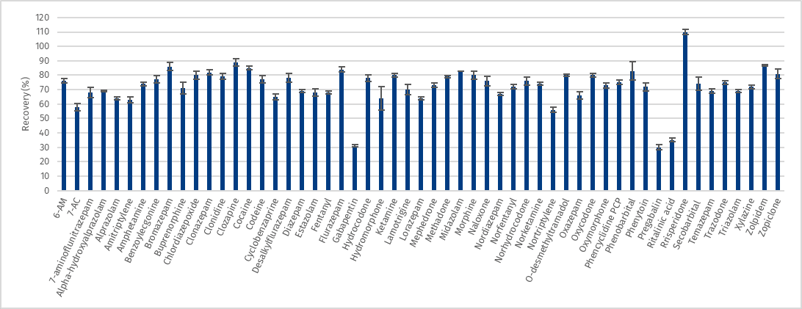
Figure 1. Recovery of analytes obtained from 100 µL of human breast milk spiked at 25 ng/mL. %RSD shown as error bars (n=5).
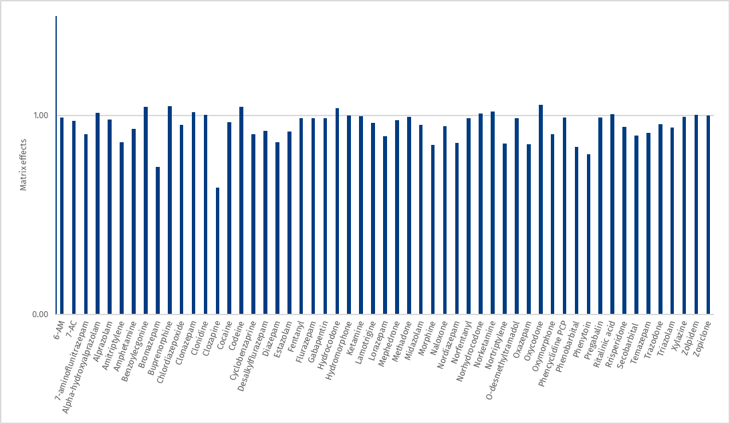
Figure 2. Matrix effect for 100 µL of human breast milk spiked at 25 ng/mL.
Linearity and LOQ
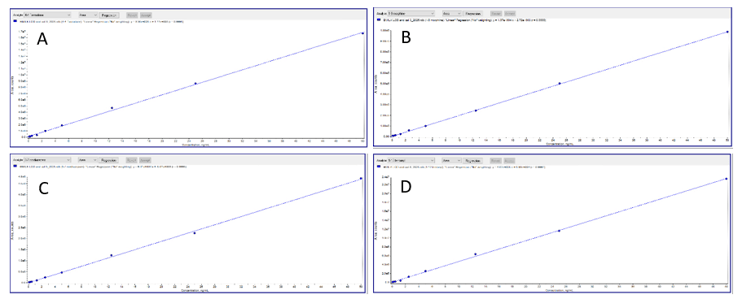
Figure 3. Representative calibration curves for A) Trazodone, B) Morphine, C) Nordiazepam, and D) Fentanyl.
The method demonstrated good linearity across a concentration range of 0.01-50 ng/mL (Figure 3). Calibration curves were prepared for breast milk extracts spiked in the range of 0.01-50 ng/mL. Calibration standard (10 µL) was added to breast milk at the highest concentration (50 ng/mL) and the remaining samples were prepared by serial dilution. 100 µL of each calibrator was processed with the ISOLUTE® cSPE for QuEChERS cartridges (EN General 200 mg/3 mL). Analyte sensitivity below the concentration range was estimated as <0.1 ng/mL and the LOQ was determined based on signal to noise of 10:1. Most analytes demonstrated LOQ at ≤ 0.1 ng/mL. Good linearity was observed for most analytes, with typical R2 values > 0.999 (Table 2).
Extract cleanliness
The efficiency of ISOLUTE® cSPE for QuEChERS for protein and phospholipid removal from the sample matrix was investigated via LC-MS/MS analysis of residual phospholipids and gel electrophoresis analysis of proteins. Figure 4 shows no detectable proteins in electrophoresis data for samples extracted by ISOLUTE® cSPE for QuEChERS. Furthermore, a significant reduction (>99%) of phospholipids is observed in the LC-MS/MS analysis when compared to manual protein precipitation (Figure 5).
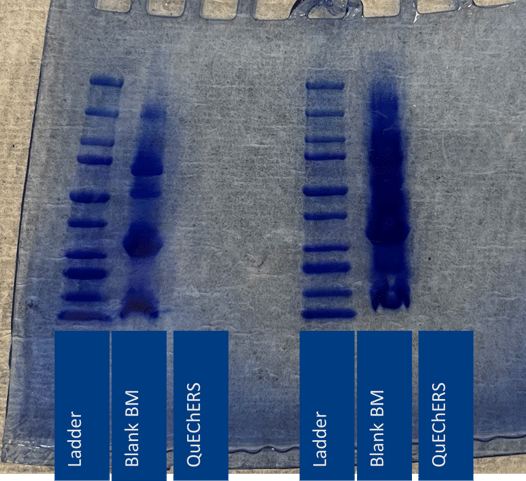
Figure 4. Gel electrophoresis of blank breast milk matrix compared to breast milk extracted with ISOLUTE® cSPE for QuEChERS demonstrating complete protein removal.
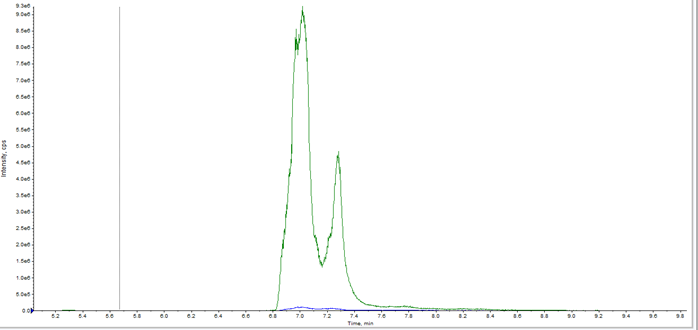
Figure 5. Phospholipid profile of ISOLUTE® cSPE for QuEChERS (blue) and manually crashed human breast milk (green) demonstrating > 99% phospholipids removal.
Conclusion
Using ISOLUTE® cSPE for QuEChERS cartridges for sample preparation, this application note demonstrates high drug analytes recovery and sensitivity with low matrix effects and good reproducibility. ISOLUTE® cSPE for QuEChERS provided an efficient format for salt-assisted extraction and partitioning followed by column solid phase extraction resulting in clean extracts free of interfering matrix components. Sample cleanup is further enhanced due to the improved matrix scavenging efficiency provided by the packed column. The simplified workflow means fewer manual steps, such as centrifugation, improving method reproducibility and automatability.
Chemicals and reagents
- Human breast milk from a single donor was obtained from Innovative Research (Novi, MI) PN IRHUBMKS100ML.
- Acetonitrile and water (LC/MS grade) were obtained from Fisher Scientific.
- Mobile phase A (0.1% formic acid aq) was prepared by adding 1.0 mL formic acid to 900 mL of LC/MS grade water.
- Mobile phase B (0.1% formic acid in methanol) was prepared by adding 1.0 mL formic acid to 900 mL of LC/MS grade methanol.
- Reconstitution solution was prepared by adding 100 µL of formic acid and 5 mL of methanol to 95 mL of LC/MS grade water.
Literature number: AN1024
