
Introduction
Toxicology screening for tetrahydrocannabinol and its metabolites is routinely conducted in various biological matrices. Whole blood (post mortem or ante mortem) is considered one of the most difficult to extract target analytes from with sufficient cleanliness to minimize ion suppression in an atmospheric pressure ionization source. The characteristics of whole blood (increased viscosity and cellular content) present challenges to sample preparation methodology that require a sorbent amenable to separating the target analytes from the endogenous interference. Here we demonstrate the extraction of THC and its metabolites using ISOLUTE SLE+ in a 96-well plate format. ISOLUTE SLE+ offers a fast and efficient alternative to traditional liquid-liquid extraction (LLE) and solid phase extraction (SPE) sample preparation methods.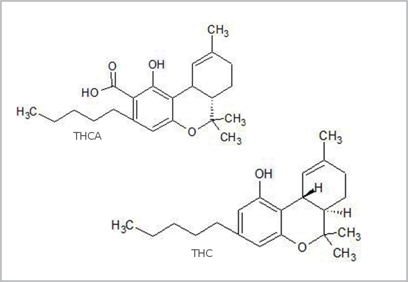
Figure 1. Structures of Tetrahydrocannabinol (THC) and Tetrahydrocannabinolic Acid (THCA)
Analytes
Δ9-tetrahydrocannabinol (THC), Δ9- tetrahydrocannabinol D3 (THC-D3), 11-nor- Δ9-carboxy tetrahydrocannabinol (THC-COOH), 11-nor-Δ9-carboxy tetrahydrocannabinol-D3 (THC-COOH-D3), 11-hydroxy- Δ9-tetrahydrocannabinol (THC-OH), 11-hydroxy-Δ9 tetrahydrocannabinol D3 (THC-OH-D3)
Sample preparation procedure
Format:
ISOLUTE SLE+ 400 μL Supported Liquid Extraction plate, part number 820-0400-P01
Matrix
Pooled whole blood
Sample pre-treatment:
1) Add 200 μL of spiked negative whole blood or sample whole blood to wells.
2) Add 100 µL of 0.1% Formic Acid to each well
3) Add analyte working standard and internal standard to each well (up to 30µL)
NOTE: For whole blood the recommended total solution volume should be under-loaded by a minimum of 15% of the recommended loading capacity. The current method loading is 330 µL into each fixed well plate (max volume load is 400 µL).
Sample loading:
Samples were prepared directly in designated wells. This was done to minimize loss of analytes due to sample transfer and binding of analytes to plastic transfer tubes. However, if an internal standard is used, off line sample pre-treatment and mixing is recommended. Apply a short pulse of vacuum (VacMaster-96 Sample Processing Manifold) or positive pressure (PRESSURE+ 96 Positive Pressure Manifold) to initiate flow and then allow sample to absorb on cartridge for 5 minutes.
Analyte elution:
Apply 3 x 600 μL of methyl tert-butyl ether (MTBE) to each well and allow solvent to gravity flow. Apply positive pressure or pull slight vacuum as needed during collection process to facilitate a flow rate of 1 mL per minute.
Post extraction:
Evaporate sample and reconstitute in water: methanol (50:50, v/v, 500 μL).
Additional information
Working standards and internal standards were prepared in 100% methanol. All standards were ordered from Cerilliant Corp.
HPLC conditions
Instrument:
Agilent 1200 Liquid Handling System (Agilent Technologies, Berkshire, UK)
Column:
Phenomenex Gemini C18, 150 mm x 4.6 mm (5 µm)
Mobile phase:
A: 0.1% Formic Acid
B: Methanol with 0.1% Formic Acid
Isocratic:
A 5% :B 95% (v/v), 5 minute run time
Mass spectrometry conditions
Applied Biosystems/MDS Sciex 4000 Q-Trap triple quadrupole mass spectrometer (Applied Biosystems, Foster City, CA.) equipped with a Turbo Ionspray® interface for mass analysis.
Ion source temperature:
700 °C
|
Scan Function |
Analyte |
MRM Transition |
Declustering Potential (DP) |
Collision Energy (CE) |
Cell Exit Potential (CXP) |
|
|
1 |
THC |
315.2 |
193.1 |
30 |
27 |
16 |
|
2 |
THC-D3 |
318.2 |
196.1 |
30 |
25 |
16 |
|
3 |
THC-COOH |
345.1 |
299.1 |
30 |
28 |
16 |
|
4 |
THC-COOH-D3 |
348.1 |
330.1 |
30 |
23 |
16 |
|
5 |
THC-OH |
331.2 |
193.0 |
30 |
23 |
16 |
|
6 |
THC-OH-D3 |
334.2 |
316.0 |
30 |
25 |
16 |
Results and discussion
The MRM transitions were identified for the THC and metabolites (see table 1). The deuterated internal standards were also extracted and analysed. Extraction of the samples was carried out in each well utilizing the hydro- phobic top frit which keeps aqueous blood sample from flowing onto the sorbent prior to addition of pretreatment solution, calibrants and internal standards. Once all components were added to the well, the samples were loaded onto the sorbent. The elution of the analytes was found to work best with methyl-tert-butyl ether (MTBE). A comparison of sample prior to elution and post elution is shown in Figure 2. The samples were reconstituted and injected onto the HPLC cartridge following the conditions listed above. A typical extracted ion chromatogram is shown in Figure 3 for the extracted analytes at 25 ng/mL concentration.
The averaged recoveries for the analytes ranged from 60-107% across a dynamic concentration range from 50 ng/mL to 12.5 ng/mL (Figure 4). The averaged recoveries were collected over seven replicates with %RSDs typically less than 10. The percent ion suppression/enhancement as a function of matrix effects post extraction from whole blood is detailed in Figure 5. The matrix effects accounted for less than 10% ion suppression.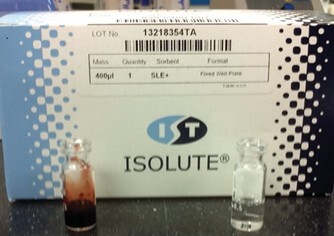
Figure 2. A typical chromatogram obtained from the extraction of a 20 ng/mL fortified specimen of plasma
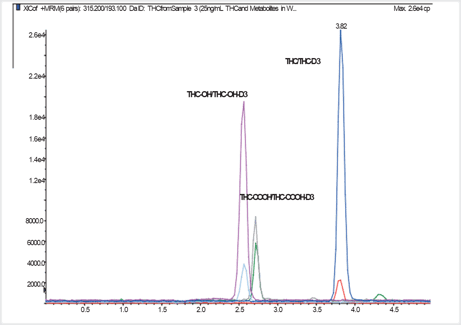 Figure 3. Relative recovery (%) and method repeatability for the extraction of vitamin B3 and related metabolites from serum.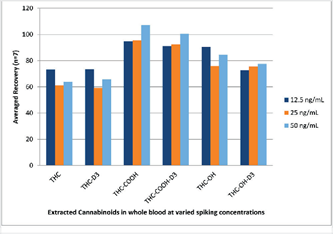
Figure 4. Matrix suppression determined from the extraction of vitamin B3 and related metabolites from serum.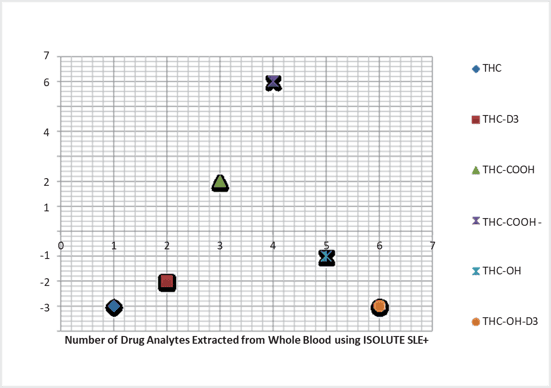
Figure 5. Matrix suppression determined from the extraction of vitamin B3 and related metabolites from serum.
Ordering information
|
Part Number |
Description |
Quantity |
|
820-0400-P01 |
ISOLUTE® SLE+ 400 µL Supported Liquid Extraction Plate |
1 |
|
SD-9600-DHS-EU |
Biotage® SPE Dry Sample Concentrator System 220/240 V |
1 |
|
SD-9600-DHS-NA |
Biotage® SPE Dry Sample Concentrator System 100/120 V |
1 |
|
PPM-96 |
Biotage® Positive Pressure Manifold 96 Position |
1 |
Literature number: AN814
