
Introduction
The purification step is one of the main bottlenecks in the peptide synthesis workflow. Preparative RP-HPLC is normally the method of choice but is limited by small loading amounts, long separation times, poor recoveries and high costs. In addition, crude synthetic peptides contain impurities with retention characteristics very similar to the target peptide which can present additional purification challenges. Although there are a number of examples in the literature,1 flash chromatography or medium pressure liquid chromatography (MPLC) is almost never considered as a technique for purification of synthetic peptides, as it is not perceived to be suitable for this application. However, with recent advances in flash using 20-25 micron spherical particles making flash chromatography an efficient technique for synthetic peptide purification.
Biotage® SNAP* Bio flash cartridges were developed with a small particle size (20 µm) and large pore size (300 Å) to provide increased resolution and effective separation of complex peptide mixtures. Flash chromatography can be used either as the sole purification method or as a front end clean-up prior to a final RP-HPLC step.
In part 1 of this application note we showed a variety of examples demonstrating how flash chromatography can be used as the sole purification method for purification of crude synthetic peptides. In part 2 we show a variety of examples demonstrating how flash chromatography can be used as a front end clean-up method for crude synthetic peptides which can make the subsequent RP-HPLC step easier.
Experimental
Materials
All materials were obtained from commercial suppliers; Sigma-Aldrich (acetonitrile, formic acid and methanol). Milli-Q (Millipore) water was used for LC-MS analysis.
Synthesis
General Solid-Phase Synthesis of Peptides
All peptides were prepared by Fmoc solid-phase peptide synthesis on a Biotage® Initiator+ Alstra™ fully automated microwave peptide synthesizer using standard methods.
Peptides were cleaved from the resin with TFA-H2O-TES (95:3:2) for 5 min. and then for 2 h and precipitated with cold diethyl ether.
Analysis of the peptides was performed by ULC-MS on a QTOF Impact HD, RSLC Dionex Ultimate 3000 (Thermo) using a Kinetex 2.6 µm EVO 100 Å C18 column (50 × 2.1 mm, Phenomenex) with a flow rate of 0.5 mL/min. The following solvent system was used: solvent A, water containing 0.1% formic acid; solvent B, acetonitrile containing 0.1% formic acid. The column was eluted using a linear gradient from 5%–100% of solvent B.
Flash chromatography was performed in reversed-phase mode on an Isolera™ flash purification system equipped with either Biotage® SNAP KP-C18-HS 30g, SNAP C18 300 Å 10g, or SNAP C18 300 Å 25g cartridges respectively.
*Biotage® SNAP chromatography columns have been discontinued and replaced by Biotage® Sfär chromatography columns. The Biotage® Sfär columns are available with the same media options as the Biotage® SNAP columns, delivering equivalent results.
Results & discussion
H-ETYVTYTAQS PNLLSLTNIS DIFDISPLSI ARASNIDAGK DKLVPGQVLL VPVT-NH2 (Lys M1)
The 54 amino acid peptide Lys M1 is a subdomain of Lotus japonicus derived from the Nod-factor receptor 5 (Nfr5). Lys M1 was synthesized using microwave assisted SPPS (not optimized). This difficult sequence was isolated with a crude purity of 20% as determined by LC-MS.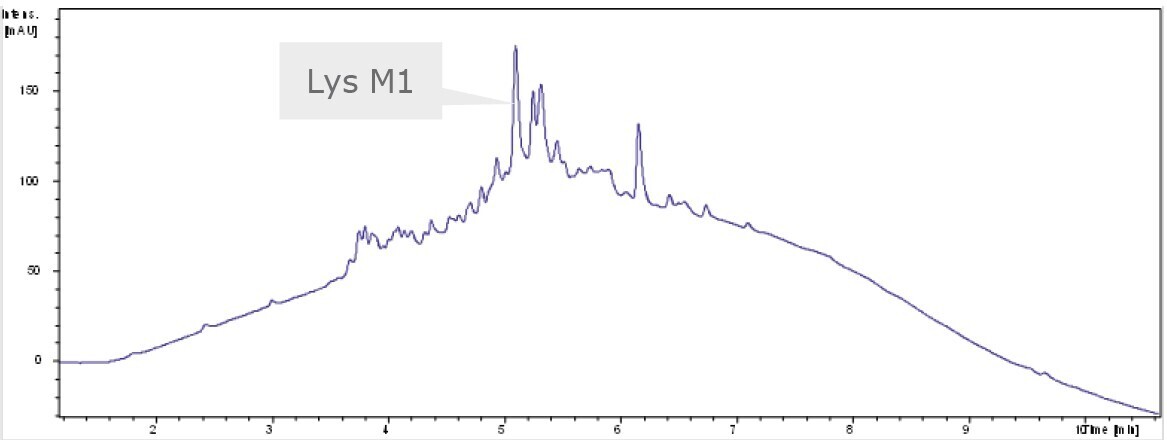
Figure 1. HPLC chromatogram of crude Lys M1.
This peptide is challenging to purify because of its low solubility and normally requires multiple injections when purified by prep RP-HPLC including a number of pre-purification steps. In this example we compared the purification of Lys M1 peptide on a 50 µm irregular silica C18 cartridge (SNAP KP-C18-HS) with a 20 µm spherical silica SNAP Bio C18 300 Å cartridge. Aqueous acetonitrile solution (including 0.1% formic acid) was used as mobile phase with gradient elution. 50 mg off the crude peptide was dissolved in 5 mL of 60% aq. acetonitrile and purified on both types of flash cartridges and the chromatograms are shown below (Figure 2).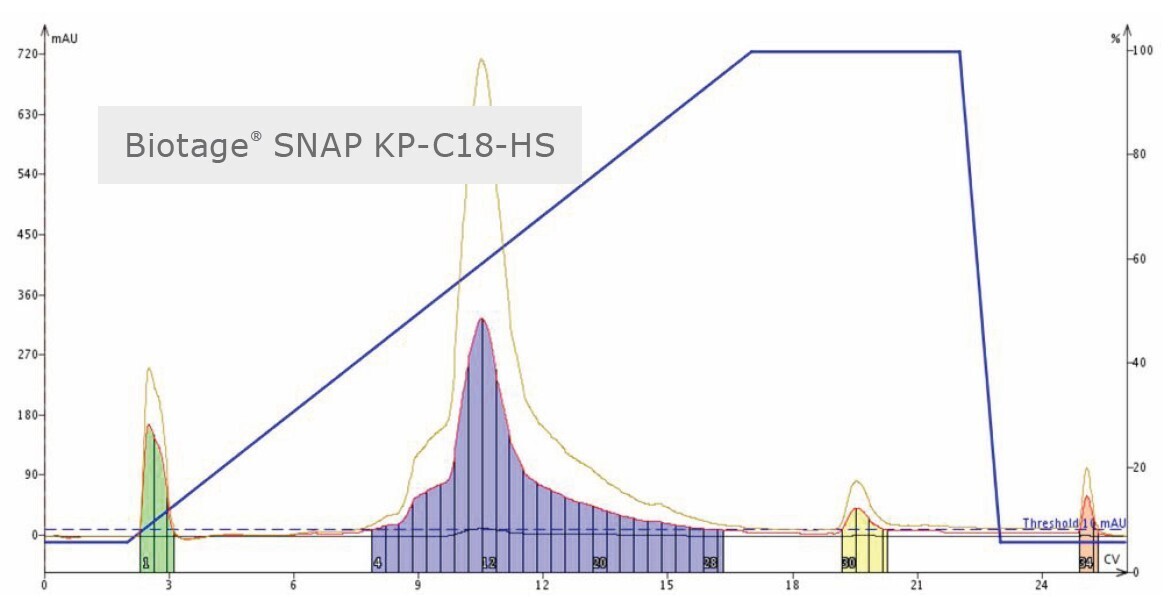
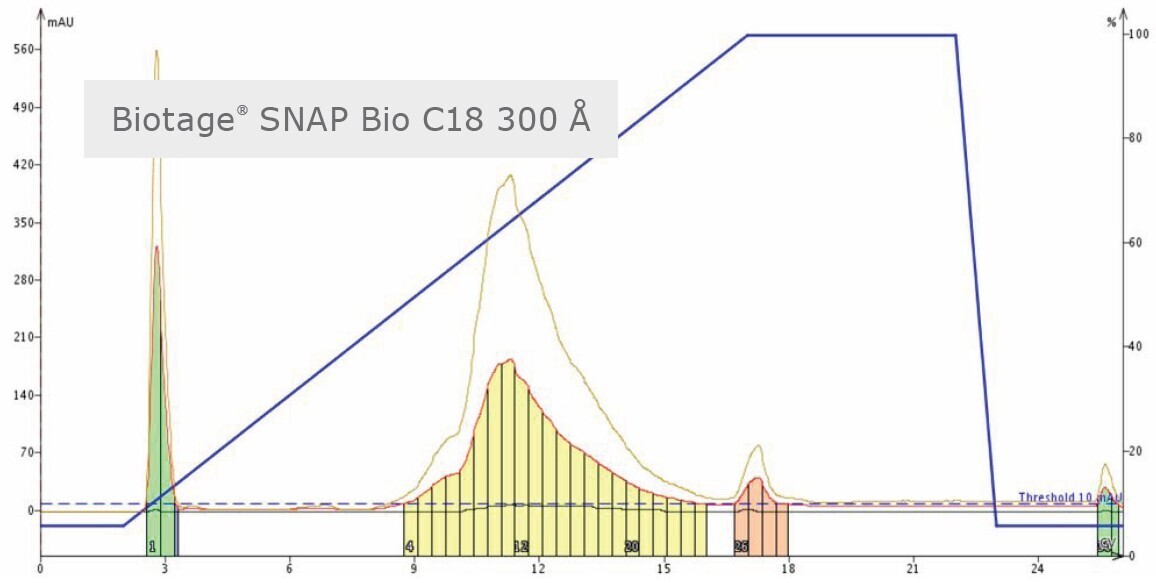
Figure 2. Chromatograms from the flash purification of Lys M1 using Biotage® SNAP KP-C18-HS and Biotage® Bio C18 300 Å flash cartridges.
The fraction size collected was at 2 mL intervals across the peak to obtain fractions of higher purity of the required peptide.
The crude peptide purity of the synthesized peptide was 20%, following partial purification by flash chromatography the purity was increased to 58% (7 mg) for SNAP KP-C18-HS and to 66% (13 mg) for SNAP Bio C18 300 Å (Figure 3). Although none of the cartridges gave fully purified Lys M1, the objective here was not to isolate pure peptide fractions but to quickly remove many of the impurities to make the subsequent HPLC purification easier by reducing the quantity to be purified. The solubility of the partially pure peptide was also much improved. Moreover, several pre-purification steps were avoided which are normally required when this peptide is purified by RP-HPLC alone. Although the purification is not complete this is a big step towards the pure target peptide.
a)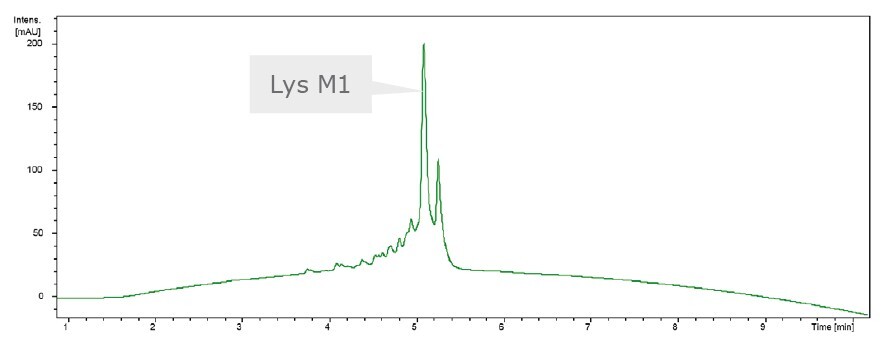
b)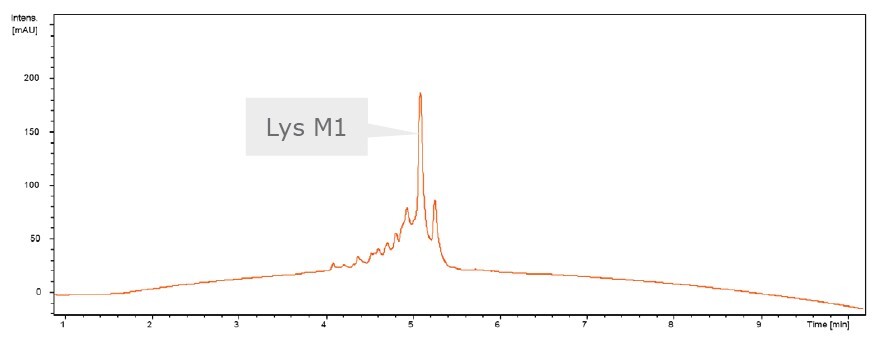
Figure 3. HPLC chromatograms of Lys M1 peptide purified by flash chromatography on a) Biotage® SNAP KP-C18-HS and b) Biotage® Bio C18 300 Å flash cartridges.
Chromatography method
|
Cartridge |
Biotage® SNAP KP-C18-HS 30 G |
Biotage® SNAP Bio C18 300 Å 25 G |
|
Flow Rate |
45 mL/min |
45 mL/min |
|
Solvent A |
H2O (0.1% formic acid) |
H2O (0.1% formic acid) |
|
Solvent B |
CH3CN (0.1% formic acid) |
CH3CN (0.1% formic acid) |
|
Equilibration |
5% B, 3 CV |
5% B, 3 CV |
|
Gradient |
5% B, 2 CV |
5% B, 2 CV |
54-mer
In the next example another 54 amino acid peptide (sequence information not provided) which again was normally difficult to purify by prep RP-HPLC was purified using flash chromatography on a Biotage® SNAP Bio 300 Å 10 g flash cartridge. The peptide was isolated after synthesis with a crude purity of ~30%. A solution of 80 mg of the peptide was injected on to the flash cartridge and the best fraction cut contained 9 mg of peptide with 65% purity (Figure 4). The peptide containing fractions were combined and purified once more by prep-HPLC, but since the amount of crude material was decreased and the crude material was now of a higher purity, the HPLC step was quicker and easier to accomplish.
a)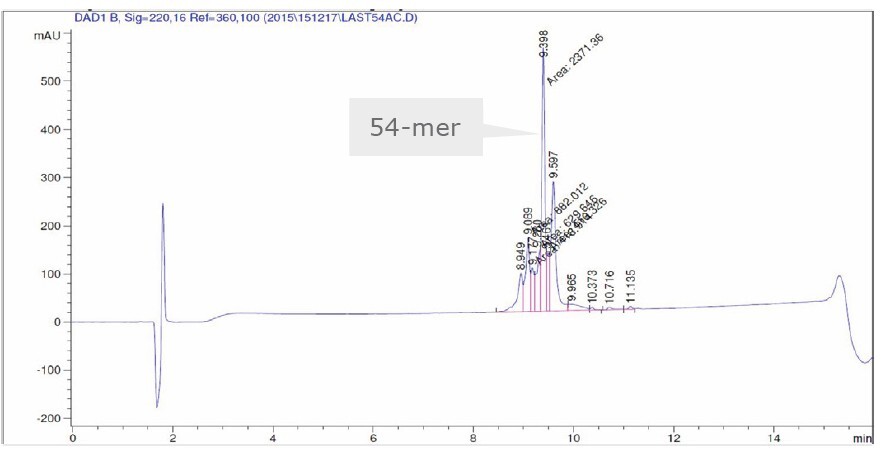 b)
b)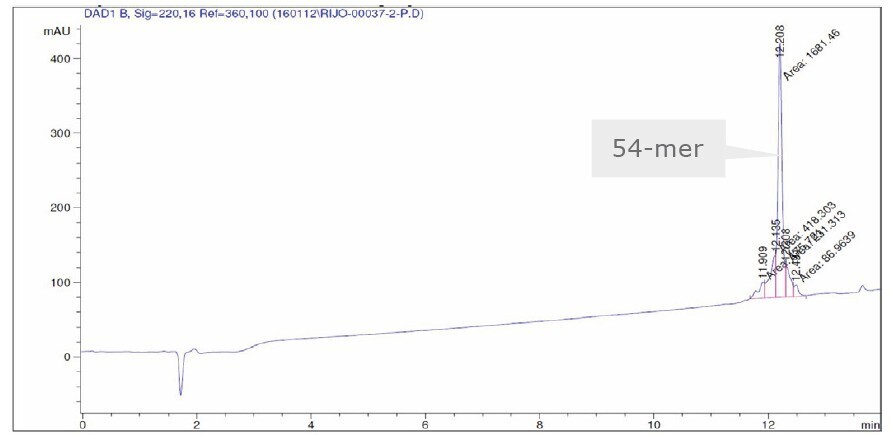 Figure 4. a) HPLC chromatogram of crude 54-mer peptide, crude purity
~30%; b) HPLC chromatogram of flash purified 54-mer peptide, purity increased to 65%.
H-HDEFERHAEGTFTSDVSSYLEGQAA KEFIAWLVKGRG-NH2 (GLP-1)
The GLP-1 37-mer peptide was synthesized with a crude purity of 26% (Figure 5a). 82 mg of the crude peptide was dissolved in 600 µL of DMSO and injected on to a 10 g Biotage® SNAP Bio C18 300 Å cartridge. Fractions were collected based on mass fractionation using Isolera™ Dalton mass-directed flash purification system. Fractions 6 and 7 (Figure 5b) were pooled together and freeze dried. The purity of the desired target peptide had now increased to 54% with 24 mg recovered (Figure 5c). Having removed a significant number of impurities the subsequent HPLC polishing step could be achieved in less time.
a)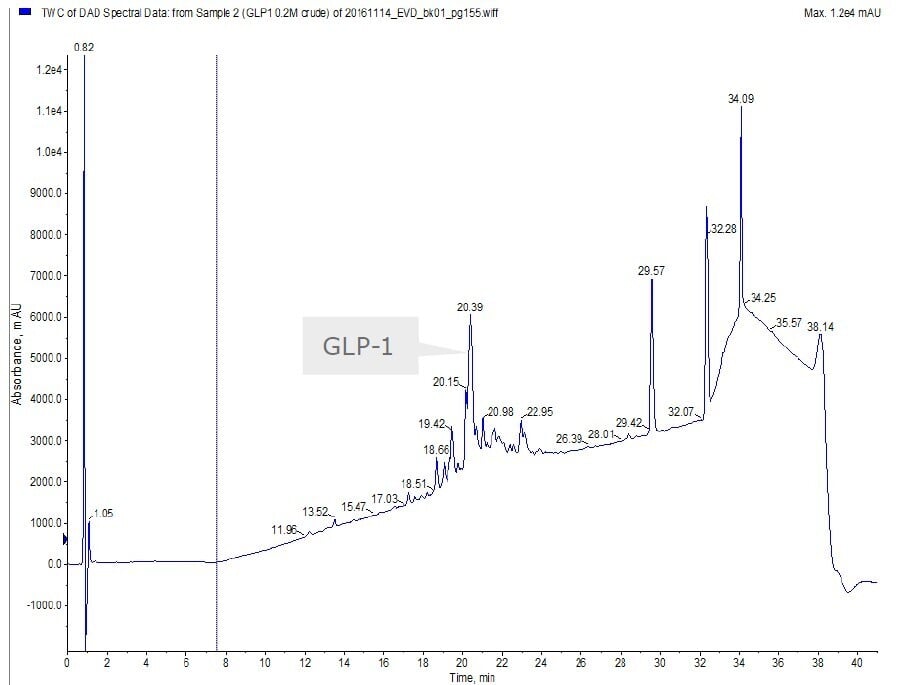 b)
b)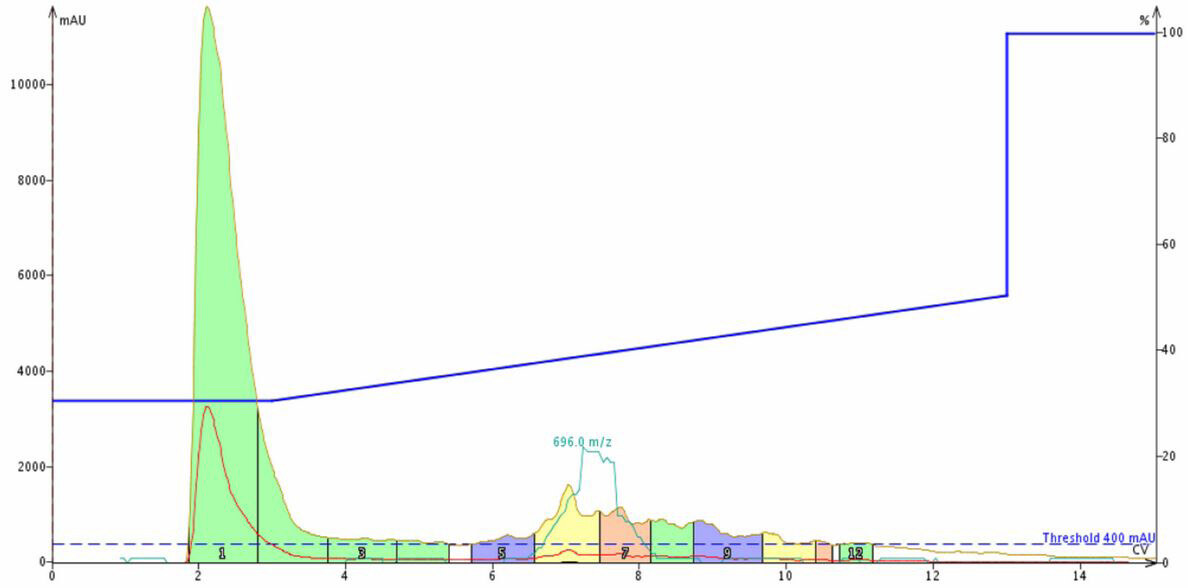 c)
c)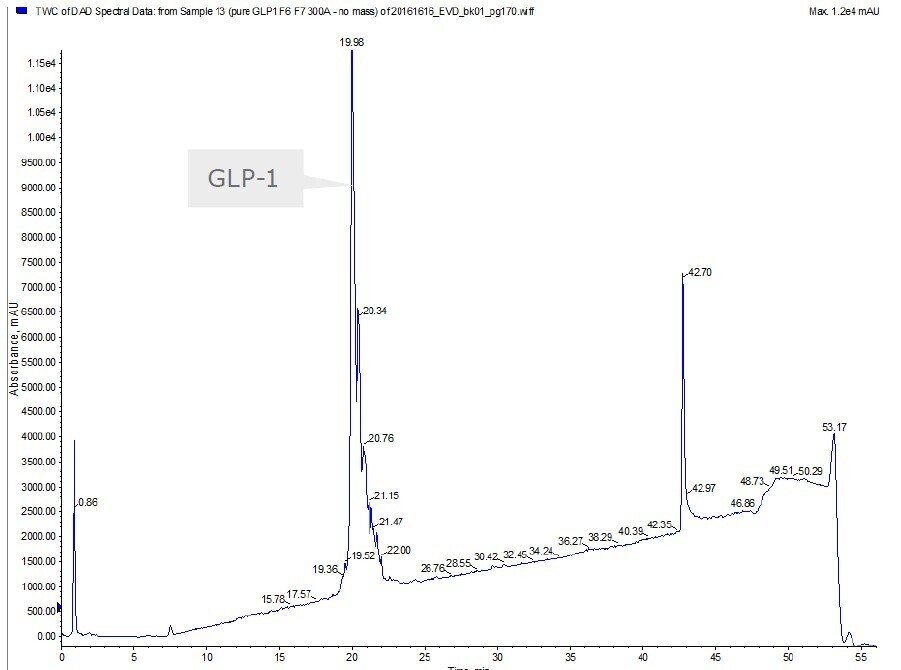 Figure 5. a) HPLC chromatogram of crude GLP-1 peptide, crude purity 26%; b) Chromatogram of GLP-1 purified using a Biotage® SNAP Bio C18 300 Å 10 g flash cartridge; c) HPLC chromatogram of flash purified GLP-1 peptide, purity increased to 54%.
Chromatography method
|
Cartridge |
Biotage® SNAP Bio C18 300 Å 10 G |
|
Flow Rate |
50 mL/min |
|
Solvent A |
H2O (0.1% TFA) |
|
Solvent B |
CH3CN (0.1% TFA) |
|
Equilibration |
30% B, 3 CV |
|
Gradient |
30-50% B, 10 CV |
H-DWLKAFYDKVAEKLKEAFGGDWLKAFY DKVAEKLKEAF-NH2 (18A-GG-18A)
18A-GG-18A is a dimeric peptide denoted as a ‘beltide’2 containing 38 amino acids. It is able to form nanodiscs in the presence of phospholipids. An error was made during the cleavage of this peptide which resulted in not only the desired C-terminal amide peptide but also the C-terminal acid of the corresponding peptide. The target peptide has a crude purity ~30%, with the C-terminal acid being the main impurity peak in the chromatogram. This would be a challenge to purify even with RP-HPLC.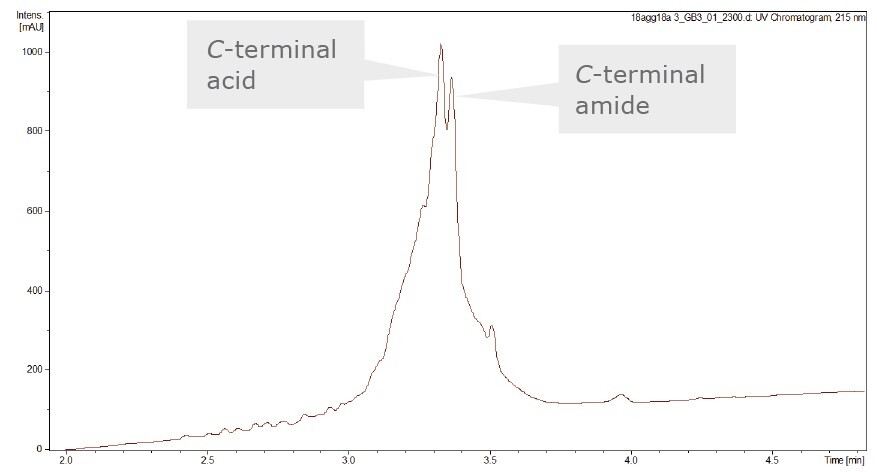 Figure 6. HPLC chromatogram of crude 18A-GG-18A peptide, crude purity
~30%.
70 mg samples of the crude peptide mixture were dissolved in 2 mL 20% aq. acetonitrile and injected on to two types of flash cartridge and the chromatograms are shown in Figure 7.
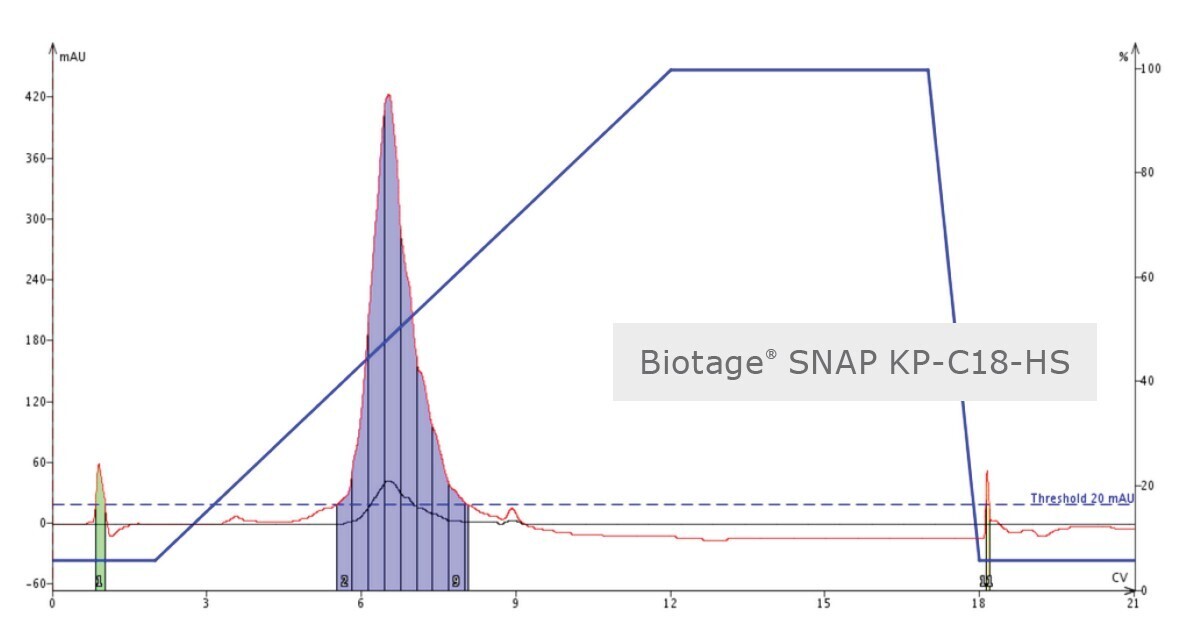
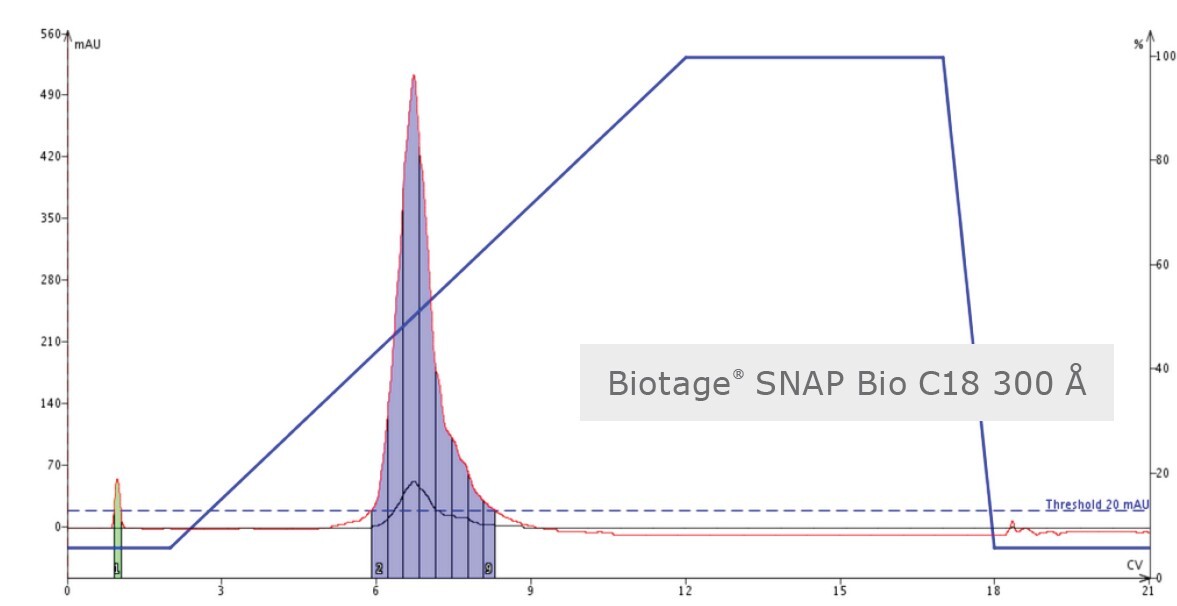 Figure 7. Chromatograms from the flash purification of 18A-GG-18A peptide using Biotage® SNAP KP-C18-HS and Biotage® Bio C18 300 Å flash cartridges.
Not surprisingly the 50 µm irregular silica C18 cartridge (Biotage® SNAP KP-C18-HS) was not able to separate the C-terminal amide from its corresponding C-terminal acid peptide (Figure 8). However, with the 20 µm spherical silica SNAP Bio C18 300 Å cartridge, it was surprisingly possible to obtain pure C-terminal acid and the target C-terminal amide peptide in collected fractions. Based on HPLC results, the C-terminal acid peptide purity in fraction 4 was >95% (19 mg) and the target peptide purity in fraction 7 was also >95% (15 mg). In addition fractions containing both peptides (fraction 5 and 6, only fraction 5 shown) were pooled before further purification (Figure 9). However, many of the other impurities have been removed which will make the subsequent HPLC purification easier. Figure 8. HPLC chromatogram of flash purified 18A-GG-18A using a Biotage® SNAP KP-C18-HS flash cartridge.
a) b)
b) c)
c)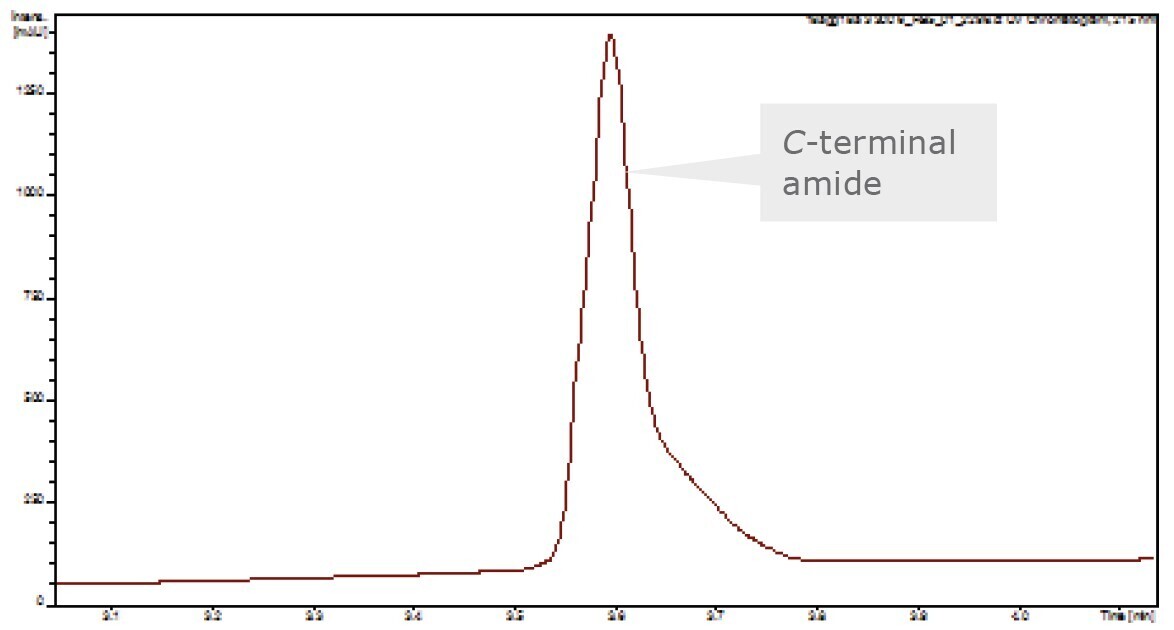
Chromatography method
|
Cartridge |
Biotage® SNAP KP- C18-HS 30 G |
Biotage® SNAP Bio C18 300 Å 25 G |
|
Flow Rate |
45 mL/min |
45 mL/min |
|
Solvent A |
H2O (0.1% formic acid) |
H2O (0.1% formic acid) |
|
Solvent B |
CH3CN (0.1% formic acid) |
CH3CN (0.1% formic acid) |
|
Equilibration |
5% B, 3 CV |
5% B, 3 CV |
|
Gradient |
5% B, 2 CV |
5% B, 2 CV |
Conclusion
We have demonstrated that flash chromatography is a powerful technique to increase the purity of crude peptide samples. It can be used in tandem with RP-HPLC to quickly clean up peptide samples to limit the time performing the final purification step which expedites the peptide synthesis workflow from crude synthetic peptide to the final purified product.
The increased loading capacity of flash cartridges compared to prep RP-HPLC allows more peptide to be processed in a single injection and significant amounts of impurities can be removed that would require more time and effort to purify by RP-HPLC alone.
The Biotage® SNAP Bio 300 Å flash cartridges with wide pore media, provided increased resolution with better separation and better recovery when purifying crude peptide mixtures in comparison to standard C18 flash cartridges. This enables faster and more efficient purification of peptides and larger molecules.
References
- a) Gorska, K.; Keklikoglou, I.; Tschulena, U.; Winssinger, N.; Chem. Sci., 2011, 2, 1969-1975.
b) Steel, R.; Cowan, J.; Payerne, E.; O’Connell, M. A.; Searcey, M.; ACS Med. Chem Lett., 2012, 3 (5), 407-410.
c) Vitale, R.; Lista, L.; Cerrone, C.; Caserta, G.; Chino, M.; Maglio, O.; Nastri, F.; Pavone, V.; Lombardi, A.; Org. Biomol. Chem., 2015, 13, 4859-4868.
d) Biondi, B., Casciaro, B., Di Grazia, A. et al. Amino Acids (2016). doi:10.1007/s00726-016-2341-x. - Larsen, A. N.; Sørensen, K. K.; Johansen, N. T.; Martel, A.; Kirkensgaard, J. J. K.; Jensen, K. J.; Arleth, L.; Midtgaard, S. R.; Soft Matter, 2016,12, 5937-5949.
Acknowledgements
Prof. Knud J. Jensen and Dr. Kasper Kildegaard Sørensen at the University of Copenhagen.
Red Glead Discovery AB, Lund, Sweden.
Dr. Elizabeth Denton, Biotage®, Charlotte NC, USA.
Part Number: AN113
