
Introduction
GS-441524 (Figure 1) is the main plasma metabolite of the antiviral drug remdesivir. Remdesivir is a nucleoside analogue antiviral drug developed by Gilead Sciences for the treatment of Ebola, and both have been found to exhibit antiviral activity against several coronaviruses, including SARS-CoV-2 (COVID-19).
GS-441524 is also a promising and inexpensive drug candidate in the treatment of COVID-19 and future emerging coronaviruses. Therapeutic Drug Monitoring (TDM), which measures blood levels of the antibacterial drugs and helps designs dosages for individual patient administration, is critical for effective and safe use of the drugs.
In this application note, ISOLUTE® ENV+ based on a hydroxylated polystyrene divinylbenzene copolymer (Figure 2) was used as a sample preparation cartridge to clean up samples prior to LC-MS/MS analysis. It is suitable for retention of highly polar compounds that are typically not retained by silica-based C18 cartridges. In this application, GS-441524 could be extracted from plasma samples with high recovery.
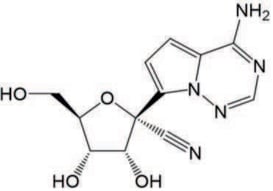
Figure 1. Structural Formula for GS-441524.
Analytes
GS-441524 (Remdesivir metabolite, CAS: 1191237-69-0) Doripenem (Doripenem, CAS: 148016-81-3) used as an Internal Standard (IS).
Sample preparation procedure format
Format
ISOLUTE® ENV+ 50 mg/ 1 mL cartridges, (p/n: 915-0005-A)
Sample pre-treatment
To 200 µL of plasma, add doripenem as an internal standard at a concentration of 0.1 µg/mL. To this, add 200 µL of 10 mmol/L ammonium formate solution containing 0.1% formic acid and vortex mix for 30 seconds.
Conditioning
Condition the cartridge with methanol (1 mL).
Equilibration
Pass through 1 mL of 10 mmol/L ammonium formate solution containing 0.1% formic acid.
Sample loading
Load 400 µL of the pre-treated sample.
Wash
Elute interferences with 1 mL of a 10 mmol/L ammonium formate solution containing 0.1% formic acid.
Elution
First, elute with 0.4 mL of water: methanol = 8:2 (v/v) Next, elute with 0.4 mL of methanol.
Mix the two eluates to obtain sample for LC/MS/MS.
Dilution
Depending on the range of calibration concentration in LC/MS/ MS to be used, dilute the sample solution further*.
* In this application note, samples were diluted 2.5-fold using purified water.
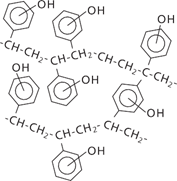
Figure 2. Schematic Representation of ISOLUTE® ENV+.
UHPLC conditions
Instrument
Shimadzu Nexera LC-30AD
Column
Waters ACQUITY UPLC® BEH C18 1.7 µm (2.1 mm × 50 mm column)
Mobile phase
A: 10 mmol/L ammonium formate solution containing 0.1% formic acid
B: Methanol
Flow rate
0.4 mL/min.
Gradient conditions
Time/% of B: 0/5 → 1/5 → 3.5/90 → 4/90 → 4.1/5 → 5/5
Column temperature
50 °C
Injection volume
1 µL
Mass spectrometry conditions
Instrument
Shimadzu LCMS-8060
Ionization mode
ESI positive
Nebulizer gas flow rate
2.80 L/min.
Drying gas flow rate
10.00 L/min.
Heating gas flow rate
10.00 L/min.
Interface temperature
350 °C
DL temperature
200 °C
Heat block temperature
350 °C
CID gas
270 kPa
SRM transitions
GS-441524:
m/z 292.20 > 202.20, Rt 1.92 min,
Collision Energy; -10
Doripenem:
m/z 420.90 > 274.00, Rt 1.55 min, Collision Energy; -18
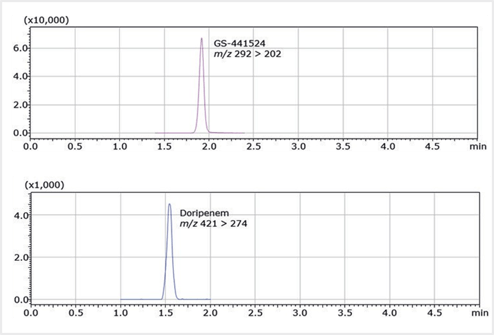
Figure 3. SRM Chromatograms of GS-441524 (top) and Doripenem (bottom).
Results
Figure 3 shows the SRM (Selected Reaction Monitoring) chromatograms of LC-MS/MS analyses of GS-441524 and doripenem (IS). The calibration curve generated is shown in Figure 4. The required blood concentration range for TDM (Therapeutic Drug Monitoring) of GS-441524 is 10 to 1000 ng/mL. In this method, the concentration of GS-441524 was measured at 10-fold dilution from 1 to 100 ng/mL. As a result, a wide dynamic range and good linearity with a multiple correlation coefficient (r2) of 0.999 or higher was obtained.
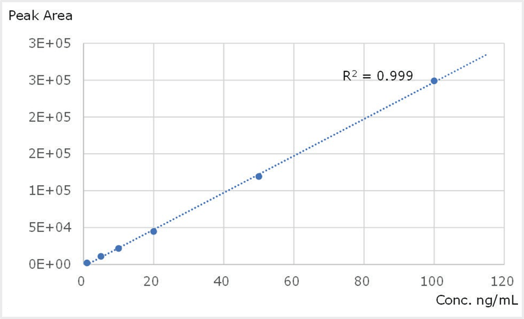
Figure 4. Calibration Curve for GS-441524 (1.0 ~ 100 ng/mL).
Confirmation of Analyte Recovery and Matrix Factors Sample pre-treatment is very important in samples of biological origin. ISOLUTE® ENV+ solid phase extraction cartridges were used to eliminate the effects of matrix components like protein, phospholipids and salts, and to allow for improved quantitative analyses. The sample used was control plasma with 10 ng/mL GS-441524. The SRM chromatogram obtained by LC/MS/MS measurement after pretreatment is shown in Figure 5). No interference by contaminants was observed.
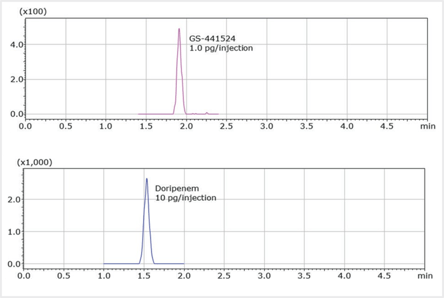
Figure 5. SRM Chromatograms after SPE with ISOLUTE® ENV+ for GS-441524 10 ng/mL in plasma.
Next, we evaluated matrix effects using ISOLUTE® ENV+ for clean-up. Three samples of plasma containing 10, 100, and 1000 ng/mL of GS-441524 were prepared using ISOLUTE® ENV+ cartridges. The recovery rates and matrix factors are shown in Table below. The recoveries were calculated by comparing the peak area values in plasma samples spiked with GS-441524 before extraction (A) and the peak area value of plasma samples spiked with GS-441524 after extraction (B). Matrix factors were calculated by comparing the peak area values (B) and the standard solution (S). As a result, a high recovery rate of 86.7% to 98.9% was obtained, and the matrix factor was sufficiently small, ranging from 0.5% to 9.3%, confirming that pretreatment with ISOLUTE® ENV+ can efficiently remove matrix effects.
|
Blood concentrations (ng/mL) |
Recovery rate (%) |
Matrix factor (%) |
|---|---|---|
|
10 |
98.9 |
9.3 |
|
100 |
98.6 |
0.5 |
|
1000 |
86.7 |
5.0 |
* Recovery rate = [A]/[B] × 100; Matrix Factor = 1-[B]/[S] × 100.
Ordering information
|
Part Number |
Description |
Quantity |
|
915-0005-A |
ISOLUTE® ENV+ 50 mg/1 mL |
100/pk |
|
PPM-48 |
Biotage® PRESSURE+ 48 Positive Pressure Manifold |
1 |
|
121-2016 |
Biotage® VacMasterTM 20 Sample Processing Manifold |
1 |
Acknowledgement
This application note was prepared in collaboration with the Pharmaceutical Department of Gunma University Hospital, Japan.
Literature number: AN959
