
Introduction
Patulin is a mycotoxin produced by aspergillum and penicillium mold species commonly found on rotting apples. Although not a particularly potent toxin, patulin has been shown to be genotoxic and potentially carcinogenic, requiring regulation and analysis in all apple based products. Recommended maximum limits for patulin are set globally at 10 μg/kg in apple juice, 25 μg/kg in solid apple foods and 10 μg/kg for apple-based baby food. See comments for sample pre-treatment suggestions for solid apple samples and cloudy apple juice. This application note achieves high recoveries of patulin from clear apple juice with RSDs below 10%. Limits of quantitation are 10 μg/kg (calculated from the signal to noise ratio).
ISOLUTE® Myco SPE columns provide robust, reliable sample preparation for multiple mycotoxin classes from a wide range of foodstuffs. Using a single, easy-to-use sample preparation product, along with optimized matrix-specific application notes, scientists can prepare diverse food/crop samples for analysis by LC-MS/MS.
Analytes
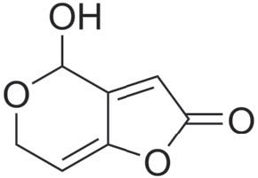
Figure 1. Structure of patulin
Sample preparation procedure
Column configuration
ISOLUTE® Myco 60 mg/3 mL (tabless) part number 150-0006-BG
Sample pre-treatment
Dilute apple juice 1:1 (v/v) with 10 mM ammonium acetate, pH=5. Adjust total volume to pH=5 using 25% ammonium hydroxide (conc) (62.5 µL per mL of apple juice).
Condition
Condition the column with acetonitrile (2 x 1 mL).
Equilibration
Equilibrate column with 10 mM ammonium acetate pH=5 (1 mL).
Solid phase extraction
Sample loading
Load pre-treated sample (1 mL) onto the column.
Interference wash 1
Wash the column with 10 mM ammonium acetate pH=5 (3 x 1 mL).
Drying
Dry the column for 5 minutes at 2 bar (29 psi) or maximum pressure.
Interference wash 2
Wash the column with toluene (1 mL).
Drying
Dry the column for 5 minutes at 2 bar (29 psi) or maximum pressure.
Elution
Elute with acetonitrile (1 mL).
Post elution
The eluate is dried in a stream of nitrogen using a TurboVap® LV at 30 °C. Reconstitute in water (500 μL, HPLC or deionized) prior to analysis.
Note
This method was developed using the Biotage® PRESSURE+ 48 positive pressure manifold, but ISOLUTE® Myco columns can also be processed using automated positive pressure (Biotage® Extrahera™ HV-5000) or vacuum manifold (Biotage® VacMaster™).
HPLC conditions
Instruments
Waters Alliance 2795
Column
Kinetex phenyl-hexyl 50 mm x 2.1 mm 2.6 μm dp. (Phenomenex inc., Torrance CA)
Mobile phase
A: Water (HPLC grade)
B: Acetonitrile
Flow rate
0.3 mL/min
Injection
10 μL (partial loop) from 20 μL
Gradient
Initial 15% B, hold for 1 min
linear ramp to 100 % B in 1 min, hold for 1 min
linear ramp to initial conditions in 0.5 min, hold for 2 mi
Total run time 4.5 min
Column temperature
Room temperature
Sample temperature
15°C
Table 1. MRM parameters
|
MRM |
Entrance potential |
Collision energy (eV) |
|
|
Patulin (quant ion) |
153 > 109 |
40 |
8 |
|
Patulin (qual ion) |
153 > 81 |
35 |
10 |
|
Hydroxmethylfurfural |
125 > 97 |
40 |
8 |
MS conditions
Instrument
Waters Ultima Platinum QQQ
Source
Electrospray, negative ion mode
Desolvation temp.
350 °C
Quadrupole
100 °C
Capillary
3000 kv
Mode
MRM
Results
The extraction method demonstrates high recovery of patulin whilst effectively resolving hydroxymethylfurfural (HMF), which can be a source of chromatographic interference when analyzed using less selective analytical methods. Mean analyte recoveries of 101% were achieved for patulin (n=7) with RSDs <10% as shown in table 2. Each chromatogram is shown separately in figure 2 and then overlaid to show actual resolution in figure 3. The limit of quantitation was calculated to be 10 μg/kg based upon an observed signal-to-noise ratio of 16:1, easily meeting the regulatory limits set for patulin minimum residue limits.
Table 2. Typical recoveries of patulin, quant and qual ions (n=7)
|
|
Patulin Quant (153>109) % recovery |
Patulin Qual (153>81) % recovery |
|
1 |
99.60 |
104.30 |
|
2 |
95.40 |
98.40 |
|
3 |
97.30 |
100.00 |
|
4 |
103.60 |
100.10 |
|
5 |
92.40 |
91.90 |
|
6 |
104.50 |
98.20 |
|
7 |
113.60 |
107.50 |
|
Mean |
100.91 |
100.90 |
|
% RSD |
6.99 |
3.02 |
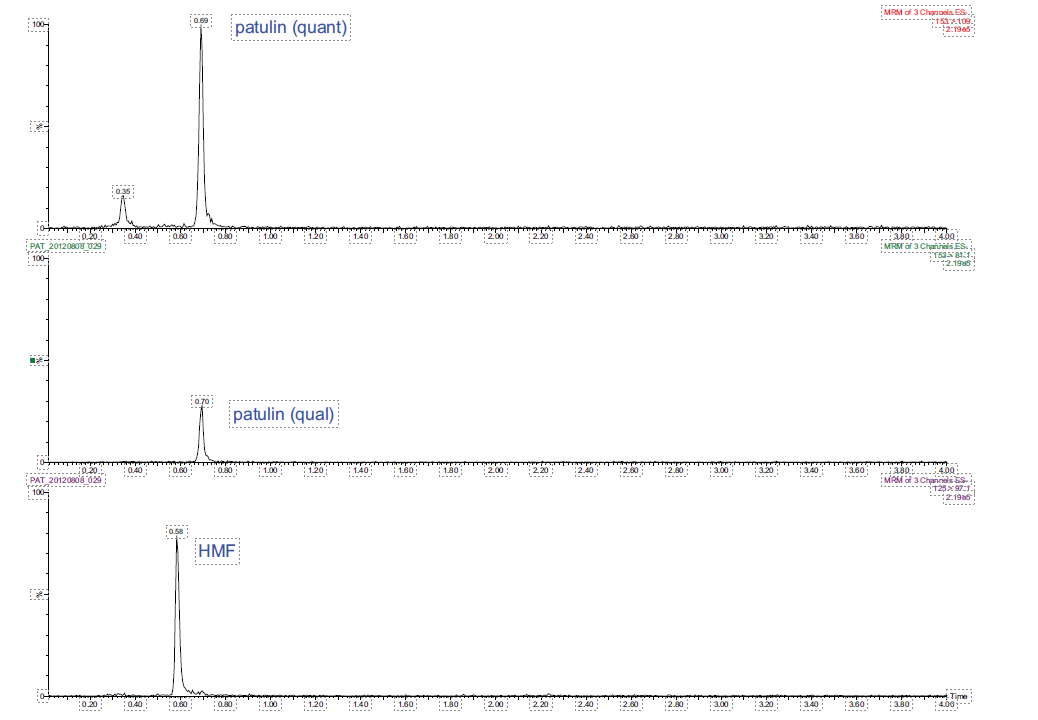 Figure 2. Typical chromatogram (10 µg/kg) using the ISOLUTE® Myco method, showing extracted patulin and the resolved interference analyte HMF
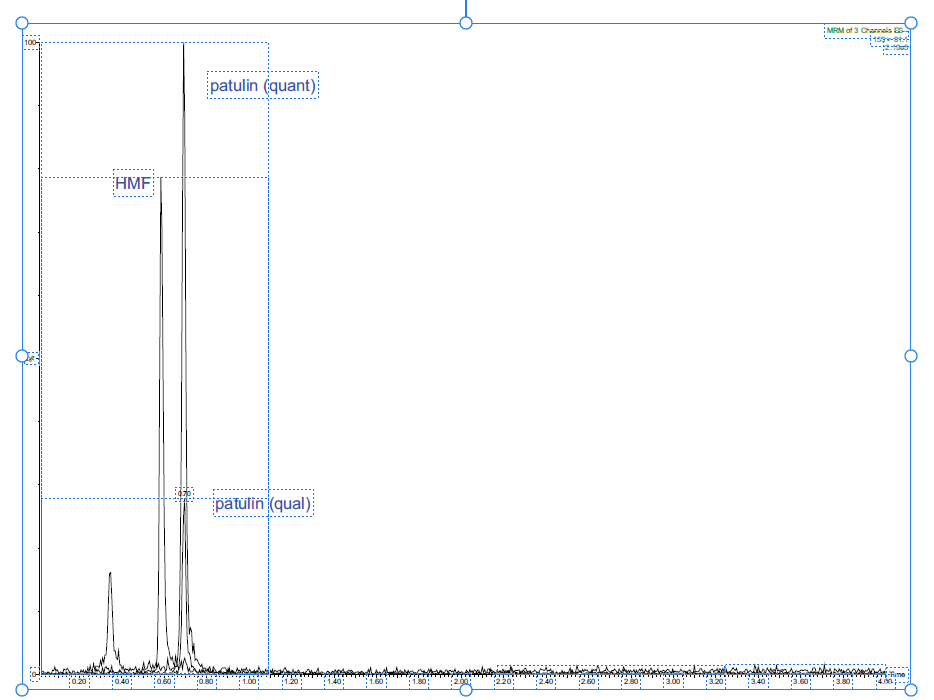 Figure 3. Typical overlaid chromatogram as 10 µg/kg using the ISOLUTE® Myco method, showing extracted patulin and the resolved interference analyte HMF.
Calibration curves constructed using this method (from 2-200 ng/mL), demonstrated excellent linearity with coefficients of determination greater than 0.99 as shown in Figure 4.
Compound name: patulin 153>109
Correlation coefficient: r = 0.998134, r2 = 0.996271
Calibration curve: 115.582 * x + -141.87
Response type: External Std, Area
Curve type: Linear, Origin: Include, Weighting: Null, Axis trans: None
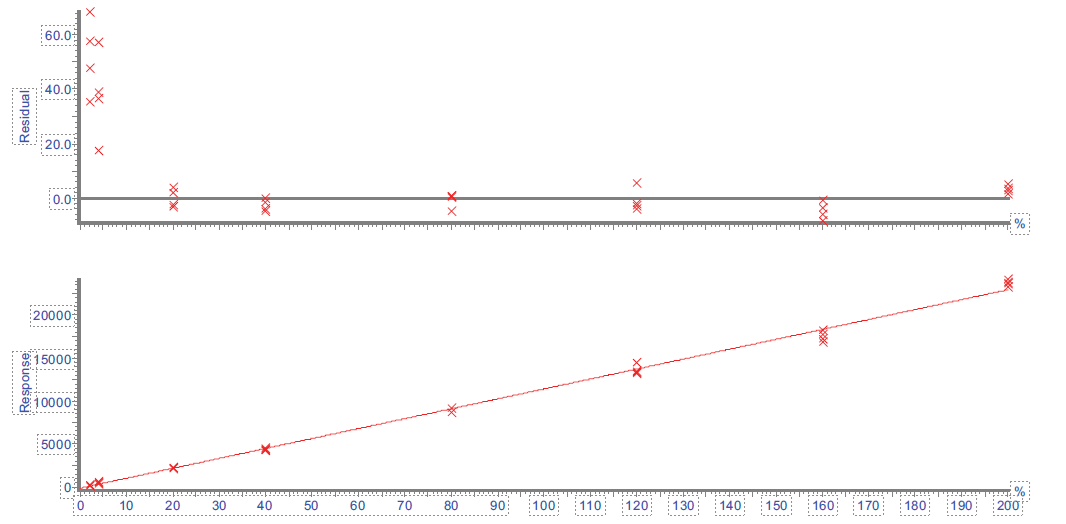 Figure 4. Calibration curves constructed using this method from 2-200 ng/mL
Comments
Unlike clear apple juice, solid apple samples and cloudy apple juices require digestion with pectinase to ensure high analyte recoveries. A typical procedure is suggested below: Homogenize apples. Weigh 10 g of sample and add pectinase enzyme followed by 10 mL water. Mix. Leave at room temperature overnight or for 2 hr at 40 °C. Centrifuge at 4500 g for 5 min and filter the supernatant with 0.2 μm filter. Use 150 μL of pectinase aqueous solution at 3800 units/mL (Sigma-Aldrich Cat. No. P2611). Use a similar process for cloudy apple juice.
Literature number: AN781
