
The Healthcare Innovation Centre at the Technology Innovation Headquarters of Hitachi’s R&D group promotes development of advanced biotechnology for medical research. Recently, researchers came up with a new method for analysing pharmacodynamics in cultured cells, in a study aimed at improving the pass rate in clinical trials. We spoke with Dr. Ryosuke Takahashi from the Department of Biosystems Research.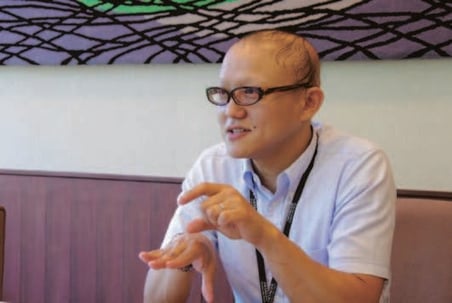
Figure 1: Dr. Ryosuke Takahashi from the Department of Biosystems Research
Please tell us about the Healthcare Innovation Centre.
In April of 2015, the R&D department of the Hitachi group went through significant changes. Based on the idea of collaborative innovation with our customers, Hitachi reorganized a global R&D group, and it is responsible for “customer-driven innovation”, “technology-driven innovation”, and “vision-driven innovation” with a three-pronged approach. Our technology innovation centre has departments for energy, electronics, mechanical engineering, materials, system engineering, information and telecommunications, control, production engineering, and healthcare. The mission of the healthcare innovation centre is to develop useful technologies to contribute to the healthcare business of Hitachi group.
What is your current research focus?
One of the biggest issues for pharmaceutical companies is the tremendous cost for clinical trials on humans. For every ten potential candidates for clinical studies, only one becomes an actual product. As a result, 90% of the cost put into clinical trials on humans is wasted resource. So to increase the pass rate of clinical trials, it is important to handpick potential substances with high accuracy at the early stages of developing a new drug. However, hepatic toxicity and cardio-toxicity stand in the way of passing clinical trials on humans, so I tried to develop an in-vitro technology for evaluation. That’s how it started.
Another point to consider is the different pharmacodynamics of humans and animals. Even if something works on animals, it may not pass for humans, because humans have a different metabolism. Basically. the administered drug travels through the bloodstream and enters the liver. Then it either goes back to the bloodstream to its destination, or gets discharged from the body in the form of bile through the biliary canaliculus. What I want to do is predict the outcome using in vitro cultured cells. Needless to say, the cells here are not the same as the cells in human tissue, but if I can determine which outcome is more likely, I believe the development process for medication will become more efficient.
Conventionally, cell cultures are grown on a two dimensional surface, but this doesn’t reflect the functions and structures in human tissue, so we began to look at three dimensional culture methods and came up with the spheroid culture plate. At a glance it looks like a regular 24 or 96 well micro plate, but the bottom of the wells are different. It is packed with tiny holes with microscopic stuctures. When you plant a cell on these protuberances, the cells migrate by themselves to create a 3D spheroid, which is a three dimensional aggregate. By controlling the number of cells on this structure, we can generate spheroids of the same size.
With this 3D culture technology, we can conduct assays in conditions that are similar to a living body. We are expecting to develop a highly accurate in-vitro evaluation method in the future. Pharmaceutical companies tell us they find this very interesting.
How are you using ISOLUTE ENV+ in your research?
In the actual assay, we collect the blood vessel discharge fraction, the bile canaliculus discharge fraction, and the residue in the cell. Then we use LC/MS to measure the amount of unaltered substances and metabolites. We use ISOLUTE ENV+ to remove the salt from the sample.
Why did you choose ISOLUTE ENV+?
In a different project we were using the protein precipitation plate ISOLUTE PPT+. We also needed something with a desalinization function and were introduced to ISOLUTE ENV+. I didn’t get a chance to compare ISOLUTE ENV+ with all the other products out there, but considering the drug sensitivity in the LC/MS process, I think it has a very high extraction efficiency. It helps me gather measurable samples through LC/MS so I am very satisfied.
We also like the 96 well format because it is so easy to use. In our case we have a lot of samples, so we need compatibility with a 96 well plate. Where we lacked experience with sample preparation, the Biotage staff taught us how to use it. There are many types of SPE materials around, so their support helps us when we get stuck with something.
You are also using PRESSURE+ 96 for processing samples. How are you liking it?
That is a great product. I can’t compare it with others since I’ve only used PRESSURE+ 96, but it is easy to use, I really like it.
Hitachi, Ltd.
For over 100 years since its establishment, Hitachi has been committed to producing infrastructure that supports society and our daily lives. Their work includes energy and water processing systems for a sustainable society, traffic systems for trains that supports the safety and comfort of passengers, telecommunications system that creates innovation through big data, healthcare technologies used for health management, diagnosis and treatment that contribute to the well being of people. Their experience and achievements in various genres are subject to high evaluations both domestically and internationally. Hitachi continues its challenge for future innovations through “social innovation businesses”, combining infrastructure technologies they have cultivated over the years with the latest IT technologies based on their corporate philosophy, “Contributing to society through development of superior technology and products”.
» Established: February 1910
» Number of employees (consolidated): 333,150
Literature number: PPS432
