
At the Forensic Medicine Lab at Toho University, researchers use ISOLUTE® SLE+ cartridges from Biotage. When dealing with samples that easily form emulsions like urine or blood, it allows researchers to use the established liquid-liquid extraction technique, saving significant amount of time on analysis. We spoke with the Head of the Forensic Medicine Lab Professor Masaru Terada.
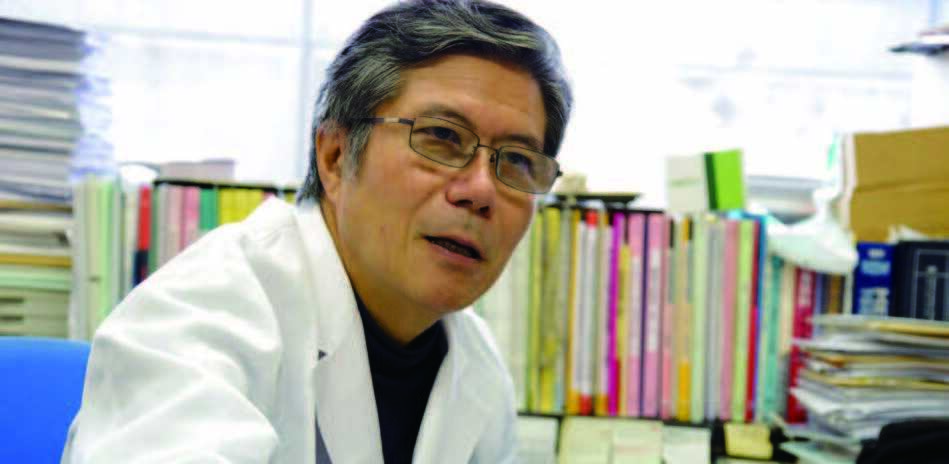 Figure 1: Head of the Forensic Medicine Lab Professor Masaru Terada
First, please tell us about the area of your research.
I come from the field of medicine, but when I was a student, I helped out with analysis in the chemical research lab of Tokyo Medical Examiner’s Office, where I came into contact with the forensics medicine department at Kyorin University. So I started working there as a chemist, with medical toxicant examination and developing analysis methods.
The main focus of my research is developing a highly accurate analysis method for medical toxicants from biological samples. I mainly deal with substances like stimulant drugs, benzodiazepine, barbiturate drugs, and psychotropic drugs such as antidepressants, as well as anaesthetics.
My expertise is forensic medicine, so my matrices are usually organ tissue or blood, which aren’t very clean. I had my hardest case about 30 years ago. A woman had died from intravenous injections – a man she knew shot stimulant drugs into her and buried her in the ground. This happened around April. He later got arrested and the body was dug up in September. That’s when I came in to extract the stimulant drug, which was the cause of death. But the body had been lying in sandy soil which makes decaying processes pretty slow, so the corpse was partially mummified. With regular methods and gas chromatography, there were too many contaminants and I couldn’t find the drug peak. So I tried various clean up methods and worked on GC/MS, the newest extraction technique at the time with help from the forensic medicine lab at Keio University’s medical department. After trial and error, I was able to quantify and identify the stimulant drug from the brain, liver, and spleen. The case was solved, but it took about half a year for extraction.
That sounds like hard work. Have you seen an advance in analysis technology over the years?
I have. In the 1970s, GC/MS was not around as much. Most of the GC devices back then used ionization detectors (FID). Then came the nitrogen phosphorus detectors for GC which I started using frequently. If the chemical compound contains nitrogen and phosphorus, it allowed me to extract specific elements. It was also 100 times more sensitive than regular FID, if not more. It was made specifically for nitrogen and phosphorus, so it drastically decreased contaminant peaks from things typical in biological samples, like fat.
There was also another case where I used ion trap type GC tandem mass spectrometry (MS/MS) to prove heroin intake. Heroin itself gets metabolized very quickly, so I had to look for its deacetylated metabolites such as 6-acetylmorphine.
Also, when dealing with low-density benzodiazepine drugs, you can use the MS/MS method with ion traps to acquire the full mass spectrum, which allows you to perform qualitative analysis with certainty. You can use samples at the nanogram order to extract benzodiazepine from blood. However, today it is more common and easier to use LC/MS/MS with a liquid chromatograph mass spectrometer.
New psychotropic drugs come out all the time, and there are cases where people overdose on them, so I have to be prepared to analyse and extract those new drugs as well. Also, if the body is decayed to a far extent, I cannot use regular methods, so I have to work on developing analysis methods for these special cases as well.

Figure 2: ISOLUTE® SLE+ prevents emulsions, a distinct problem in forensic medicine.
So the extraction method before analysis is equally important. Why did you choose to use ISOLUTE® SLE+?
I often used liquid-liquid extraction for biological samples to begin with. Afterwards, I tried using solid phase extraction too, but there was too much preparation work involved, such as activating the cartridges with a solvent flush.
When I was introduced to ISOLUTE® SLE+, I saw that the basic idea was the same as a regular liquid-liquid extraction, so I thought it was worth a try.
What are the merits of ISOLUTE® SLE+ in your experience?
There are many publications and dissertations available when it comes to liquid-liquid extraction. So one advantage is that it is easy to draw on the accumulated knowledge on the subject. Another merit is it allows me to process samples like urine, which easily emulsifies with the regular liquid-liquid extraction method, very quickly. Emulsion makes the borders unclear, so I have to salt it out to clarify the borders to remove the solvent. With ISOLUTE® SLE+, it prevents emulsions, so I don’t need to worry about this. This is a huge advantage. It is very convenient being able to complete the extraction in one shot. These are the reasons I chose ISOLUTE® SLE+.
Also, working in forensic medicine means there are lots of dirty samples. Sometimes inserting such samples into the test tubes lead to problems like contamination of the test tubes. ISOLUTE® SLE+ is disposable, so we can always perform clean extractions. This is very helpful for us.
So ISOLUTE® SLE+ is contributing to problems distinct to forensic medicine such as processing urine samples.
Yes. The same problem occurs with blood and organ parts as well, so I think it will be helpful for cases like that too.
In forensic medicine, our main subjects are contents of the stomach, blood, and urine. If there is clear suspicion of drug addiction, we check the main organs like the brain, liver, and kidney. In any case, I use ISOLUTE® SLE+ as my primary tool. When using whole blood, I dilute it first, put it on the centrifuge separator, and take out the supernatant for analysis.
But the biggest reason why I chose ISOLUTE® SLE+ was its high reproducibility. Reproducibility is critical when it comes to extraction. In regular liquid-liquid extraction, the coefficient of variation sometimes gets very large. ISOLUTE® SLE+ has a high reproducibility, which is very helpful.
So it is a clean sample processing method with a high reproducibility.
Yes. Solid phase extraction is clean too, but it takes time. With solid phase extraction, I have to let the solvent flow through once to activate the cartridges. Sometimes parts of the cartridges get jammed up in the loading or rinsing process, which leads to uneven control. With ISOLUTE® SLE+, I don’t need to worry about these things. I can just load the samples directly onto the cartridges with reliable control.
Furthermore, it lets me clean up various samples in one single cartridge. With solid phase extraction, I have to use different cartridges, which can be a handful. With ISOLUTE® SLE+, I can change the way I use it depending on the objective, for instance a low polarity solvent first followed by a high polarity solvent
afterwards.
Have you come across any problems or future requests?
Well, in regular liquid-liquid extraction, you can extract two drugs with different acidities from one sample by taking out the acidic and neutral fractions first, alkalinize it, and then get the basic fraction. I can’t do that with ISOLUTE® SLE+. To extract drugs with different polarities, I have to use two separate cartridges. It can be inconvenient.
We will continue to support your research and solve that problem by optimizing the methods. Lastly, could you tell us about what you have planned in the future?
In the revised version of “Testing method and notes on medical toxicants” which will be released in 2017, I introduce a new analysis method for psychotropic drugs. I am mainly in charge of the chapters on analysis methods for benzodiazepine drugs and its metabolites, as well as bromvalerylurea. I am looking at developing future analysis methods that are easier and more accurate.
Many researchers use liquid-liquid extraction for biological samples. With ISOLUTE® SLE+, I can use data from past references on liquid-liquid extraction methods and get highly accurate results. It finishes the analysis very quickly without any complicated procedures, so I believe more researchers will start using it.
Toho University
Toho University is a natural science university that pursues the study of “Nature, Life, Man”. With respect towards nature, recognition of the prestige of life, and a modest heart of man, it thrives to train and educate students with character and
knowledge. There are four undergraduate departments: medicine, pharmaceutical science, science, and nursing, as well as graduate school of medicine, pharmaceutical science, and science. In addition, the graduate school of nursing was established in 2013
Established 1925
Number of students: 4691
Number of employees: 842
Figures as of May 2015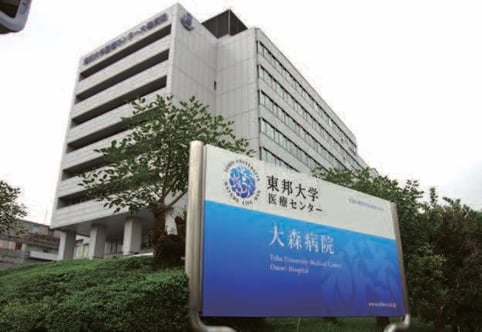
Figure 3: Toho University
Literature Number: PPS430
