
In the search for better anti-doping testing methods
The only equine drug testing laboratory in Japan, the Laboratory of Racing Chemistry (LRC) established in 1965 is an internationally accredited horse racing doping control laboratory primarily to provide analytical testing services for the analysis of equine biological samples including urine, blood and hair. LRC also provides the parentage verification test to certify the pedigrees of the Japanese horses to protect the breeding industry and racing creditably in Japan.
In February 2021, LRC was approved by the Fédération Equestre Internationale (FEI) as one of the five FEI approved laboratories in the world for testing the equestrian samples
from the FEI-regulated events and was subsequently designated by the FEI as the sole laboratory for testing the pre-arrival testing samples and the equine anti-doping and controlled medication samples for the Tokyo 2020 Olympic and Paralympic Equestrian games in the summer of 2021.
In order to handle a wide variety of tests, the Drug Analysis Department utilizes Biotage® Extrahera™ Classic and Biotage® Extrahera™ HV-5000 automated sample preparation workstations that can rapidly and automatically handle sample processing. In this customer case, we interviewed both Dr. Misato Kodaira and Dr. Yoshibumi Shimizu, Chemists in the Drug Analysis Department, about the background and the key points that led to their decision to introduce our systems into their laboratory.
First of all, could you tell us about the nature of your work and research?
Dr. Shimizu: LRC’s main role is to uphold the integrity as well as ensuring fairness in the horseracing industry. We have two major testing-related divisions: the Drug Analysis Division mainly for the testing of prohibited substances and controlled medications in horseracing and equestrian sports, and the Genetic Analysis Division for gene analysis and parentage verification. We test all samples from the horse racing operated by national and local governments in Japan for prohibited substances and controlled medications that may be used in racehorses.
Annually, we conduct a total of approximately 50,000 tests of various types (or about 1,000 tests each week). As part of our research work, we are involved in the development and enhancement of our in-house test methods. In addition, we also conduct research on the expansion of the panel of drugs to be tested and research on pharmacokinetics.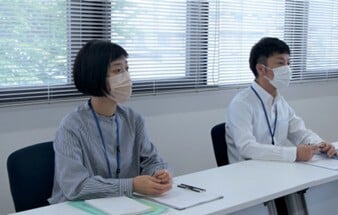
Figure 1. Dr. Misato Kodaira (Left), Dr. Yoshibumi Shimizu (Right).
I understand you were involved in the testing for equestrian samples for the Tokyo 2020 Summer Olympics and Paralympics held last year in 2021. Can you tell us more about your work at that time?
Dr. Shimizu: Last summer, we conducted testing of horses that competed in the equestrian events at the Olympics and Paralympics. Apart from the post-competition testing, we also provided a voluntary pre-arrival testing service for horses entered for the Olympics and Paralympics. Same test scheme was applied to the pre-arrival testing and post-competition testing. As such, we were in a very tense and time-critical situation from the end of June up to the completion of the analysis of the last batch of the Paralympic post-competition samples in early September. The three Extrahera™ units installed last year contributed significantly to our analysis process.
Dr. Kodaira: We also had to deal with regular horse racing samples in addition to the Olympic and Paralympic samples, and it felt like I was back in school where I worked like a student (laughs). Thinking back to the Olympics and Paralympics, I remember that it was particularly difficult to arrange the screening tests, because the frequency of sample arrival was irregular, and the number of samples could not be determined until they were opened. After receiving each batch of samples from the Olympic and Paralympic equestrian event (often in the afternoon), we were usually required to submit the results of the analysis the following morning, so we had to start on it as soon as the samples arrived! I was so focused that I needed to finish everything from sample pretreatment to analysis on the mass spectrometer on the same day.
Thank you very much for your easy-to-understand explanations! Wow, so you had to deal with the tough Olympic and Paralympic tests in addition to your normal testing duties, that’s amazing!
In order to process a large number of specimens speedily, your laboratory has been advocating automation of sample prep for some time. What made you decide to consider Biotage® Extrahera™ this time?
Dr. Shimizu: I had been interested in the Extrahera™ for a long time because I learnt about it from scientific papers and actual users in the same industry. We need to handle a large number of samples, so we use more than 20 units of the automated sample preparation systems. Automating the sample pretreatment process can provide the advantages of saving manpower resources, improving process reproducibility, and more importantly maintaining the quality of test results even when different laboratory personnel operates the same process. Once the sample is set in the system, the operator can focus on other tasks, such as actual analysis or preparation of the analytical instrumentation, making more effective use of time.
Dr. Kodaira: Recently, our doping tests have been expanded to cover a much wider range of drugs of abuse, which has brought up some technical issues, leading us to consider the use of the Biotage® Extrahera™ system.
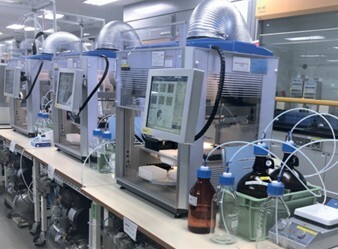
Figure 2. Three Biotage® Extrahera™ installed in the Drug Analysis Department.
Could you tell us what kind of challenges did you face?
Dr. Kodaira: For our previous solid phase extraction systems, I noticed that some of the new drugs to be tested had a tendency to carry over. To deal with this issue, we used special arrange- ment of the positions of the samples in the system and at the same time introduced additional negative blank samples etc., but this took us more time and thus we wanted to look for an alternative to resolve this problem.
Dr. Shimizu: For example, with a syringe-type sample pretreatment system, we had no choice but to perform more washings depending on the properties of each compound, but we faced a dilemma that the more washings we performed, the more extraction time it required. With the increased sensitivity of our analytical instrumentation, reducing carryover was an urgent issue.
After the live demonstration at LRC of Biotage® Extrahera™, you decided to procure it and install in your laboratory. What were the main deciding factors?
Dr. Shimizu: The major factor in our decision of the procurement of the Extrahera™ was the fact that carryover was virtually reduced to zero because the problem of carryover indeed causes headaches to every chemist working in the racing and equestrian industry.
As the Extrahera™ makes use of disposable pipette tips, the system itself theoretically eliminates the risk of carryover.
Dr. Kodaira: If carryover occurs, it would take a long time to find out the root cause. Usually, it is necessary to go back to the initial extraction process and re-inspect the samples, so we are very glad to have introduced the Extrahera™ system that eliminates this time-consuming rework step.
Dr. Shimizu: Regarding the throughput, the method I used reduced the processing time by about 40% as compared to what we had before. Furthermore, the results obtained were good and therefore I felt that the reduction in extraction time was very beneficial.
What do you think about the design and ease of use?
Dr. Shimizu: I liked that because it is compact and has a built-in exhaust system. We wanted something with minimal exposure to solvents to protect the health of our laboratory personnel. In this respect, Extrahera™ having an integrated exhaust system meant it fit our intended purpose.
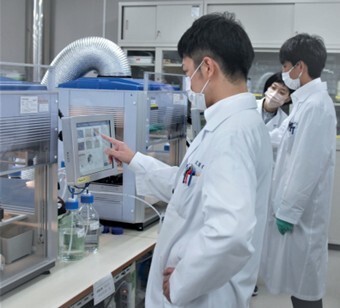
Figure 3. Dr. Shimizu operating a Biotage® Extrahera™ system.
We heard from our technicians that the software is intuitive and easy to use and the touch panel makes the operations much easier. We also understood that it is easy to schedule different types of extraction processes because the end time is displayed on the panel. The system also makes the scheduling process faster and easier. Once the sample is put into the system, we can do other things, so work productivity and efficiency has really improved.
It’s great that you find the features of our system beneficial. Besides our Classic model, Dr. Shimizu you have also cooperated with us on the development phase of our new model of Biotage® Extrahera™ HV-5000. Please tell us what you felt at that time?
Dr. Shimizu: I have a favourable impression of your company’s attitude to improve the recently launched high-capacity Biotage® Extrahera™ HV-5000 by receiving evaluations for the prototype from actual users during the development phase. When I found my feedback had been useful and my suggested modifications were eventually implemented in the final model, I truly felt that your company respects the customers and seriously considers every useful feedback.
We also relied on the support we received when migrating methods from our existing equipment. We appreciated the detailed customization by the supporting team when we had issues. Besides the performance of the product, the reliability of the supporting team was another critical factor in our decision to bring the system into our laboratory.
Thank you very much for your high evaluation of our product, including support. Please let us know if there is anything you would like to see improved on the Extrahera or if you have any requests for Biotage.
Dr. Shimizu: Regarding the software, we wished to have the option of controlling the door independently, instead of having it automatically open when all processes are completed. We sometimes take a lunch break or leave the system running
to handle other tasks after placing the samples in the Extrahera and in order to protect the integrity of the samples, it is necessary to keep the door closed until the time of sample collection.
We are never done improving ourselves, so we always appreciate the feedback, and we are already implementing a software update that will give you control over the Extrahera door!
To close off, what are your plans for the future?
Dr. Shimizu: Actually, there is no close-ended test scope in doping control testing in equine sports. I would like to investigate and develop more testing methods that are
ahead of the curve to cover the increasingly drugs of abuse. The sample preparation technology is also constantly changing, and we need to continue to investigate better sample preparation systems.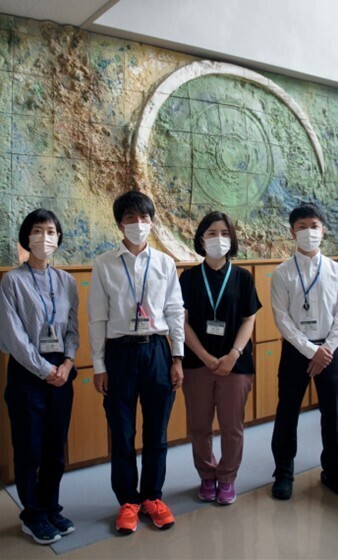
Figure 4. Staff members at Laboratory of Racing Chemistry.
Thank you very much for taking the time to discuss your experience with the Extrahera platforms. We look forward to working with you in the future.
- This user interview was conducted in May 2022
Acknowledgements
We would like to sincerely thank Dr. Yoshibumi Shimizu and Dr. Misato Kodaira as well as their team at the Laboratory of Racing Chemistry for their valuable opinions and continued support for the Biotage products.
LRC’s Drug Analysis Department has been accredited to the international standard ISO/IEC 17025 (General requirements for the competence of testing and calibration
laboratories) since 2004 and is currently accredited to its latest version of 2017. In February 2021, LRC was approved by the Fédération Equestre Internationale (FEI) as one of the five FEI Approved Laboratories in the world for testing the equestrian samples from the FEI-regulated events. In July 2021, LRC was provisionally appointed by the International Federation of Horseracing Authorities (IFHA) as an IFHA Reference Laboratory. After the successful completion of the IFHA on-site assessment, LRC was fully appointed to become the 6th IFHA Reference Laboratory in July 2022. LRC is currently one of the four laboratories worldwide attaining both appointments of the FEI Approved Laboratory and the IFHA Reference Laboratory.
For more details about their work at the Laboratory of Racing Chemistry, Japan, please contact:
Dr. Yoshibumi Shimizu (y-shimizu@lrc.or.jp) Gary Ngai-Wa Leung (gary.nw.leung@lrc.or.jp)
Literature number: PPS695
