
For Research Use Only. NOT for Use in Diagnostic Procedures.
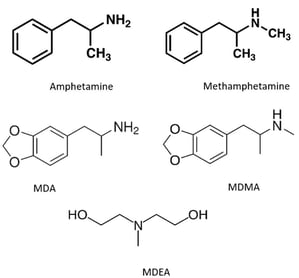 Figure 1. Structures of analytes.
Introduction
This application note describes the extraction of Amphetamines from human urine using ISOLUTE® HCX SPE cartridges and Biotage® Extrahera™ HV-5000 prior to GC/MS analysis.
The simple sample preparation procedure, based on a mixed- mode/strong cation exchange extraction mechanism, delivers clean extracts and analyte recoveries greater than 90% with RSDs lower than 10%. Linearity of greater than 0.998 is achieved from 5–500 ng/mL.
This application note includes optimized conditions for automated processing of the ISOLUTE® HCX cartridges (using Biotage® Extrahera™ HV-5000) and manual processing (using the Biotage® PRESSURE+ 48 positive pressure manifold). Data generated using both processing systems is shown.
Analytes
Amphetamine
Methamphetamine
3,4-Methylenedioxyamphetamine (MDA)
3,4-Methylenedioxymethamphetamine (MDMA)
Methyldiethanolamine (MDEA)
Internal standard
Amphetamine-D5
Sample preparation procedure
Format:
ISOLUTE® HCX 130 mg/3 mL cartridge, p/n 902-0013-B
Automated and manual processing:
Samples were processed manually (batch size 24) using a Biotage® PRESSURE+ 48 positive pressure manifold. Each step below was processed at 2 to 4 psi using the adjustable flow setting. Drying steps were processed at 40 psi using the maximum flow setting.
Automated sample processing (batch size 24) was performed using the Biotage® Extrahera™ HV-5000 system. Detailed processing conditions are included in the appendix.
Sample pre-treatment:
Spike human urine (1 mL) with internal standard solution, add 3 mL 100 mM ammonium acetate (pH6) and mix thoroughly, giving a total volume of 4 mL. Sample pre-treatment is performed in sample tubes (16 x 100 mm, p/n C40708).
Note: Internal standard solution consists of a 10 ng/µL methanolic solution. 10 µL of this was added to 1000 µL of human urine to give a 100 ng/mL spike concentration
Conditioning:
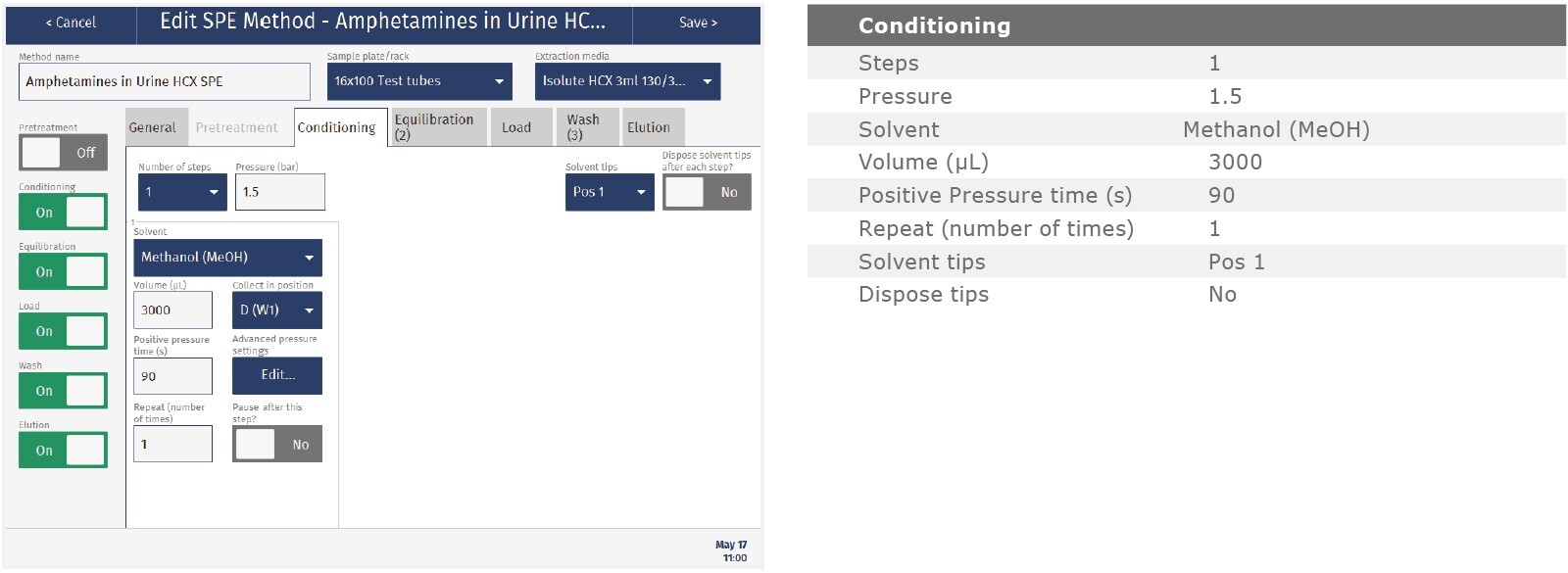
Condition cartridges with methanol (3 mL)
Equilibration:
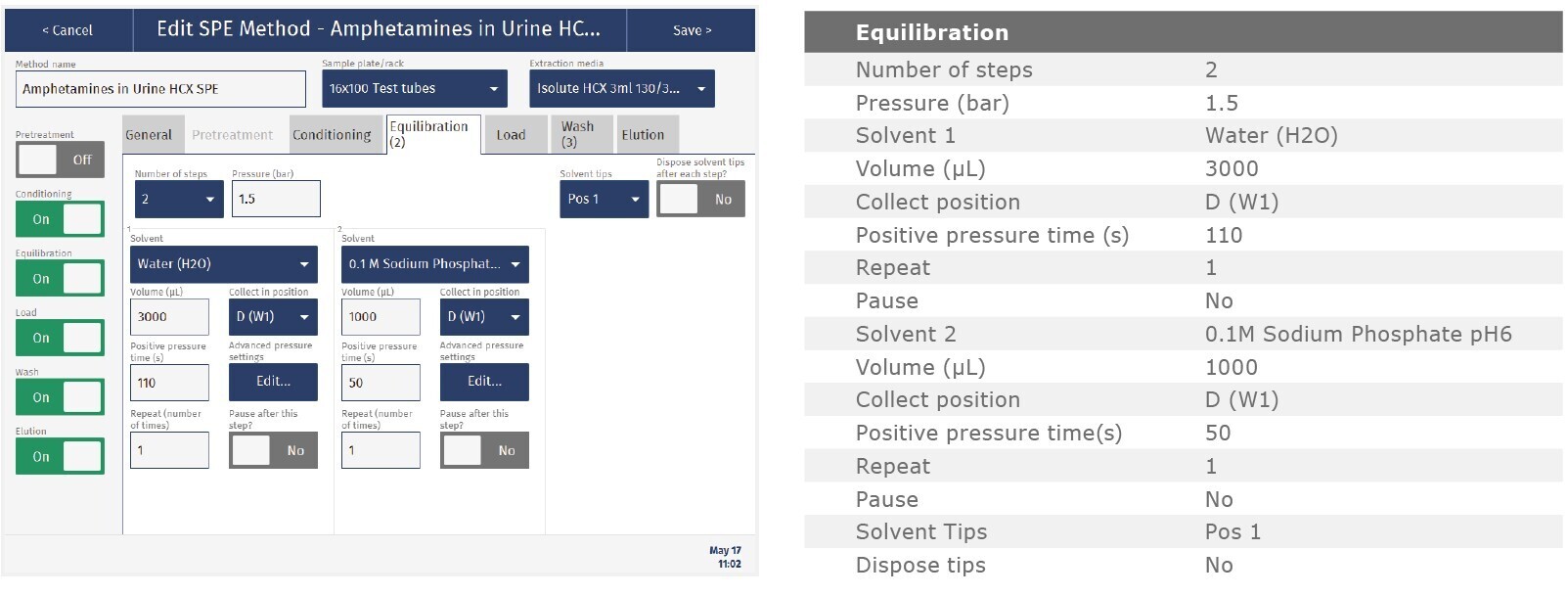
Equilibrate cartridges with deionized water (3 mL) followed by sodium phosphate buffer (100 mM , pH 6, 1 mL).
Sample loading:
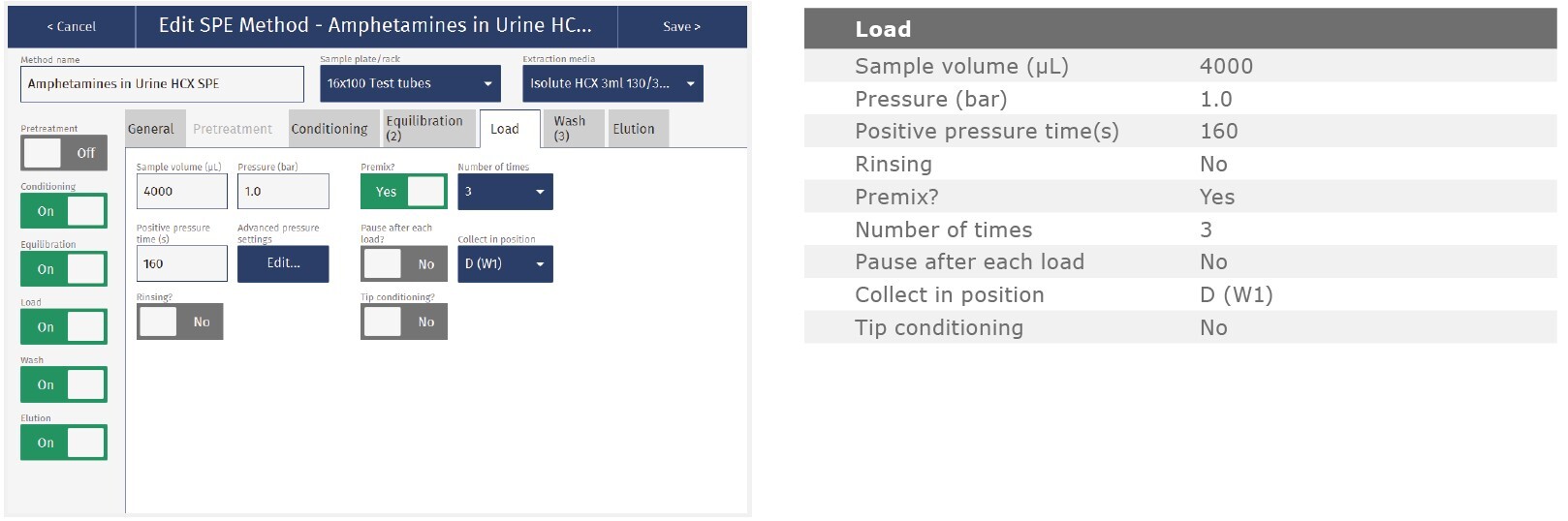
Load the full volume (4 mL) of the pre-treated human urine sample. (This will require two transfer steps as the volume of sample exceeds the volume of the cartridge).
Note: for a smaller batch size of 12, ISOLUTE® HCX 130 mg/10 mL XL (p/n 902-0013-H) cartridges may be used. These facilitate loading of a single transfer step/ aliquot.
Wash 1:
Elute interferences with DI water (2 mL)
Wash 2:
Elute interferences with acetic acid (100 mM, 1 mL)
Wash 3:
Elute interferences with methanol (3 mL)
Dry:
Dry cartridges for 5 mins. under positive pressure (40 psi)
Elution:
Elute analytes with DCM:IPA:NH4OH (78:20:2, 3 mL) into elution solvent tubes (12 x 75 mm, p/n C44651) held in a 24 Position Collection Rack, 12 x 75 mm, p/n 414511SP).
Evaporation and derivatization steps were necessary in this application to obtain a stabilized analyte that could be analyzed via GC/MS.
Post elution and reconstitution:
Transfer elution solvent tubes to the evaporation system.
Evaporation 1: Dry the extract in a stream of air using a TurboVap® 96 Dual at 25 °C, 25 L/min for approximately 55 minutes (note: samples must be completely dry for a successful derivatization step).
Reconstitute evaporated samples with ethyl acetate (50 µL) and PFPA (50 µL). Vortex mix and derivatize on a heat block at 50° for 25 minutes.
Evaporation 2: Transfer to high recovery GC/MS vials and dry in a stream of air using a TurboVap® 96 Dual at 25 °C, 25 L/min for approximately 5 minutes. Recon in 200 µL ethyl acetate and transfer to the GC/MS for analysis.
Evaporation conditions
Evaporation 1
Instrument:
TurboVap® 96 Dual with 24 position rack (12 x 32 mm)
Mode:
Manual
Configuration:
24, single
Gas temperature:
25 oC
Plate temperature:
25 oC
Gas flow:
25 L/min
Plate height:
25 mm
Evaporation 2
Instrument:
TurboVap® 96 Dual with 24 position rack (12 x 32 mm)
Mode:
Manual
Configuration:
24, single
Gas temperature:
25 oC
Plate temperature:
25 oC
Gas flow:
25 L/min
Plate height:
58 mm
GC conditions
Instrument:
Agilent 7890A GC with purged Ultimate Union
Column:
Agilent J&W DB-5ms 30 m, 0.25 mm, 0.25 µm
Mobile phase:
GC/MS grade helium
Inlet temperature:
250 °C Splitless
Flow rate:
1.5 mL/min.
Injection volume:
1.0 μL
Table 1. GC oven gradient.
|
Ramp rate (°C/min) |
Temp (°C) |
Hold Time |
|
|
60 |
1 |
|
25 |
215 |
4 |
MS conditions
Instrument:
Agilent 5975C
Transfer line temp:
280 °C
Source temp:
230 °C
Quad temp:
150 °C
Table 2. MS conditions for target analytes.
|
Analytes |
Quant ions |
Qual ions |
|
Amphetamine |
190 |
118 |
|
Amphetamine-D |
123 |
96 |
|
Methamphetamine |
204 |
118, 160 |
|
MDA |
162 |
135 |
|
MDMA |
162 |
204 |
|
MDEA |
162 |
192 |
Results
Recovery and reproducibility
High (> 90%, figure 2) and reproducible (RSD < 10%, figure 3) recoveries were achieved for all analytes using the method described in this application note using the ISOLUTE® HCX cartridge format processed using the Biotage® Extrahera™ HV-5000. Figure 2. Shows analyte % recoveries from eight spiked samples using the optimized ISOLUTE® HCX protocol described in this application note. Cartridges were processed manually using Biotage® Pressure +48 and extraction was automated using the Biotage® Extrahera™ HV-5000.
 Figure 3. Shows analyte % RSD obtained from eight spiked samples using the optimized ISOLUTE® HCX protocol described in this application note. Cartridges were processed manually using Biotage® Pressure +48 and extraction was automated using the Biotage® Extrahera™ HV-5000.
Linearity
Calibration curve performance was investigated from whole blood spiked between 5–500 ng/mL. Good linearity was observed delivering r2 values greater than 0.998. Tables 3 and 4. detail linearity performance for each method of extraction.
Table 3. Analyte calibration curve r2 for manual extraction.
|
Analyte |
r2 |
|
Amphetamine |
0.999 |
|
Methamphetamine |
0.998 |
|
MDA |
0.999 |
|
MDMA |
0.999 |
|
MDEA |
0.999 |
Table 4. Analyte calibration curve r2 for automated extraction.
|
Analyte |
r2 |
|
Amphetamine |
0.999 |
|
Methamphetamine |
0.999 |
|
MDA |
0.999 |
|
MDMA |
0.999 |
|
MDEA |
0.999 |
Calibration curves
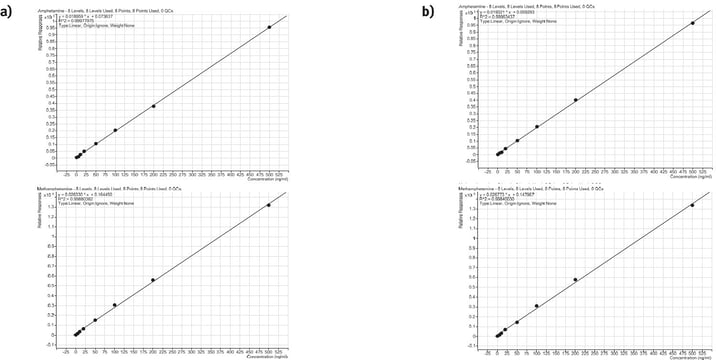
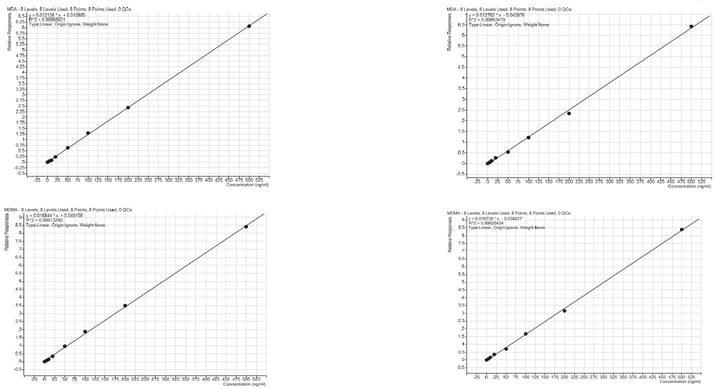
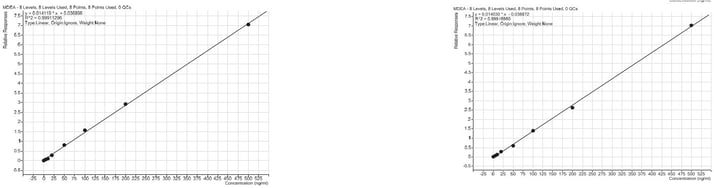 Figure 4. Calibration curves for automated amphetamine extraction using the Biotage® Extrahera™ HV-5000 (a) and manual extraction (Biotage® PRESSURE+ 48) (b) using ISOLUTE® HCX cartridges.
ISOLUTE® HCX solid phase extraction elution cartridges provided robust automated extraction of amphetamines from pre-treated human urine samples. Good, reproducible recoveries were achieved, with an overall processing time of 58 minutes (excluding the evaporation and derivatisation steps).
Processing time
For a batch size of 24 samples, processing times were:
|
Processing System |
Processing Time |
|
Biotage® PRESSURE+ 48 |
50 minutes |
|
Biotage® Extrahera™ HV-5000 |
58 minutes |
Chemicals and reagents
- Methanol (LC-MS grade), ethyl acetate, IPA and DCM were purchased from Rathburn Chemicals Ltd (Walkerburn, UK).
- All analyte standards, deuterated internal standards, hydrochloric acid, ammonium hydroxide, PFPA and acetic acid were purchased from Sigma- Aldrich Company Ltd. (Gillingham, UK).
- DI Water used was 18.2 MOhm-cm, drawn daily from a Direct-Q5 water purifier.
- Internal standard (100 ng/mL) was prepared from a 1 mg/mL stock solution by adding 10 µL to 990 µL of MeOH. 10 µL of this solution was then added to each calibration solution.
- 100mM Sodium Phosphate (pH6) was made up by adding 1.4196g of sodium phosphate dibasic to 100 mL of water (18.2 MOhm-cm) and adjusting to the correct pH with concentrated hydrochloric acid.
- 100mM ammonium acetate (pH6) was made up by weighing 0.7708g of ammonium acetate, adding 100 mL of water (18.2 MOhm-cm) and adjusting to the correct pH with concentrated hydrochloric acid.
- Acetic acid 100mM was prepared by adding 572 µL of glacial acetic acid to 100 mL of water (18.2 MOhm-cm).
- Elution solvent (DCM:IPA:NH4OH (78:20:2, v/v)) was made up by measuring out 156 mL of DCM and 40 mL of IPA and adding both to a bottle with 4 mL ammonium hydroxide.
Additional information
All data shown in this application note was generated using human urine donated by healthy human volunteers.
Ordering information
|
Part Number |
Description |
Quantity |
|
SPE Consumable |
||
|
902-0013-B |
ISOLUTE® HCX cartridges, 130 mg/3 mL |
50 |
|
Manual Processing |
||
|
PPM-48 |
Biotage® PRESSURE+ 48 Positive Pressure Manifold |
1 |
|
Automated Processing |
||
|
471002 |
Biotage® Extrahera™ HV-5000 |
1 |
|
417610 |
Configuration Kit 24 Positions Dual Flow - HV |
1 |
|
414174SP |
Column Rack 24 x 3 mL |
1 |
|
414511SP |
Collection Rack 12 x 75 mm 24 positions |
1 |
|
414254SP |
Sample Rack 16 x 100 mm, 24 Positions |
1 |
|
C40708 |
Test Tubes (16 x 100 mm) |
1000 |
|
C44651 |
12 x 75 mm Test Tube |
1000 |
|
Evaporation |
||
|
418000 |
TurboVap® 96 Dual |
1 |
|
418312SP |
24 Position Manifold, Kit |
1 |
|
418319SP |
Rack 12 x 32 mm, 24 Positions |
1 |
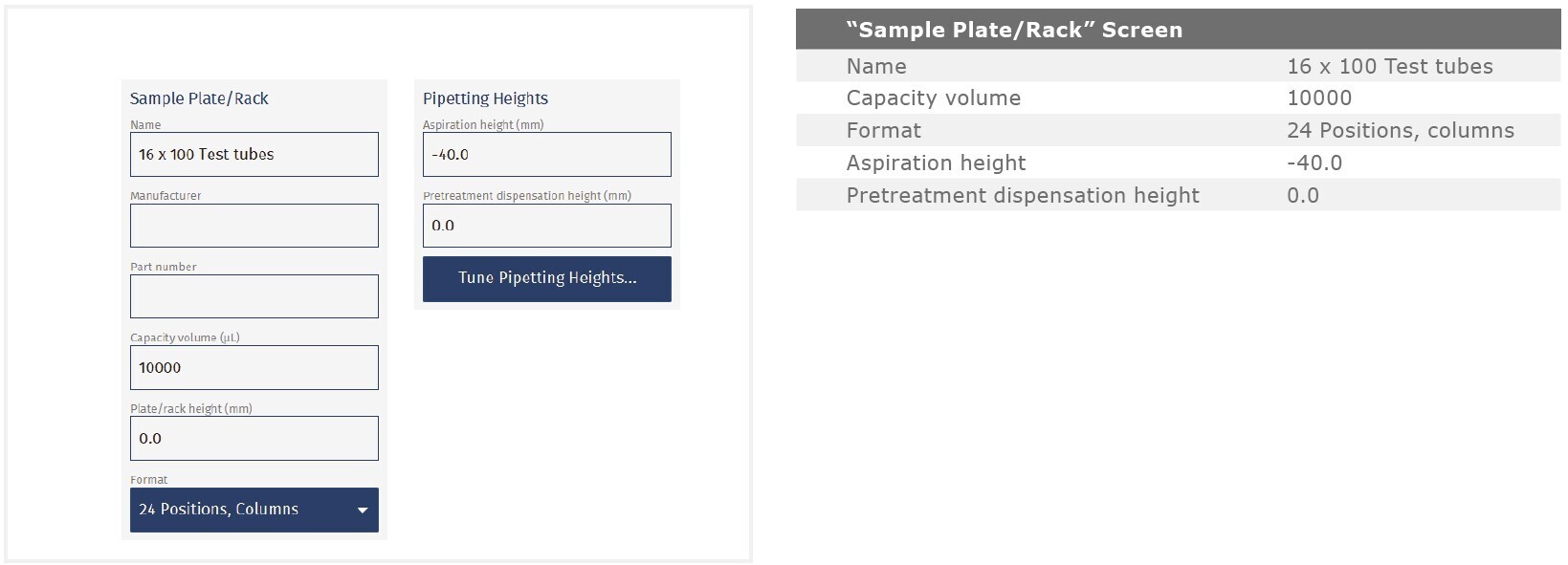
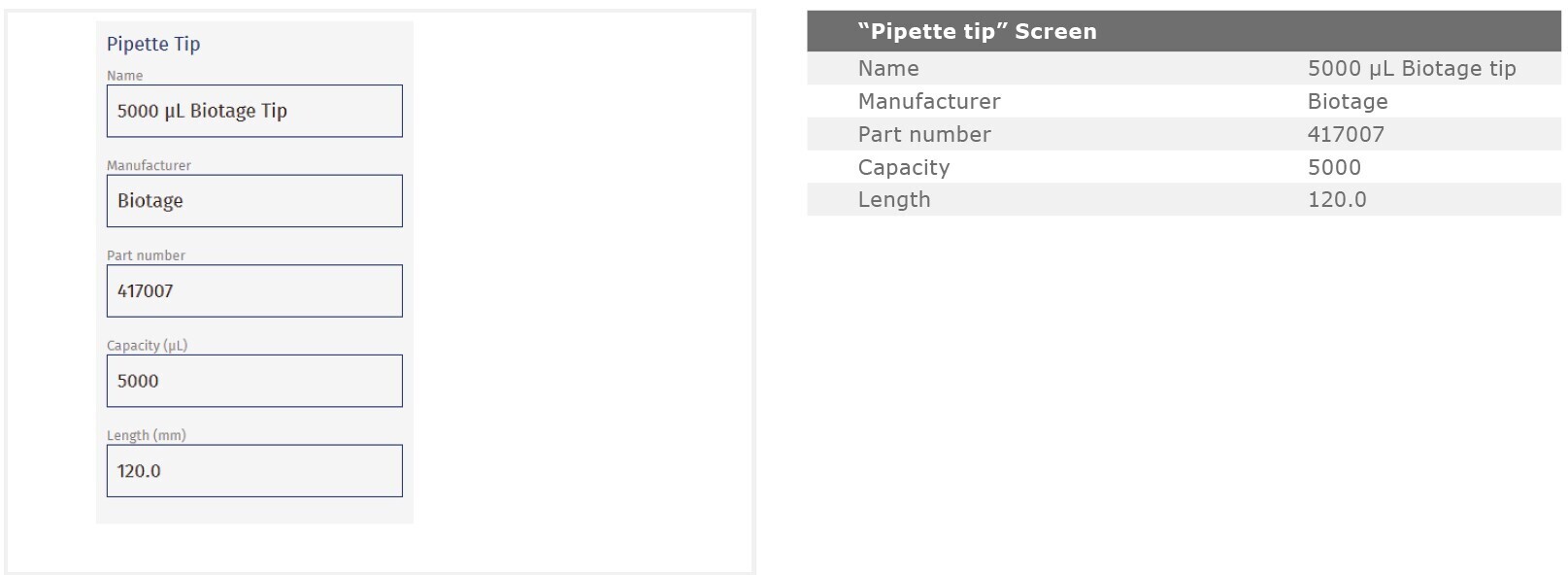
Appendix: Biotage® Extrahera™ HV-5000 settings
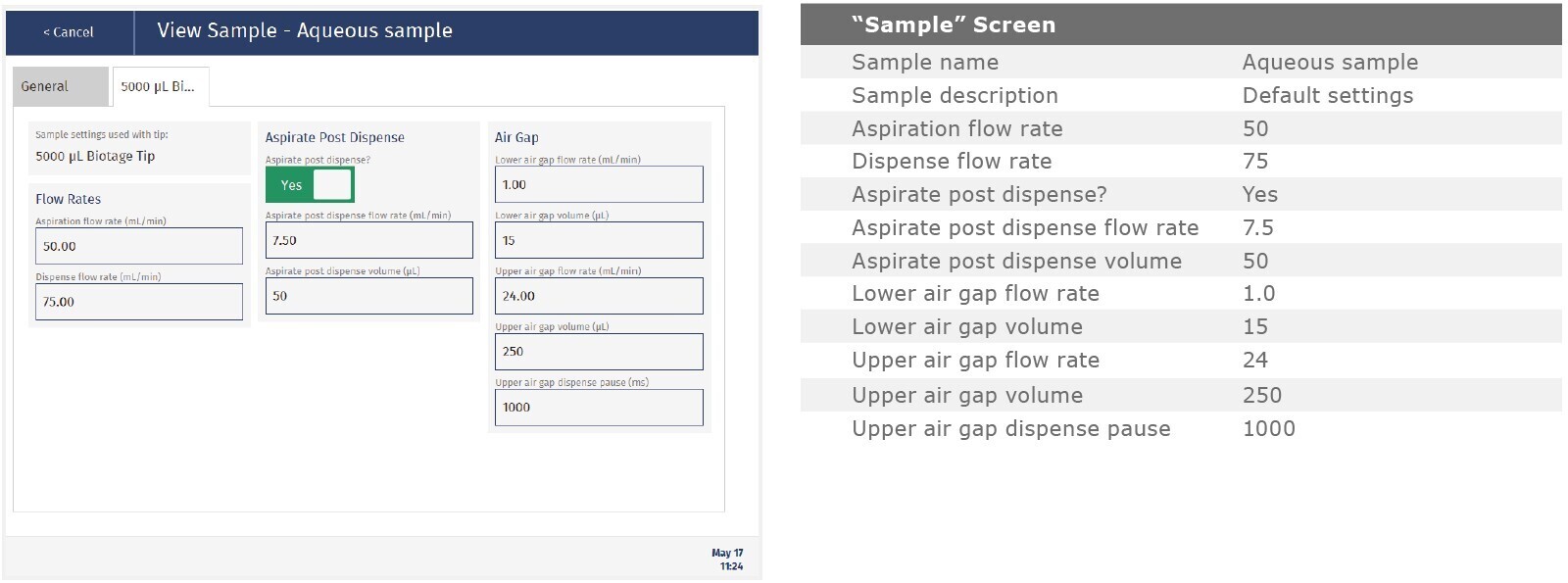
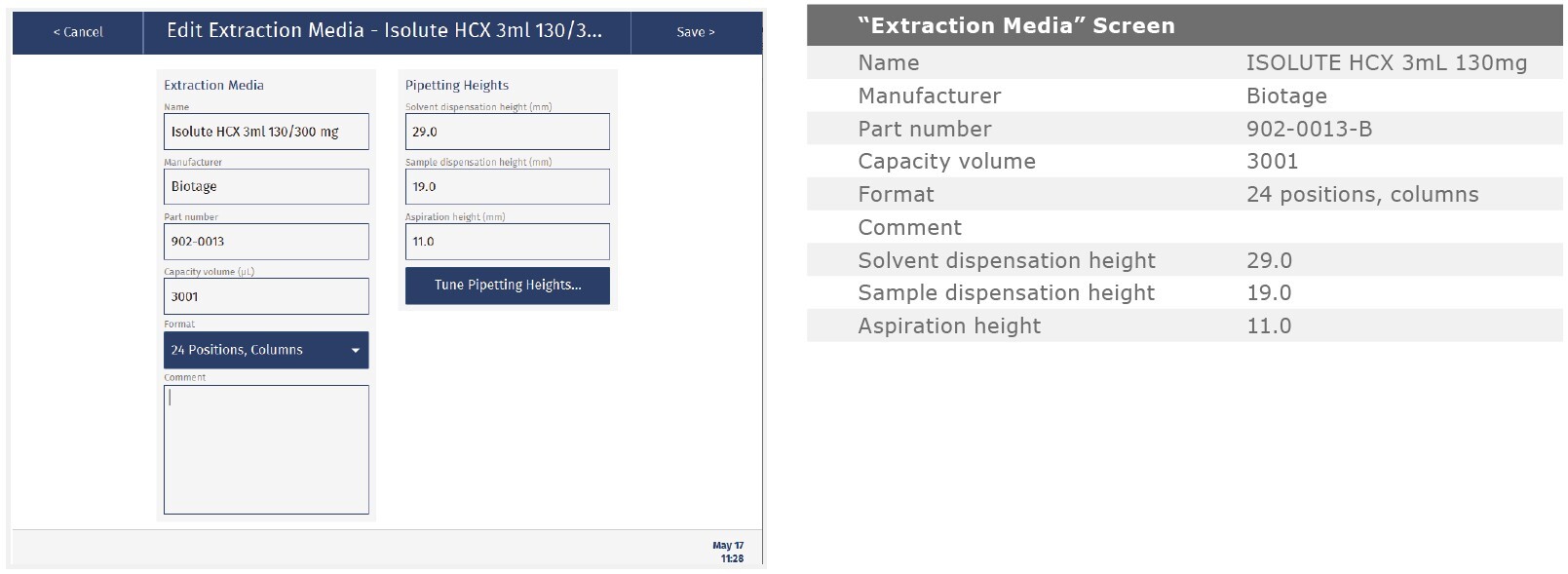
The method described in this application note was automated on the Biotage® Extrahera™ High Volume 5000 using ISOLUTE® HCX 130 mg/3 mL cartridges. This appendix contains the software settings required to configure Extrahera™ to run this method.
Screenshots may not match instrument settings depending upon the instrument software version.
|
Sample name: |
Amphetamines |
|
Sample plate/rack: |
16 x 100 test tubes |
|
Extraction Media: |
ISOLUTE® HCX 130 mg/3mL |
Screenshot Settings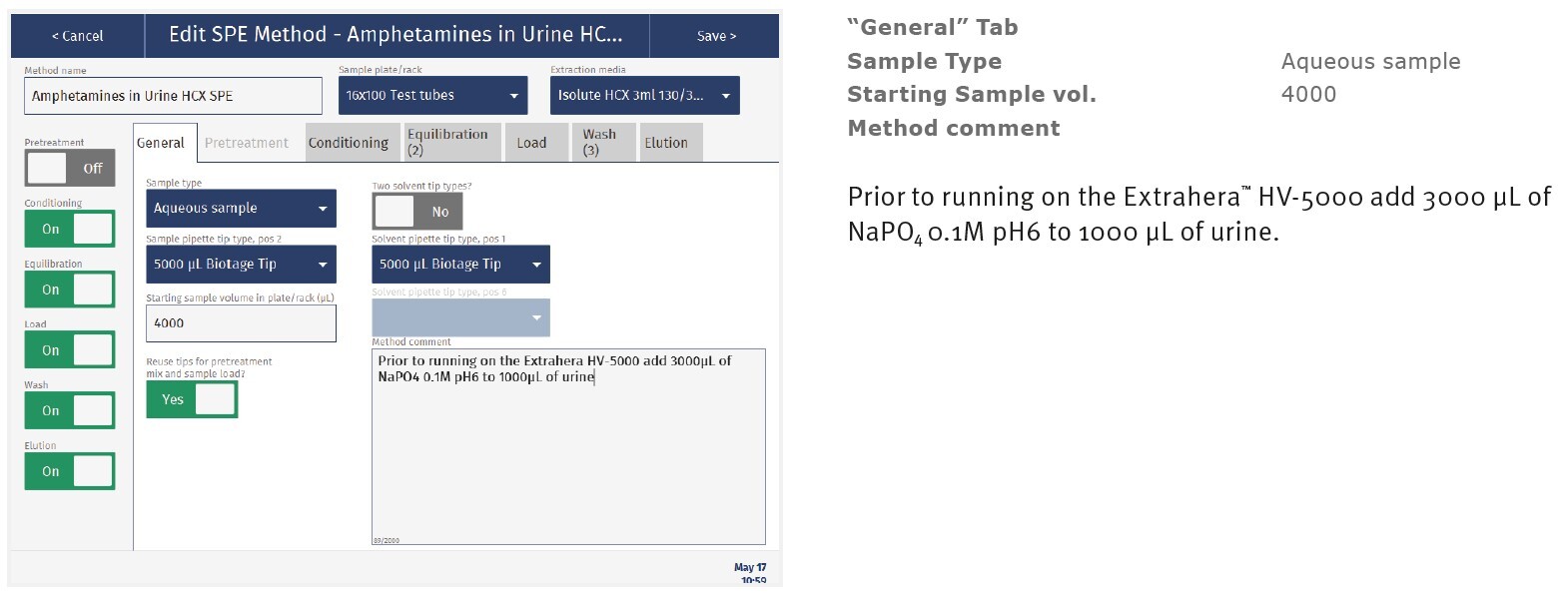
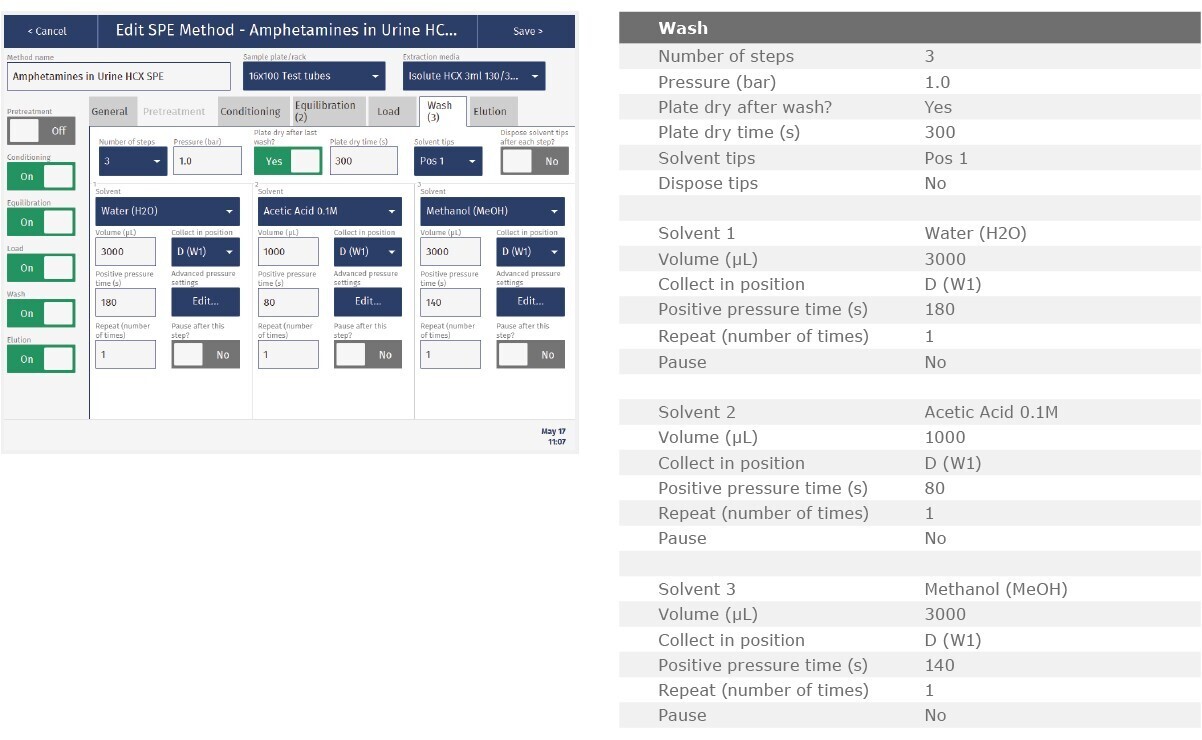
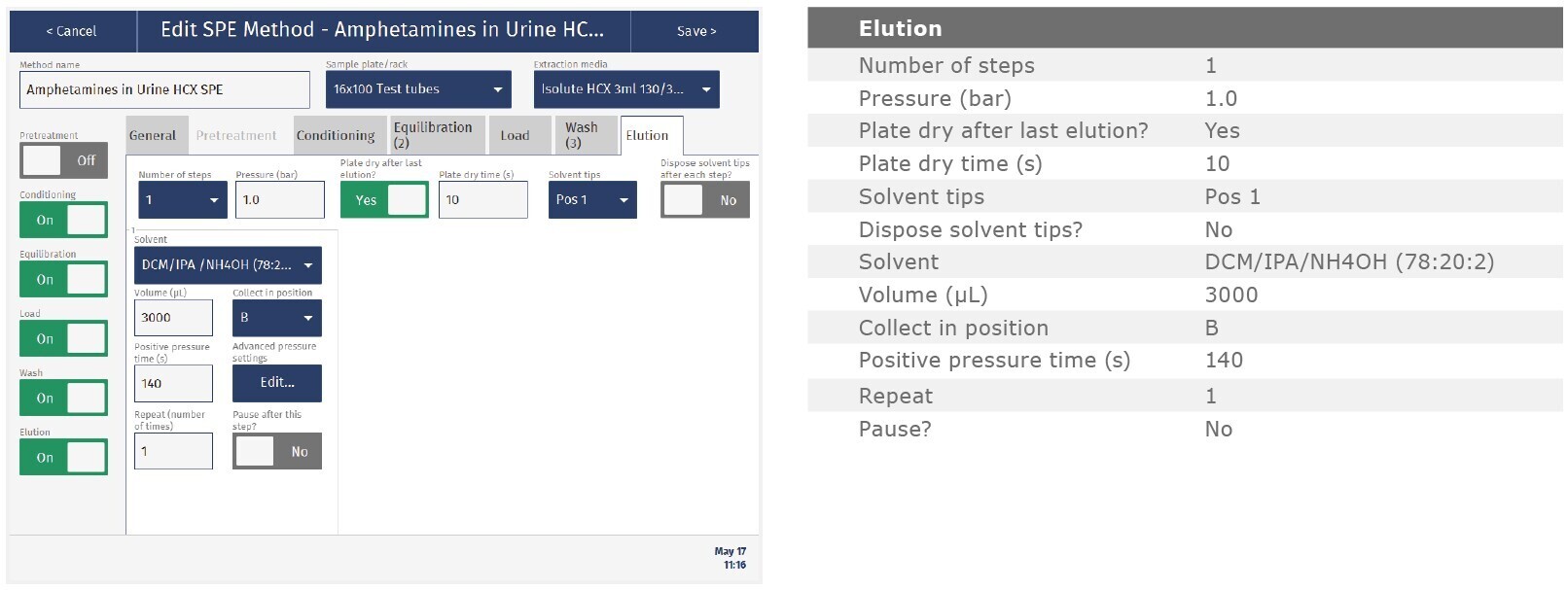
Solvent properties
|
Solvent Description |
|
|
1 |
Methanol |
|
2 |
Water (H2O) |
|
3 |
0.1M Sodium Phosphate, pH6 (aq) |
|
4 |
0.1M Acetic Acid (aq) |
|
5 |
DCM/IPA/NH4OH (78:20:2) |
|
6 |
|
|
7 |
|
|
8 |
|
|
9 |
|
|
10 |
|
|
Solvent |
1 |
2 |
3 |
4 |
5 |
6 |
7 |
8 |
9 |
10 |
|
Reservoir Type |
Refillable |
Non Refillable |
||||||||
|
Capacity |
N/A |
N/A |
N/A |
N/A |
N/A |
|||||
|
Aspiration flow rate |
50 |
50 |
50 |
50 |
50 |
|||||
|
Dispense flow rate |
70 |
75 |
75 |
75 |
40 |
|||||
|
Aspiration post dispense? |
Yes |
Yes |
Yes |
Yes |
Yes |
|||||
|
Aspirate post dispense flow rate |
7.5 |
7.5 |
7.5 |
7.5 |
6.0 |
|||||
|
Aspirate post dispense volume |
50 |
50 |
50 |
50 |
100 |
|||||
|
Lower air gap flow rate |
1.0 |
1.0 |
1.0 |
1.0 |
1.0 |
|||||
|
Lower air gap volume |
15 |
15 |
40 |
40 |
30 |
|||||
|
Upper air gap flow rate |
10 |
24 |
24 |
24 |
5 |
|||||
|
Upper air gap volume |
250 |
250 |
250 |
250 |
250 |
|||||
|
Upper air gap dispense pause |
1000 |
1000 |
1000 |
1000 |
2000 |
|||||
|
Conditioning? |
Yes |
Yes |
Yes |
Yes |
Yes |
|||||
|
Frequency |
1st Asp. only |
|||||||||
|
Cond. Times |
3 |
2 |
2 |
2 |
6 |
|||||
|
Cond. Flow rate |
50 |
50 |
50 |
50 |
75 |
|||||
|
Volume dependent conditioning |
Yes |
Yes |
Yes |
Yes |
Yes |
|||||
Literature Number: AN978
