
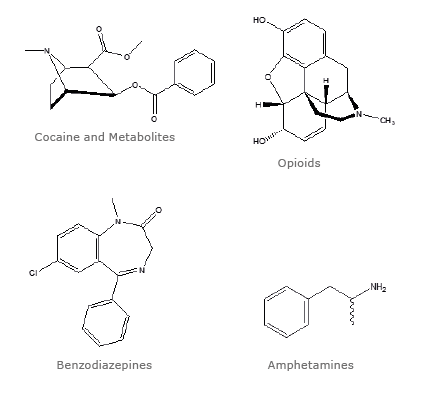
 Figure 1. Selected analyte structures representing the analyte classes extracted.
Introduction
This application note describes the automated extraction of multiple drugs of abuse from human urine using 1 mL sample capacity ISOLUTE® SLE+ supported liquid extraction cartridges prior to LC/MS-MS analysis. The extraction methodology is suitable for raw or hydrolysed urine samples. Hydrolysis protocols are provided.
The Biotage® Extrahera™ HV-5000 automated sample preparation system allows rapid and efficient cartridge format extractions to a high level of accuracy and precision.
The simple supported liquid extraction procedure described in this application note delivers clean extracts and analyte recoveries mostly greater than 80% with RSDs lower than 5% for most analytes. Linearity of greater than 0.99 is achieved for all analytes with calibration range of typically 0.1–100 ng/mL.
|
Analytes |
|
|---|---|
|
2-OH-ethyl-flurazepam |
6-MAM |
|
7-amino-clonazepam |
7-amino-flunitrazipam |
|
α-OH-alprazolam |
α-OH-triazolam |
|
Alprazolam |
Amphetamine |
|
Benzoylecgonine |
Bromazepam |
|
Buprenorphine |
Cocaine |
|
Codeine |
Dihydrocodeine |
|
EDDP |
Estazolam |
|
Fentanyl |
Flunitrazepam |
|
Flurazepam |
Hydrocodone |
|
Hydromorphone |
Ketamine |
|
Lorazepam |
LSD |
|
MDEA |
MDMA |
|
Methadone |
Methamphetamine |
|
Mephedrone |
Midazolam |
|
Morphine |
Nitrazepam |
|
Norfentanyl |
Norketamine |
|
Nordiazepam |
Oxazepam |
|
Oxycodone |
Oxymorphone |
|
Pethidine |
Phencyclidine (PCP) |
|
Temazepam |
Triazolam |
|
Zaleplon |
Zolpidem |
Sample preparation procedure
Format:
ISOLUTE® SLE+ 1 mL sample volume (tables), p/n 820-0140-CG
Automated processing:
Automated sample processing of a batch of 24 samples was performed using the Biotage® ExtraheraTM HV-5000 system. Detailed processing conditions are included in the appendix.
Sample pre-treatment:
Hydrolysed urine
Spike sample with internal standard and/or controls as necessary. Dilute urine sample (1 mL) with ammonium acetate buffer (100 mM, pH 5, 0.95 mL) and β-glucuronidase (0.05 mL). Mix and incubate at 60 °C for 2 hours then add concentrated ammonium hydroxide solution (20 µL).
Non-hydrolysed urine
Dilute urine sample (1 mL) with 0.1% ammonia solution (1 mL).
After pre-treatment, transfer to 16 x 75 mm tubes for Extrahera HV-5000 for processing
Sample loading:
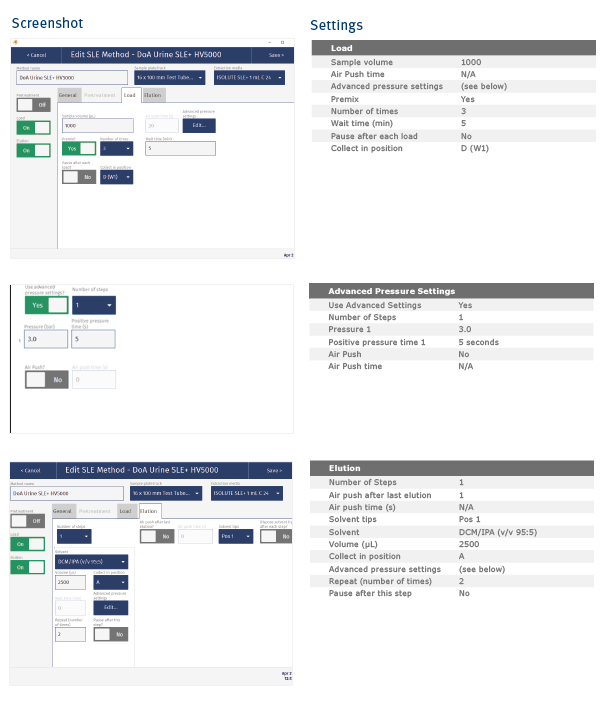
Load 1 mL of the pre-treated urine sample onto each SLE cartridge. The sample is pushed into the SLE cartridge using a positive pressure pulse followed by gravity. The sample is then left to equilibrate in the cartridge for 5 minutes.
Elution:
Elute analytes with DCM:IPA (95:5, v/v, 2 x 2.5 mL). Collect the elution solvent into 12 x 75 mm glass tubes containing 100 µL of 50 mM HCl in methanol.
Post elution and reconstitution:
Dry the extract in a stream of air or nitrogen using a TurboVap® LV at 40 °C, 1.5 L/min, for approximately 20 minutes. Reconstitute evaporated samples with H2O:MeOH (90/10, v/v, 500 µL) containing 0.1% formic acid. Vortex mix, transfer to a 96 well collection plate and cap.
LC conditions
Instrument:
Shimadzu Nexera UHPLC
Cartridge:
Restek Raptor™ Biphenyl 2.7 µm (100 x 2.1 mm)
Mobile phase:
A: 2 mM ammonium formate (aq) containing 0.1% formic acid
B: 2 mM ammonium formate (MeOH) containing 0.1% formic acid
Flow rate:
0.4 mL/min
Injection volume:
5 µL
Cartridge temperature:
30 °C
|
Time (min) |
%A |
%B |
|
0 |
80 |
20 |
|
2.0 |
80 |
20 |
|
7.5 |
40 |
60 |
|
11.25 |
40 |
60 |
|
12.75 |
0 |
100 |
|
14.5 |
0 |
100 |
|
14.51 |
80 |
20 |
|
16.5 |
80 |
20 |
MS conditions
Instrument:
Shimadzu 8060 Triple Quadrupole MS using ES interface
Nebulizing gas flow:
3 L/min
Drying gas flow:
3 L/min
Heating gas flow:
17 L/min
Interface temp:
400 °C
DL temp:
250 °C
Heat block temp:
300 °C
CID gas flow:
270 kPa
|
Analytes |
MRM Transition |
Collision Energy |
Analytes |
MRM Transition |
Collision Energy |
|
Morphine |
286.0>152.1 (286.0>201.1) |
-50.0 -25.0 |
Zolpidem |
308.00>235.10 (308.00>263.10) |
-35.0 -25.0 |
|
Oxymorphone |
302.00>227.1 (302.00>198.1) |
-30.0 -45.0 |
Buprenorphine |
468.10>396.25 (468.10>414.30) |
-40.0 -35.0 |
|
Hydromorphone |
286.0>185.0 (286.0>157.0) |
-30.0 -40.0 |
Fentanyl |
337.00>188.10 (337.00>105.00) |
-20.0 -40.0 |
|
Amphetamine |
136>91.05 (136>119.1) |
-15.0 -14.0 |
Flurazepam |
388.00>315.00 (388.00>288.00) |
-20.0 -26.0 |
|
Methamphetamine |
150.0>90.95 (150>119.1) |
-20.0 -14.0 |
PCP |
244.00>91.05 (244.00>159.15) |
-35.0 -14.0 |
|
Dihydrocodeine |
302>119.05 (302>171) |
-35.0 -45.0 |
Midazolam |
325.90>249.10 (325.90>223.00) |
-35.0 -40.0 |
|
Codeine |
300.0>215.1 (300.0>165) |
-25.0 -40.0 |
Bromazepam |
315.80>182.10 (315.80>209.10) |
-31.0 -27.0 |
|
6-MAM |
328.0>165.1 (328.0>211.1) |
-40.0 -25.0 |
EDDP |
278.00>234.00 (278.00>234.00) |
-30.0 -45.0 |
|
MDMA |
194.0>163.1 (194.0>105.0) |
-15.0 -25.0 |
Lorazepam |
320.80>275.00 (320.80>229.05) |
-22.0 -30.0 |
|
Oxycodone |
316.2>241.2 |
-20.0 |
Oxazepam |
320.80>229.05 (286.90>104.20) |
-23.0 -35.0 |
|
Mephedrone |
178.00>145.05 (178.00>144.00) |
-20.0 -30.0 |
Nitrazepam |
286.90>104.20 (281.90>180.10) |
-25.0 -35.0 |
|
Hydrocodone |
300.0>199.05 (300.0>171.1) |
-30.0 -40.0 |
a-OH-Triazolam |
358.90>331.10 (358.90>239.05) |
-28.0 -44.0 |
|
MDEA |
208>163.05 (208>105.05) |
-15.0 -25.0 |
2-OH-et-flurazepam |
332.90>211.10 (332.90>109.00) |
-37.0 -27.0 |
|
Nor-Ketamine |
223.9>125 (223.9>179.05) |
-20.0 -15.0 |
Methadone |
310.50>265.10 |
-16.0 |
|
Nor-Fentanyl |
233.0>84.05 (233.0>56.05) |
-20.0 -26.0 |
a-OH-Alprazolam |
324.90>216.10 (324.90>205.10) |
-39.0 -46.0 |
|
BZE |
289.90>168.05 (289.90>105.00) |
-20.0 -30.0 |
Nordiazepam |
270.90>140.05 (270.90>208.10) |
-26.0 -28.0 |
|
Ketamine |
237.90>125.00 (237.90>207.05) |
-30.0 -14.0 |
Zaleplon |
305.90>236.15 (305.90>264.20) |
-28.0 -22.0 |
|
7-Aminoclonazepam |
285.90>222.10 (285.90>121.10) |
-25.0 -29.0 |
Flunitrazepam |
313.90>268.10 (313.90>239.10) |
-25.0 -35.0 |
|
Cocaine |
304.00>182.05 (304.00>82.05) |
-20.0 -30.0 |
Estazolam |
294.90>267.05 (294.90>205.05) |
-20.0 -40.0 |
|
Norbuprenorphine |
414.00>101.25 (414.00>187.20) |
-39.0 -38.0 |
Temazepam |
300.90>255.05 (300.90>177.05) |
-20.0 -39.0 |
|
LSD |
323.50>208.10 (323.50>223.25) |
-29.0 -23.0 |
Triazolam |
342.90>308.10 (342.90>239.05) |
-27.0 -41.0 |
|
7-Aminoflunitrazepam |
283.90>135.05 (283.90>227.05) |
-30.0 -26.0 |
Alprazolam |
308.90>281.00 (308.90>205.05) |
-25.0 -40.0 |
|
|
|
|
Pethidine |
248.00>220.10 (248.00>174.20) |
-22.0 -20.0 |
Results
Recovery and reproducibility
High (mostly > 80%) and reproducible (RSD mostly < 5%) recoveries were achieved using the method described in this application note using the Biotage® ExtraheraTM HV-5000.
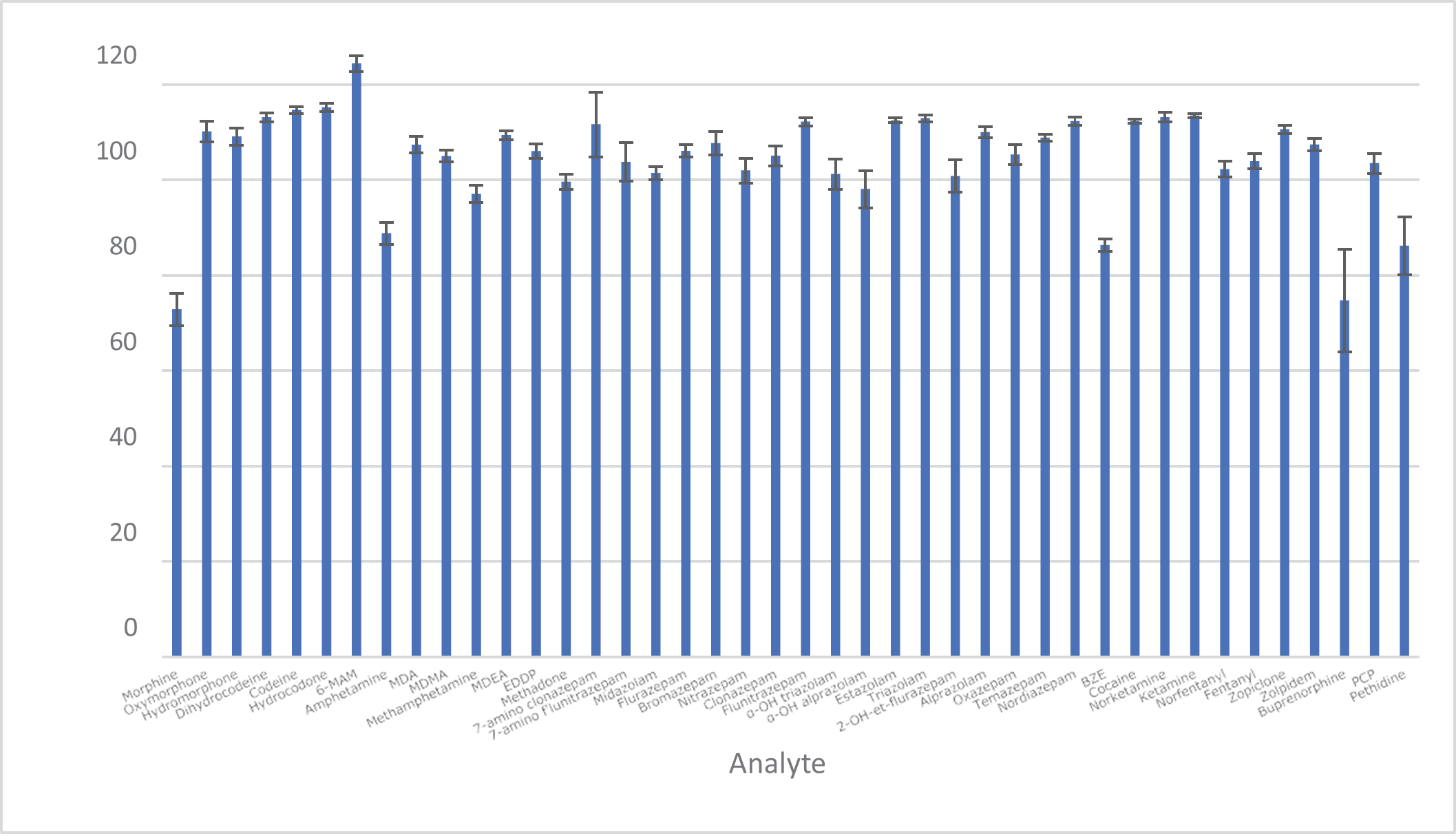 Figure 2. Extraction recoveries and precision for target analytes in non-hydrolysed urine.
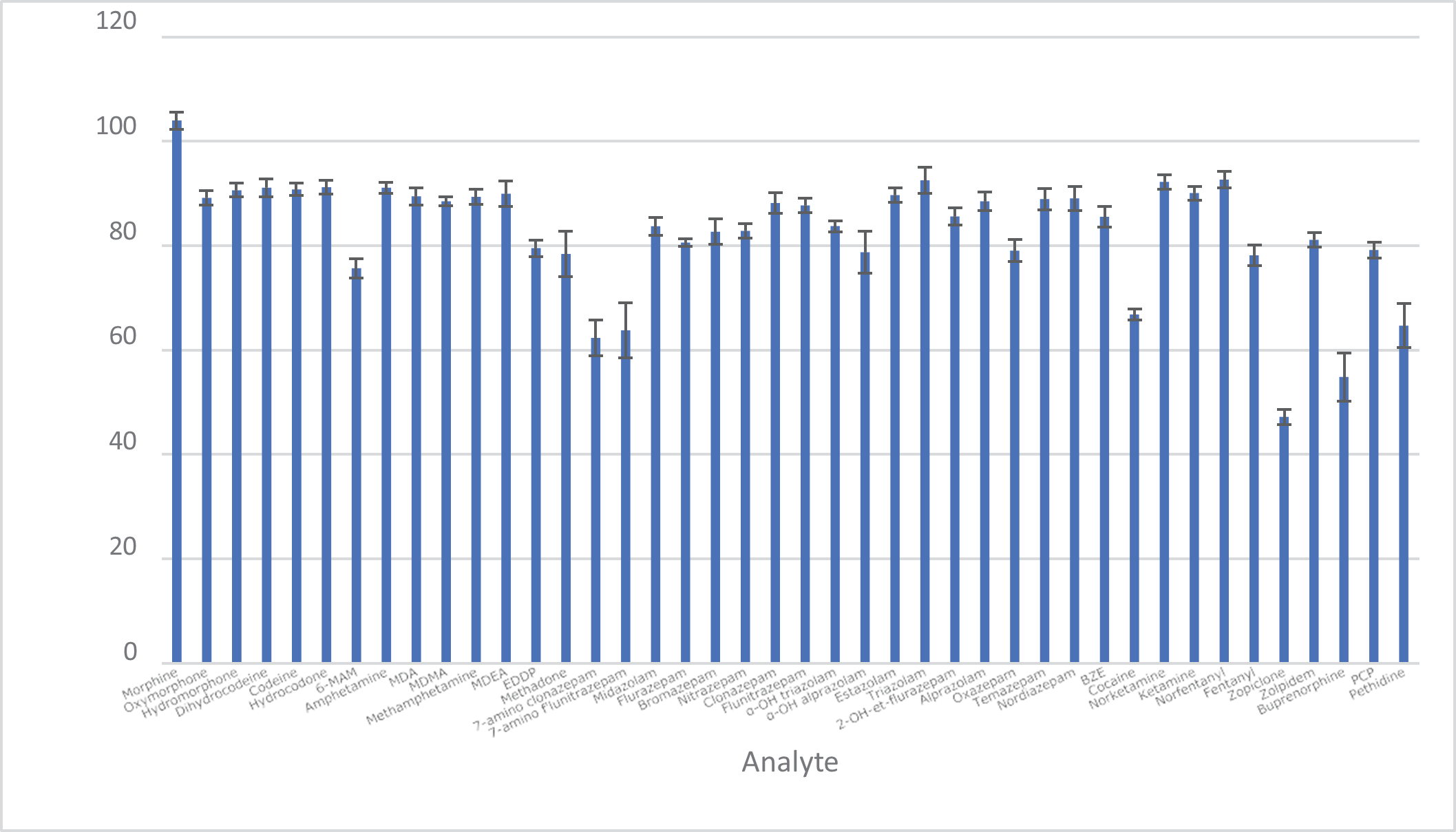 Figure 3. Extraction recoveries and precision for target analytes in hydrolysed urine.
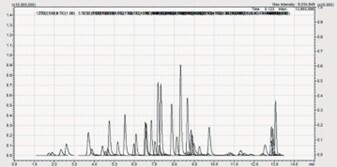 Figure 4. Representative chromatography with analytes spiked at 2 ng/mL
Linearity
Calibration curve performance was investigated for analytes spiked into urine at concentrations of 0.1–100 ng/mL. Good linearity was observed for all analytes typically delivering r2 values greater than 0.99 without the use of an internal standard. Tables below detail linearity performance and associated LLOQ for each analyte spiked into non-hydrolysed and hydrolysed urine matrix, respectively. In some instances saturation was measured at the top of the calibration line resulting in the calibration range being reduced, this can be corrected by increasing the reconstitution volume above 0.5 mL or reducing the injection volume below 10 µL. Alternatively method sensitivity may be improved by reducing the reconstitution volume and increasing the injection volume.
Improved linearity is likely to be obtained by using structurally similar internal standards.
Reduced LLOQ may be achieved, as this is dependant on the make and model of the LC-MS/MS system being used. In this case, using the Shimadzu LCMS-8060, and the conditions shown, the LLOQ was estimated by extrapolating analyte only calibration lines down to a level where the signal to noise was estimated to be 10:1. No calibration lines covered a concentration range below the LLOQ.
|
Analyte |
r2 |
Range (ng/mL) |
LLOQ (ng/mL) |
|
Morphine |
0.9893 |
0.1–100 |
0.1 |
|
Oxymorphone |
0.9993 |
0.1–100 |
0.05 |
|
Hydromorphone |
0.9985 |
0.1–100 |
0.02 |
|
Amphetamine |
0.9896 |
0.1–100 |
0.01 |
|
Methamphetamine |
0.9970 |
0.1–100 |
0.025 |
|
Dihydrocodeine |
0.9993 |
0.1–100 |
0.01 |
|
Codeine |
0.9985 |
0.1–100 |
0.025 |
|
6-MAM |
0.9982 |
0.1–100 |
0.03 |
|
MDMA |
0.9988 |
0.1–100 |
0.01 |
|
Hydrocodone |
0.9995 |
0.1–100 |
0.025 |
|
MDEA |
0.9996 |
0.1–100 |
0.02 |
|
Norketamine |
0.9984 |
0.1–100 |
0.02 |
|
Norfentanyl |
0.9966 |
0.1–100 |
0.02 |
|
BZE |
0.9998 |
0.1–100 |
0.01 |
|
Ketamine |
0.9987 |
0.1–700 |
0.01 |
|
7-Aminoclonazepam |
0.9973 |
0.1–100 |
0.05 |
|
Cocaine |
0.9998 |
0.1–40 |
0.01 |
|
LSD |
0.9985 |
0.2–100 |
0.02 |
|
7-Aminoflunitrazepam |
0.9984 |
0.1–100 |
0.03 |
|
Zolpidem |
0.9999 |
0.1–40 |
0.02 |
|
Buprenorphine |
0.9988 |
0.1–70 |
0.05 |
|
Fentanyl |
0.9999 |
0.1–100 |
0.025 |
|
Flurazepam |
0.9998 |
0.1–100 |
0.01 |
|
PCP |
0.9999 |
0.1–100 |
0.02 |
|
Midazolam |
0.9999 |
0.1–100 |
0.025 |
|
Bromazepam |
0.9984 |
0.1–100 |
0.1 |
|
EDDP |
0.9997 |
0.1–100 |
0.01 |
|
Lorazepam |
0.9991 |
0.2–100 |
0.2 |
|
Oxazepam |
0.9998 |
0.5–100 |
0.5 |
|
Nitrazepam |
0.9994 |
0.1–100 |
0.05 |
|
Clonazepam |
0.9996 |
0.1–100 |
0.1 |
|
a-OH-Triazolam |
0.9982 |
0.2–100 |
0.2 |
|
2-OH-et-flurazepam |
0.9988 |
0.1–100 |
0.05 |
|
Methadone |
0.9979 |
0.2–100 |
0.2 |
|
a-OH-Alprazolam |
0.9984 |
0.2–100 |
0.2 |
|
Nordiazepam |
0.9983 |
0.1–100 |
0.025 |
|
Zaleplon |
0.9973 |
0.1–40 |
0.03 |
|
Flunitrazepam |
0.9985 |
0.1–100 |
0.05 |
|
Estazolam |
0.9992 |
0.1–100 |
0.02 |
|
Temazepam |
0.9989 |
0.1–100 |
0.1 |
|
Triazolam |
0.9991 |
0.1–100 |
0.02 |
|
Alprazolam |
0.9990 |
0.1–100 |
0.02 |
|
Zopiclone |
0.9988 |
0.1–100 |
0.025 |
|
Pethidine |
0.9999 |
0.1–20 |
0.02 |
|
Analyte |
r2 |
Range (ng/mL) |
LLOQ (ng/mL) |
|
Morphine |
0.9951 |
0.1–100 |
0.1 |
|
Oxymorphone |
0.9978 |
0.1–100 |
0.05 |
|
Hydromorphone |
0.9980 |
0.1–100 |
0.01 |
|
Amphetamine |
0.9967 |
0.1–100 |
0.1 |
|
Methamphetamine |
0.9990 |
0.1–100 |
0.05 |
|
Dihydrocodeine |
0.9986 |
0.1–100 |
0.05 |
|
Codeine |
0.9981 |
0.1–100 |
0.02 |
|
6-MAM |
0.9976 |
0.1–100 |
0.05 |
|
MDMA |
0.9965 |
0.1–100 |
0.02 |
|
Hydrocodone |
0.9986 |
0.1–100 |
0.02 |
|
MDEA |
0.9979 |
0.1–100 |
0.02 |
|
Norketamine |
0.9967 |
0.1–100 |
0.02 |
|
Norfentanyl |
0.9944 |
0.1–100 |
0.02 |
|
BZE |
0.9981 |
0.1–100 |
0.01 |
|
Ketamine |
0.9982 |
0.1–70 |
0.02 |
|
7-Aminoclonazepam |
0.9948 |
0.1–100 |
0.1 |
|
Cocaine |
0.9971 |
0.1–40 |
0.01 |
|
LSD |
0.9897 |
0.5–70 |
0.5 |
|
7-Aminoflunitrazepam |
0.9938 |
0.1–100 |
0.1 |
|
Zolpidem |
0.9961 |
0.1–40 |
0.01 |
|
Buprenorphine |
0.9952 |
0.1–20 |
0.01 |
|
Fentanyl |
0.9928 |
0.1–100 |
0.02 |
|
Flurazepam |
0.9983 |
0.1–100 |
0.01 |
|
PCP |
0.9933 |
0.1–100 |
0.1 |
|
Midazolam |
0.9963 |
0.1–100 |
0.05 |
|
Bromazepam |
0.9967 |
0.1–100 |
0.05 |
|
EDDP |
0.9965 |
0.1–100 |
0.01 |
|
Lorazepam |
0.9903 |
0.5–20 |
0.5 |
|
Oxazepam |
0.9937 |
0.5–100 |
0.5 |
|
Nitrazepam |
0.9948 |
0.1–100 |
0.02 |
|
Clonazepam |
0.9911 |
0.1–100 |
0.1 |
|
a-OH-Triazolam |
0.9925 |
0.2–100 |
0.2 |
|
2-OH-et-flurazepam |
0.9963 |
0.5–100 |
0.5 |
|
Methadone |
0.9907 |
0.1–100 |
0.05 |
|
a-OH-Alprazolam |
0.9930 |
0.1–100 |
0.1 |
|
Nordiazepam |
0.9978 |
0.1–100 |
0.05 |
|
Zaleplon |
0.9929 |
0.1–20 |
0.1 |
|
Flunitrazepam |
0.9964 |
0.1–100 |
0.1 |
|
Estazolam |
0.9969 |
0.1–100 |
0.02 |
|
Temazepam |
0.9930 |
0.1–100 |
0.2 |
|
Triazolam |
0.9940 |
0.1–100 |
0.03 |
|
Alprazolam |
0.9977 |
0.1–100 |
0.02 |
|
Zopiclone |
0.9971 |
0.1–100 |
0.1 |
|
Pethidine |
0.9967 |
0.1–20 |
0.02 |
Chemicals and reagents
- Methanol (LC-MS grade), Ultra-Pure Methanol (Gradient MS), and dichloromethane (99.8%) were purchased from Rathburn Chemicals (Walkerburn, Scotland, UK).
- All analyte standards, ammonium acetate, ammonium formate, formic acid, hydrochloric acid and ammonium hydroxide (27–30%) were purchased from Sigma- Aldrich Company Ltd. (Gillingham, UK).
- Beta glucuronidase was purchased from Sigma Aldrich (β glucuronidase from Helix Pomata, G7017-10 mL).
- Water used was 18.2 MOhm-cm, drawn daily from a Direct-Q5 water purifier.
- 0.1% ammonia solution (used for non-hydrolyzed urine sample pre-treatment) was made by diluting 100 µL concentrated ammonium hydroxide solution in 100 mL water. This was prepared fresh daily.
- Elution solvent (DCM:IPA (95:5, v/v)) was made up by combining 475 mL of DCM and 25 mL of IPA.
- Reconstitution solvent was made by measuring out 90 mL of purified water (18.2 MOhm-cm) and 10 mL of MeOH and adding them to the same bottle with 100 µL formic acid.
- Mobile phase A (2 mM ammonium formate (aq), 0.1% formic acid) was prepared by adding 0.126 mg of ammonium formate to 1 L purified water with 1 mL formic acid.
- Mobile phase B (2 mM ammonium formate (aq), 0.1% formic acid) was prepared by adding 0.126 mg of ammonium formate to 1 L ultra-pure MeOH with 1 mL formic acid.
Additional information
- All data shown in this application note was generated using human urine donated by anonymous healthy volunteers.
- The Biotage® ExtraheraTM method detailed in this application note was used for the analysis of drugs of abuse in both hydrolysed and non-hydrolysed urine. Because the sample pre-treatment conditions used were different for each matrix, this step was not performed on the Extrahera.
For non-hydrolysed urine samples, pre-treatment could be performed using the Extrahera for sample dilution. - In the method detailed here 2 mL of pre-treated urine is prepared with a 1 mL aliquot subsequently extracted.
When processing samples using the Extrahera system, it is recommended that a pre-treated sample volume larger than 1 mL is prepared so that 1 mL can be accurately aspirated from the sample tube. With an optimized sample aspiration depth sample volumes as low as 1.5 mL can be extracted.
Reduction in running time
Using a Biotage® ExtraheraTM HV-5000 with 5 mL capacity tips resulted in a shorter run time than when performed on an Biotage® ExtraheraTM Classic (which uses 1 mL capacity tips). The method described here took 29 minutes and 40 seconds to run on a Extrahera HV 5000 compared to 34 minutes 52 seconds using the Extrahera Classic.
Ordering information
|
Part Number |
Description |
Quantity |
|---|---|---|
|
820-0140-CG |
ISOLUTE® SLE+ cartridges, 1 mL, tubeless |
30 |
|
121-5203 |
Collection Plate, 2 mL Square |
50 |
|
121-5204 |
Pierceable Sealing Mat |
50 |
|
417002 |
Biotage® Extrahera® HV-5000 |
1 |
|
417610 |
Configuration Kit 24 Positions Dual Flow - HV |
1 |
|
414579 |
Biotage® Extrahera® Solvent Safety Kit |
1 |
|
417007 |
Biotage® Extrahera® HV-5000 tips (1000) |
1 |
|
414254SP |
Sample Rack 16 × 100 mm, 24 Positions |
1 |
|
413282 |
Test Tubes (16 × 75 mm) |
1000 |
|
413640SP |
Cartridge Rack 24 × 6 mL (Tubeless) |
1 |
|
415491 |
Sample/Collection Rack 12 × 75 mm, 24 Positions |
1 |
|
C44651 |
Test Tubes (12 × 75 mm) |
1000 |
|
415408SP |
TurboVap® LV 48 Manifold |
1 |
|
414964 |
TurboVap® LV Multi Rack (48 Positions, 10–20 mm Tubes) |
1 |
Appendix
Biotage® ExtraheraTM HV-5000 settings
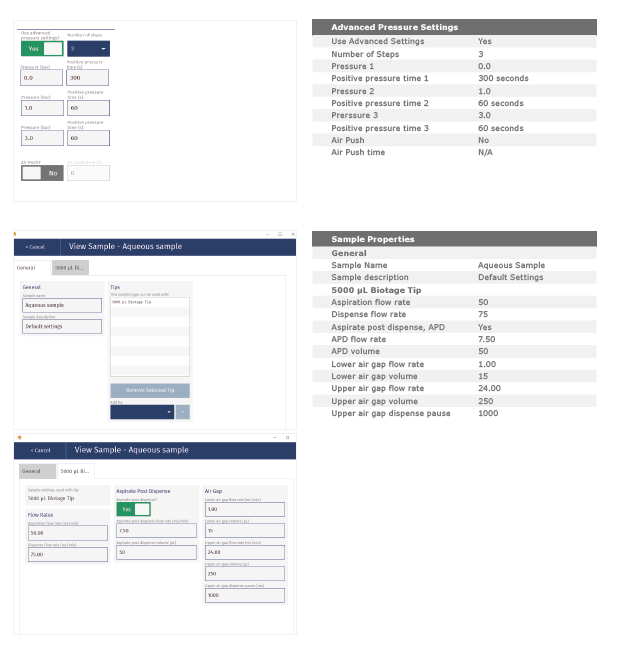
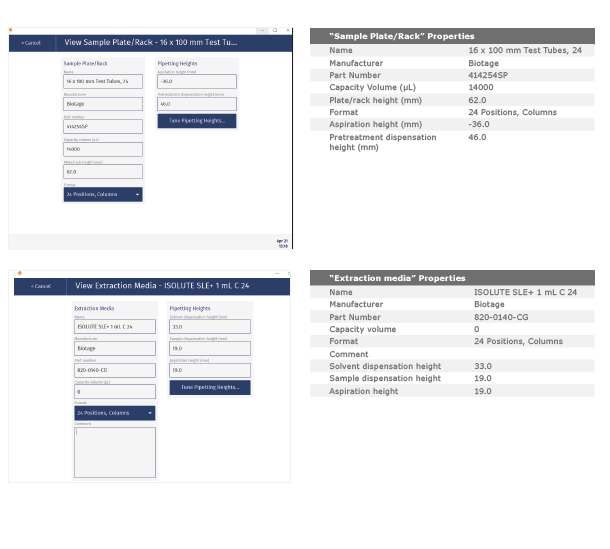
The method described in this application note was automated on the Biotage® Extrahera™ HV 5000 using ISOLUTE® SLE+ 1 mL capacity tables cartridges. This appendix contains the software settings required to configure Extrahera to run this method. Analyte recoveries, % RSDs, linearities and LLOQs were comparable for both manually processed and automated methods, for both extraction formats.
Method name: DoA Urine SLE+ HV5000
Sample plate/rack: 16 x 100 mm Test Tube, C40708
Extraction Media: ISOLUTE® SLE+ 1 mL C 24, 820-0140-CG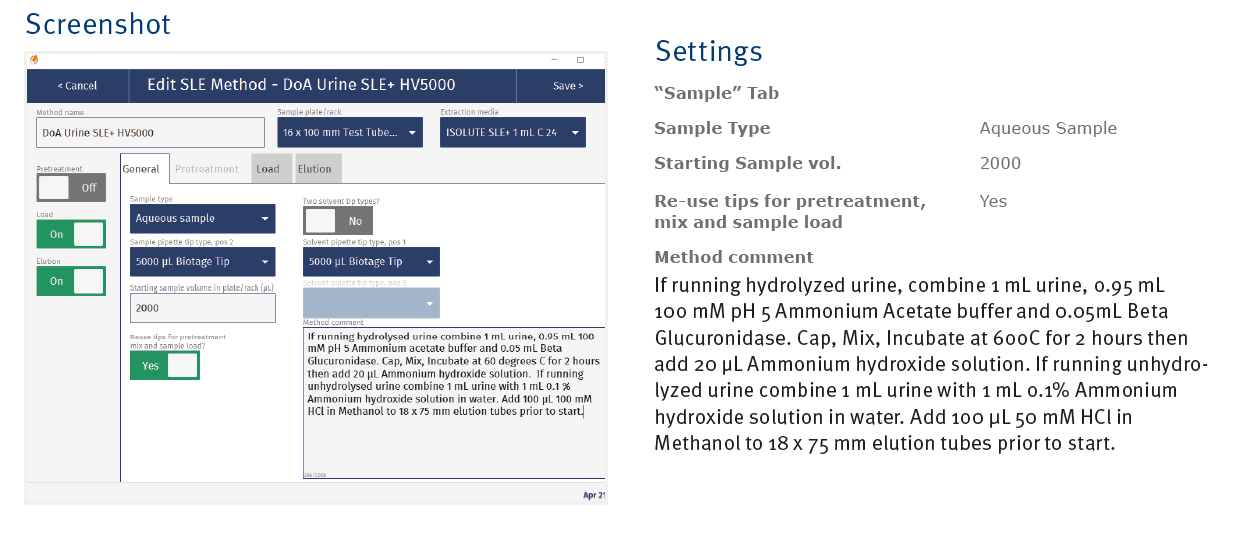
Literature number: AN981
