
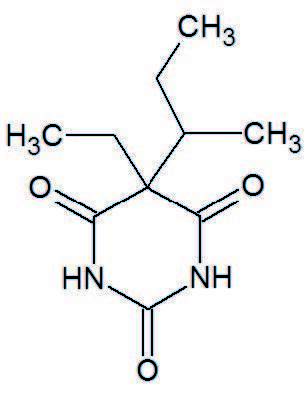
Figure 1. Structure of Butabarbital
Introduction
This application note describes the extraction of barbiturate compounds from whole blood, prior to GC/MS analysis. This protocol also allows the simultaneous extraction of various other drugs of abuse classes: amphetamines, benzodiazepines, cocaine and opiates.
ISOLUTE® SLE+ cartridges with 1 mL sample capacity are used to extract whole blood samples following a straightforward sample dilution. No protein precipitation or other pre-treatment is required prior to sample loading. The sample preparation procedure delivers clean extracts, good recoveries and RSD values and LLOQs from 20 ng/mL (analyte dependant).
ISOLUTE SLE+ Supported Liquid Extraction plates and cartridges offer an efficient alternative to traditional liquid- liquid extraction (LLE) for bioanalytical sample preparation, providing high analyte recoveries, no emulsion formation, and significantly reduced sample preparation.
Analytes
Butalbarbital, Butabarbital, Amobarbital, Pentobarbital, Secobarbital, Hexobarbital, Phenobarbital
Sample preparation procedure
Format:
ISOLUTE® SLE+ 1mL Sample Volume cartridge, part number 820-0140-C
Sample pre-treatment
To 1 mL of whole blood, add 10 µL of ISTD (total 100 ng/mL). Allow to equilibrate and add 1 mL of 1% ammonium hydroxide (aq). Vortex.
Sample loading
Load 750 μL of the pre-treated whole blood onto the cartridge and apply a pulse of vacuum or positive pressure (3–5 seconds) to initiate flow. Allow the sample to absorb for 5 minutes
Analyte extraction
Apply dichloromethane* (DCM, 2.5 mL) and allow to flow under gravity for 5 minutes. Collect in an appropriate glass tube. Apply a second aliquot of DCM* (2.5 mL) and allow to flow under gravity for 5 minutes. Apply vacuum or positive pressure (5-10 seconds) to pull through any remaining extraction solvent into the collection vessel.
* Note that MTBE can be used as an alternative extraction solvent if a non-chlorinated option is required. MTBE also suitable for extraction of other analyte classes (amphetamines, benzodiazepines, opiates). If simultaneous extraction of cocaine and metabolites is required, DCM should be used as extraction solvent.
Post elution and reconstitution
Evaporate the extract in a stream of air or nitrogen using a TurboVap® LV (40 °C, 20 to 40 L/min). Reconstitute the extracts with ethyl acetate (250 µL) and vortex for 20 seconds before transferring to high recovery GC vials. Evaporate the extract in a stream of air or nitrogen using a SPE Dry (40 °C, 20 to 40 L/min). Reconstitute extracts with ethyl acetate (80 µL) and TMAH (trimethylanilinum hydroxide) (20 µL) and vortex.
GC conditions
Instrument
Agilent 7890A with QuickSwap
Cartridge
Agilent J&W DB-5, 30 m x 0.25 mm ID x 0.25 μm
Carrier
Helium 1.2 mL/min (constant flow)
Inlet
150 °C, Splitless, purge flow: 50 mL/min at 1.0 min
Injection
1 µL
Wash solvents
Acetone & ethyl acetate
Oven
Initial temperature 120 °C, hold for 1 minute, ramp 12 °C/min to 192 °C, ramp 100 °C/min to 330 °C
Post run
Backflush for 1.6 minutes (2 void volumes)
Transfer Line
280 °C
MS conditions
Instrument
Agilent 5975C
Source
230 °C
Quadrupole
150 °C
MSD mode
SIM
SIM parameters
|
SIM Group |
Analyte |
Target (Quant) Ion |
Qual Ion 1 |
Qual Ion 2 |
|---|---|---|---|---|
|
1 |
Butalbital |
196 |
181 |
195 |
|
1 |
Butalbital |
169 |
184 |
211 |
|
2 |
Amobarbital |
169 |
184 |
226 |
|
3 |
Pentobarbital |
169 |
112 |
184 |
|
4 |
Secobarbital |
196 |
181 |
195 |
|
5 |
Hexobarbital |
235 |
79 |
169 |
|
5 |
Phenobarbital |
232 |
117 |
175 |
Results
Blank whole blood was spiked at 100 ng/mL for recovery testing; the typical recovery data is shown in Figure 2. Both MTBE and DCM protocols gave reproducible data with RSD values <10%.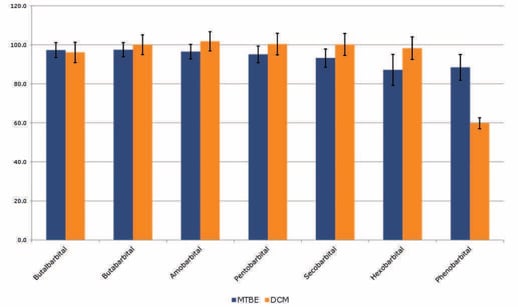
Figure 2. Typical opiate recoveries using MTBE or DCM as extraction solvent.
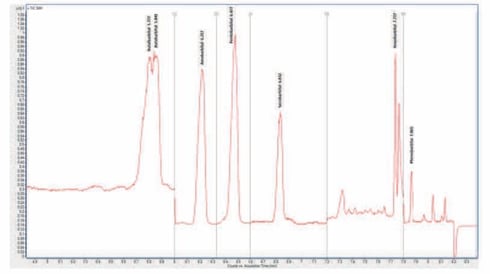 Figure 3. Total Ion Chromatogram of barbiturates at 50 ng/mL using the DCM
extraction protocol.
Calibration curves
Whole blood was spiked prior to extraction, at concentrations of 10, 20, 50, 75, 100, 200 and 500 ng/mL for each analyte to create calibration curves. Morphine-D3 and 6-MAM-D3 were spiked at 100 ng/mL for each level. The curves are shown in Figure 4.
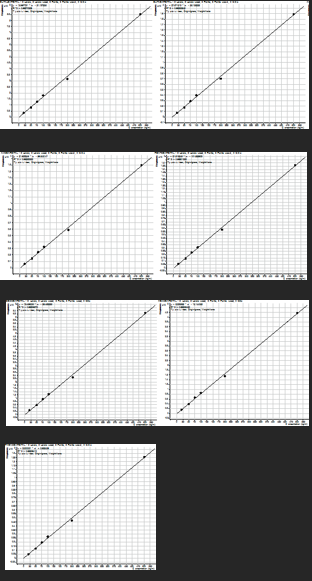 Figure 4. Charts demonstrating coefficient of determination (r2) values between 0.9983 and 0.9990 for the barbiturates using the DCM extraction protocol.
|
Drug Analyte |
LLOQ (ng/mL) DCM Extraction |
LLOQ (ng/mL) MTBE Extraction |
|
Butalbarbital |
50 |
50 |
|
Butabarbital |
20 |
20 |
|
Amobarbital |
20 |
20 |
|
Pentobarbital |
20 |
50 |
|
Secobarbital |
50 |
50 |
|
Hexobarbital |
20 |
20 |
|
Phenobarbital |
100 |
20 |
Additional notes
Solvents and reagent preparation:
- All solvents were HPLC grade.
- 1% ammonium hydroxide (aq): Add concentrated ammonium hydroxide (28–30%) (1 mL) to HPLC grade water (99 mL).
Cartridge loading:
ISOLUTE® SLE+ cartridges are underloaded (750 µL sample on a 1 mL capacity cartridge) to avoid breakthrough of whole blood matrix.
Non-chlorinated extraction solvent alternative:
MTBE can be used as an alternative extraction solvent if a non-chlorinated option is required. MTBE also suitable for extraction of other analyte classes (amphetamines, benzodiazepines, opiates), but cannot be used for cocaine and metabolites.
Ordering information
|
Part Number |
Description |
Quantity |
|
820-0140-C |
ISOLUTE® SLE+ 1 mL Sample Volume Cartridge* |
30 |
|
820-0140-CG |
ISOLUTE SLE+ 1 mL Sample Volume Cartridge (tabless) |
30 |
|
PPM-48 |
Biotage® PRESSURE+ 48 Positive Pressure Manifold |
1 |
|
SD-9600-DHS-EU |
Biotage® SPE Dry Sample Concentrator System 220/240 V |
1 |
|
SD-9600-DHS-NA |
Biotage® SPE Dry Sample Concentrator System 100/120 V |
1 |
Literature number: AN853
