
For research use only. NOT for use in diagnostic procedures.
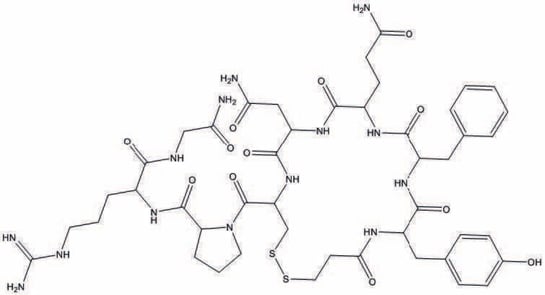 Figure 1. Structure of Desmopressin (MWt 1069.2).
Introduction
This application note describes a solid phase extraction (SPE) protocol for the extraction of the peptide desmopressin from human serum prior to LC-MS/MS analysis.
Desmopressin is an antidiuretic hormone and a synthetic vasopressin analogue. Desmopressin is clinically used to treat bedwetting (nocturnal enuresis), diabetes insipidus and may also be used for clotting disorders.
The method described in this application achieves high reproducible extraction recoveries of desmopressin peptide from serum while minimizing co-extractable material in the form of proteins, lipids and phospholipids. Extraction from serum was performed using EVOLUTE® EXPRESS WCX 96-well plates.
EVOLUTE® EXPRESS SPE products provide robust, efficient, high throughput automatable extraction solutions.
Analytes
Desmopressin
Sample preparation procedure
Format
EVOLUTE® EXPRESS WCX 30 mg plate, part number 602-0030-PX01
Sample pre-treatment
Dilute serum (200 µL) with 10 mM ammonium acetate pH 6 (aq) (200 µL)
Solid-phase extraction
Condition
Condition each well with methanol (1 mL)
Equilibration
Equilibrate each well with 10 mM ammonium acetate pH 6 (aq) (1 mL)
Sample loading
Load 400 µL of pre-treated serum into each well
Wash 1
Elute interferences with 10 mM ammonium acetate pH 6 (aq) (1 mL)
Wash 2
Elute interferences with methanol (1 mL)
Elution
Elute analytes with 2% formic acid in 70/30 (v/v) methanol/H2O (200 µL)
Post elution
Evaporate to dryness at 40 °C in a stream of air or nitrogen using a Biotage® SPE Dry 96
Reconstitution
Reconstitute the extract with 0.1% Formic acid in H2O/ MeCN (50/50, v/v, 200 µL)
UHPLC conditions
Instrument
Waters ACQUITY I-Class
Column
ACE EXCEL 1.7 µ C18-amide column (100 x 2.1 mm id)
Mobile phase
A: 0.1% Formic acid (aq)
B: 0.1% Formic acid in acetonitrile (MeCN)
Flow rate
Flow rate: 0.3 mL/min
Table 1: Gradient conditions.
|
Time |
%A |
%B |
Curve |
|
0 |
90 |
10 |
1 |
|
4.0 |
5 |
95 |
6 |
|
5.0 |
90 |
10 |
11 |
|
5.5 |
90 |
10 |
11 |
Curve 6: Linear gradient.
Injection volume
2 μL
Sample temperature
20 °C
Column temperature
40 °C
Mass spectrometry conditions
Instrument
Xevo TQ-S triple quadrupole mass spectrometer equipped with an electrospray interface for mass analysis.
Desolvation temperature
500 °C
Ion source temperature
150 °C
Collision cell pressure
3.7 e-3 mbar
Positive ions were acquired in the multiple reaction monitoring (MRM) mode for the [M+2H]2+ doubly charged ion:
Table 2. MRM conditions.
|
Compound |
MRM Transition |
Cone Voltage (V) |
Collision Energy (eV) |
|
Desmopressin (Qual) |
535.3 > 120.1 |
30 |
20 |
|
Desmopressin (Quant) |
535.3 > 328.2 |
30 |
25 |
Results
Good retention and chromatographic peak shape was obtained using the C18-amide column. Figure 2. shows signal intensity and peak shape attained from serum spiked at 5 ng/mL.
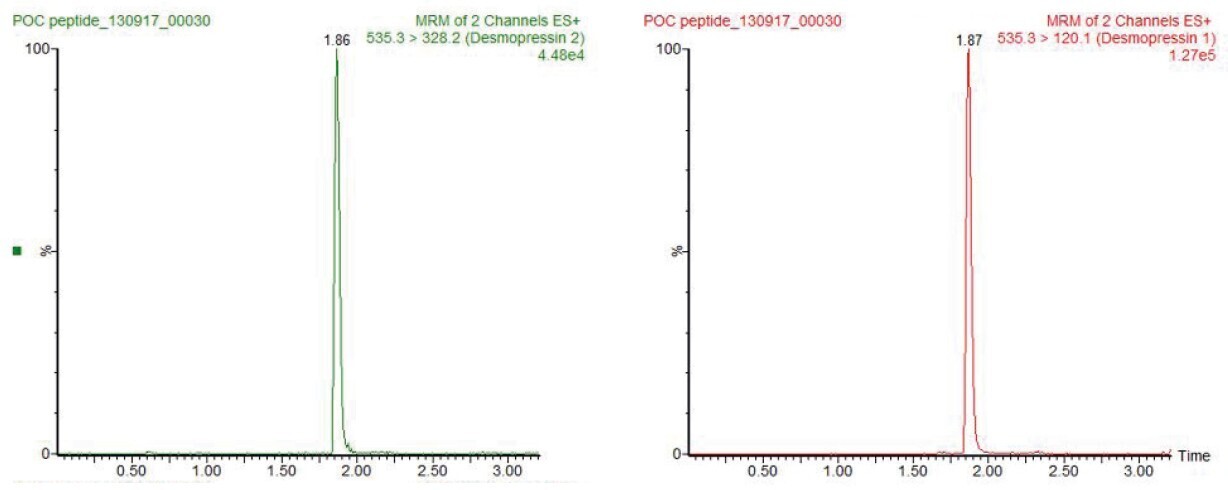 Figure 2. Chromatography obtained from serum spiked at 5 ng/mL.
Recovery
Serum was spiked at various concentrations from 0.2-200 ng/mL for recovery determination. High reproducible recoveries >80 % with corresponding RSDs <10 % were demonstrated. Figure 3. shows the recovery profile using 2% formic acid in various combinations of MeOH/H2O from 100% methanol to MeOH/H2O (70/30, v/v). Slightly lower recoveries were observed using the 70/30 (v/v) combination but significant improvements in extract cleanliness (phospholipid removal) were observed under these elution conditions.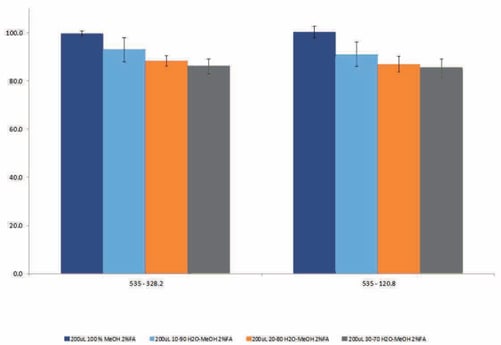 Figure 3. Spiked serum recovery profile for the EVOLUTE® EXPRESS WCX SPE protocol using various % aqueous elution solvents.
Calibration curves
Calibration curves were generated using stripped serum spiked at concentrations from 0.2–200 ng/mL. Good linearity, coefficients of determination (r2 >0.99) and sensitivity
(nominal LOQ 0.2 ng/mL) were obtained. Stripped serum matrix demonstrated low endogenous levels which contributed to a slight intercept on the calibration curves.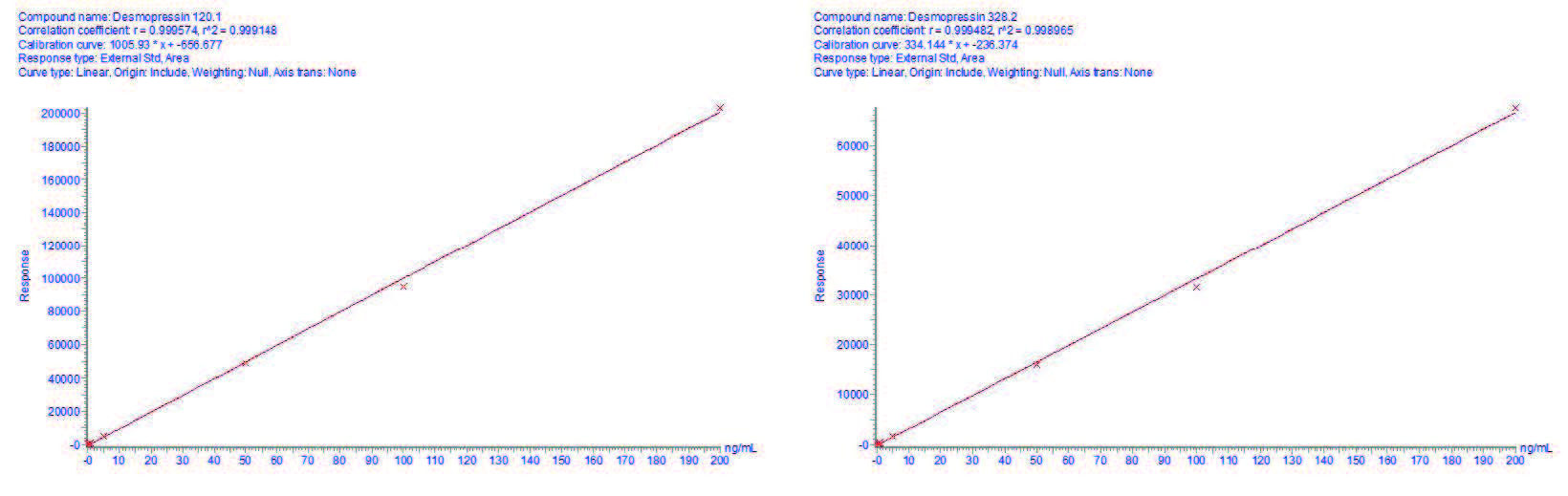 Figure 4. Serum quantifier ion calibration curves spiked from 0.2-200 ng/mL.
Extract cleanliness
Phospholipid removal
Phospholipids were investigated to provide an indication of extract cleanliness. The most abundant phospholipids (previously selected from full scan, SIR and precursor ion
scanning experiments) using MRM transitions monitoring the common 184 product ion. Figure 5 compares the phospholipid content of 100 µL of protein precipitated serum (a) with the final extract obtained using this EVOLUTE® EXPRESS WCX protocol (200 µL of matrix) (b).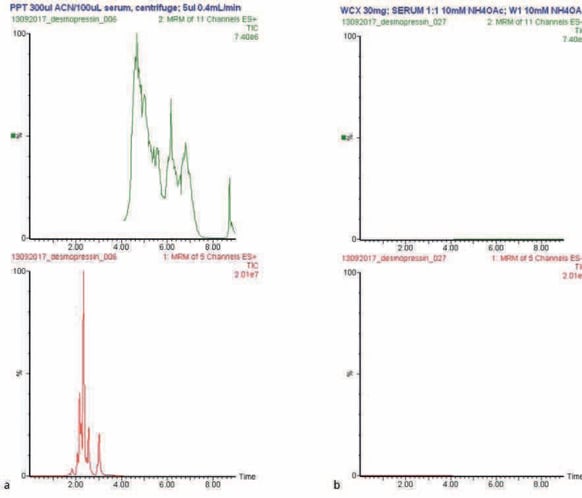 Figure 5. Phospholipid MRM TICs for protein precipitated serum (a) and final serum extract (b) showing efficient removal of phospholipids during the SPE procedure.
Additional notes
Buffer preparation
1. 10 mM ammonium acetate aq at pH 6: Weigh 0.7708 g of ammonium acetate and dissolve in deionised water. Dilute and make up to 1 L in deionised water, acidify to pH 6 with acetic acid.
2. 2% formic acid in H2O /methanol (30/70, v/v). Measure 28 mL of water and add 70 mL of methanol. Add 2 mL of formic acid. Mix.
3. 0.1% formic acid in H2O/ MeCN (50/50, v/v). Measure 49.9 mL of water; add 100 µL of formic acid and add 50 mL of MeCN.
Mobile phase considerations and ionization
4. Ionization is performed in +ve ion mode with desmopressin demonstrating precursor ion at 535.3 m/z, corresponding to the [M + 2H]2+ ion.
5. Acidic mobile phase additives were used to facilitate protonation in positive ion mode.
6. Acetonitrile was selected for the organic eluent as a polar aprotic option for ionization. Acetonitrile provided shaper peaks and as a result better signal to noise ratios compared to methanol.
SPE considerations
1. pH control using a pH 6 buffer for sorbent conditioning and sample pre-treatment allowed ionization of both the weak cation exchange SPE sorbent (-ve charge) and the analyte (+ve charge) for optimum analyte retention.
2. Due to high analyte polarity, interference elution (wash) steps were pH controlled and kept highly aqueous to remove any proteins or salts while maintaining analyte ionisation for optimum retention. The second organic wash step is used to disrupt hydrophobic interactions of any non-ionised species (lipids etc).
3. Final elution conditions were optimized to high organic conditions to ensure solubility of the analyte and break hydrophobic retention. Acidic solvent pH conditions eliminate the charge on the sorbent when using weak cation exchange SPE. Elution with 2% formic acid in H2O/ACN (30/70, v/v) also prevents elution of any remaining phospholipids, ensuring a clean extract.
4. Minimum elution volumes were optimized at 200 µL; but this will depend on exact solvent selection.
5. A reconstitution solvent of 0.1% Formic acid in H2O/ MeCN (50/50, v/v) was selected to avoid analyte solubility issues which then required a low injection volume of 2 µL.
6. EVOLUTE® EXPRESS ABN also provided good recoveries and endogenous matrix removal. However, overall performance was better using the optimized elution combination with WCX sorbent.
Ordering information
|
Part Number |
Description |
Quantity |
|
602-0030-PX01 |
EVOLUTE® EXPRESS WCX 10 mg Fixed Well Plate |
1 |
|
PPM-96 |
Biotage® PRESSURE+ 96 Positive Pressure Manifold |
1 |
|
121-5203 |
Collection plate, 2 mL, square |
50 |
|
121-5204 |
Piercable sealing cap |
|
|
SD-9600-DHS-EU |
Biotage® SPE Dry 96 Sample Evaporator 220/240V |
1 |
|
SD-9600-DHS-NA |
Biotage® SPE Dry 96 Sample Evaporator 100/120V |
1 |
Literature Number: AN887
