
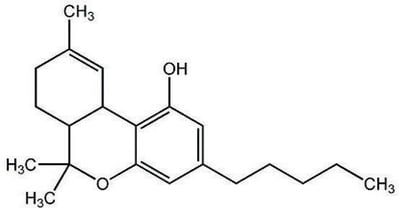
Figure 1. Structure of Δ9-tetrahydrocannabinol (THC).
Introduction
This application note describes a procedure for sample pre-treatment and extraction of THC and metabolites from human hair, using Biotage® Lysera for matrix pulverization of the sample prior to clean up using ISOLUTE® SLE+ supported liquid extraction.
Manual processing protocols were developed using the Biotage® PRESSURE+ 96 (plate format) or 48 (column format) positive pressure manifolds. For automated processing, protocols were developed using Biotage® ExtraheraTM .
The application note contains procedures optimized for both individual column format and 96-well plate format for higher throughput applications. The methodology delivers clean extracts with analyte recoveries >75% (plate format) or >60% (column format) with %RSD <10% for most analytes and LLOQ from 200 fg/mg of hair.
Both manual and automated procedures gave comparable results.
ISOLUTE® SLE+ Supported Liquid Extraction cartridges and plates offer an efficient alternative to traditional liquid- liquid extraction (LLE) for bioanalytical sample preparation, providing high analyte recoveries, no emulsion formation and significantly reduced preparation time.
Analytes
Tetrahydrocannabinol (THC), 11-Nor-9-carboxy-Δ⁹- tetrahydrocannabinol (THC-COOH), 11-Hydroxy-Δ⁹- tetrahydrocannabinol (THC-OH), Δ9-tetrahydrocannabinolic acid-A (THCAA), cannabidiol (CBD), and cannabinol (CBN)
Internal standards
Tetrahydrocannabinol –D3 (THC- D3), 11-Nor-9-carboxy-Δ⁹- tetrahydrocannabinol-D3 (THC- COOH-D3) and 11-Hydroxy-Δ⁹- tetrahydrocannabinol- D3 (THC-OH- D3)
Sample preparation procedure
Format
ISOLUTE® SLE+ 400 µL capacity cartridges (p/n 820-0055-B) or ISOLUTE® SLE+ 400 µL capacity plates (p/n 820-0400-P01)
Matrix preparation
Weigh 20 mg of hair into 2 mL Biotage® Lysera tubes containing 4 x 2.4 mm stainless steel beads. Add 1 mL methanol to each hair sample. Also add 10 µL of a 100 pg/mL internal standard solution making a 50 pg/mg spike.
Micropulverization procedure
Grind to a fine powder using Biotage® Lysera: 3 x 5.3 m/sec for 3 minutes with a 20 sec dwell.
Centrifuge tubes for 10 minutes at 13,300 rpm (Heraeus Pico 17 Microcentrifuge (Thermo Scientific) with 24 position, 2 mL rotor).
Post micropulverization
Transfer 200 µL of supernatant into 12 x 75 mm glass tubes or 2 mL collection plates and evaporate extracts using a TurboVap® LV at 20 °C or Biotage®SPE Dry 96 depending on the format being used.
Reconstitute in methanol:water (70:30, v/v. 200 µL).
Supported liquid extraction conditions
|
|
ISOLUTE® SLE+ 400 µL Cartridges |
ISOLUTE® SLE+ 400 µL Plate |
|
Sample Loading |
Load 200 µL of reconstituted extract onto the ISOLUTE® SLE+ cartridge. A pulse of pressure is not needed as the methanolic extract flows straight onto the bed. Allow the sample to absorb for 5 minutes. |
Load 200 µL of reconstituted extract onto the ISOLUTE® SLE+ well. A pulse of pressure is not needed as the methanolic extract flows straight onto the bed. Allow the sample to absorb for 5 minutes. |
|
Analyte Extraction |
Apply MTBE (600 µL) allow to flow under gravity for 5 minutes. Apply a further aliquot of MTBE (600 µL) and allow to flow under gravity for 5 minutes. For complete removal apply a pulse of positive pressure at 10 psi (10–20 seconds). |
Apply MTBE (600 µL) allow to flow under gravity for 5 minutes. Apply a further aliquot of MTBE (600 µL) and allow to flow under gravity for 5 minutes. For complete removal apply a pulse of positive pressure at 10 psi (10–20 seconds). |
|
Collection Vessels |
Collect extract in 12 x 75 mm glass tubes. |
Collect extract in 96-well collection plates. |
|
Post Elution |
Evaporate extracts to dryness at 40 °C, for 30 minutes at a flow rate of 1.5 L/min using a TurboVap® LV. |
Evaporate extracts to dryness at 40 °C, for 30 minutes at a flow rate of 20–40 L/min using a Biotage® SPE Dry 96. |
|
Reconstitute |
Reconstitute extracts in a mix of mobile phase A/mobile phase B (70:30, v/v, 200 µL). |
Reconstitute extracts in a mix of mobile phase A/mobile phase B (80:20, v/v, 200 µL). Vortex mix. |
|
|
Vortex mix and transfer to a 96-well format plate and cover with a sealing mat prior to injection. |
Cover plate with a sealing mat prior to injection. |
UHPLC conditions
Instrument
Shimadzu Nexera X2 UHPLC
Column
ACE Excel 2 C18 (50 x 2.1 mm) with a Restek EXP holder and Restek C18 guard column
Mobile phase
A: 0.01% Acetic Acid (aq)
B: 0.01% Acetic Acid in MeOH
Flow rate
0.3 mL/min
Column oven temperature
50 °C
Injection volume
5 µL
Table 1. UHPLC gradient.
|
Time (min) |
%A |
%B |
|
0 |
50 |
50 |
|
0.5 |
20 |
80 |
|
2.00 |
10 |
90 |
|
4.00 |
10 |
90 |
|
4.01 |
50 |
50 |
Mass spectrometry conditions
Instrument
Shimadzu 8060 Triple Quadrupole MS using ES interface
Nebulizing gas flow
3 L/min
Drying gas flow
5 L/min
Heating gas flow
15 L/min
Interface temperature
400 oC
DL temperature
300 oC
Heat block temperature
500 oC
CID gas flow
270 kPa
Table 2. MS conditions for target analytes in positive and negative mode.
|
Analytes |
MRM Transition |
Collision Energy |
|
THC-D3 |
318.0 > 196.15 |
-24 |
|
318.0 > 123.2 |
-32 |
|
|
THC |
315.0 > 193.10 |
-23 |
|
315.0 > 123.2 |
-32 |
|
|
OH-THC-D3 |
334.0 > 316.15 |
-15 |
|
334.0 > 196.25 |
-25 |
|
|
OH-THC |
331.0 > 313.3 |
-15 |
|
331.0 > 193.25 |
-26 |
|
|
THC-COOH-D3 |
346.3 > 302.3 |
22 |
|
346.3 > 248.30 |
28 |
|
|
THC-COOH |
343.3 > 299.3 |
22 |
|
343.3 > 245.25 |
30 |
|
|
CBN |
311.0 > 223.0 |
-22 |
|
311.0 > 241.2 |
-17 |
|
|
CBD |
313.2 > 245.15 |
24 |
|
313.2 > 179.25 |
20 |
Results
This simple sample preparation method delivers clean extracts and analyte recoveries mostly greater than 75% with RSDs lower than 10% for all analytes (see fig 2), and LLOQs below 10 pg/mg and as low as 200 fg/mg for THC-COOH and (see table 3) for all ISOLUTE® SLE+ formats used.
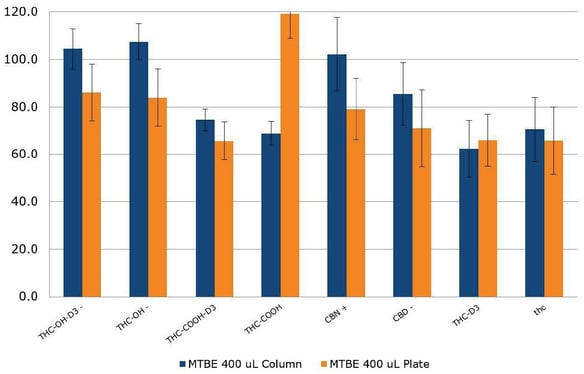
Figure 2. Average analyte recoveries and %RSD (n=7) for ISOLUTE® SLE+ cartridge and plate formats.
Calibration curve performance was investigated from hair samples spiked between 0.1–200 pg/mg of hair. Good linearity was observed for all analytes typically delivering r2 values greater than 0.99. Table 3. details linearity performance and associated LOQ for each analyte using the ISOLUTE® SLE+ cartridge format. Similar results were achieved using the 96-well plate format.
Table 3. Analyte calibration curve r2 and LOQ performance.
|
|
Column Format |
Plate Format |
||
|
Analytes |
r2 |
LLOQ (pg/mg) |
r2 |
LLOQ (pg/mg) |
|
THC |
0.997 |
10 |
0.998 |
10 |
|
OH-THC |
0.997 |
10 |
0.998 |
10 |
|
THC-COOH |
0.997 |
0.2 |
0.997 |
0.2 |
|
CBN |
0.997 |
10 |
0.997 |
10 |
|
CBD |
0.997 |
1 |
0.995 |
0.5 |
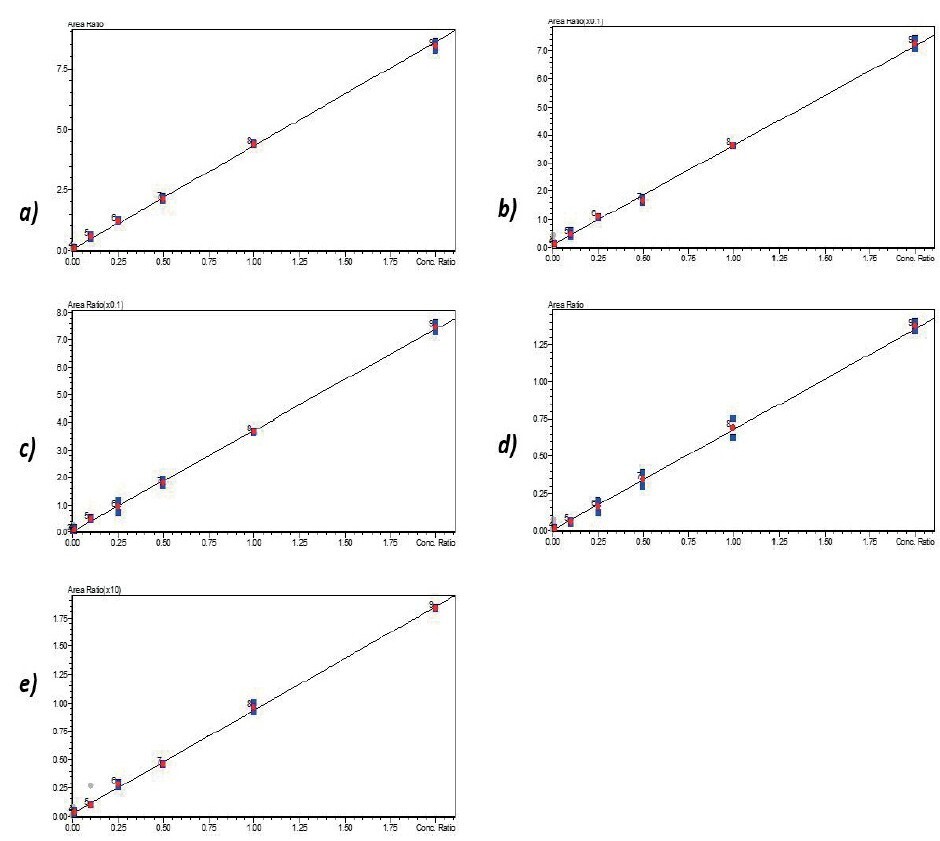
Figure 3. Calibration curves for THC (a), OH-THC (b), THC-COOH (c), CBD (d) and CBN (e) using human hair with 400 µL capacity column format (loading 200 µL of extracted sample as described).
Chemicals and reagents
- Methanol (LC-MS grade), Ultra-Pure Methanol (Gradient MS), dichloromethane (99.8%), isopropanol (99.9%), MTBE (99%) and formic acid (98%) were purchased from Honeywell Research Chemicals (Bucharest, Romania).
- All analyte standards and deuterated internal standards, and acetic acid (LC-MS grade) were purchased from Sigma- Aldrich Company Ltd. (Gillingham, UK).
- Water used was 18.2 MOhm-cm, drawn daily from a Direct-Q5 water purifier.
- 0.1% NH4OH was prepared by adding 100 µL of ammonium hydroxide to 99.9 mL of methanol
- Mobile phase A (0.01% Acetic acid (aq)) was prepared by adding 50 µL to 500 mL of purified water.
- Mobile phase B (0.01% Acetic acid (aq)) was prepared by adding 50 µL to 500 mL of HPLC grade methanol.
- Internal standards (100 pg/µL) were prepared from a 10 ng/µL stock solution by adding 10 µL of each of to 950 µL of MeOH. 10 µL of this solution was then added to each calibration.
Additional information
- All data shown in this application note was generated using real hair samples, both dyed and natural, provided by healthy human volunteers. All hair types gave
similar analyte recovery and extract cleanliness. - Biotage® Lysera hints and tips
- A minimum of four tubes must be loaded in the tube carriage to ensure balance during processing
- Ensure vial caps and Lysera head are firmly tightened and Lysera locking mechanism is fully engaged
- 2 mL Lysera tubes were placed directly into the centrifuge, no transfer to centrifuge vials was needed.
Ordering information
|
Part Number |
Description |
Quantity |
|
19-060 |
Biotage® Lysera |
1 |
|
19-649 |
2 mL Reinforced Tubes with screw caps (Bulk pack) |
1000 |
|
19-640 |
2.4 mm Metal Beads - 500 grams |
1 |
|
820-0055-B |
ISOLUTE® SLE+ 400 µL Sample Volume Cartridges |
50 |
|
820-0400-P01 |
ISOLUTE® SLE+ 400 µL Capacity Plate |
1 |
|
PPM-96 |
Biotage® PRESSURE+ 96 Positive Pressure Manifold |
1 |
|
PPM-48 |
Biotage® PRESSURE+ 48 Positive Pressure Manifold |
1 |
|
415000 |
TurboVap® LV |
1 |
|
SD-9600-DHS-EU |
Biotage® SPE Dry 96 Sample Evaporator 220/240 V |
1 |
|
SD-9600-DHS-NA |
Biotage® SPE Dry 96 Sample Evaporator 100/120 V |
1 |
|
121-5203 |
Collection Plate, 2 mL Square |
50 |
|
121-5204 |
Piercable Sealing Mat |
50 |
|
C44651 |
Test Tubes (12 x 75 mm, Uncapped) |
1000 |
|
414001 |
Biotage® Extrahera™ |
1 |
Appendix: Biotage® Extrahera™ settings
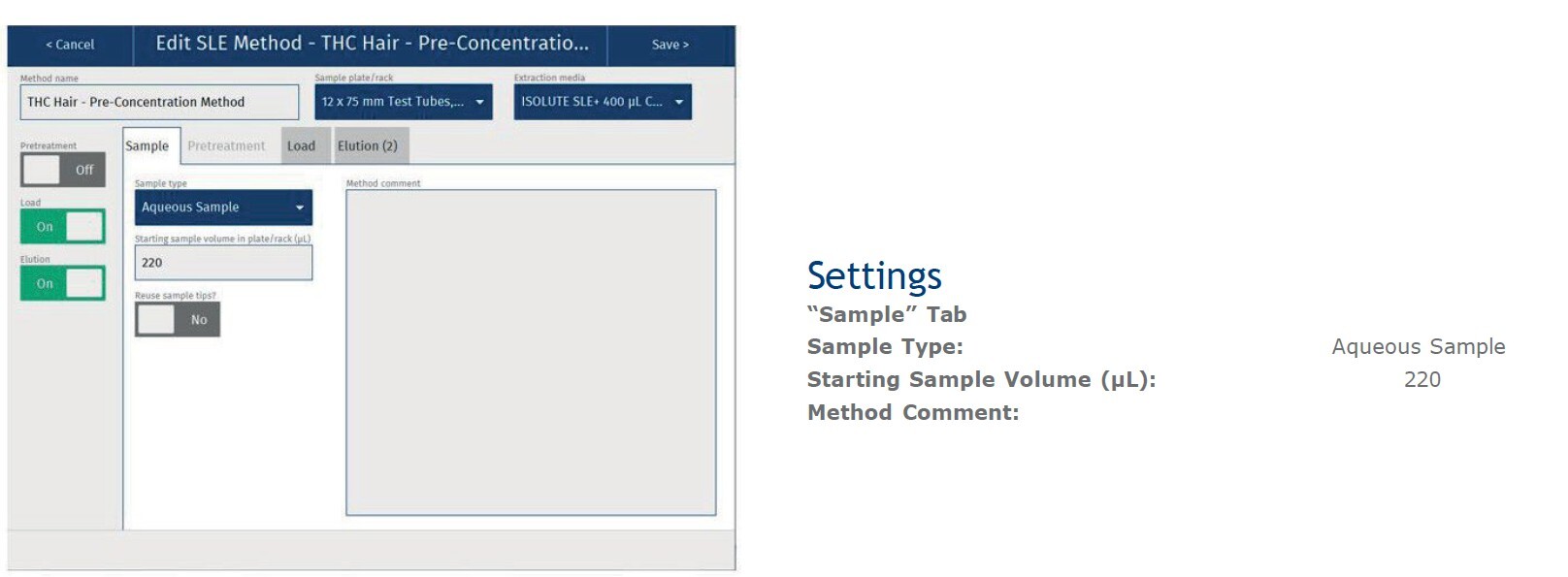
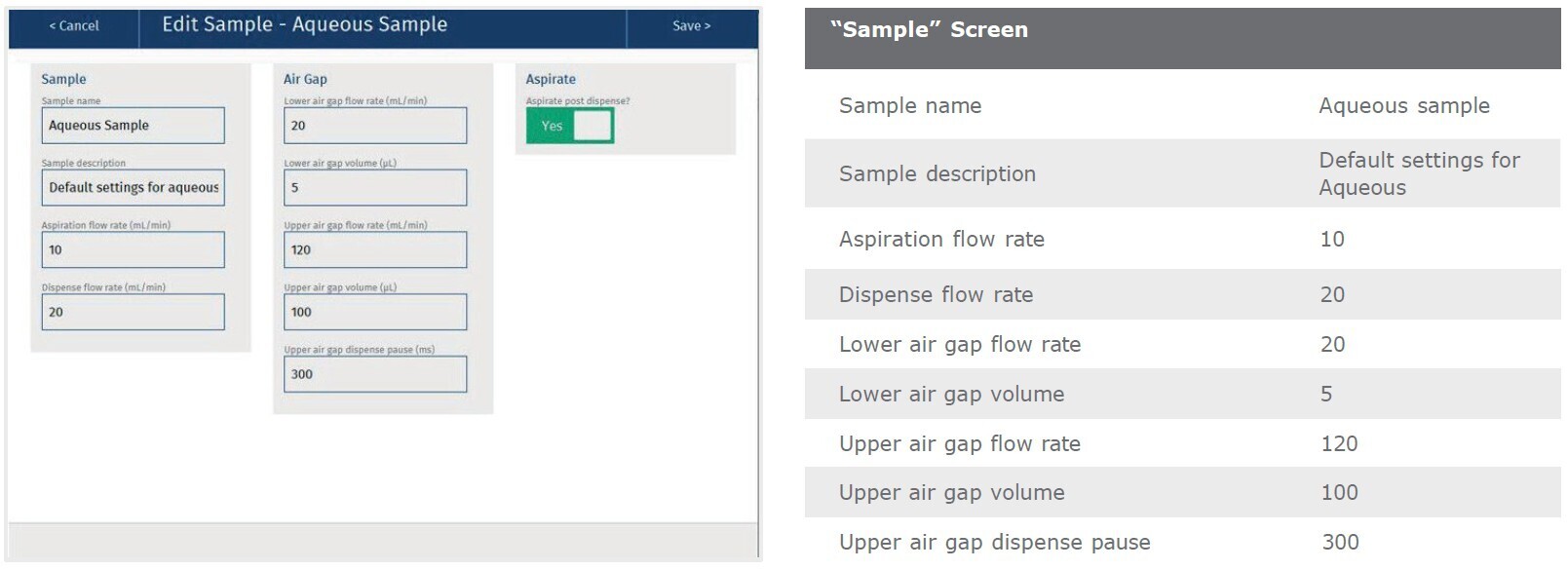
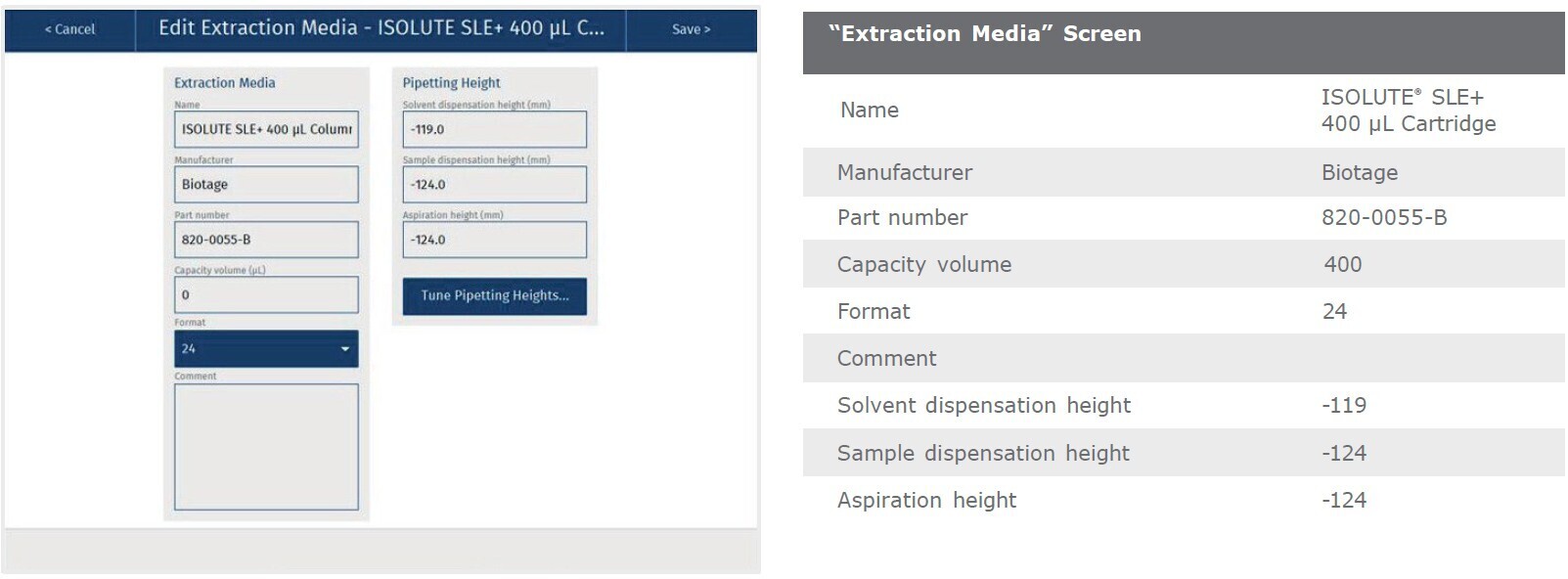
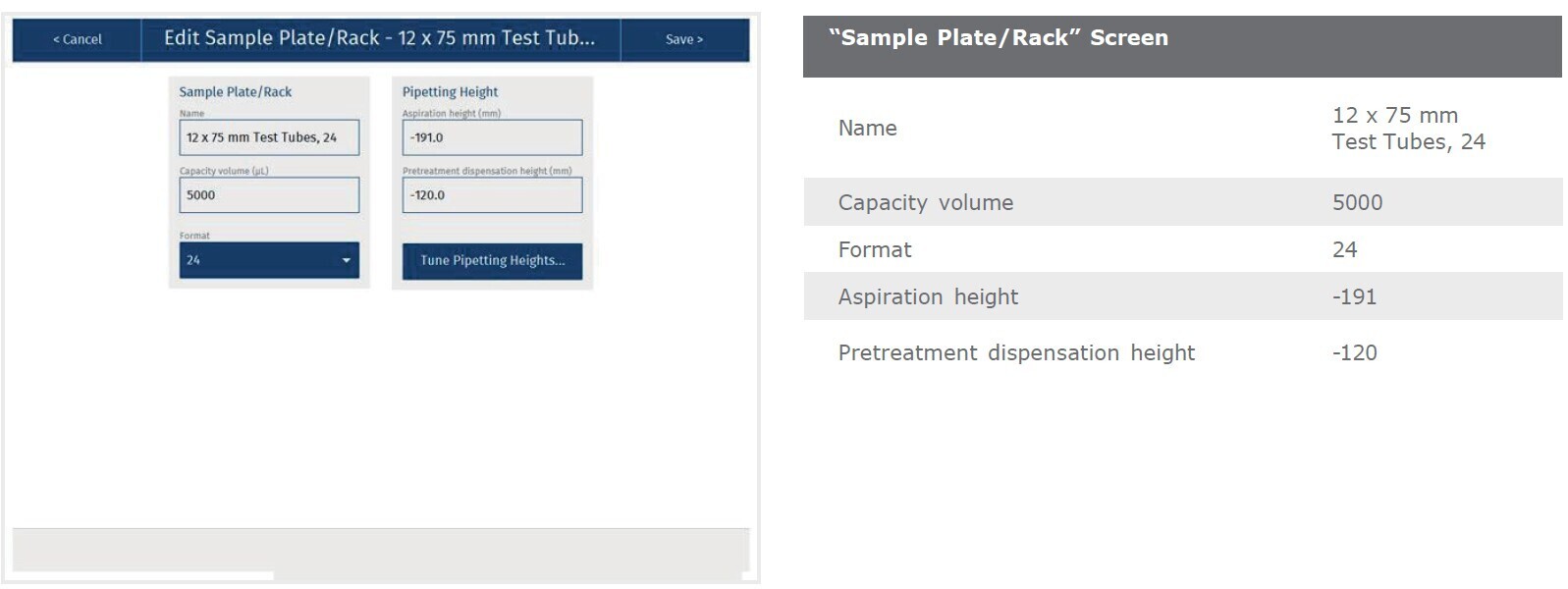
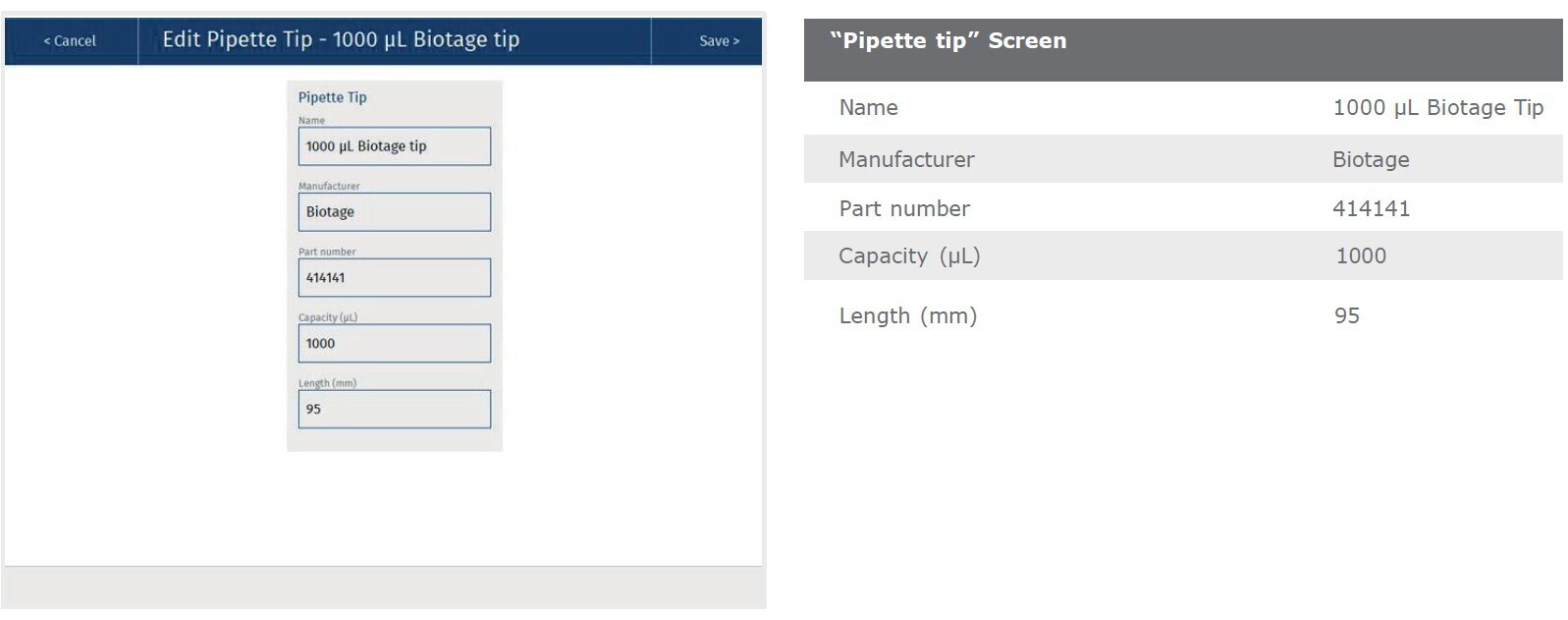
The method described in this application note was automated on the Biotage® Extrahera™ using ISOLUTE® SLE+ 400 µL capacity cartridges and 96-well plates. This appendix contains the software settings required to configure Extrahera to run the column format method. As described in the main body of the application note, analyte recoveries, %RSDs, linearities and LOQs were comparable for both manually processed and automated methods, for both extraction formats.
|
Sample Name: |
THC Hair – Pre concentration Method |
|
Sample Plate/Rack: |
12 x 75 mm Test Tubes, 24 |
|
Extraction Media: |
ISOLUTE® SLE+ 400 µL Cartridges |
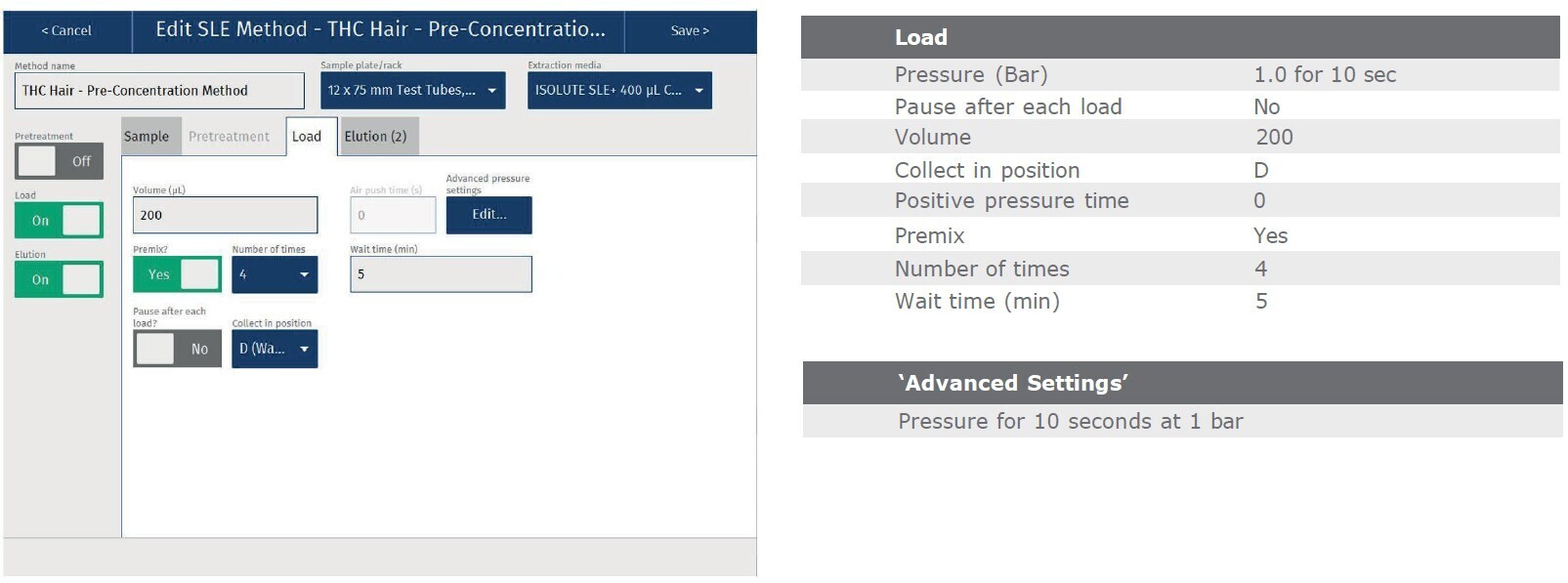
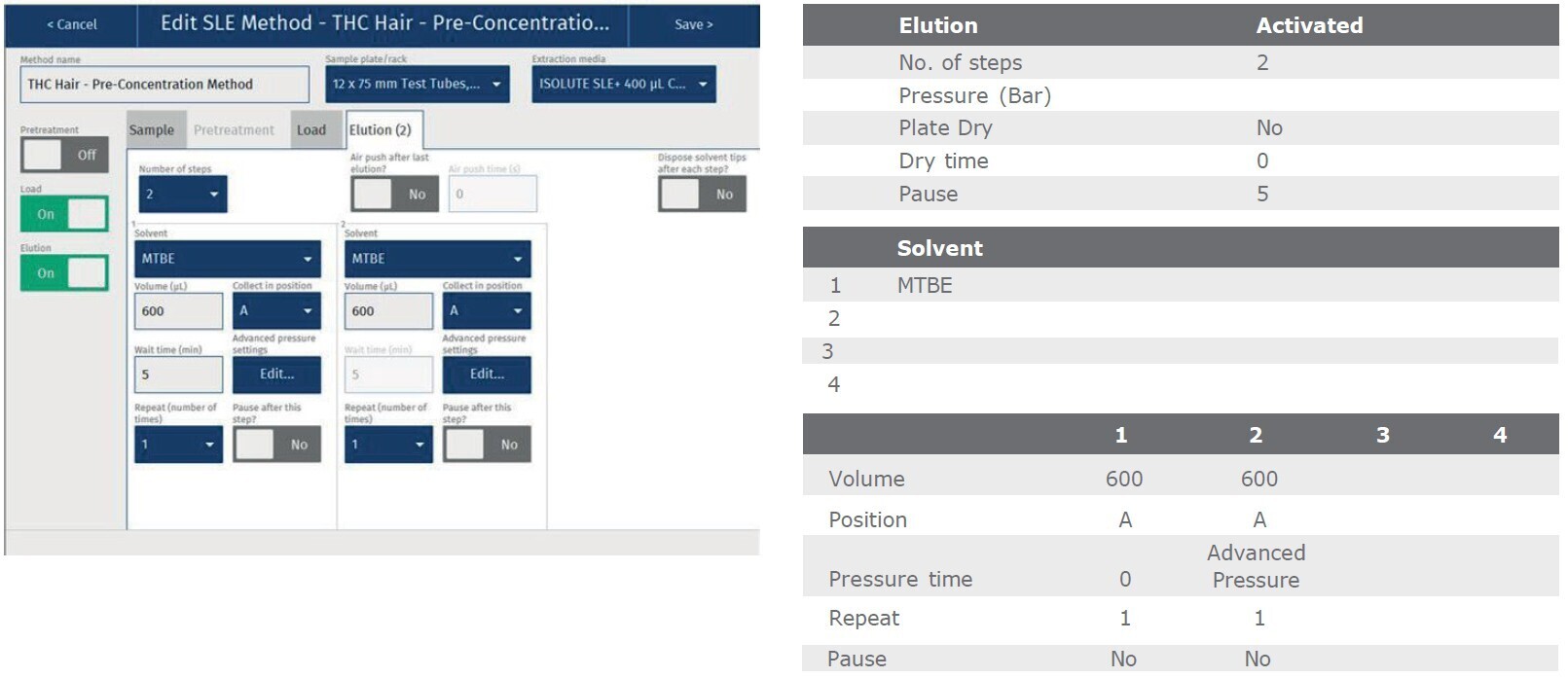
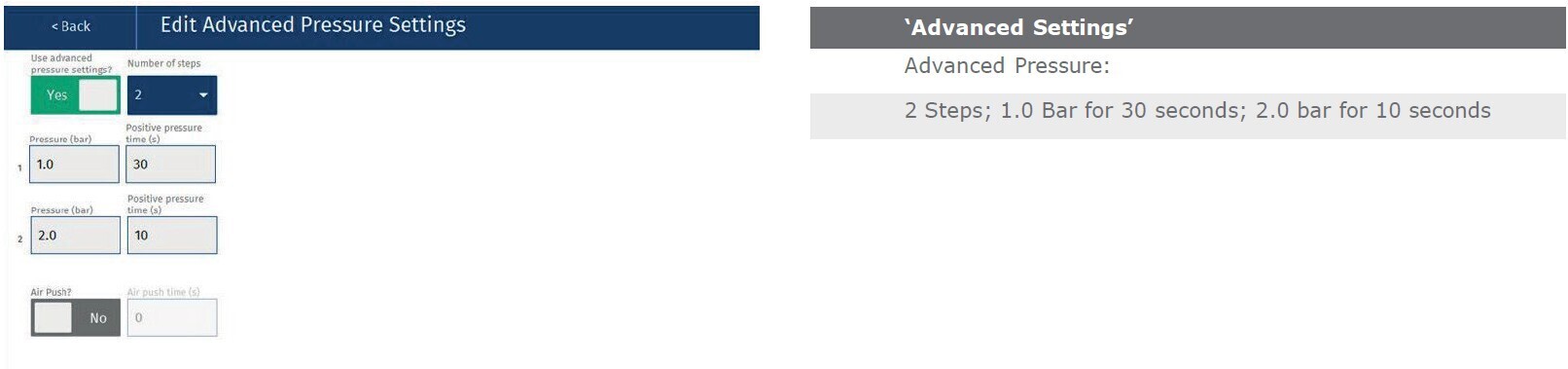 Solvent properties
|
Solvent Description |
|
|
1 |
MTBE |
|
2 |
|
|
3 |
|
|
4 |
|
|
5 |
|
|
6 |
|
|
7 |
|
|
8 |
|
|
9 |
|
|
10 |
|
Solvent |
1 |
2 |
3 |
4 |
5 |
6 |
7 |
8 |
9 |
10 |
|
Reservoir Type |
Refillable |
Non Refillable |
||||||||
|
Capacity |
||||||||||
|
Aspiration flow rate (mL/min) |
10 |
|||||||||
|
Dispense flow rate (mL/min) |
10 |
|||||||||
|
Lower air gap flow rate (mL/min) |
10 |
|||||||||
|
Lower air gap volume (µL) |
5 |
|||||||||
|
Upper air gap flow rate (mL/min) |
120 |
|||||||||
|
Upper air gap volume (µL) |
100 |
|||||||||
|
Upper air gap dispense pause |
300 |
|||||||||
|
Conditioning? |
Yes |
|||||||||
|
Conditioning number of times |
2 |
|||||||||
|
Conditioning flow rate (mL/min) |
10 |
|||||||||
|
Chlorinated |
No |
|||||||||
|
Serial dispense |
No |
|||||||||
Literature Number: AN919
