
For research use only. NOT for use in diagnostic procedures.
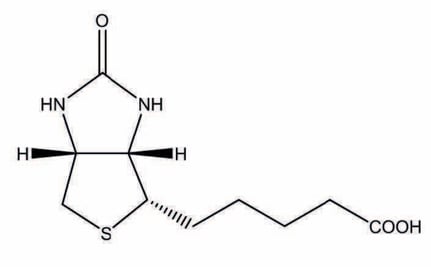 Figure 1. Structure of Vitamin B7.
Introduction
Vitamin B7 (Biotin) is a water soluble vitamin necessary for cell growth. The method described in this application note achieves high reproducible extraction recoveries of vitamin B7 from serum while minimizing co-extractable material in the form of proteins, lipids and phospholipids. Serum is extracted using the EVOLUTE® EXPRESS ABN 96-well plate.
EVOLUTE EXPRESS SPE products dramatically improve flow characteristics, and enhance sample preparation productivity providing clean, robust, sample preparation. This method can be automated using Biotage® Extrahera™ (see appendix for details).
Analytes
Biotin (with Biotin-[2H2] as internal standard).
Sample preparation procedure
Format
EVOLUTE® EXPRESS ABN 10 mg plate, part number 600-0010-PX01.
Sample pretreatment
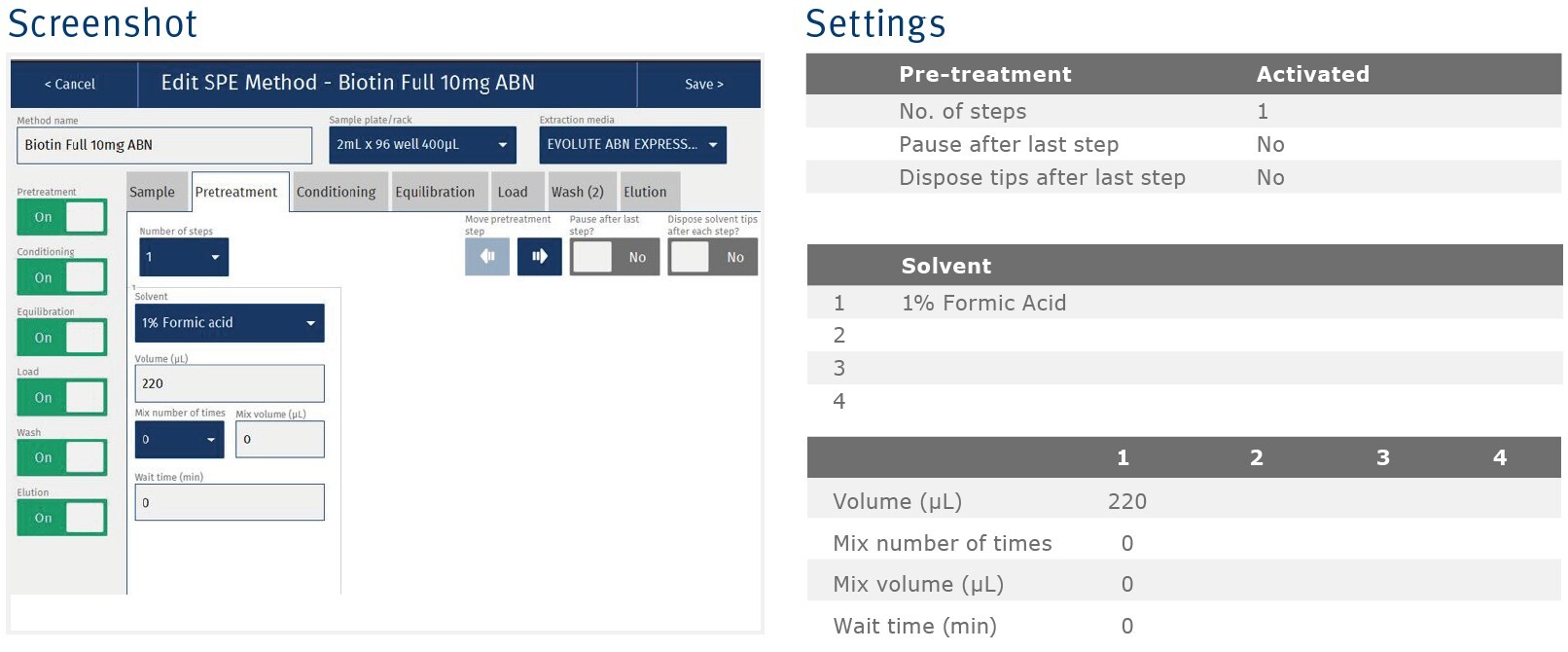
To 200 µL of serum add internal standard (Biotin-[2H2]) at 250 pg/mL and dilute using with 1% formic acid (aq) (200 µL). Mix.
Condition (Optional)
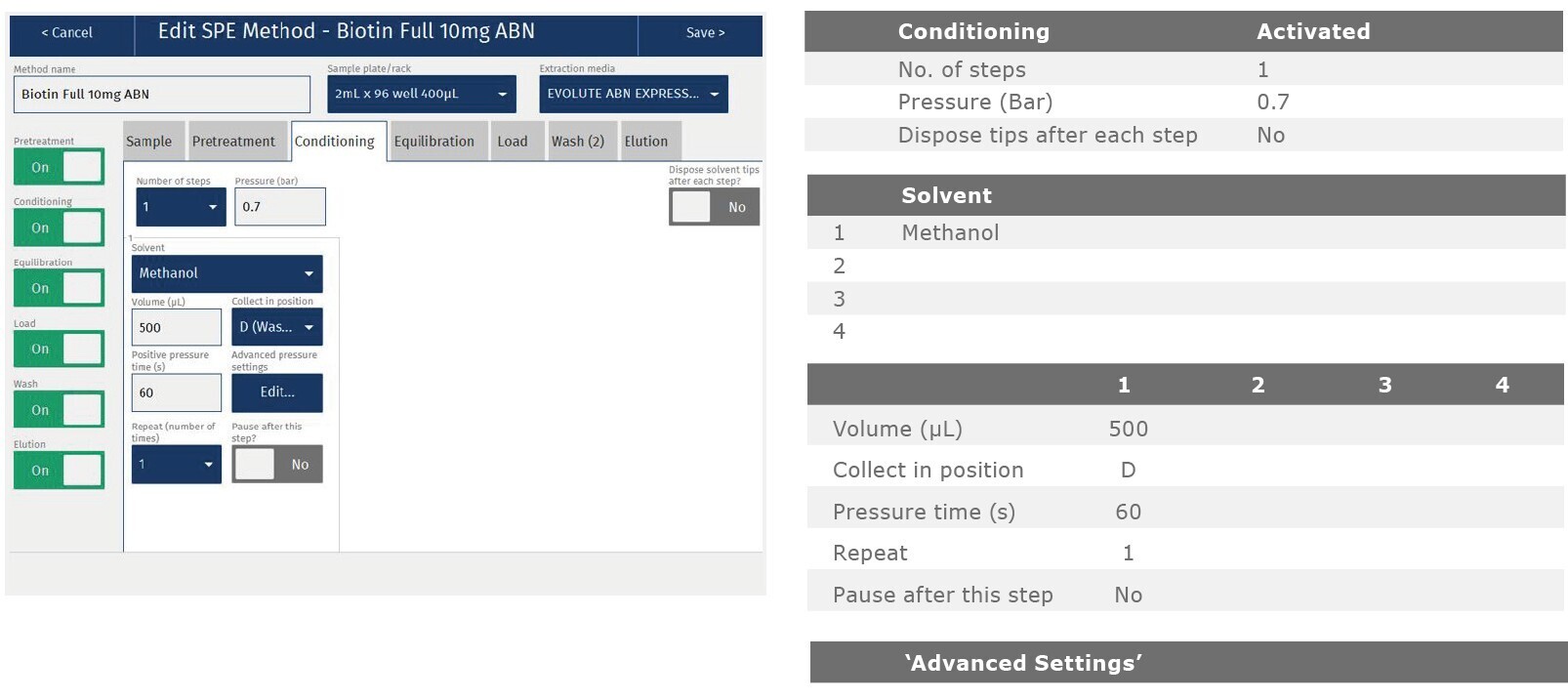
Condition each well with methanol (500 µL). This step is not required with the EVOLUTE EXPRESS Load-Wash-Elute procedure.
Equilibration (Optional)
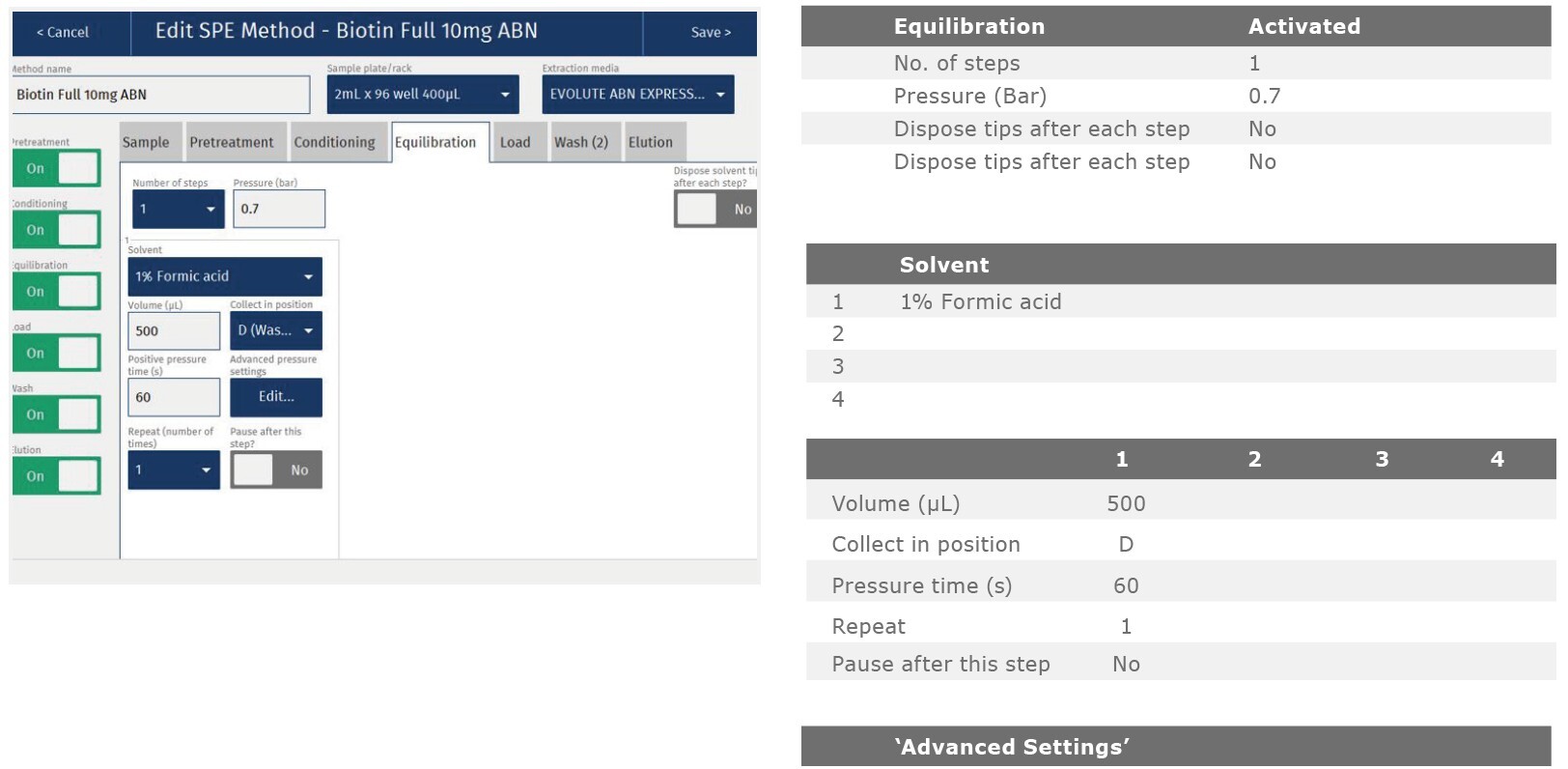
Equilibrate each well with 1% formic acid (aq) (500 µL). This step is not required with the EVOLUTE EXPRESS Load-Wash-Elute procedure.
Sample loading
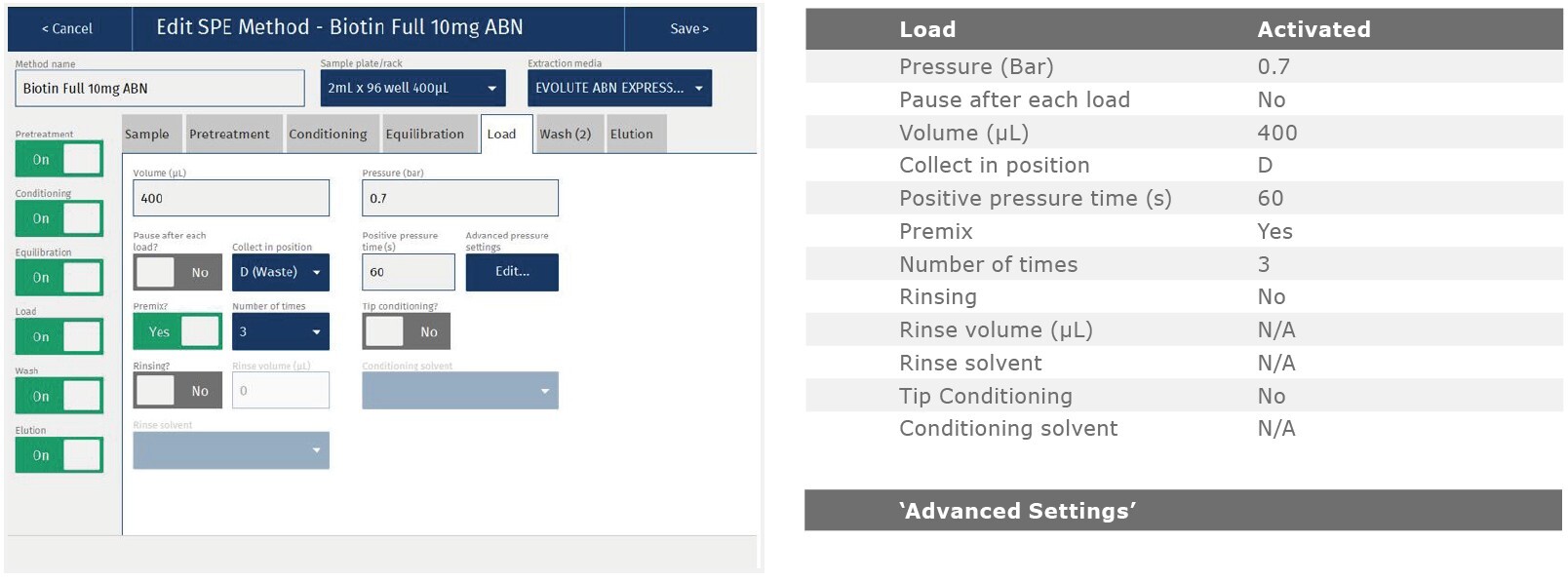
Load 400 µL of pre-treated serum into each well.
Wash 1
Elute interferences with H2O (500 µL).
Wash 2
Elute interferences with H2O/MeOH (95/5, v/v, 500 µL).
Elution
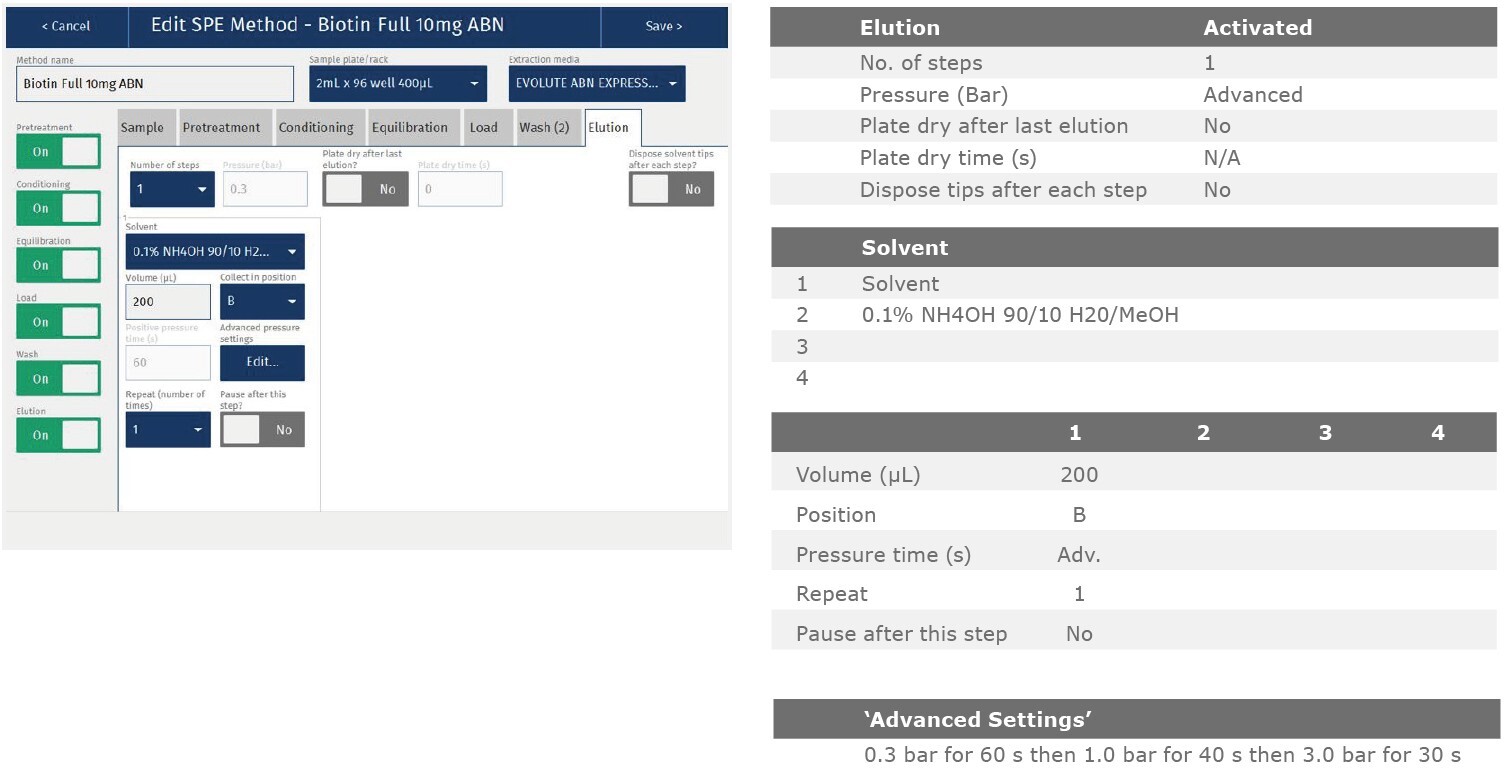
Elute analytes with 0.1% NH4OH in (H2O/MeOH, 90/10, v/v, 200 µL).
Post elution
Evaporate to dryness at 40 °C in a stream of air or nitrogen using a Biotage® SPE Dry.
Reconstitution
Reconstitute the extract with H2O/ACN (90/10, v/v, 200 µL ).
UPLC conditions
Instrument
Waters ACQUITY I-Class
Column
ACE Excel 1.7 µ C18-PFP column (100 x 2.1 mm id)
Mobile phase
A: 1 mM ammonium fluoride (aq).
B: Acetonitrile.
Flow rate
0.4 mL/min.
Table 1. Gradient conditions.
|
Time |
% A |
% B |
Curve |
|
0 |
90 |
10 |
1 |
|
1.50 |
82 |
18 |
6 |
|
2 |
20 |
80 |
1 |
|
2.6 |
90 |
10 |
1 |
Curve 6: Lineat gradient
Injection volume
10 μL
Sample temperature
20 °C
Column temperature
40 °C
Mass spectrometry conditions
Instrument
Xevo TQ-S triple quadrupole mass spectrometer equipped with an electrospray interface for mass analysis.
Desolvation temperature
500 °C
Ion source temperature
150 °C
Collision cell pressure temperature
3.7 e-3 mbar
Negative ions acquired in multiple reaction monitoring (MRM) mode:
Table 2. MRM conditions.
|
Compound |
MRM Transition |
Cone Voltage (V) |
Collision Energy (eV) |
|
Vitamin B7 (Qual) |
243.1 > 200.0 |
25 |
15 |
|
Vitamin B7 (Quant) |
243.1 > 166.0 |
25 |
15 |
|
Vitamin B7-[2H2] |
245.1 > 168.0 |
25 |
15 |
Results
Good retention and chromatographic peak shape was obtained using the C18-PFP column. Figure 2. demonstrates signal intensity and peak shape attained from serum spiked at 25 pg/mL with deuterated internal standard at 250 pg/mL.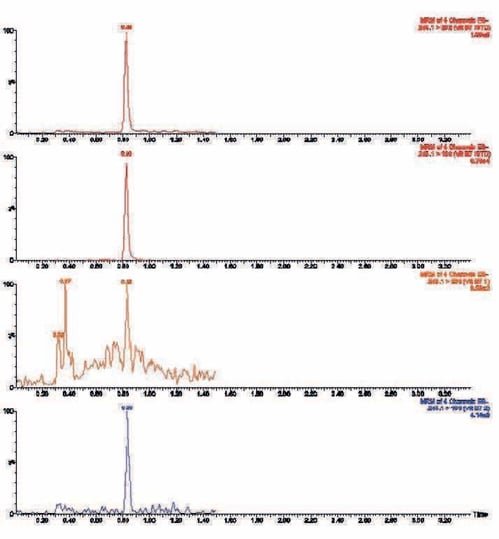 Figure 2. Chromatography obtained from serum spiked at 25 pg/mL. Retention time for vitamin B7 (biotin) is approximately 0.8 mins.
Recovery
Stripped serum was spiked at various concentrations from 25–5000 pg/mL for recovery determination. High reproducible recoveries > 80% with corresponding RSDs < 10% were demonstrated. Typical recovery data for full and Load-Wash- Elute methods from spiked serum at 2000 pg/mL is shown in figure 3.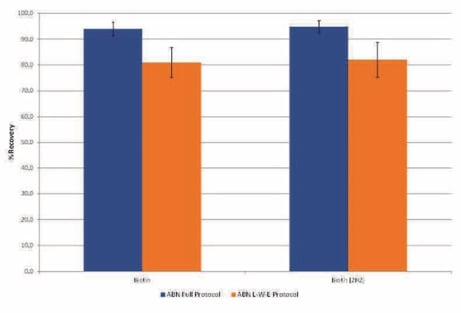 Figure 3. Spiked serum recovery profile for full and Load-Wash-Elute SPE protocols.
Calibration curves
Calibration curves were generated using stripped serum spiked at concentrations from 25–1000 pg/mL. Good linearity, coefficients of determination (r2 > 0.99) and sensitivity
were obtained. Stripped serum matrix contained low residual endogenous levels of biotin which contributed to a slight intercept on the calibration curves. (see figure 4).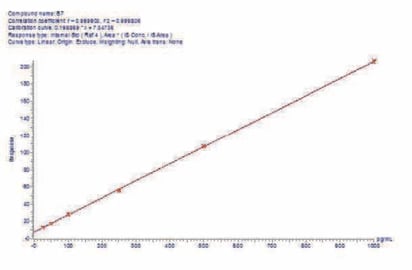
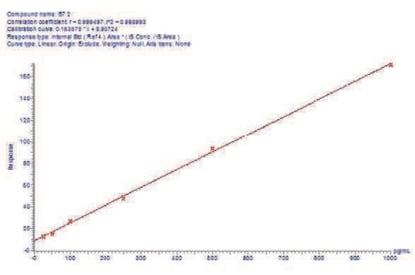 Figure 4. Serum quantifier and qualifier ion calibration curves spiked from 25–1000 pg/mL, extracted in duplicate.
Extract cleanliness
Phospholipid removal
Post extraction residual phospholipid levels were investigated to provide an indication of extract cleanliness. The most abundant phospholipids in human serum (previously selected from full scan, SIR and precursor ion scanning experiments) were assessed using MRM transitions monitoring the common 184 product ion. Figure 5 demonstrates phospholipid content comparing 100 µL of protein precipitated serum with the final EVOLUTE EXPRESS ABN extraction protocol using 200 µL of matrix.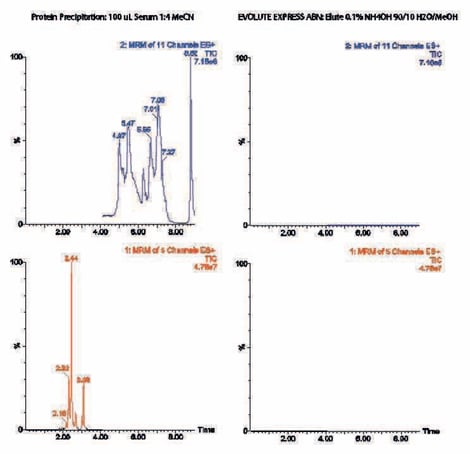 Figure 5. Phospholipid MRM TICs for final serum extraction protocol.
Post column infusion
Extract cleanliness was also investigated using post-column infusion (PCI) experiments. Mobile phase and blank serum extracts were injected onto the LC-MS/MS setup while simultaneously infusing Vitamin B7, to determine regions of suppression, as shown in Figure 6.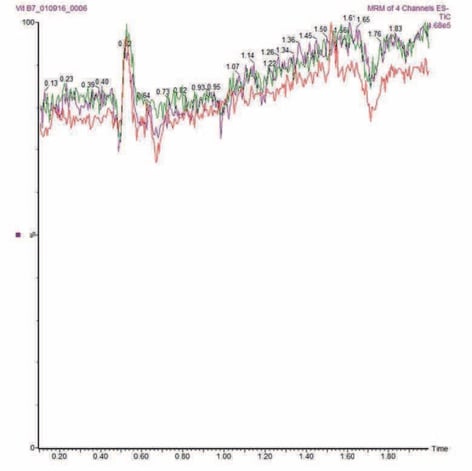 Figure 6. PCI baselines comparing blank solvent (red) to extracted blank serum using full SPE (green) or L-W-E procedures (purple). Minimal baseline disturbance, indicating low matrix effects, is evident at ~0.8 minutes (analyte retention time).
Additional notes
Reagent preparation
- 1% formic acid aq: Measure 99 mL of H2O and add 1 mL of formic acid (99% concentration).
- H2O/MeOH (95/5, v/v): Measure 95 mL of H2O and add 5 mL of MeOH.
- 0.1% NH4OH in (90/10, v/v) H2O/MeOH: Measure 89.9 mL of H2O, add 100 µL of NH4OH (aq, 28–32% concentration) followed by 10 mL of MeOH.
- H2O/MeCN (90/10, v/v): Measure 90 mL of H2O and add 10 mL of MeCN.
- 1 mM ammonium fluoride aq (mobile phase A): Weigh 0.03704 g and dissolve in H2O. Dilute and make up to 1 L in H2O.
Mobile phase and ionization considerations
- As a small polar carboxylic acid, ionization of vitamin B7 is possible using both + and – ion modes.
- Negative ion mode provided better sensitivity due to the availability of more selective MRM transitions. Positive ion MRM showed a tendency for the water loss product ion [M+H-H2O]+.
- Acidic mobile phase additives are typically used to provide extra retention of acid moieties during chromatography. However, due to the use of negative ionization and optimization of signal to noise these additives were omitted.
- Ammonium fluoride was selected to scavenge baseline noise in negative ion electrospray. This resulted in better signal to noise than other additive such as ammonium acetate or formate.
- The NH4F resulted in shorter retention of the target analyte due to increased pH.
- MeCN was selected for the organic eluent as a polar aprotic option for negative ionization.
SPE considerations
- EVOLUTE® EXPRESS ABN was compared to the mixed-mode strong and weak anion exchange sorbents. EVOLUTE EXPRESS AX also provided good recoveries and phospho- lipid removal. However, better cleanliness due to enhanced pigment removal was achieved using the optimized elution combinations with the ABN sorbent.
- pH control using acidic additives for sorbent conditioning (optional) and sample pre-treatment was aimed at suppressing ionization of the analyte making it less polar for the initial retention.
- Washing steps were kept highly aqueous (to avoid losses due to analyte polarity) but were also intended to remove residual acidic nature to allow easier elution.
- Final elution conditions were optimized for highly aq elution conditions which resulted in massively reduced phospholipid content in the extracts. Elution with H2O/ MeOH (50/50, v/v) demonstrated good removal of phospho- lipids but the addition of small amounts of base resulted in the analyte being more ionized, and therefore more polar, allowing elution using 90% aqueous conditions. This provided excellent extract cleanliness.
- Minimum elution volume was optimized at 200 µL for the highly aqueous elution solvent described above. A reduced volume (100–150 µL) with an increased organic content could be used. However, this may adversely impact extract cleanliness, due to increased co-elution of matrix components.
- It was not possible to eliminate evaporation and move to direct injection using the selected chromatographic mobile phases. The use of a pH stable column may allow direct injection. Alternatively, a H2O/MeOH (50/50, v/v) elution solvent could be used with aq dilution prior to injection.
Ordering information
|
Part Number |
Description |
Quantity |
|
600-0010-PX01 |
EVOLUTE® EXPRESS ABN 10 mg Fixed Well Plate |
1 |
|
For Manual Processing |
||
|
PPM-96 |
Biotage® PRESSURE+ 96 Positive Pressure Manifold |
1 |
|
For Automated Processing |
||
|
414001 |
Biotage® Extrahera |
1 |
|
415040 |
Configuration Kit 96 Positions Dual Flow |
1 |
|
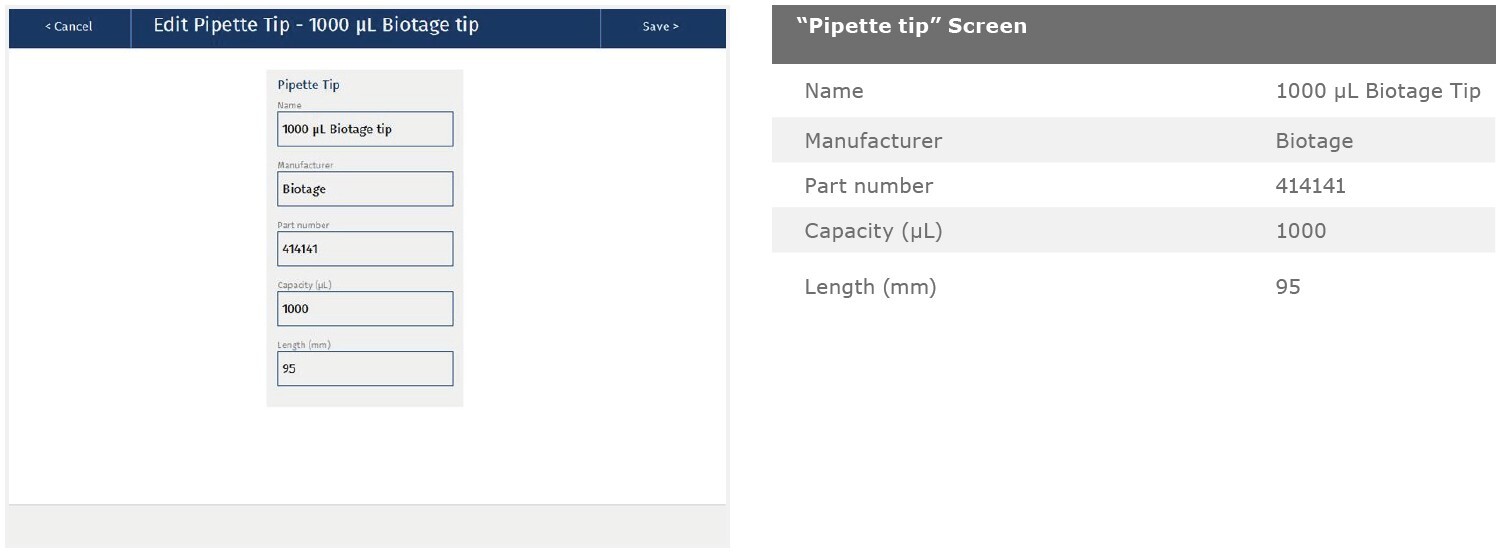
414141 |
Extrahera Clear Tips |
960 |
|
Accessories/Consumables |
||
|
121-5203 |
Collection Plate, 2 mL, Square |
50 |
|
121-5204 |
Piercable Sealing Cap |
50 |
|
Evaporation |
||
|
SD-9600-DHS-EU |
Biotage® SPE Dry 96 Sample Evaporator 220/240V |
1 |
|
SD-9600-DHS-NA |
Biotage® SPE Dry 96 Sample Evaporator 100/120V |
1 |
Appendix: Biotage® Extrahera™ settings
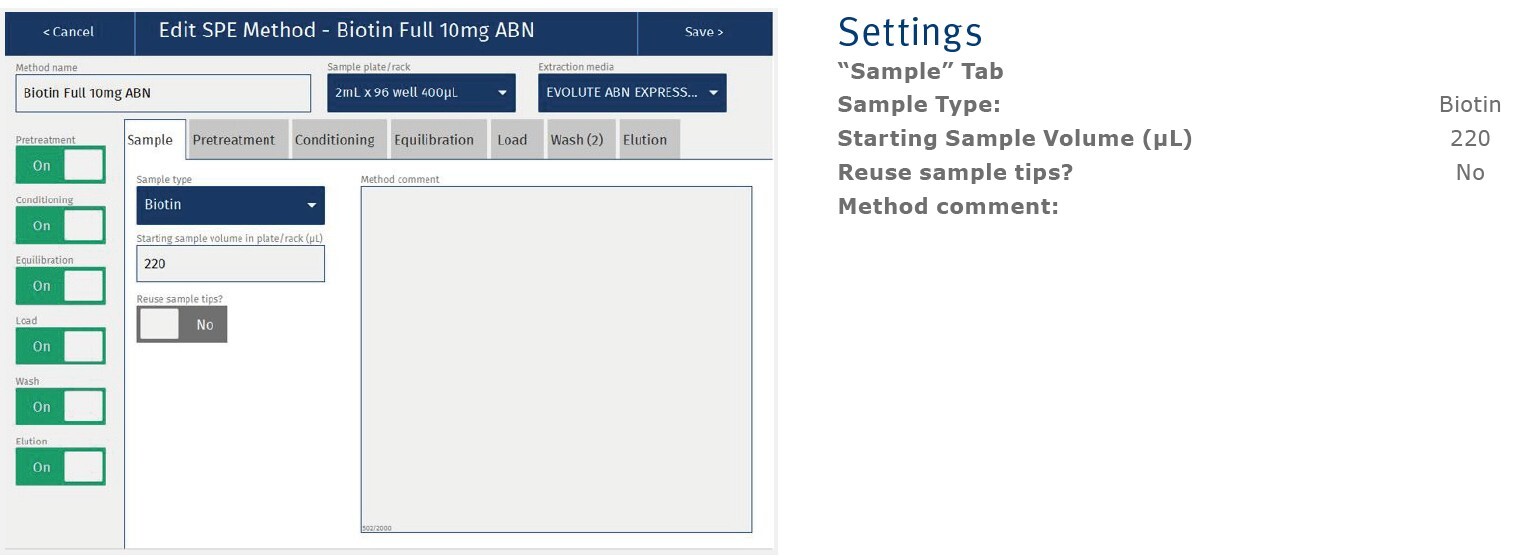
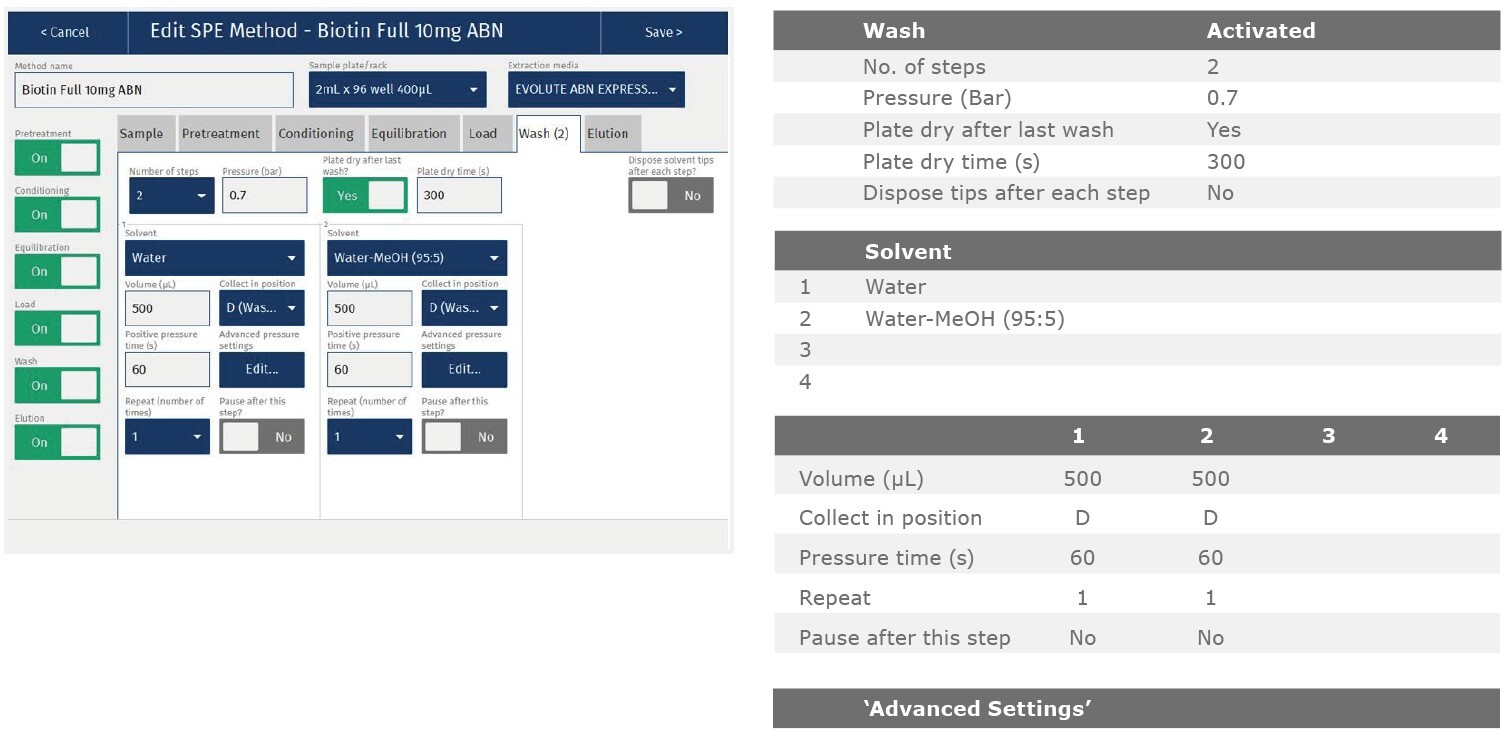
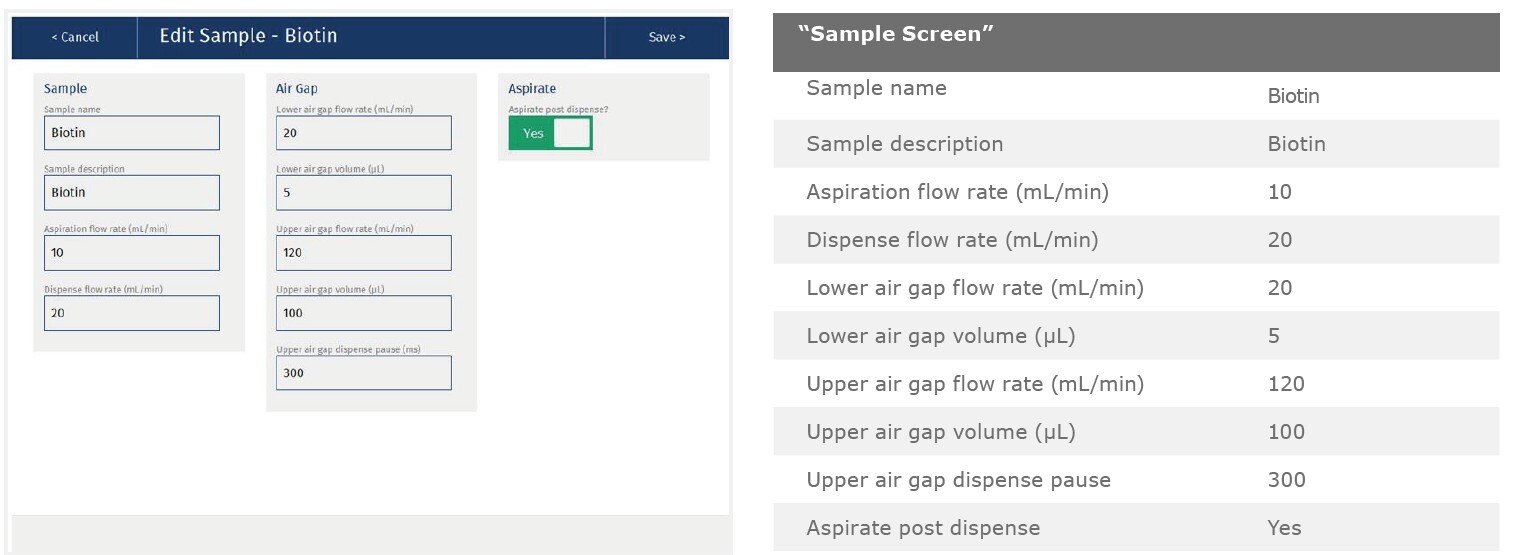
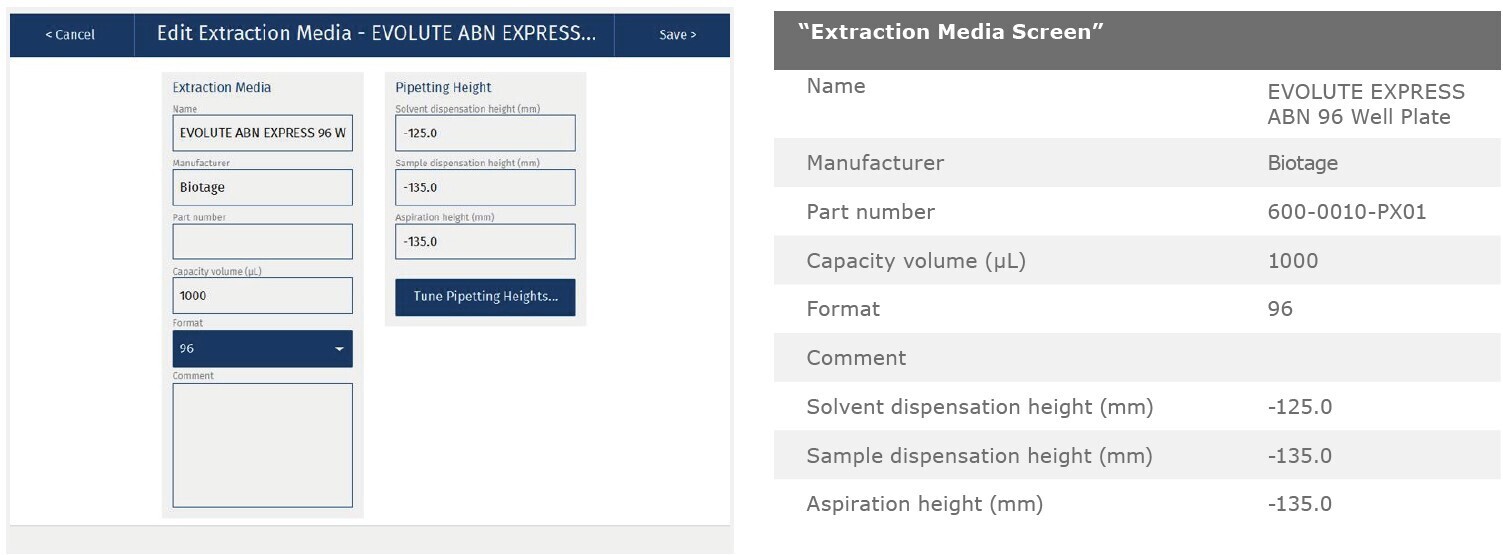
The methods described in this application note were automated on the Biotage® Extrahera™, using EVOLUTE® EXPRESS ABN 10 mg plates. Method performance was comparable.
|
Method |
Total extraction time for 96 samples |
|
EVOLUTE® EXPRESS Load-Wash-Elute method |
30 mins 19 secs |
|
EVOLUTE® EXPRESS ‘full’ method |
38 mins 5 secs |
This appendix contains the software settings required to configure Extrahera to run the method described in this application note.
An importable electronic copy of this method for Extrahera can be downloaded from www.biotage.com
|
Method Name: |
Biotin Full 10 mg ABN |
|
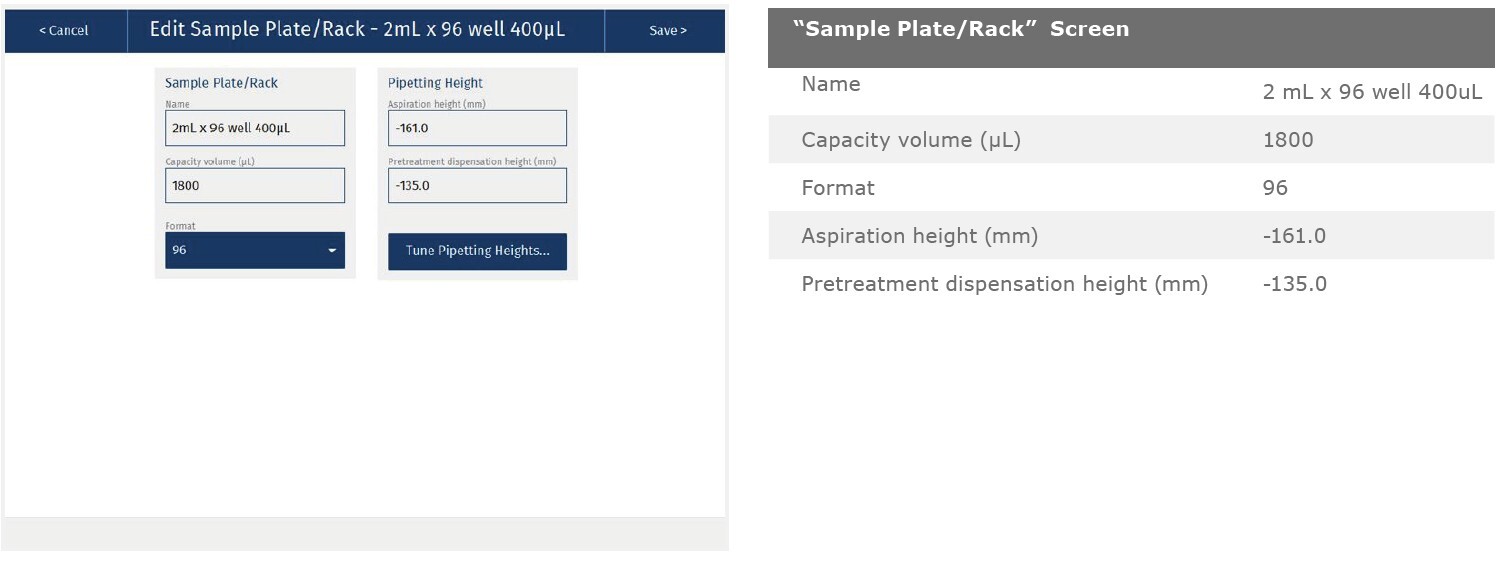
Sample Plate/Rack: |
2 mL x 96 well 400 µL |
|
Extraction Media: |
EVOLUTE ABN EXPRESS 96 Well Plate |
 Solvent properties
|
Solvent Description |
|
|
1 |
1% Formic acid |
|
2 |
Methanol |
|
3 |
Water |
|
4 |
Water-MeOH (95:5) |
|
5 |
0.1% NH4OH 90/10 H20/MeOH |
|
6 |
|
|
7 |
|
|
8 |
|
|
9 |
|
|
10 |
|
Solvent |
1 |
2 |
3 |
4 |
5 |
6 |
7 |
8 |
9 |
10 |
|
Reservoir Type |
Refillable |
Non Refillable |
||||||||
|
Capacity |
N/A |
N/A |
N/A |
N/A |
N/A |
|||||
|
Aspiration flow rate (mL/min) |
10 |
10 |
10 |
10 |
10 |
|||||
|
Dispense flow rate (mL/min) |
20 |
20 |
20 |
20 |
20 |
|||||
|
Lower air gap flow rate (mL/min) |
20 |
20 |
20 |
20 |
20 |
|||||
|
Lower air gap volume (µL) |
5 |
5 |
5 |
5 |
5 |
|||||
|
Upper air gap flow rate (mL/min) |
20 |
120 |
20 |
20 |
120 |
|||||
|
Upper air gap volume (µL) |
100 |
100 |
100 |
100 |
100 |
|||||
|
Upper air gap dispense pause |
300 |
300 |
300 |
300 |
300 |
|||||
|
Conditioning? |
Yes |
Yes |
Yes |
Yes |
Yes |
|||||
|
Conditioning number of times |
2 |
3 |
2 |
2 |
3 |
|||||
|
Conditioning flow rate (mL/min) |
20 |
20 |
20 |
20 |
20 |
|||||
|
Conditioning volume (%) |
100 |
100 |
100 |
100 |
100 |
|||||
|
Aspirate post dispense |
Yes |
Yes |
Yes |
Yes |
Yes |
|||||
|
Chlorinated |
No |
No |
No |
No |
No |
|||||
|
Serial dispense |
No |
No |
No |
No |
No |
|||||
Literature Number: AN880
