
Introduction
Synthetic benzodiazepines are becoming more abused and are considered “legal highs”. Many forensic laboratories are finding more and more of these compounds in post-mortem and impairment cases. While synthetic benzodiazepine prevalence has not been widely broadcast as it is overshadowed by the opioid epidemic, this drug class is now the fourth most commonly identified illegal synthetic drug class, after synthetic cannabinoids, synthetic opioids, and synthetic cathinone (https://ndews. umd.edu/resources/dea-emerging-threat-reports).
Analytes
Clobazam, bromazepam, phenazepam, estazolam, clonazolam, prazepam, flubromazepam, etizolam, delorazepam, pyrazolam, diclazepam, nimetazepam
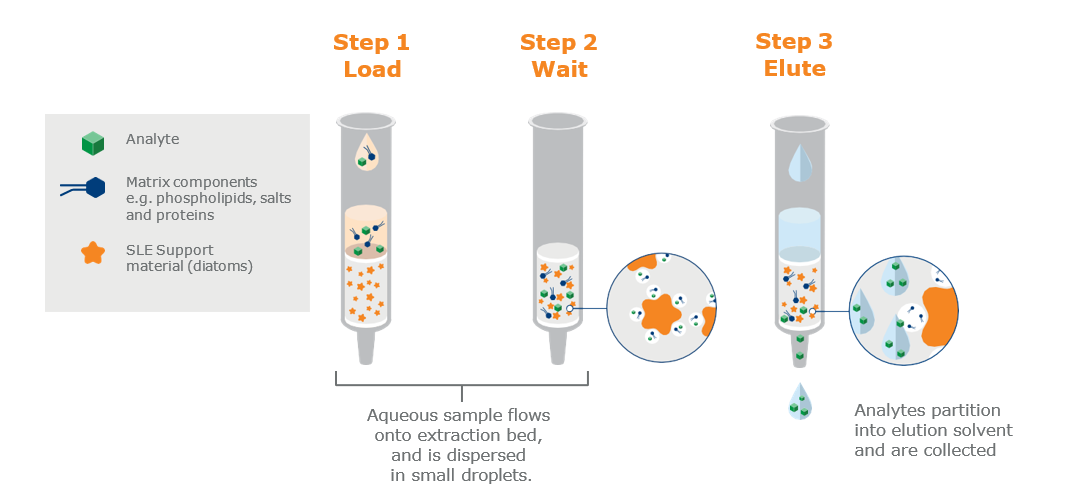
Figure 1: Typical workflow for ISOLUTE® SLE+
Methods
There are several different extraction methods that can be used to extract synthetic benzodiazepines from biological matrices such as urine and blood. This application note evaluates three common extraction techniques, detailing the methodology used, and comparing results in terms of analyte recovery and matrix effects.
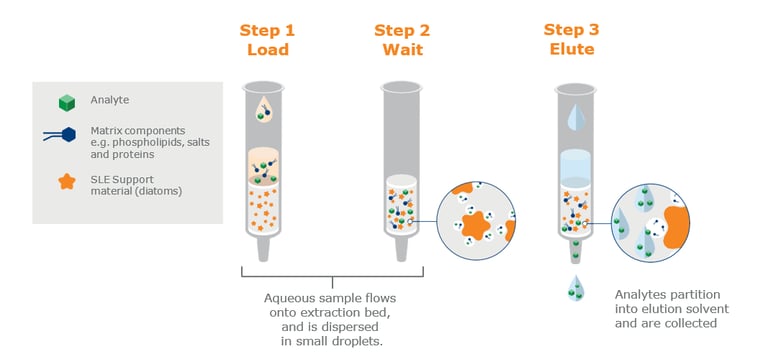
One technique is supported liquid extraction using ISOLUTE® SLE+. This product, available in plate or cartridge format, employs the mechanism of a liquid-liquid extraction with a diatomaceous earth sorbent, allowing for complete separation of the aqueous and organic layers (see Figure 1).
The first step is loading samples onto the diatomaceous earth material. A five-minute wait time allows the aqueous sample to fully adsorb onto the sorbent. Next, an elution step follows using a water-immiscible organic solvent like dichloro- methane (DCM), ethyl acetate (EA), or MTBE (tert-butyl methyl ether). This step targets the compounds of interest allowing them to elute off of the diatomaceous earth sorbent, while leaving behind any aqueous impurities and other unwanted components.
Solid Phase Extraction (SPE) can also be used to isolate the synthetic benzodiazepine compounds. EVOLUTE® EXPRESS CX, a polymeric sorbent, was used for these compounds.
This technique utilizes a mixed-mode mechanism (non-polar interactions and cation exchange) to allow for additional sample cleaning without loss of analyte recovery. The polymeric sorbent is water-wettable, which permits the exclusion of the condition and equilibration steps and promotes less pre-elution plate drying time (see Figure 2).
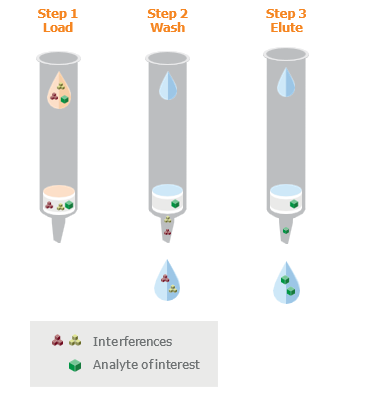
Figure 2: Typical workflow for solid phase extraction using EVOLUTE® EXPRESS.
Dual Mode Extraction (DME) using ISOLUTE® HYDRO DME+ is the simplest technique for extraction. This product, available in plate or cartridge format, uses two scavenging layers of sorbent to remove components of biological matrices, including pigments, salts, urea, and creatinine (see Figure 3).
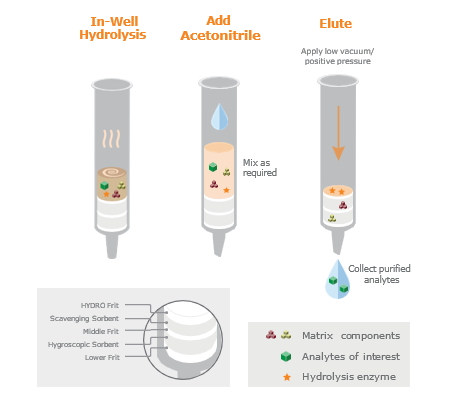
Figure 3: Typical workflow for ISOLUTE® HYDRO DME+.
The methods used for extraction of the synthetic benzodiazepine compounds from whole blood and urine samples are shown below. The samples can be extracted manually using a Biotage® VacMaster™ 96 or Biotage® Pressure+ 96. The extractions can also be automated using the Biotage® Extrahera Automated Sample Preparation System.
|
Sample volume |
100 µL |
|
Pretreatment |
100 µL 1% NH4OH (aqueous) |
|
Load sample Elution |
2 x 750 µL dichloromethane OR |
|
2 x 750 µL ethyl acetate OR 2 x 750 µL MTBE OR 2 x 750 µL 95:5 |
|
|
dichloromethane/isopropanol |
Following elution, evaporate samples to complete dryness using a Biotage® SPE Dry 96 plate evaporator. Reconstitute in 100 µL 95:5 mobile phase A/mobile phase B.
|
Urine sample volume |
100 µL |
|
Pretreatment |
100 µL 0.1% formic acid (aqueous) |
|
Extraction |
|
|
Condition |
NONE |
|
Equilibrate |
NONE |
|
Load |
|
|
Wash 1 |
1 mL water |
|
Wash 2 |
1 mL 0.1% formic acid (aq) |
|
Wash 3 |
1 mL methanol OR 50:50 methanol/water |
|
Plate Dry |
1 min at 20 psi |
|
Elution |
2 x 750 µL 78:20:2 DCM/IPA/NH4OH OR 2 x 750 µL 78:20:2 EA/ACN/NH4OH |
After elution, evaporate samples to complete dryness using a Biotage® SPE Dry 96 plate evaporator. Reconstitute in 100 µL 95:5 mobile phase A/mobile phase B.
|
Sample volume |
100 µL |
|
Load sample |
|
|
OPTIONAL |
Add 10 µL formic acid to sample |
|
Add Acetonitrile |
600 µL |
|
Mix |
Pipette mix 5 times |
|
Elution |
Push sample through sorbent |
Following elution, evaporate samples to complete dryness using a Biotage® SPE Dry 96 plate evaporator. Reconstitute in 100 µL 95:5 mobile phase A/mobile phase B.
Analytical conditions
For all samples, following evaporation and reconstitution as described, LC-MS/MS analysis was performed using the conditions outlined below.
LC parameters
Instrument
Shimadzu Nexera X2
LC column
Restek Raptor Biphenyl 50 x 3 mm, 2.7 µm (Cat # 9309A52)
Column temperature
40°C
Mobile phase A:
0.1% formic acid in water
Mobile phase B:
0.1% formic acid in methanol
|
Time |
% Mobile phase B |
|
0.01 |
5 |
|
0.5 |
10 |
|
5.25 |
70 |
|
7.5 |
95 |
|
7.7 |
95 |
|
7.75 |
5 |
|
9.25 |
STOP |
Flow rate
0.4 mL/min
Run time
9.25 minutes
Injection volume
2.5 µL
MS/MS parameters
Instrument
SCIEX 5500 Triple Quadrupole
Source gas
600 ⁰C
Curtain gas
30
Collision gas (CAD)
8
Ionspray voltage
1500 V
Ion source gas 1
50
Ion source gas 2
50
Entrance potential
10
Positive polarity
Table 3 shows the MS parameters for each compound in the panel
|
Compound |
Retention time |
Q1 |
Q3 |
Declustering Potential |
Collision Energy |
CXP |
|
Clobazam |
6.74 |
300.951 |
259.1 |
136 |
31 |
6 |
|
|
|
300.951 |
224.1 |
136 |
45 |
10 |
|
Bromazepam |
6.74 |
317.929 |
301.0 |
16 |
13 |
8 |
|
|
|
317.929 |
259.0 |
16 |
35 |
16 |
|
Phenazepam |
6.71 |
348.917 |
206.1 |
21 |
47 |
12 |
|
|
|
348.917 |
184.1 |
21 |
41 |
8 |
|
Estazolam |
6.86 |
295.000 |
267.0 |
96 |
33 |
4 |
|
|
|
295.000 |
205.2 |
96 |
55 |
14 |
|
Clonazolam |
6.57 |
353.962 |
308.1 |
181 |
37 |
14 |
|
|
|
353.962 |
280.1 |
181 |
49 |
8 |
|
Prazepam |
7.73 |
324.992 |
271.1 |
216 |
33 |
10 |
|
|
|
324.992 |
140.1 |
216 |
47 |
10 |
|
Flubromazepam |
6.57 |
334.904 |
226.1 |
66 |
39 |
12 |
|
|
|
334.904 |
185.9 |
66 |
41 |
12 |
|
Etizolam |
7.34 |
342.955 |
314.1 |
216 |
35 |
6 |
|
|
|
342.955 |
259.1 |
216 |
47 |
8 |
|
Delorazepam |
6.58 |
304.946 |
166.0 |
121 |
71 |
8 |
|
|
|
304.946 |
140.2 |
121 |
71 |
26 |
|
Pyrazolam |
6.51 |
355.938 |
206.2 |
156 |
47 |
12 |
|
|
|
355.938 |
167.2 |
156 |
65 |
16 |
|
Diclazepam |
7.15 |
318.927 |
154.1 |
141 |
39 |
10 |
|
|
|
318.927 |
227.2 |
141 |
47 |
6 |
|
Nimetazepam |
6.94 |
296.000 |
250.1 |
126 |
35 |
8 |
|
|
|
296.000 |
221.2 |
126 |
47 |
8 |
Results
For every method, a 10 ng/mL and a 100 ng/mL sample were run to ensure consistency over a concentration range.
The recoveries and matrix effects shown are using a 10 ng/mL sample in whole blood or urine. When analysing urine samples (Figure 4), the highest recoveries were obtained when using ISOLUTE® SLE+ with an ethyl acetate elution solvent. When using EVOLUTE® EXPRESS CX with a 100% methanol wash, bromazepam and clobazam were mostly washed away. ISOLUTE® HYDRO DME+ when used without formic acid had recoveries of 60–75% for all compounds.
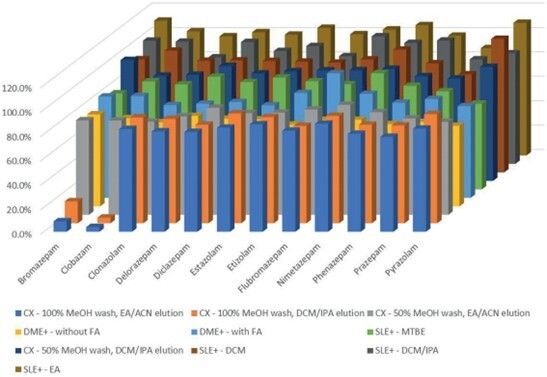
Figure 4. Recoveries of synthetic benzodiazepines from urine samples
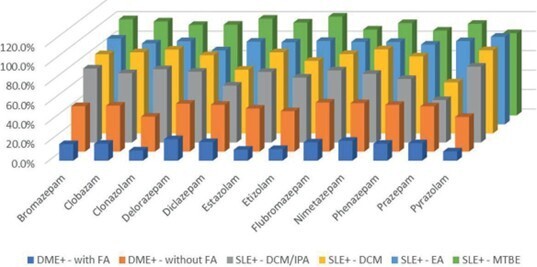
Figure 5. Recoveries of synthetic benzodiazepines from whole blood samples
When analysing whole blood samples (Figure 5), the highest recoveries were obtained when using ISOLUTE® SLE+ with an MTBE or an ethyl acetate elution solvent. ISOLUTE® HYDRO DME+ when used with formic acid only resulted in recoveries of 10–20% for all compounds. Without using formic acid, recoveries were between 35–50% for all compounds.
When looking at matrix effects of urine samples (Figure 6), ISOLUTE® HYDRO DME+ with formic acid resulted in the most suppression (dirtiest extracts). The cleanest extracts (least suppression) was seen when extracting with ISOLUTE® SLE+ using a dichloromethane or dichloromethane/isopropanol elution solvent or EVOLUTE® EXPRESS CX with a 50% methanol wash and an EA/ACN/NH4OH elution solvent.

Figure 6. Matrix effects of synthetic benzodiazepines from urine samples.
When looking at matrix effects of whole blood samples (Figure 7), the dirtiest extracts were seen when extracting using ISOLUTE® SLE+ with an MTBE elution solvent. Surprisingly, extracting using ISOLUTE® HYDRO DME+ resulted in the cleanest extracts (least suppression).
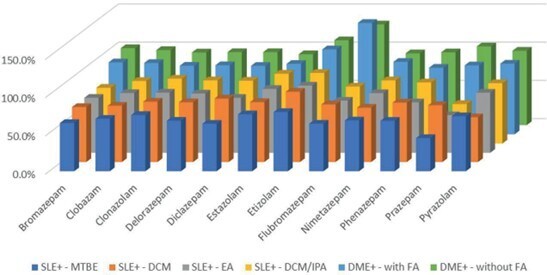
Figure 7: Matrix effects of synthetic benzodiazepines from whole blood
Conclusion
There are several different extraction techniques that can be used to extract synthetic benzodiazepines from whole blood and urine samples. It is important to consider the compounds in the panel, the desired extract cleanliness, compound recoveries, and extraction time to determine which method best fits the application. If use of the same extraction technique for both whole blood and urine samples is desired, ISOLUTE® SLE+ using an ethyl acetate elution solvent results in recoveries over 75% and slight suppression for some compounds.
Literature number: AN932
