
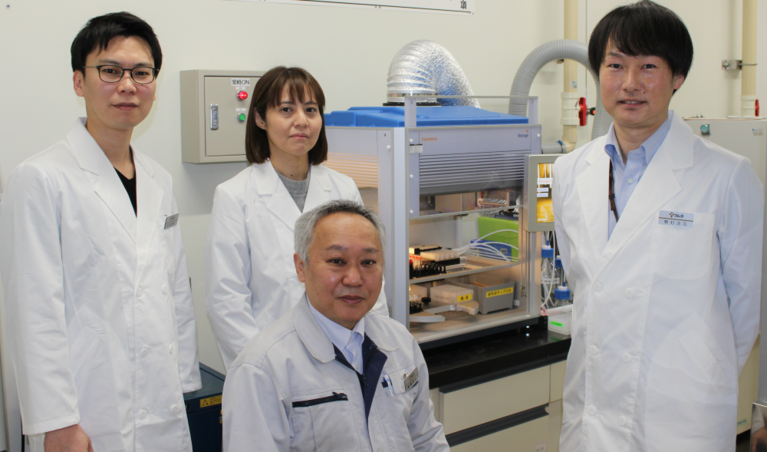
Tsumura Co., a leading manufacturer of Kampo medicines in Japan, implemented Biotage® Extrahera™ Classic to automate sample preparation for quality testing. By automating the workflow, Tsumura improved reproducibility, increased throughput, and reduced operator-dependent variability in mycotoxin testing.
Quality testing across complex natural materials
At Tsumura, a leading manufacturer of prescription Kampo (traditional herbal) formulations and over-the-counter Kampo medicines, thousands of samples are analyzed annually across a wide range of quality tests for products formulated from 119 different natural ingredients. Due to the complexity of matrices in naturally derived raw materials, ensuring accuracy in sample preparation and minimizing operator-dependent variability are key challenges.
To address these issues, the Chemistry, Manufacturing, and Controls (CMC) Research Institute at Tsumura implemented the Biotage® Extrahera™ Classic automated sample preparation system in their laboratory. By automating the sample preparation workflow, the team achieved improved reproducibility and operational efficiency.
We spoke with Mr. Takahiro Toyoshima, Director of the CMC Development Research Institute, Ms. Kyoko Tsujioka, General Manager of the CMC Assurance Department, Mr. Shingo Nakamura, Group Leader of the Impurity Testing Development Group, and Dr. Hiroshi Nomura about the background of this implementation and its impact on their operations.
Ensuring reliable testing across thousands of samples
Could you tell us about your company’s business operations and research activities?
Mr. Toyoshima: Our company specializes in Kampo medicines. Approximately 90% of our raw natural ingredients are sourced overseas, primarily from China but also Laos and other countries. In addition to domestic manufacturing in Japan, we also operate production facilities in China.
The company has 129 Kampo formulations, which use 119 types of natural ingredients as raw materials. The natural ingredients are mixed and extracted according to each formulation, converted into extracts, and commercialized as granule formulations. Since these are naturally derived raw materials, there are inherent risks of contamination, including pesticide residues, mycotoxins, and heavy metals. To mitigate these risks, we thoroughly implement strict controls based on Good Agricultural and Collection Practices (GACP) from the cultivation and collection stages of the natural ingredients. At the CMC Development Research Institute, the CMC Assurance Department conducts a wide range of quality tests, from the raw material to final products such as extract granules. Given the diversity of materials and products, the sample matrices are highly complex, resulting in a large number of quality tests.
A wide range of quality testing
What types of testing do you perform?
Mr. Nakamura: Our testing can be broadly categorized into four main areas: pesticide residues, mycotoxins, heavy metals and arsenic, as well as microbiological testing. All of these are essential to ensuring the safety of our products.
Mr. Toyoshima: In particular, pesticide residue and mycotoxin testing account for a significant portion of our workload. As we handle a large volume of tests, optimizing staffing and maintaining overall operational balance have become key challenges. In this context, we see automation—especially in sample preparation and purification processes—as an important step toward improving efficiency.
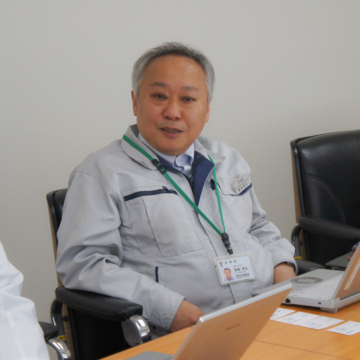
Image 1. Mr. Toyoshima.
Challenges in sample preparation for highly reliable mycotoxin testing
Could you tell us about the sample preparation methods you used prior to implementing the Biotage® Extrahera™ Classic automated sample preparation workstation, and the challenges you faced?
Dr. Nomura: Prior to the implementation of the automated system, all sample preparation was performed manually. The main advantage of manual operation is that you can start work immediately without the need for specialized equipment. In the early stages of method development, this flexibility allowed us to easily evaluate and optimize conditions, so it did not pose a significant issue at that stage. However, when aiming to accurately detect trace levels of compounds, such as in mycotoxin analysis, the sample preparation process inevitably becomes more complex. These procedures are highly dependent on the operator’s skill level, which can lead to variability in the results.
In addition, when generating validation data or considering future routine use in quality control, it becomes necessary to process a large number of samples involving multiple analysts. In such cases, we found it significantly challenging to standardize the workflow to ensure consistent performance.
Selective cleanup of mycotoxins from complex matrices
I understand you use immunoaffinity columns (IAC) for selective cleanup of mycotoxins from your matrices.
Dr. Nomura: One of the key characteristics of mycotoxin analysis is the extremely low target concentration, typically at the ppb level. In addition, the sample matrices we handle are highly complex. We work with raw natural materials as well as concentrated extracts used in Kampo formulations, many of which can be classified as “difficult-to-analyze” samples, such as dried spices.
From these complex matrices, we need to selectively and accurately quantify only the target mycotoxins. For this reason, we use immunoaffinity columns to remove impurities and interfering substances from the extracts. However, compared to conventional SPE columns, these columns require much more delicate handling, and operating conditions significantly impact the results. Parameters such as the flow rate during sample loading and the wait time during elution must be carefully controlled.
Consequently, operators must have a solid understanding of the underlying principles and perform the procedures correctly, and managing operator-dependent variability has been a key challenge.
Mr. Nakamura: The Kampo products we manufacture are pharmaceuticals intended for patients in poor health. Therefore, we place the utmost importance on ensuring product quality so that patients can use them with confidence.
Regarding mycotoxins, we conduct testing on every batch of all formulations of our products. As we process thousands of samples annually through manual operations, adopting next-generation testing methods developed by our team is essential to ensure analytical reliability and operational efficiency in our testing workflows.
High operability and GLP compliance were key factors in our selection
When introducing an automated sample preparation system, what factors were most important to you? Also, could you tell us what ultimately led you to choose our Biotage® Extrahera™ Classic?
Dr. Nomura: When selecting the system, we prioritized simplicity of configuration and ease of operation. With some other systems, modular configurations and programming are required, which tended to make operation more complex. In contrast, this system features an integrated design, allowing users to operate it by simply following predefined steps. This makes it highly user-friendly, even for less experienced operators. We also appreciated the ease of troubleshooting, as potential issues can be identified and isolated quickly.
In quality control testing, multiple analysts use the system, so it is essential that anyone can operate it without difficulty. The Biotage® Extrahera™ Classic offers intuitive touchscreen operation, making it easy to incorporate into routine workflows. In addition, compliance with GLP requirements, which are essential for pharmaceutical testing, was a key factor in our decision. The system provides robust data integrity features, such as user access control and audit trails. Finally, its competitive price range compared to other systems with similar capabilities also supported our decision to adopt it.
Improved workflow efficiency and reproducibility through automation
What benefits have you experienced since implementing Biotage® Extrahera™ Classic?
Dr. Nomura: The most significant benefit has been the improvement in workflow efficiency achieved through automation. While the system is running, we can carry out other tasks in parallel, which greatly enhances our overall productivity.
Another key advantage is the improved reproducibility of our analytical results. The positive pressure manifold function ensures a stable flow rate through the columns, reducing variability that was often unavoidable with manual operation. As the number of samples increases, these benefits become even more apparent. Compared to manual processing, the system clearly offers higher throughput.
For example, in our mycotoxin testing workflow, processing 24 samples manually would be difficult for a single analyst to complete within a day. With the Biotage® Extrahera™ Classic, however, the pretreatment process can be completed in approximately three hours, which has been extremely helpful.
We’re glad to hear that the Biotage® Extrahera™ Classic was also effective for sample preparation using immunoaffinity columns (IAC), which require delicate handling.
Dr. Nomura: We also experienced benefits in terms of method development. With improved reproducibility in the sample preparation process, it became much easier to determine whether issues in results were due to operational errors or the performance of the method itself. This has accelerated the overall speed of method development.
Addressing challenges with practical solutions
Did you encounter any challenges during operation?
Dr. Nomura: We initially encountered an issue when dispensing highly viscous solutions containing relatively high concentrations of surfactants. Bubbles would form at the tip of the pipette and occasionally burst, affecting the process. However, this issue was resolved by using wide-bore tips, which have larger opening than standard tips and are available as part of the Biotage product lineup.
It was reassuring to see that, in addition to standard consumables, there are options tailored to specific applications. Having access to such solutions for handling subtle operational challenges is a significant advantage, and we hope this user-oriented approach to product development will continue.
In addition, we also received valuable support from the Biotage team when setting up the operating conditions. Their concrete advice on parameters and methodology—based on a deep understanding of both the system and sample preparation—was extremely helpful. This allowed us to proceed with method optimization on a solid, well-founded basis. The high level of overall technical expertise at Biotage is one of the key reasons we consider them a trusted research partner.
Expanding automated sample preparation for future applications
Could you share your future expectations and plans?
Dr. Nomura: As the Biotage® Extrahera™ Classic we implemented supports 1 mL, 3 mL and 6 mL columns, we plan to expand its use to other quality control applications beyond mycotoxins testing, such as pesticide residue analysis. We have also established the conditions for automated immunoaffinity column cleanup of mycotoxins. Looking ahead, we expect the system to handle the sample preparation of thousands of samples. Furthermore, to enable the processing of a larger number of samples in a shorter time, we are also considering introducing the higher-capacity Extrahera™ HV-5000 model designed for high-throughput applications, which we found to reduce sample preparation time by approximately 30% during our evaluation of the demo system provided by Biotage.
Ms. Tsujioka: In a quality control department where all lots are tested and thousands of samples are processed annually, the frequency of use of automated instrument will naturally increase. It would be beneficial if users could share best practices and operational know-how to ensure stable operation of the equipment.
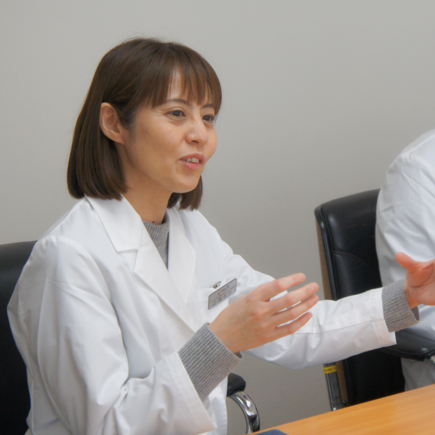 Image 2. Ms. Tsujioka.
Acknowledgements
We would like to sincerely thank Mr. Toyoshima, Ms. Tsujioka, Mr. Nakamura, and Dr. Nomura at Tsumura & Co. for their valuable opinions and continued support for the Biotage portfolio of products.
This interview was originally conducted in Japanese on March 24, 2026.
About Tsumura
Tsumura is a pharmaceutical company that contributes to the well-being of people through products and services based on Kampo medicine and traditional Chinese medicine. Guided by its corporate value, “The Best of Nature and Science,” Tsumura takes a scientific approach to ensuring the safety, efficacy, and consistency of its pharmaceutical products, and continues to grow as a leading company in the prescription Kampo formulation sector.
Literature number: CC04
