
At the Institute of Scientific and Industrial Research (ISIR), Osaka University, the synthesis and physical properties of advanced functional materials is in the spotlight. The goal is to develop molecular-scale electronic devices with the same functional abilities as televisions or solar cells.
At Osaka University, the Department of Soft Nanomaterials, Nanoscience, and Nanotechnology in the Institute of Scientific and Industrial Research (ISIR), is researching the synthesis and physical properties of novel π-conjugated compounds to develop advanced functional materials. Biotage® Initiator is used in the laboratory for organic synthesis reactions. We had a talk with Yutaka Ie, Associate Professor at Osaka University.
Thank you for giving us some time today. Please give us a brief description of your research.
“The main purpose of our research is to study the synthesis of compounds and their resulting physical properties. Particularly for aromatic compounds such as a benzene rings, we can obtain new physical properties by expanding their molecular structure. We also deal with synthesis of new substances for practical use in electronics and evaluate their physical properties.
The two major fields of our research include organic and molecular electronics. Our main objective in the field of organic electronics is to produce products such as solar batteries, transistors, and monitor screens that are currently made using conventional inorganic semiconductors, but using organic semiconducting materials instead. These materials are characterized by their lightweight elements and flexibility, and we think such materials can be used for many different applications in the future.
The objective in the field of molecular electronics is to develop functional devices using very small elemental structures. Ultimately, our goal in this field is to develop molecular-scale electronic devices with the same functional abilities as televisions or solar cells.”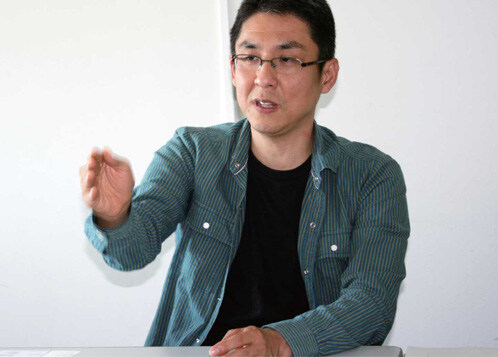
Figure 1: Yutaka Ie is Associate Professor at Osaka University
Why did you decide to start using the Biotage® Initiator for your synthesis process?
“The Biotage® Initiator had already been installed in ISIR as a shared instrument among multiple departments. We decided to use the Initiator after reading literature on reactions using microwave reactors. In our department, we would do overnight reactions using conventional heating at 100 or 120 °C. After introducing the microwave system, we have drastically reduced the time taken to complete the reactions. Consequently, our department began to use this shared system more frequently, and eventually we decided to purchase another system specifically for our department.”
Easy to set up, even for students
Did you evaluate products from other companies?
“Sure, we compared several products by going through their catalogues, and found that the Biotage Initiator had benefits including the panel display and service maintenance. Our decision to use this microwave system was quick in light of
those easy-to-use features, and our previous experience with the system for experiments at ISIR.
For condition settings, the English software version can be used with simple and easy prompts, enabling our students to use this system. It is tiresome to thoroughly read complex user manuals of lab instruments. Us organic chemists can find it rather hard to deal with multiple instruments or devices. If instruments are too complex to set up or operate, our staff will keep their distance from them (laughs). The easy-to-use interface is the best feature of the Biotage® Initiator.”
From one week to 40 minutes
What are your favourite applications with this system.
“The Biotage® Initiator is mostly suitable for organic reactions, and we find the Initiator very useful especially for catalytic reactions of organometallics. Catalytic reactions are often a very time- consuming, but the Biotage® Initiator allows us to perform such reactions efficiently and rapidly, which is very convenient for us.”
How fast can this system perform reactions?
“In the case of a synthesis process using conventional overnight heat reflux, this system can complete the reaction in five minutes. Also, in case of a process requiring a week to complete with conventinal heating, the Initiator can complete that process in about 40 minutes. The number of synthesis reactions performed in our lab has increased dramatically because of the reduced time to complete these processes. We can perform five reactions a day, rather than one, as was the case previously.
This system has such an overwhelming advantage.”
Excellent responsiveness
“An additional advantage of Biotage® Initiator is the system’s responsive- ness. In theory, a long-term synthesis carried out in a flask is equivalent to a short-term synthesis using microwaves. However, in some chemical reaction systems, microwave synthesis can perform reactions without failure. For instance, a certain compound described in our recently submitted paper could only be synthesized with microwaves, we were not able to obtain the compound at all using normal conditions, where theoretically, the compound could be produced. I find this difference between theory and practice interesting.
We don’t know the reason why we couldn’t synthesize the compound in a batch process, but the catalyst or substrate might have been damaged due to the long reaction period. In any case, microwave synthesis is essential for this compound. Without the microwave instrument, it could not be done.”
It is interesting that microwave system can not only reduce reaction time but also perform reactions not possible under normal conditions.
“That’s right, the microwave system has great potential. In case of reaction systems producing compounds with low stability, including complex mixtures that had failed before, such compounds can now be produced using the microwave instrument. We may have missed out on such compounds before we acquired the instrument. The Biotage® Initiatoris really an excellent product.”
Standardized parameters
Did you face any issues related to our microwave system?
“We haven’t had any issues, but we often receive inquiries from other researchers regarding our reaction conditions. The reaction conditions in Biotage systems are determined by temperature and time, while in competitor products, the reaction conditions are set in terms of power in Watts. As a result, other research groups can’t reproduce our experiments using our original evaluation method without having a Biotage microwave instrument.
Correspondingly, it is not straightforward to reproduce experiments as described in other researchers’ papers with Watts as a parameter. We can’t replicate the reaction conditions from other researchers accurately enough. This leads to wasted resources and time for exploring the different reaction conditions repeatedly.
I believe that manufacturers must develop their microwave instruments with uniformity in setting conditions to ensure compliance with competitive products, since more and more chemists will introduce them in their labs. Especially for polymer synthesis, it will become much more important to consider the microwave reaction conditions. Differences in temperatures and time for reactions may influence the molecular weight and physical properties of the polymers produced. So it is challenging for chemists to reproduce polymers without a given set of strict reaction conditions.”
That’s a good suggestion. Do you have any other requests concerning our microwave instruments?
“It would be better if changes in a reaction over time could be displayed on the screen, because it is a factor for determining the extent of completion of the reaction. It would also be helpful if a mass spectrometry instrument, which is used for measuring molecular weight of a sample, could be added to the system. It would be very helpful for us to detect polymers with molecular weights in the range of 2,000 to 3,000 MW."
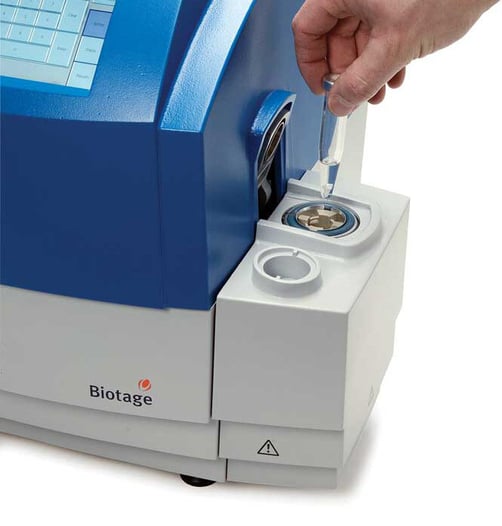
Figure 2: The pioneering microwave synthesis system Biotage® Initiator allows chemists to perform organic reactions under precisely controlled conditions. A touch screen panel guides the user and eliminates the need for a PC space. With its excellent operability and stability, this instrument plays an active role in organic synthesis in laboratories worldwide
I.S.I.R Osaka University
Osaka University’s roots date back to 1838. Tekijyuku, a private education institution, was founded by Ogata Koan who was a doctor studying Western sciences. After the Osaka temporary hospital and the Osaka Prefectural Medical School were established, Osaka Imperial University was established in 1931 as the sixth oldest imperial university with two faculties: medicine and science. The Newly renamed Osaka University in 1949 comprised five faculties: literature, law and economics, science, medical and engineering, and academic department. As of now, Osaka University has 11 faculties and 10 laboratory departments with approximately 15,000 students, approximately 7,900 graduate students, and approximately 6,000 teaching staff. In the laboratory of Yutaka Ie, Associate Professor in ISIR, studies on the development of organic electronics and single-molecule electronics are being carried out.
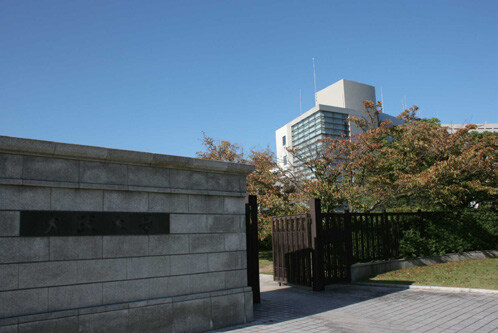
Figure 3: I.S.I.R Osaka University
Literature number: PPS411
