
In this interview Mr. Akutagawa, Executive Director and Mr. Oi, Ph.D., Senior Manager of the Kashima Manufacturing and Quality Technology Department at Eisai, share their experiences with the testing and integration of metal scavengers into their active pharmaceutical ingredient (API) manufacturing process.
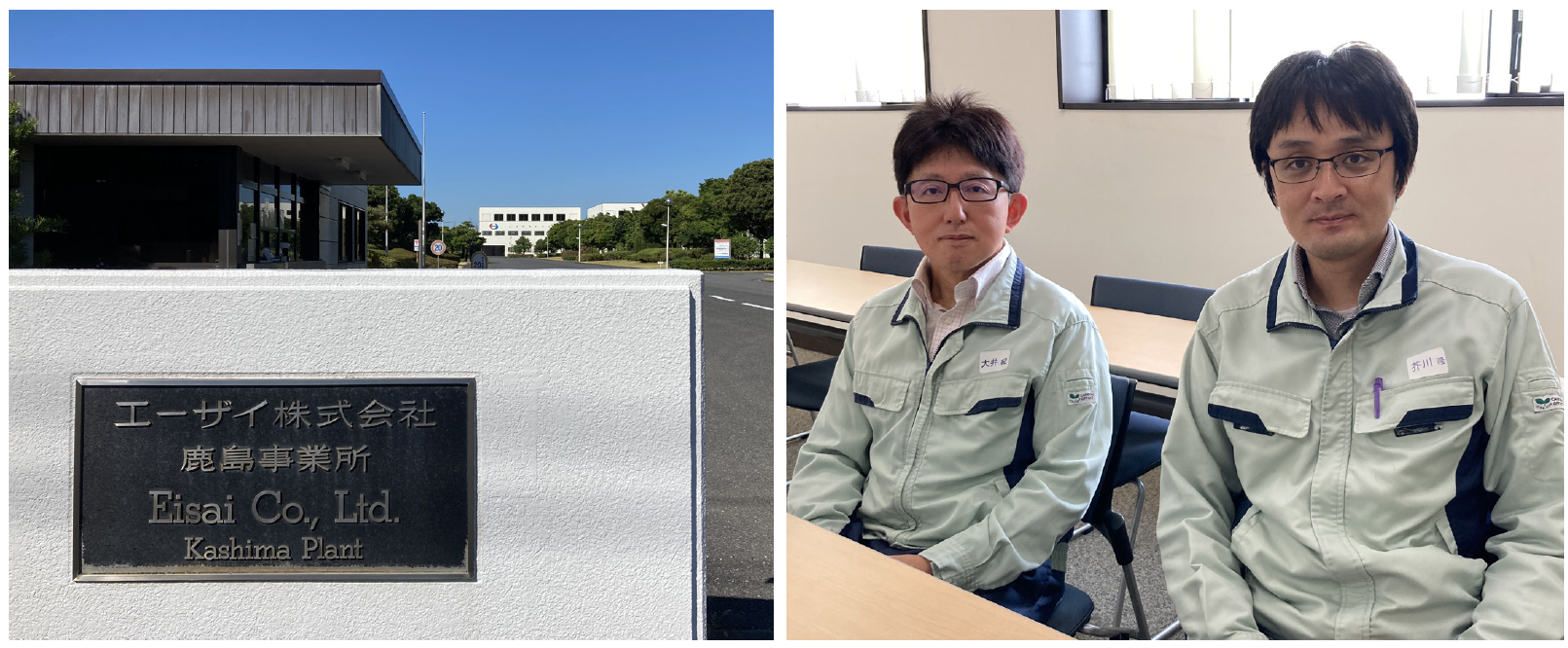 Can you tell us about Eisai's Kashima Manufacturing and Quality Technology Department?
Mr. Akutagawa: The Kashima Plant is involved in the production of active pharmaceutical ingredients (APIs) used to combat a diverse spectrum of diseases. The site has a central role in our research and manufacturing activities for delivering APIs globally.
Our department is tasked with an array of responsibilities, including collaborative efforts with the R&D division to develop novel chemical entities. We also address quality and cost-related challenges in the manufacturing of our commercial drug substances, manage equipment maintenance and engineering, and are involved in planning of our next-generation smart factories.
Mr. Oi: My primary role involves troubleshooting the transition from batch-based procedures obtained during process development to full-scale manufacturing. I also investigate root causes of issues that may arise during commercial manufacturing and implement corrective actions. Our process research focuses on optimizing synthesis processes for the scale-up and manufacturing of new chemical entities.
We also strive to enhance quality and reduce costs through collaborative endeavors with the R&D department, including the development of solutions for commercial production, such as continuous manufacturing. The importance of these activities has increased as the industry has evolved and changed.
You've embarked on a journey to explore the use of metal scavengers in your production. Can you elaborate on this?
Mr. Oi: Our interest in metal scavengers was piqued when we came across a presentation on flow chemistry in API manufacturing at a symposium. Additionally, we found a user interview highlighting ISOLUTE® Si-Thiol metal scavenger on Biotage's website.
Initially, we thought it would be difficult to incorporate metal scavengers into commercial manufacturing due to the challenges associated with modifying already approved
manufacturing protocols, considering regulatory requirements like cGMP. However, as I was involved in a project focused on a new chemical entity, I took on the challenge of developing a new methodology.
In this project, our primary goal was to reduce palladium (Pd) residues in the API to below the allowable limit when establishing the manufacturing process for the candidate molecule. After numerous studies, we discovered that scavengers could efficiently remove Pd, which greatly motivated us to advance our research.
What methods had you previously used to remove palladium (Pd)?
Mr. Oi: Initially, our options were column purification and crystallization. However, column purification, particularly on large-scale, requires the use of equipment that complies with the fire service act, and there are challenges in terms of versatility and scale-up. Crystallization, on the other hand, was less efficient at removing Pd from APIs due to Pd's affinity for heteroatoms, and it was also essential to minimize API loss.
In our case, we attempted to remove Pd using a water-soluble ligand and a liquid-liquid extraction method. Although this method effectively removed Pd, it had a drawback of loss of our target compounds. Disposing of rare metals (Pd) in the aqueous phase also raised environmental concerns.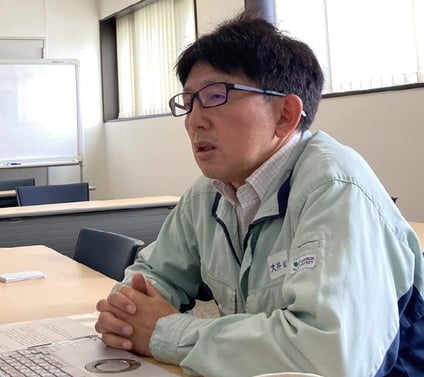
Can you tell us more about your environmental approach in this project?
Mr. Oi: Building an environmentally sustainable society is a key responsibility for our company. One advantage of the methods used in this project was that most of the Pd could theoretically be captured by the scavengers. Since Pd is a rare metal, this method can be recommended as a sustainable method that reduces environmental impact.
However, there are considerations before applying new technologies to commercial manufacturing. In our study, we used a flow system, where the cartridge was filled with
scavengers, instead of the popular batch-stir methods. The final application mode in manufacturing is still under evaluation but other users are also exploring the flow system.
What are the key factors you consider when adopting a new solution for your manufacturing process?
Mr. Oi: Ensuring a stable supply of high-quality pharmaceuticals in compliance with cGMP requirements is paramount. Additionally, securing a reliable source of raw materials with the required quality and quantity is essential. The ability to establish a product quality agreement (PQA) with a manufacturer is another critical factor.
When we introduce new solutions into our processes, we always have concerns about potential contamination to our product. However, in this case, mitigation via a pre-rinsing strategy prior to manufacturing ensured that any trace components wouldn't contaminate our drug substance and was a pivotal factor in our decision to incorporate the ISOLUTE® Si-Thiol to the plant. Furthermore, the competitive nature of the product compared to alternatives influenced our choice.
Do you have plans for further implementation of ISOLUTE® Si-Thiol?
Mr. Oi: We are planning to integrate ISOLUTE® Si-Thiol into our manufacturing process and will soon begin validation for production. Our studies have demonstrated the product's efficacy, and beyond scavenging, we intend to utilize it for various applications such as reaction workup, controlling side reactions, and removing impurities. We are also exploring the incorporation of other scavengers into our processes.
About Eisai
Eisai's Corporate Concept is "to give first thought to patients and people in the daily living domain, and to increase the benefits that health care provides." Under this Concept (also known as human health care hhc Concept), we aim to effectively achieve social good in the form of relieving anxiety over health and reducing health disparities. With a global network of R&D facilities, manufacturing sites and marketing subsidiaries, we strive to create and deliver innovative products to target diseases with high unmet medical needs, with a particular focus in our strategic areas of Neurology and Oncology.
In addition, we demonstrate our commitment to the elimination of neglected tropical diseases (NTDs), which is a target (3.3) of the United Nations Sustainable Development Goals (SDGs), by working on various activities together with global partners.
Literature Number: PPS724
