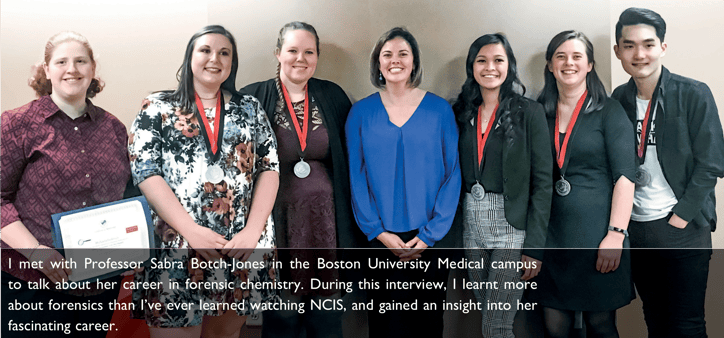
Figure 1: Members of the Botch-Jones Research Group at the BU SoM BMFS Delta Delta Epsilon Honor Society Medallion Ceremony. Left to right: Michaela Federico, Megan Smoker, Courtney McGowan, Sabra Botch-Jones, Erika Phung, Sarah Boyle, Chin Hin (Marco) Chan.
We interviewed Professor Sabra Botch-Jones at Boston University Medical about her career in forensics, eager to learn how she applies her real-life experiences in an academic setting. Sabra Botch-Jones’ team is currently working alongside the Research Triangle Institute (RTI) on a project funded by the National Institute of Justice (NIJ), involving Biotage sample prep cartridges and comparing them to other sample preparation techniques used in forensic toxicology.
Can you describe your area of work?
I started out in post-mortem forensic toxicology, working for the Federal Aviation Administration for the first eight years of my career. I worked primarily on victims of aviation accidents, which includes different types of testing from blood and urine, to tissues, pretty much everything you could collect from the human body. From there, I went to a medical examiner’s office doing more post-mortem forensic toxicology, as well as human performance toxicology, specifically drug-related crimes. I then came to Boston University School of Medicine, almost five years ago, where I now teach courses in forensic toxicology, instrumental analysis, analysis of controlled substances, forensic chemistry, and an advanced chemistry course. I also oversee graduate students interested in forensic chemistry.
How much have you seen the industry change over the last couple of decades?
It’s changed tremendously, especially in the types of compounds we encounter. The biggest effect on my career was when novel psychoactive substances became more prevalent in our casework. We had to figure out what new compounds were there, with very limited knowledge of their chemical makeup.
Also, watching the opioid epidemic occur and change during my career has been eye-opening. As a result, what we test for today has grown significantly, as well as how low of a limit of detection we have to reach.
The importance of liquid chromatography-mass spectrometry became more and more apparent as we have had to deal with the novel psychoactive substances and opioids. Until we figured that out, who knows how many drugs we missed because we didn’t have the technology to analyse with the needed sensitivity. As the number of investigative tools increased for the detection of drugs, such as triple-quads, we can now take a more targeted approach with our improved laboratory capabilities and efficiency.
Your team was chosen by the Department of Justice for this work, how did that come about?
We are partnering with the Research Triangle Institute (RTI) in Raleigh, NC, working with Katherine Bollinger and Nichole Bynum. We have two NIJ funded intra-laboratory research projects developing similar methods, looking at the same or similar compounds or classes of compounds, and comparing our results.
First, we’re looking at the stability of synthetic cannabinoids in human matrices such as blood and urine, and testing them at different time points to understand how they degrade over time. We are looking at factors such as storage temperature, time that has passed, and seeing whether preservatives improve analyte stability. We want to see if we may lose these compounds over time. This work may impact how forensic toxicology laboratories store their samples.
The second project, where we really started getting involved with Biotage, is looking at different sample prep techniques. We’ve been working with liquid-liquid extraction, solid- phase extraction as well as supported liquid extraction and conducting full method validations on each extraction technique and comparing the results. For this project, we are also looking at all the major classes of drugs and all the most common drugs you’d encounter in forensic toxicology: synthetic cannabinoids, benzodiazepines, barbiturates, opioids and more. Basically, we’re trying to make it very broad so we can make these comparisons that encompass a large range of compounds.
In what ways do you think new sample prep technologies can help forensic toxicologists?
In a couple of different ways, one is just by saving time. If you’re doing sample prep it can take up to an hour or even longer depending on the complexity of the approach. You have to go through all the steps, evaporate the samples, even if you have only one, and then get it ready for analysis. If you’re able to cut that in half by eliminating certain steps, that’s just amazing.
Sample prep itself is straightforward, the development and optimization is where it is tricky. Once you have that down and have your steps, it’s fairly easy. Also, automation has to be our future, as there’s only so much that we can produce at a time, and automation will help push and improve laboratory efficiency.
What type of methods are you working on currently?
Currently my research is focused on opioids, barbiturates, benzodiazepines, a THC method that includes select synthetic cannabinoids, as well as a method that has 39 different compounds that covers several classes of drugs including amphetamines, cocaine, opioids, antidepressants and more. In addition to that, I have a fentanyl and cannabidiol, THC, and metabolites study as well.
What affects your ability to develop a method, negatively or positively?
Sometimes if it’s a new compound or a new group of compounds, or if I’m using a new technique, it can be very challenging. Trying to determine what the ideal conditions are for sample prep to start with is time consuming. At the same time, we’ve overcome that by working with vendors who know their products the best, they’re able to help us select the best product for an particular application. If we’re successful then they’re successful. I hope that I’ve taught our students to realize that too and utilize vendor support.
On the positive side, until this NIJ project, there were techniques that I hadn’t utilized before. This project gave me the opportunity to use them. One of those was supported liquid extraction, and the other was the phospholipid depletion. They’re both quick, effective techniques for removing enough matrix components so that you don’t have any adverse effects while getting your sample on the instrument faster than ever. Knowing these techniques are out there, and they’re timesaving capabilities, is really important.
What is the most important aspect of the sample prep step in your work?
Recovery, it’s always going to come down to that. How much analyte you’re able to see in the end, followed by sensitivity, the ability to reach low LOD’s, and probably followed by matrix removal.
What is your opinion of the offerings currently available for sample preparation? How do you choose the product to use in your lab?
It’s almost too much! There are a lot of options out there for scientists to choose from. Honestly, working with the vendors is the best option. I’ll tell them my needs and then they help me pick the best tool for my project.
Now for this project with the National Institute of Justice, did they pick out tools or did you?
We proposed that “we’re going to evaluate different types of sample preparation techniques for biological samples” and we kept this fairly broad. We wanted to compare SPEs, SLE, LLEs, etc. We didn’t specify which vendors, but we knew going in we were going to perform head-to-head comparisons and targets a wide range of drugs.
So then how was Biotage picked out of the bunch?
Great question. So, this was my first experience with Biotage. I’d heard of you, but in my professional experience I hadn’t worked with your products yet. However, Nichole and Katherine had worked with Biotage. As we were gathering information for the NIJ proposal, we literally went booth to booth at SOFT 2017 asking vendors for literature. We also recently did it at MATT 2019.
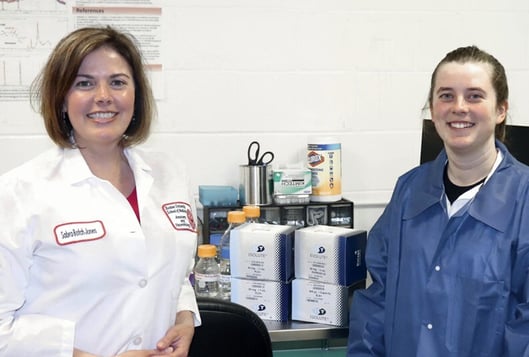
Figure 2: “Our students are the hands of the research.” Professor Sabra Botch-Jones currently has four students on the sample prep research, and another group on a synthesis project. On top of all the classes she teaches.
How do your results compare so far with those obtained at RTI?
Good question! As we complete the sample preparation validations in blood and urine we discuss it with the team there, but we haven’t yet put everything side-by-side. It’s just a massive amount of data, it’s ridiculous.
How much do students get involved in your research?
Oh, all the time. They’re the hands of the research. I’ll get in there with them, but they’re the ones doing the work and I am very proud of the work they do. Jillian and Lynn (Biotage Technical Representatives) came and did a forensic seminar last fall which is still referenced among the students. All students here have worked with Biotage at some point or another. I have four primary students on the sample prep research and another three on the synthetic cannabinoid project, but during the process we enlisted many more to help out. Even some whom had chosen DNA as their career path or other disciplines, but wanted to gain additional laboratory skills. All of the students have contributed in some way. They’ve validated methods in blood, urine, and we are moving on to oral fluid and this experience has been huge for their job opportunities moving forward.
How long does it take before new students are productive?
It depends on their individual backgrounds. I currently have a couple students who are first year students. Typically, students get through their first semester or two before they begin research, and then it’s just a few months before they “get it”. They use references, such as the Biotage Oral Fluid White Paper, to help them learn how to use the tools they have available to them.
What is next on your wish list?
I’d love to explore automation such as to be able to evaluate the 48 or 96 well plate systems and where many of the sample preparation steps are automated. I think it’s possible and although it may take some time, I would like to explore automation for my research lab and for the students educational and research experience.
Compounds Run on ISOLUTE® SLE+ 1 mL Cartridges
|
Category |
Analyte |
|---|---|
|
Synthetic Cannabinoids |
4-cyano CUMYL-BUTINACA |
|
ADB-PINACA |
|
|
EMB-FUBINACA |
|
|
JWH-250 |
|
|
MO-CHMINACA |
|
|
5-fluoro-3,5-AB-PFUPPYCA |
|
|
5-fluoro ADB-PINACA |
|
|
APP-PICA |
|
|
CUMYL-THPINACA |
|
|
PB-22 |
|
|
XLR11 |
|
|
5-fluoro PY-PINACA |
|
|
MDMB-FUBICA |
|
|
MEP-CHMINCA |
|
|
NM2201 |
|
|
RCS-8 |
|
|
UR144 |
|
|
THC / Synthetic Cannabinoids |
Tetrahydrocannabinol (THC) |
|
11-Hydroxy-Δ9-THC |
|
|
11-nor-9-Carboxy-Δ9-THC |
|
|
AB-FUBINACA |
|
|
AB-FUBINACA-metabolite 3 |
|
|
AB-PINACA |
|
|
THC-d3 |
|
|
11-Hydroxy-Δ9-THC-d3 |
|
|
11-nor-9-Carboxy-Δ9-THC-d3 |
|
|
Benzodiazepines |
Alprazolam |
|
Alpha-hydroxyalprazolam |
|
|
Clonazepam |
|
|
7-Aminoclonazepam |
|
|
Diazepam |
|
|
Etizolam |
|
|
Oxazepam |
|
|
Alpha-hydroxyalprazolam-d5 |
|
|
Clonazepam-d5 |
|
|
Diazepam-d5 |
|
|
Etizolam-d5 |
|
|
Barbiturates |
Amobarbital |
|
Butalbital |
|
|
Phenobarbital |
|
|
Amobarbital-d5 |
|
|
Butalbital-d5 |
|
|
Phenobarbital-d5 |
|
|
Cannabidiol/THC Oral Fluid Study |
Tetrahydrocannabinol (THC) |
|
11-Hydroxy-Δ9-THC |
|
|
11-nor-9-Carboxy-Δ9-THC |
|
|
Cannabidiol |
|
|
THC-d3 |
|
|
11-Hydroxy-Δ9-THC-d3 |
|
|
Combined Analysis |
Codeine |
|
Methadone |
|
|
Morphine |
|
|
Fentanyl |
|
|
Oxycodone |
|
|
MDMA |
|
|
MDEA |
|
|
MDA |
|
|
Benzoylecgonine |
|
|
Cocaine |
|
|
Lidocaine |
|
|
25I-NBOMe |
|
|
BUPRENORPHINE |
|
|
6-MAM |
|
|
Amphetamine |
|
|
Methamphetamine |
|
|
Amitriptyline |
|
|
Citalopram |
|
|
Fluoxetine |
|
|
Trazodone |
|
|
Alpha-PVP |
|
|
Fluoxetine-d6 |
|
|
Trazodone-d6 |
|
|
Codeine-d6 |
|
|
Methadone-d9 |
|
|
Morphine-d6 |
|
|
Amphetamine-d6 |
|
|
Methamphetamine-d5 |
|
|
MDA-d5 |
|
|
MDMA-d5 |
|
|
Morphine-d6 |
|
|
Amitriptyline-d3 |
|
|
Citalopram-d6 |
|
|
LSD |
|
|
PCP |
|
|
LSD-d3 |
|
|
Ethylone-d5 |
|
|
PCP-d5 |
Literature number: PPS569
