
Introduction
Sample preparation plays a critical role in drugs of abuse (DoA) and cannabis testing workflows. Due to the complex nature of biological matrices, such as whole blood, urine, oral fluid, and hair, matrix interferences need to be removed prior to analysis, typically by GC-MS/MS or LC-MS/MS.
This paper discusses the most common challenges encountered during solvent evaporation for drugs of abuse and cannabis panels, highlights potential sources of analyte loss, and provides practical recommendations for optimizing evaporation conditions to maximize recovery and improve method robustness.
Phospholipids and other co-extractives that suppress ionization are common matrix interferences that can mask peaks of interest and significantly reduce sensitivity. Repeated injections of dirty matrix can begin to clog LC columns or contaminate MS systems, resulting in time-consuming and costly maintenance.
Beyond matrix clean-up, sample preparation often serves as a concentration step. Large sample volumes combined with low analyte concentrations can make it difficult for direct injection methods to achieve the sensitivity required to detect the analytes of interest. As regulations tighten, lower limits of detection (LODs) and limits of quantitation (LOQs) are constantly required. Analyzing analytes at low pg/mL or ng/mL concentrations requires efficient sample clean-up to increase the amount of analyte introduced into the analytical system.
Sample preparation can also be used for solvent exchange. Both GC and LC analyses require specific solvents for injection, therefore, a sample must be transferred from the matrix into a suitable solvent. This can be as simple as evaporation and reconstitution or may require additional techniques such as solid phase extraction (SPE).
When developing a sample preparation method, it is vital to assess all aspects of the method for potential analyte losses or sources of variability. An effective sample preparation method should maximize analyte recovery while removing as many matrix interferences as possible. Key performance parameters, including recovery, matrix effects (or matrix factors) and relative standard deviation (RSD), should be assessed to ensure the method is accurate, precise, and fit for purpose.
One aspect of sample preparation method development that is often overlooked is solvent evaporation. Although frequently considered a routine step, evaporation can have a significant impact on analyte recovery and overall method performance if not carefully optimized.
Evaporation may be included in a workflow for several reasons. It is commonly used for solvent exchange, where the sample must be transferred into a solvent compatible with the analytical technique or required for loading onto an SPE sorbent. It is also used to concentrate analytes following extraction. For example, when larger elution volumes are used during SPE, evaporating the solvent and reconstituting the sample in a smaller volume can significantly improve analytical sensitivity.
A variety of evaporation techniques are available, including heating, nitrogen blowdown, centrifugal vacuum evaporation, or combinations of these approaches.
However, the conditions used during evaporation can expose analytes to elevated temperatures, prolonged drying times, oxidation, or losses associated with volatility or adsorption, all of which can negatively affect recovery and reproducibility.
Evaluating evaporation for drugs of abuse and cannabis panels
In this study, solvent evaporation was performed using the TurboVap® 96 Dual, a nitrogen blowdown evaporator designed for 96-well plates. We focused on the evaporation and reconstitution of a panel of 54 commonly encountered drugs of abuse compounds, including cocaine and its metabolites, opiates, benzodiazepines, antidepressants, and amphetamines. Due to the varying polarity and chemical properties of THC and its metabolites, they were evaluated separately, as they often require different SPE elution solvents and evaporation conditions.
For the drugs of abuse panel, we assessed evaporation of a typical elution solvent used during mixed-mode cation exchange solid phase extraction. This solvent consisted of dichloromethane: isopropanol: ammonium hydroxide (80:20:2, v/v/v). For the cannabis panel, we used a hexane: ethyl acetate (80:20, v/v) solution. In both cases, 1 mL of the elution solvent was evaporated prior to reconstitution.
The drugs of abuse and cannabis panels were spiked at 10 ng/mL into the relevant solvent composition and evaporated to dryness. Blank solvents were also evaporated and spiked with the equivalent volume of spiking solution post-evaporation. Reconstitution recovery was calculated by comparing the peak areas of the evaporated spikes against the peak area of the post-evaporation spikes.
When carrying out SPE method development, one of the key variables to investigate is the elution solvent. The selected elution solvent should also be evaluated in an evaporation study to ensure that analyte losses during evaporation are minimal. Different solvent compositions were not evaluated in this paper but should be assessed during method development if required.
Optimizing reconstitution for analyte recovery
Analyte solubility in the chosen reconstitution solvent is critical for maximizing recovery and ensuring accurate quantitation. This can be more difficult when analyzing large panels of analytes with a range of polar and non-polar solubilities. The selected reconstitution solvent needs to be suitable for injection onto the LC system and provide efficient analyte recovery from the collection vessel.
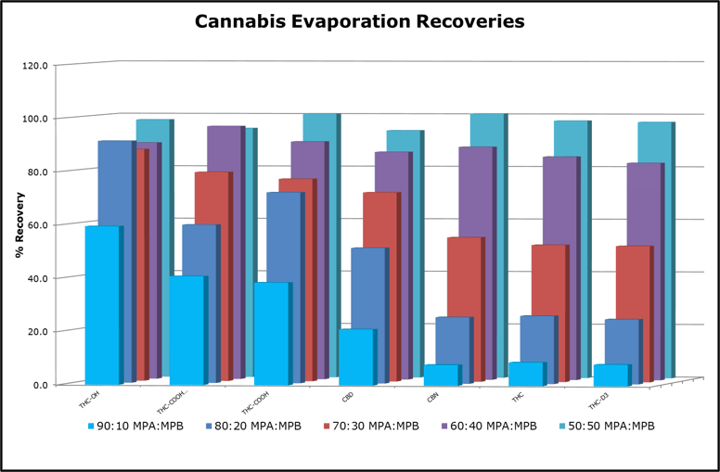 Figure 1. Recovery graph comparing different reconstitution solvent compositions.
Figure 1 shows the effects of changing the aqueous vs organic content in the reconstitution solvent for the panel of cannabis compounds. To determine the most appropriate concentration of organic solvent to use in the reconstitution solvent, the LogP of each compound of interest should be considered. LogP is the logarithm of the partition coefficient, which is a measure of how well a compound dissolves in octanol compared with water. A higher LogP value indicates a greater tendency of partitioning into octanol rather than water, indicating a more lipophilic compound.
LogP measures the partitioning of the neutral form of a compound, whereas LogD is pH dependent and measures the partitioning of all forms of a compound, both neutral and charged. Using the LogD value can therefore help determine the solubility of compounds of interest at a given pH relevant to the chosen reconstitution solvent.
The parent cannabinoids, THC, cannabinol, and cannabidiol, are hydrophobic compounds with LogP values of approximately 5.9, 6.4, and 6.3, respectively. They have very poor solubility in water but good solubility in organic solvents, such as methanol. The primary THC metabolites are also hydrophobic, with approximate LogP values of 4.6 for 11-hydroxy-THC (THC-OH) and 5.1 for 11-nor-9-carboxy-THC (THC-COOH); however, they have slightly better water solubility than the parent compounds. Mobile phase A (MPA) refers to the aqueous mobile phase used on the LC system, and mobile phase B (MPB) refers to the organic mobile phase used. In this experiment, MPA is 0.1% formic acid in water and MPB is 0.1% formic acid in methanol.
Due to the poor water solubility of the cannabis panel, increasing the organic content in the reconstitution solvent from 10% to 50% drastically changes the recovery of the analytes from the glass vial. Recoveries of <20% for parent compounds in a 90% aqueous solvent show poor recoveries, indicating that most of the analyte remains insufficiently solubilized in the reconstitution solvent. This affects the overall recovery and sensitivity of the method. Increasing to 50% organic content provided reconstitution recovery close to 100% for all the analytes of interest. The relative standard deviations (RSDs) were all below 6%, showing good reproducibility using the 50:50 (v/v) MPA:MPB reconstitution solvent.
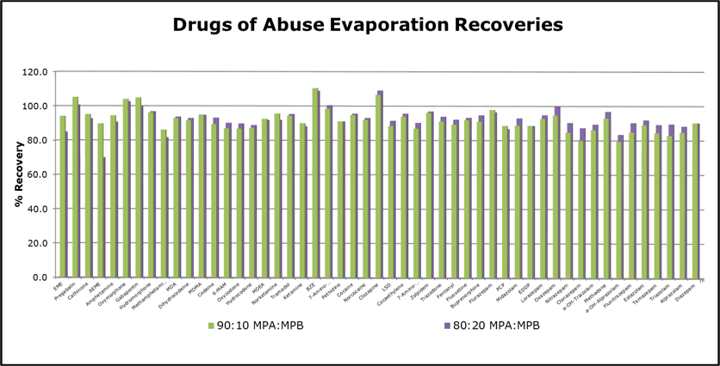
Figure 2. Recovery graph comparing different reconstitution solvent compositions for a DoA panel, in LC-MS/MS elution order.
Figure 2 shows a large drugs of abuse panel with a range of solubilities. At 10% organic concentration, there is good reconstitution of the earlier eluting compounds with a reduction in recoveries towards the latest eluting compounds. This is reversed when the organic concentration is increased to 20%. The trend shows better solubility in the 80:20 (v/v) MPA:MPB solvent for the compounds that elute in the higher organic concentration from the LC column.
This shows the importance of assessing analyte solubilities when determining the reconstitution solvent, especially when analyzing a large panel of compounds. A solvent that gives good recoveries for one compound may not be suitable for another compound, so a balance that provides acceptable recovery across for the entire panel be considered.
Managing non-specific binding during reconstitution
For LC-MS/MS injection from an autosampler, samples must be collected or transferred to a vial or plate ready for injection. However, the collection vessel used following sample preparation technique can vary. Typical collection vessels include vials, tubes or plates made from glass or different types of plastic. The chosen vessel can depend on the elution volumes, collection racks available or the ability to reconstitute the analytes from the vessel material. Depending on the manufacturing process and materials used, vials and plates can vary in cleanliness and surface properties. Residual contaminants may cause ion suppression or interfere with analyte detection, while non-specific binding of analytes to certain materials can reduce recovery by making the analytes more difficult to reconstitute from the collection vessels.
Non-specific binding (NSB) refers to the unintentional interaction of analytes with the surface of the collection vessel, such as glass or plastic. The extent of NSB depends on both the properties of the analytes and the surface material. Common mechanisms include hydrophobic interactions, where non-polar analytes bind to the surface and do not interact with aqueous solvents, or ionic interactions, where charged analytes bind to oppositely charged sites on the collection vessel surface.
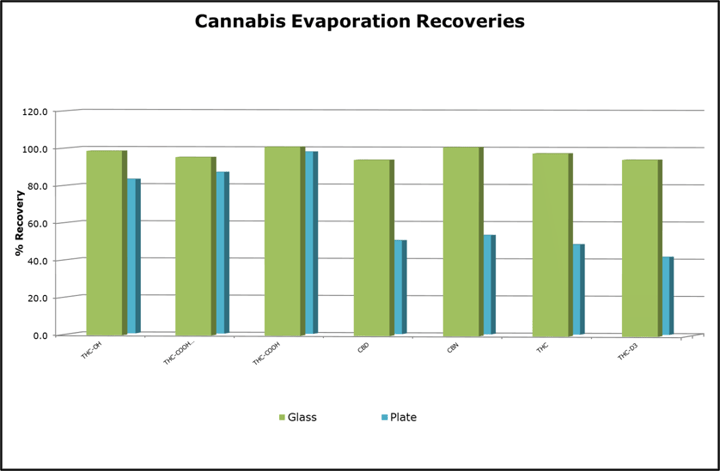
Figure 3. Recovery graph comparing reconstitution of cannabis panel using 50:50 (v/v) MPA:MPB in a glass vial and plastic plate.
In the cannabis panel, the recoveries of the parent compounds were greatly affected by the use of a plastic plate. NSB to the plastic surface resulted in a loss of approximately 50% recoveries, despite using a 50% organic reconstitution solution. This can have a substantial impact on the sample preparation method when assessing if fit for purpose. Minimizing the effects of NSB is vital to improving overall method performance. There are several factors to consider when assessing NSB:
1. Choosing the right collection vessel
One of the simplest ways to assess non-specific binding is to compare different collection vessel materials. As mentioned above, different analytes can exhibit varying degrees of NSB depending on the collection vessel material. In the cannabis panel, switching from glass to plastic collection vessels resulted in a significant loss of recovery. Therefore, when possible, glass collection vessels should be considered to minimize NSB. In 96-well plate workflows, plastic collection plates are often used within the laboratory for practical and economic reasons, making the use of glass collection vessels less feasible. Although glass inserts can help minimize non-specific binding, they add complexity and increase the consumable cost per sample.
Not all plastic and glass collection vessels are manufactured to the same standard. As a result, the quality, cleanliness and surface properties of vials and plates can vary between suppliers. Residual contaminants may cause ion suppression or interfere with analyte detection, while differences in material composition can also affect the extent of NSB.
2. Optimizing solvent composition
Analyte solubility in the reconstitution solvent can be reassessed to improve recoveries from the plastic collection plate. Using the cannabis panel as an example, the more hydrophobic analytes that exhibit more NSB to the plastic collection plate. Therefore, the need to increase the organic concentration in the reconstitution solvent should be assessed.
As best practice, using a reconstitution solvent that is similar to the starting conditions of the LC method will help improve chromatography. In the case of the cannabis panel, the LC starting conditions are set to 50:50 MPA (0.1% formic acid in water):MPB (0.1% formic acid in methanol). Therefore, the reconstitution solvent should be selected to remain reasonably close to the LC starting conditions. This will be beneficial by avoiding a solvent mismatch upon injection.
A solvent mismatch occurs when an injection solvent elution strength varies significantly from the mobile phase starting conditions. This is most often seen when injecting a strong organic solution onto highly aqueous conditions. Using THC-OH as an example, the strong solvent effects are evident in the chromatographic peak shape.
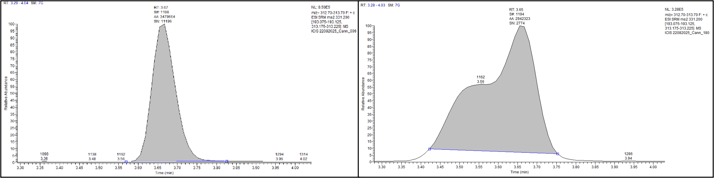
Figure 4. Chromatogram comparison of 10µL injection of 50:50 MPA:MPB (left) and 100% MPB (right) THC-OH.
Figure 4 displays an injection of 10 µL into the 50:50 (v/v) MPA:MPB starting conditions at a flow rate of 0.4 mL/min. Injecting a reconstitution solution comprising of 50% MPA and 50% MPB produced a symmetrical peak shape with a suitable peak width. Maximum signal was detected at 8.50e5, representing good sensitivity. In contrast, an injection solvent comprising 100% MPB produced poor peak shape. Peak splitting occurred, causing a larger peak width and a decrease in signal to 3.28e5.
Poor chromatography occurs because the sample is injected in a strong organic solvent (100% organic) into a mobile phase containing 50% aqueous. This solvent mismatch causes a proportion of the analyte to migrate further down the column before partitioning into the stationary phase. This promotes band broadening due to the inefficient mass transfer between the injection solvent, mobile phase and stationary phase, resulting in asymmetrical peak shapes. Increasing the aqueous content in the reconstitution solvent closer to 50% improves the partitioning of the analytes of interest into the non-polar C18 stationary phase, reducing band broadening and improving peak shape, resulting in symmetrical and sharp peaks.
To compensate for chromatographic issues when injecting solvents with high organic content, reducing the injection volume can greatly help. By injecting a smaller volume of organic solvent onto the highly aqueous mobile phase, the effects of the strong elution solvent will be reduced displaying improved peak shape. However, care must be taken to consider the decrease in detector response associated with a reduced injection volume. Reducing the injection volume by a factor of ten results in an approximately tenfold decrease in detector response, reducing the signal to 7.71e4. At the same time, improvements in peak sharpness may partially compensate for the lower injected sample volume by increasing the signal-to-noise (S/N) ratio, despite the lower absolute signal. It is therefore important to ensure that the method's limit of detection (LOD) and limit of quantification (LOQ) remain suitable for the intended application.
The composition of the reconstitution solvent is a major factor in maintaining good chromatographic performance. Common LC mobile phase solvents, such as methanol, acetonitrile, and isopropanol (IPA), differ in elution strength and should be selected carefully, as they can affect peak shape, retention time, and chromatographic resolution. They also react differently when mixed with water. Mixing methanol and water is an exothermic process, meaning heat is produced. Whereas mixing acetonitrile and water is an endothermic process, where heat is absorbed. This change in temperature can potentially be an issue for temperature-sensitive analytes during all aspects of a sample preparation method, including reconstitution and LC-MS/MS analysis. Injecting a 100% IPA solution onto an LC method that is 50% methanol causes peak fronting for THC-OH. Despite the detector response being slightly improved at 1.88e5, the peak distortion indicates that using a different organic solvent is a poor choice.
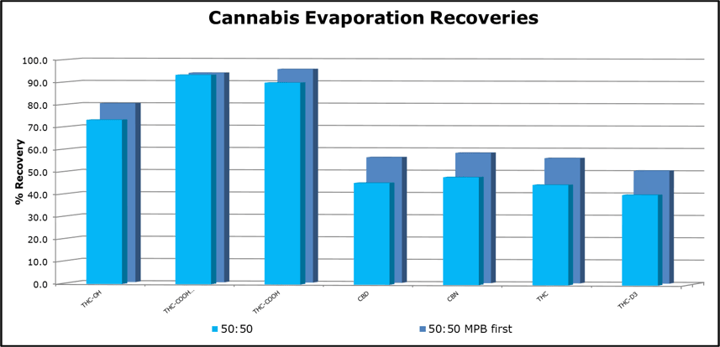
Figure 5. Recovery comparison of 50:50 MPA:MPB vs MPB first with a MPA dilution.
A method that can improve recoveries for the non-polar analytes of interest while maintaining a final reconstitution solvent containing 50% aqueous solution is to initially reconstitute the dried extract in 100% organic solvent and vortex thoroughly to ensure complete dissolution of the analytes. As demonstrated earlier in the study, the analytes are soluble in a 50:50 aqueous:organic reconstitution solvent. This suggests that the improved recoveries are unlikely to result from enhanced solubility alone. Instead, the initial reconstitution in pure organic solvent may reduce losses arising from NSB to the plastic collection plate during dissolution. The extract can then be diluted with an aqueous solution to achieve a final reconstitution solvent compatible with the chromatographic method. Using this approach, recoveries for the cannabis panel increased by 10% compared with direct reconstitution in the final aqueous/organic solvent mixture (Figure 5).
A 100 µL organic solution of 0.1% formic acid in methanol was added to each well and vortexed for 5 minutes. This high-organic solvent is preferred by the non-polar analytes and helps with the poor solubility in water. A further 100 µL of 0.1% formic acid in water was added. This gave a final solution of 50% aqueous and 50% organic, which is suited to the starting LC conditions.
Additional organic solvents were also evaluated. The non-polar cannabis analytes showed good solubility in 100% IPA, prompting further investigation into the use of IPA as the reconstitution solvent. Both the addition of small volumes of IPA and the substitution of methanol with IPA as the organic component of the reconstitution solvent were assessed.
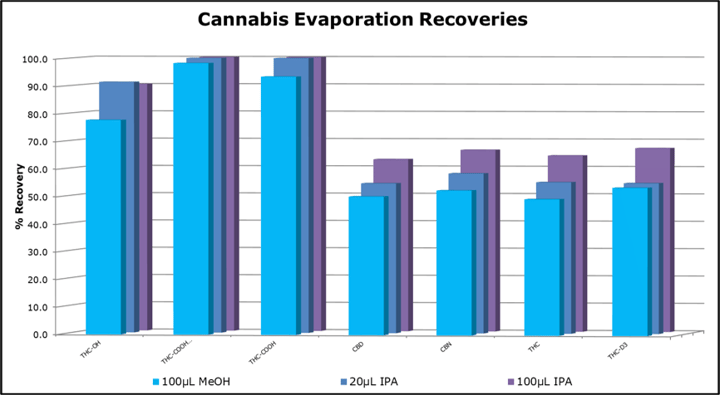
Figure 6. Recovery comparison of initial organic reconstitution followed by aqueous dilution.
Figure 6 compares the effect of different organic solvents used as the initial reconstitution solvent. All reconstitution solvents contained 0.1% formic acid and vortexed for 5 minutes before diluting with 0.1% formic acid in water. The exception was the 20 µL IPA, which was diluted further with 80 µL methanol containing 0.1% formic acid prior to aqueous dilution.
The use of IPA as an alternative to methanol increased recoveries by more than 10% for the non-polar parent compounds. Good chromatographic peak shapes were displayed demonstrating no chromatographic issues using a 50% IPA solution for injection.
3. Using keeper solvents to minimize analyte loss
A keeper solvent is a high-boiling point solvent that is added to the samples prior to evaporation to minimize the effects of NSB on the collection vessel. As the primary elution solvent evaporates, the analytes remain dissolved in the keeper solvent, reducing their contact with the vessel surface and therefore the likelihood of adsorption.
Keeper solvents are typically added in small volumes, and the minimum effective volume should be determined during method development to minimize any adverse effects on chromatographic performance. Following evaporation, the remaining keeper solvent is diluted with the chosen reconstitution solvent before injection. A typical solvent used is ethylene glycol which has a boiling point of approximately 200 °C.
4. Alter pH
pH control is very important during all stages of the sample preparation workflow, from sample pre-treatment all the way through to LC methods. Understanding and applying the2 pH unit rule can help to manipulate an analyte’s ionization state to benefit sample clean-up.
The 2 pH unit rule is based on an analyte’s pKa, the pH at which an analyte is 50% ionized and 50% un-ionized. Altering the solvent pH by 2 units above or below the pKa shifts the equilibrium so that the analyte exists almost entirely in a single ionization state (typically >99% ionized or >99% un-ionized).
Table 1. Example of an acidic analyte with a pKa of 4 and the effect of pH on charge state.
|
pH |
% free acid (uncharged) |
% dissociated (charged) |
|
2.0 |
99.5 |
0.5 |
|
3.0 |
95 |
5 |
|
pKa = 4.0 |
50 |
50 |
|
5.0 |
5 |
95 |
|
6.0 |
0.5 |
99.5 |
In the example of the acidic analyte in Table 1, adjusting the pH to 2 units below its pKa of 4 results in the analyte existing almost entirely in its un-ionized form, making it more hydrophobic. This can be beneficial for retention during SPE when non-polar retention mechanisms are used, but can cause NSB issues during evaporation as the analyte becomes less water-soluble, resulting in increased difficulty in solubilization in a highly aqueous reconstitution solvent.
Increasing the pH 2 units above the pKa of 4, results in the analyte existing almost entirely in its ionized form. This is beneficial when using ion-exchange SPE, as the charged analytes will be retained strongly on the SPE bed, allowing more aggressive wash steps to remove matrix interferences. In relation to NSB, this can also be beneficial, as the analyte is more polar and can prefer a more aqueous solution.
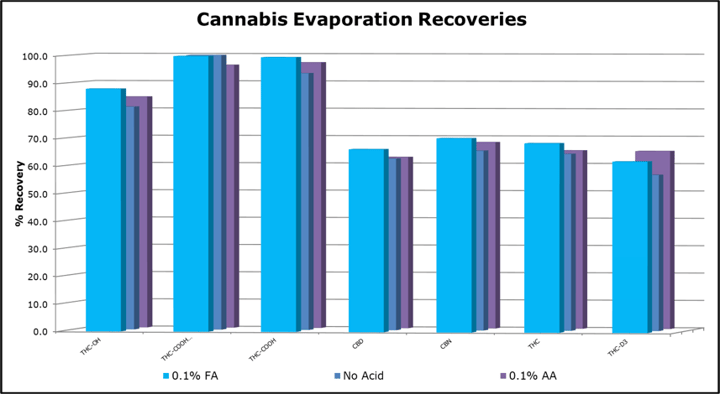
Figure 7. Recovery comparison of acid content in reconstitution solvent.
With regard to the cannabis panel shown in Figure 7, very few differences were detected when changing the acid content of the reconstitution solvent, including the use of acetic acid as an alternative.
Minimizing losses of volatile analytes
The use of volatile solvents during sample preparation can reduce evaporation times and improve workflow efficiency. However, methods involving volatile analytes require careful optimization, as these compounds may be lost during evaporation, leading to reduced recovery. Therefore, it is vital that this is investigated during sample evaporation steps.
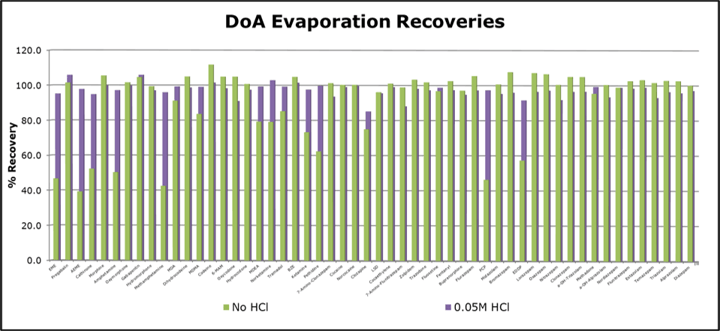
Figure 8. Recovery comparison of acid content in sample prior to evaporation.
Adding acid to the sample prior to evaporation can significantly reduce evaporation losses relating to basic volatile analytes. In the example in Figure 8, the use of 100 µL of a 0.05 M hydrochloric acid (HCl) in methanol solution was used. Recovery of volatile analytes, such as amphetamine, increased from 50% up to near 100% with the introduction of the acid. Under basic conditions, amphetamine is present mostly as the free base. The free-base form is more volatile than its salt form. The addition of a small volume of HCl to the elution solvent prior to evaporation can convert the free base into amphetamine hydrochloride by protonating the amine group. This ionic salt is significantly less volatile than the free base which results in a reduction in evaporative losses.
Finding the right evaporation temperature
Another important factor in minimizing analyte losses during evaporation is temperature control. Although increasing the evaporation temperature reduces drying time and improves workflow efficiency, it can also increase the risk of analyte loss, particularly for volatile compounds. Therefore, the optimum evaporation temperature should be assessed during method development.
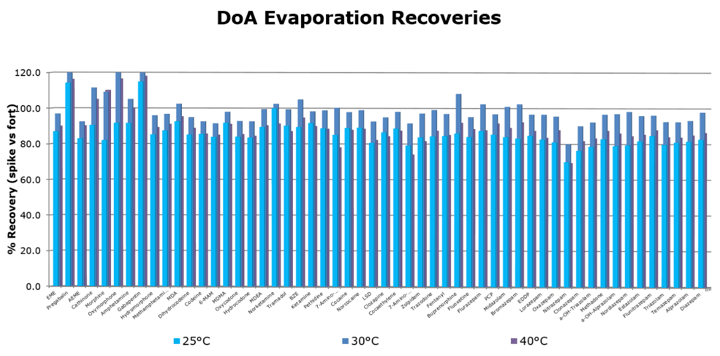
Figure 9. Effects of temperature of nitrogen flow and plate temperature on DoA panel recoveries.
On the TurboVap® 96 Dual, both the nitrogen gas flow and the plate temperature can be heated independently. For the drugs of abuse panel, setting both temperatures to 30 °C gave optimum results for the entire panel. Increasing both temperatures to 40 °C resulted in a loss of approximately 10% recoveries for every analyte and evaporating at room temperature also resulted in a loss in recoveries, as shown in Figure 9.
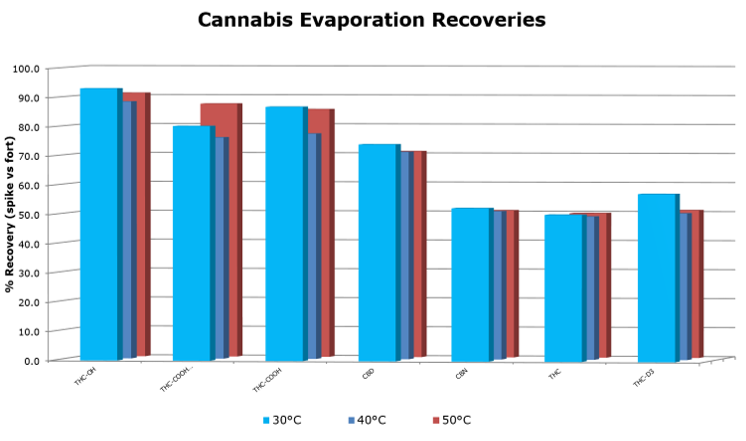 Figure 10. Effects of temperature of nitrogen flow and plate temperature on cannabis panel recoveries.
Alternatively, increasing the temperature of both nitrogen and gas flow for the cannabis panel improved or had little effect on analyte recoveries, as shown in Figure 10. Therefore, increasing the temperature to 50 °C can improve the efficiency of the evaporation method.
Optimizing reconstitution volume
The volume of reconstitution solvent is an important consideration, as it must be sufficient to fully dissolve the analytes of interest while remaining as low as possible to maximize analytical sensitivity. Increasing the reconstitution volume can improve analyte recovery by ensuring that there is sufficient solvent to completely dissolve the analytes from the collection vessel. However, the surface area of the vessel is also an important parameter to be considered. A larger surface area can increase analyte deposition and adsorption onto the vessel walls, which can potentially affect analyte recovery and reproducibility. Optimization of vessel design and surface area can therefore help to minimize analyte losses and ensure efficient dissolution in the reconstitution solvent.
Any increase in reconstitution solvent volume must be balanced against the potential reduction in sensitivity caused by sample dilution. For methods requiring low limits of detection (LODs) and limits of quantification (LOQs), it is essential to ensure that the chosen reconstitution volume still provides adequate detector response for reliable quantification.
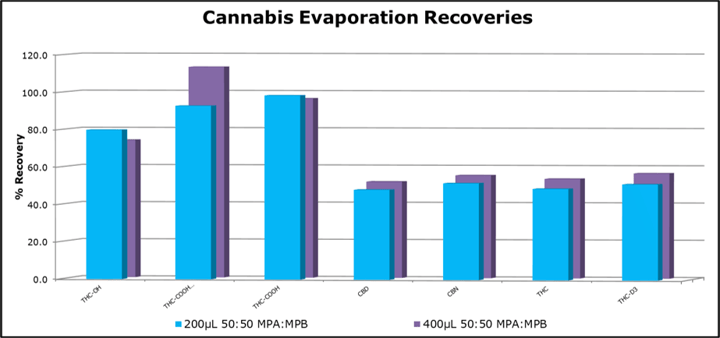
Figure 11. Recovery comparison of reconstitution volume on cannabis panel.
As shown in Figure 11, for the cannabis panel, only slight improvements in recovery were detected when increasing the reconstitution volume from 200 µL to 400 µL. However, doubling the reconstitution volume reduced the analyte concentration by half in the standards, leading to an approximately 50% decrease in detector response. This loss in sensitivity can be partially compensated for by increasing the injection volume when small injection volumes are used. In this study, however, a reconstitution volume of 200 µL was selected to maintain analytical sensitivity while avoiding injection volumes greater than 10 µL on the LC column.
Key considerations for robust evaporation workflows
Solvent evaporation and reconstitution are often considered routine steps in LC-MS/MS sample preparation, yet they can have a significant impact on analyte recovery, reproducibility, chromatographic performance, and overall method sensitivity. As demonstrated throughout this study, factors including reconstitution solvent composition, collection vessel material, non-specific binding, pH, evaporation temperature, and reconstitution volume all influence method performance and should be systematically evaluated during method development.
There is no universal evaporation strategy that suits every application. Instead, evaporation conditions should be optimized according to the physicochemical properties of the analytes and the requirements of the analytical workflow. While volatile basic drugs benefit from acidification prior to evaporation and carefully controlled temperatures, hydrophobic cannabinoids require particular attention to solvent composition and non-specific binding to maximize recovery.
By taking a systematic approach to evaporation and reconstitution optimization, laboratories can significantly improve analyte recovery, minimize variability and maximize LC-MS/MS sensitivity. Although often overlooked, these simple optimization steps can transform an otherwise acceptable method into a robust, reproducible workflow suitable for routine analytical testing.
Acknowledgements
Written by Thomas Smith, EMEA Applications Laboratory Team Leader at Biotage.
Literature number: WP04
