
Introduction
Adeno-associated viruses (AAVs) have emerged as one of the leading vectors for gene therapy, valued for their favorable safety profile, ability to mediate long-term gene expression in non-dividing cells, and their broad applicability across therapeutic areas.
Despite their therapeutic promise, challenges remain that limit the use of AAVs in drug development. Manufacturing is complex and expensive and often struggles to meet the scale needed for late-stage and commercial production. In addition, naturally occurring serotypes often have limited tissue selectivity. This can make delivery difficult, require high dosing, and can cause unintended clinical side effects.
Capsid engineering is central to improving tropism, yield, and manufacturability of AAV vectors. These efforts often require parallel screening of many capsid variants to assess desired properties. As screening platforms expand, the purification of these variants can become a bottleneck, highlighting a need for a high-throughput, reproducible, and automation-compatible purification solution. Biotage AAVX PhyTip® columns are a tip-based chromatography platform designed to support efficient, automation-friendly purification of biomolecules and are well suited for evaluating engineered AAV capsid variants.
PhyTip® columns offer advantages over other commonly used automated platforms for AAV purification. Filter plate-based approaches may be associated with loss of AAV titers, can be challenged by the viscosity of AAV lysates, and can expose samples to strong vacuum pressures. RoboColumns can be constrained by throughput and automation compatibility depending on the workflow configuration and may increase sample consumption due to the larger resin volume of the format. Magnetic bead-based methods, such as Dynabeads®, may result in increased sample loss, lower recovery, and more dilute eluates compared to other platforms, often requiring additional concentration steps before downstream analysis. In contrast, PhyTip® columns enable high-throughput purification of viscous AAV samples using lower feed volumes while delivering high recovery, excellent reproducibility, and automation-ready workflows. In addition, low elution volumes generate concentrated eluates that are well suited for common AAV downstream analytical assays such as qPCR, ELISA, and DLS.
As part of GeneNova 1, a Swedish gene therapy consortium focused on advancing AAV development workflows, collaborators at KTH Royal Institute of Technology evaluated whether AAVX PhyTip® columns could support purification of engineered AAV capsid variants generated in two independent capsid engineering studies: (1) AAV2/AAV8 chimeras designed to improve upstream titers and promote AAV secretion into the cell supernatant, and (2) AAV-affibody constructs, in which small engineered affinity proteins (affibodies) were displayed on the AAV capsid to enhance receptor-mediated tissue targeting (Figure 1).
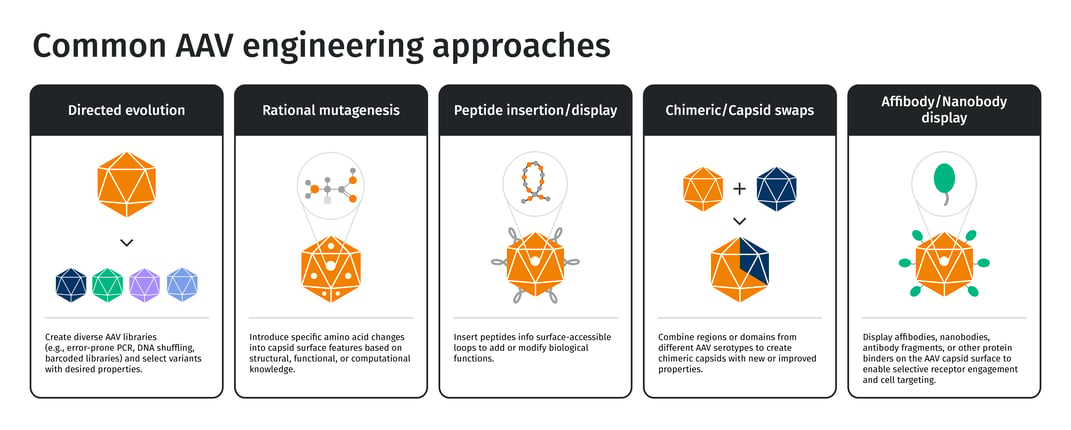
Figure 1. Common AAV capsid engineering strategies. Structures are simplified for illustrative purposes.
Methods
Case study 1: AAV2/AAV8 chimera expression and sample preparation
AAV2/AAV8 chimeras and AAV8 control vectors were expressed in suspension HEK293F cells using standard triple transfection. Following expression, cultures were centrifuged and 20 mL of supernatant was harvested, sterile filtered, and concentrated to 1 mL using 100 kDa MWCO spin filters. Concentrated supernatant samples were then diluted to 2.5 mL with PBS and designated “SUP” samples. Cell pellets were chemically lysed, filtered, and diluted to 2.5 mL with PBS to generate “CL” samples.
Case study 2: AAV-affibody expression and sample preparation
Affibody-AAV constructs were produced in adherent HEK293 cells. Following expression, cells were lysed, the lysate was clarified by centrifugation, and the supernatant was harvested and sterile filtered prior to purification.
AAVX PhyTip® purification
Two independent engineered AAV sample sets were purified using the same AAVX PhyTip workflow (Table 1). Purifications were performed using 1 mL AAVX PhyTips®, which contain POROS CaptureSelect AAVX affinity resin with a 160 µL resin bed on a Biotage MEA 2 automated liquid handling robot. For each purification, 2 mL of sample was loaded per PhyTip® in two 1 mL aliquots.
Standardized equilibration, wash, and neutralization conditions were applied across all purifications. PBS (pH 7.4) was used for equilibration and wash steps, and 1 M Tris-HCl (pH 8.7) was used for neutralization. Elution buffer composition varied between purification runs, while elution volume was constant at 600 µL. Flow rate and dual-flow aspiration/dispense cycle numbers were used to determine the residence time, which was consistent across all sample sets.
Table 1. Summary of purification conditions used for purification of engineered capsid variants.
|
Parameter |
Conditions |
|
Automation platform |
Biotage MEA2 |
|
PhyTip format |
1 mL AAVX |
|
Resin |
POROS CaptureSelect™ AAVX |
|
Resin bed volume |
160 µL |
|
Sample load volume |
2 mL |
|
Viral particles (VP) loaded per PhyTip |
~2.6-5.7 x 10¹¹ VP |
|
Equilibration buffer |
PBS, pH 7.4 |
|
Wash buffer |
PBS, pH 7.4 |
|
Elution buffer |
Variable (depending on experiment) |
|
Elution volume |
600 µL |
|
Neutralization buffer |
1M Tris-HCl, pH 8.7 |
|
Analytical assays |
ELISA, qPCR, western blot |
Sample analysis
Eluted samples were analyzed by ELISA to determine viral particle titer, qPCR to determine viral genome titer, and Western blot to assess capsid protein profiles. Western blot analysis was not performed for every purification run; representative data are shown where applicable. PageRuler™ Plus Prestained Protein Ladder was used as the molecular weight marker for Western blot analysis.
Results
Case study 1: Purification performance across sample types and elution pH
Elution optimization is a common process to maximize recoveries of individual AAV capsid types. The affinity of AAVX for a broad range of serotypes makes it well suited for evaluating purification conditions across engineered AAV variants.
Two purification runs were performed using AAV2/AAV8 chimera samples and an AAV8 capsid control. All samples were packaged with eGFP transgene. Samples were prepared from either cell supernatant (SUP) or cell lysate (CL). To evaluate the effect of elution pH on recovery, run 1 used an elution buffer at pH 3.0 and run 2 used an elution buffer at pH 2.5. Both buffers contained 300 mM MgCl₂ to maintain consistent ionic strength.
Across both runs, the average recovery was 64%, with little difference observed between the two elution pH conditions (Figure 1b). Recovery was also comparable between SUP and CL sample types. Although this trend was consistent across most conditions tested, Variant 1 SUP was an outlier, exhibiting markedly higher recovery at pH 2.5 compared to pH 3. Under the conditions tested, lowering the elution pH from 3.0 to 2.5 did not produce a consistent improvement in recovery across variants, suggesting that buffer composition or additives may be more impactful than pH alone.
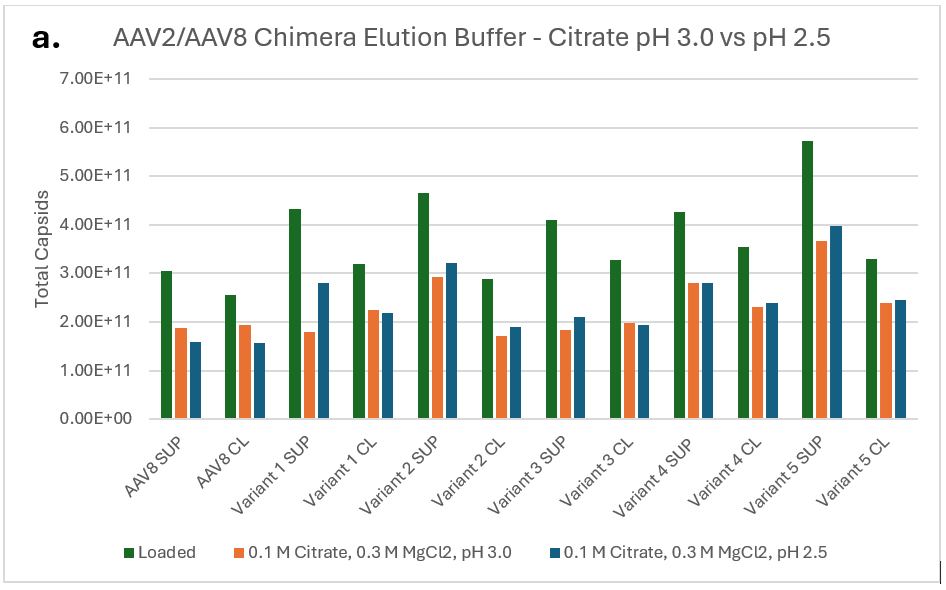
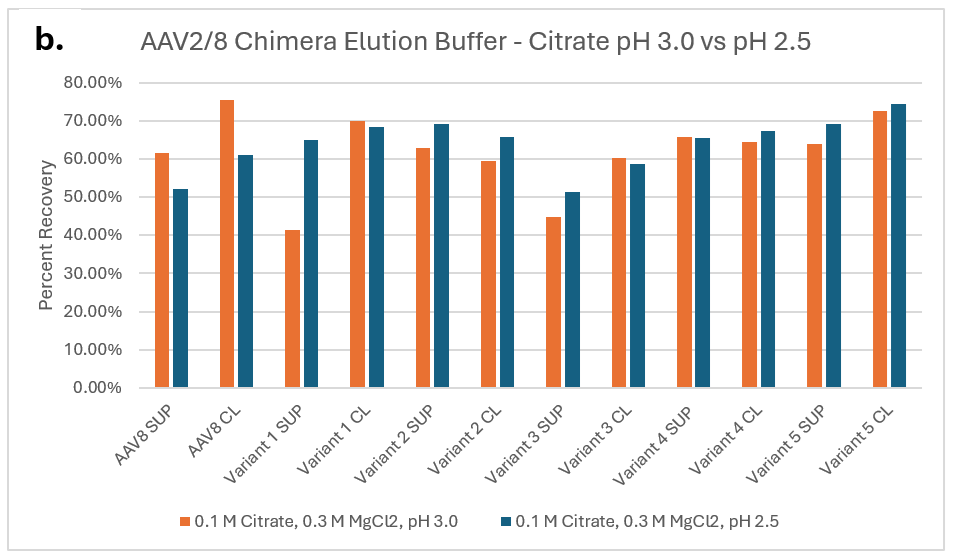 Figure 1a and b. Two elution conditions at pH 2.5 and pH 3 were tested across various novel AAV serotypes from both supernatant and from cell lysate. a. ELISA capsid titer before and after purification. b. % recovery for each purification run based on ELISA capsid titers.
Case study 1: Elution buffer screening using AAV8 reference samples
To further evaluate elution performance, various elution buffers were screened using AAV8 samples packaged with eGFP transgene and compared with a control condition (100 mM citric acid, pH 2.5). These buffers were selected to see if recoveries could be improved beyond the acidic elution conditions evaluated previously.
Among the conditions tested, the elution buffer containing 100 mM citric acid and 500 mM arginine at pH 2.5 resulted in the highest recovery of AAV8 material (Figure 2). However, the addition of arginine to the glycine and citric acid-based buffers only marginally improved recoveries, by around 3% and 4%, respectively. Because this experiment was performed with a single replicate, additional experiments are necessary to determine if the differences seen are reproducible and significant.
Absolute recoveries in this experiment were lower than expected, likely influenced by column reuse during these purifications. Because column reuse is not recommended for PhyTip® column workflows, these results are best interpreted comparatively, with the data indicating that arginine was the most effective additive among the elution conditions tested.
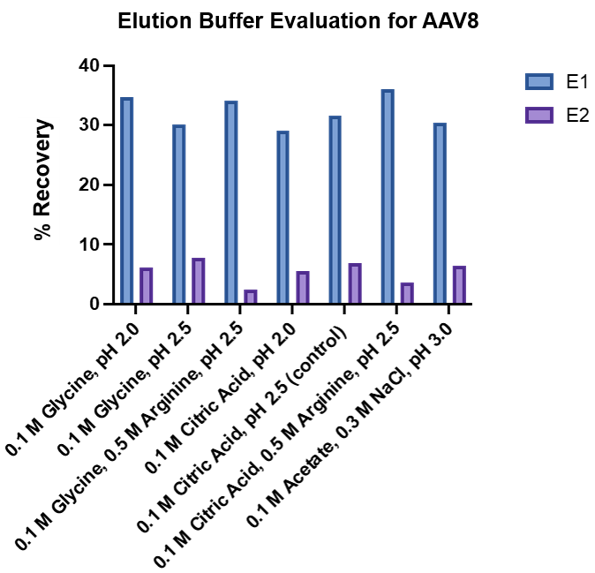 Figure 2: Various elution buffers were evaluated to assess sample recovery of AAV8. Recoveries in elution 1 (E1) and elution 2 (E2) based on ELISA capsid titer before and after purification.
Case study 1: Recovery of AAV2/AAV8 variants under arginine elution conditions
Recovery of AAV2/AAV8 variants using the best-performing elution condition (100 mM citric acid, 500 mM arginine, pH 2.5) was assessed by ELISA capsid titer (Figure 3). Recovery of AAV in elution 1 (E1), elution 2 (E2), and % of capsids in flowthrough (FL) was evaluated. Across the variants tested, approximately 60-77% of AAV was recovered in elution 1, with E2 contributing minimally to overall recovery, indicating that the majority of capsids were recovered in the first elution step (Figure 3). Similarly, low levels of AAV were measured in the FL, suggesting that most capsids bound to the column efficiently.
Notably, Variant 4 showed the highest recovery (~77%), exceeding that of the wild-type AAV8 control. These results demonstrate that the arginine-containing elution condition is effective across multiple engineered capsid variants and supported efficient recovery in a single elution step. Recoveries in this experiment were higher than in Figure 2, likely due to the use of fresh AAVX PhyTip® columns. Because column reuse can reduce performance in this workflow, these results further support the use of fresh columns for higher recoveries.
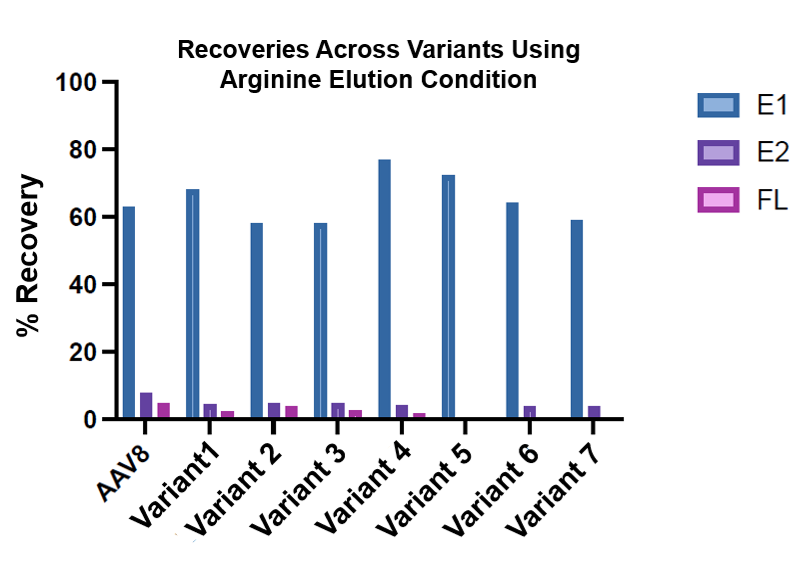 Figure 3. Arginine-containing elution buffer conditions were used to purify engineered AAV2/AAV8 chimera capsid variants. ELISA capsid titer was used to determine recovery of sample in E1 and E2, along with percentage of capsids remaining in FL.
Case study 2: Comparison of linker-containing and linker-free affibody-AAV constructs
AAV2-affibody variants were purified using the same workflow applied to the AAV2/AAV8 chimera samples, with the aim of generating material for downstream characterization and evaluating purification compatibility across construct designs. These variants were engineered to enhance AAV delivery to specific tissue types, with related findings currently being prepared for publication.
Multiple affibody-AAV configurations were evaluated, including constructs with three different insertion sites on the AAV scaffold and with various linker types and lengths. Some variants contained a single affibody insertion (Z-AAV), whereas others contained two affibody insertions (BiZ-AAV). Another set of variants were produced and purified without the linker for comparison. In this group, affibodies were attached directly to the AAV capsid surface.
Viral genome titers (VG/mL) were quantified by qPCR in both crude lysates and affinity purification eluates to assess production and recovery. Only MEA 2 eluate titers are shown here (Figure 4).
Genome titer results from affinity purification eluates show concentrations consistently above 1 x 10¹¹ VG/mL across the linker-containing variants tested, with Variants 1 and 2 being the highest, exceeding 4 x 10¹¹ VG/mL (Figure 4a). Across the constructs tested, linker-free variants generally produced higher elution titers than the linker-containing variants (Figure 4b). This trend was also observed for two construct pairs for which both linker-containing and linker-free versions were available (Variants 1 and 2).
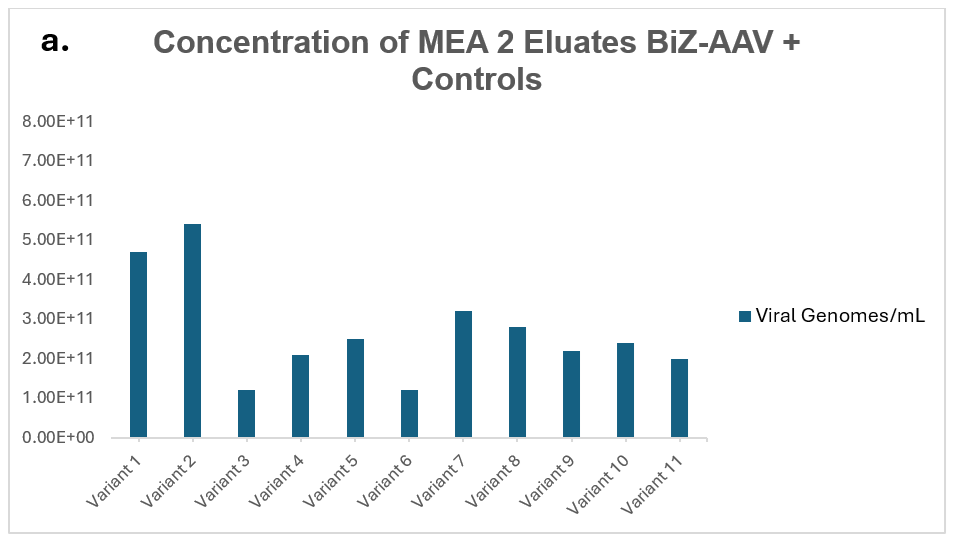
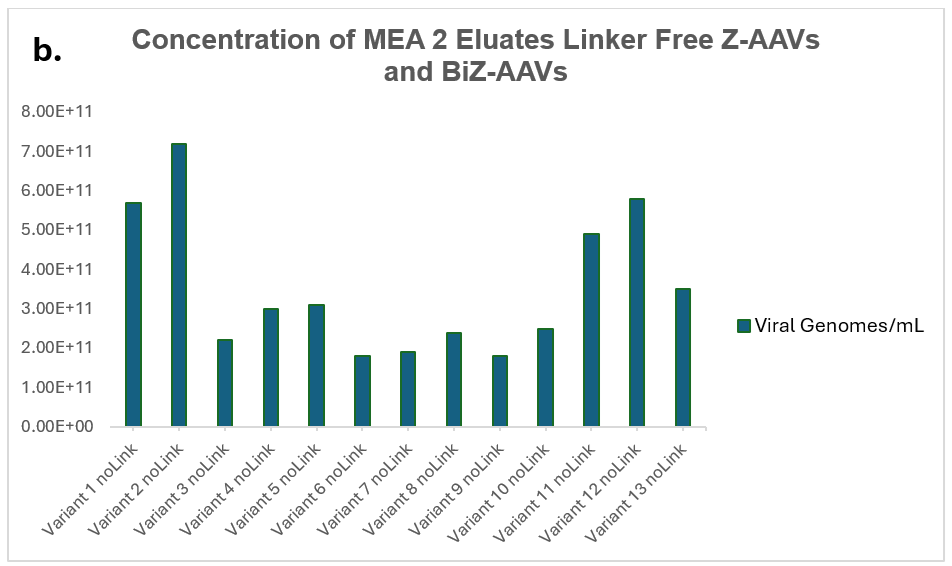 Figure 4a and b: Concentration of eluates in VG/mL for capsid variants purified on MEA2. Variant numbers were assigned independently of two purification runs and do not indicate a correspondence between figures. a. Linker-containing AAV2-affibody constructs b. Linker-free AAV2-affibody constructs
Representative Western blot Aanalysis of purified AAV
A single representative affinity run with load, flowthrough (FT), and eluate samples was analyzed by Western blot as a qualitative assessment of recovered material (Figure 5). Clear bands were observed in the elution fraction, consistent with successful recovery of AAV following purification. Because this analysis was performed for one sample run only, these data are presented as representative rather than comprehensive across all variants.
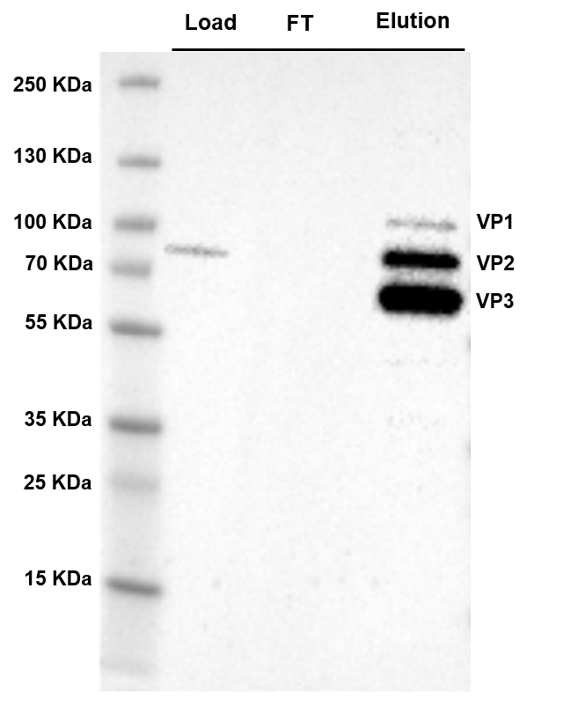 Figure 5. Representative Western blot image of AAV8 sample showing load, FT, and elution samples.
Key findings
- AAVX PhyTip® columns purified multiple engineered AAV capsid formats using a common automated workflow.
- Comparable recoveries were observed between supernatant and lysate-derived samples in the AAV2/AAV8 chimera study.
- Lowering elution pH from 3.0 to 2.5 did not consistently improve recovery across the AAV2/AAV8 variants tested.
- The citric acid/arginine elution condition provided the highest recovery in the buffer screen.
- Purified AAV2-affibody constructs achieved eluate genome titers ranging from 1 x 10¹¹ to > 7 x 10¹¹ VG/mL, enabling downstream analytical testing.
Discussion and conclusion
The two experimental datasets shown here from KTH addressed two different biological challenges, but both faced the same workflow challenge. Researchers needed a purification workflow that could purify multiple engineered AAV capsid variants in parallel to allow for rapid screening. Together, the results show that AAVX PhyTip® columns can be applied across distinct engineered AAV formats, including AAV2/AAV8 chimeras and AAV2-affibody constructs.
In the chimera study, the AAVX PhyTip workflow enabled purification of AAV variants for expression and secretion studies and supported elution optimization efforts. Because elution optimization is often required when developing purification methods for new serotypes and engineered variants, the high-throughput AAVX PhyTip format helped to accelerate purification development by enabling rapid buffer condition screening.
In the AAV2-affibody study, variants with different insertion sites, linker designs, and affibody valencies were purified with a single purification condition. This suggests that the purification workflow presented here is compatible with a range of capsid designs that could be encountered in early-stage capsid engineering workflows. It also highlights the flexibility of PhyTip® columns for use as a purification development tool.
This compatibility is particularly important for the use of PhyTip® columns as part of a platform purification workflow. Using a common purification approach across variants helps to streamline early discovery research, reduce process-related bottlenecks, and support faster screening and comparison of variants. Overall, these results support the use of AAVX PhyTip® columns as a flexible purification approach for early-stage screening and characterization of engineered AAV capsid variants.
References
1. Genenova. Innovation milieu for a safer, more efficacious and accessible AAV gene therapy. Available at: https://genenova.se/
Literature number: AN1030
Related products
Biomolecule purification with PhyTip® columns brochure
POROS CaptureSelect™ AAVX PhyTip® columns specification sheet
Accelerating high throughput protein purification using PhyTip® columns white paper
