
Introduction
Flash chromatography has evolved from manual techniques using silica pads and glass columns to automated systems with prepacked silica columns. This shift has significantly improved purification speed, consistency, and reproducibility. However, not all prepacked columns are created equal. Column construction quality plays a critical role in chromatographic performance and instrument longevity. This application note explores how suboptimal column design and packing can impact purification outcomes and even introduce risks to system integrity.
Why column quality matters
The adoption of prepacked silica columns from glass columns and silica pads has resulted in quicker more consistent and reproducible purification. This is due to higher quality silica being readily available in this format and the consistency of the media packing in the columns. The speed of purification comes from the columns’ prepacked nature and their ability to be run at higher flow rates on automated instruments such
as the Biotage® Selekt, with reproduceable results. An example of this reproducibility is shown in figure 1.
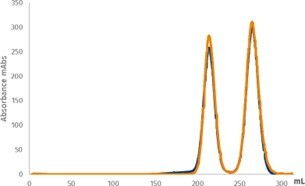 Figure 1. Two separate purifications using Biotage® Sfär HC show consistent, reproducible results.
Not all these prepacked silica columns are equal. In addition to lower quality media reducing separation efficiency, there can also be issues with the consistency and reproducibility due to poor column construction .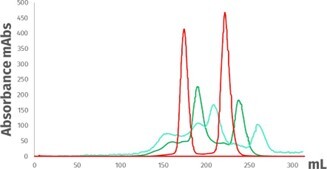 Figure 2. Shows three purifications using runs on competitor B (25 µm) show variable results despite identical conditions.
The example in figure 2 shows three independent runs on three separate Competitor B (25 µm) columns, that is equivalent to the Biotage® Sfär HC column in fig 1. The well resolved peak result is shown in red, which are the expected result for the purification.
This example illustrates a column with inconsistent packed media or low-quality media. This has resulted in cavitation and channelling through the column during some purifications. As a result, compounds take uneven routes through the column, causing additional peaks, poor separation and potential loss of material due to the fronting and tailing of peaks.
System contamination risks
In addition to the loss of material or the need to repeat the purification when this occurs, the use of these columns can also have much larger and broader consequences, for subsequent purification. When significant amounts of silica enter the system from the column, this can cause several performance issues, both for the purification ongoing and the system itself.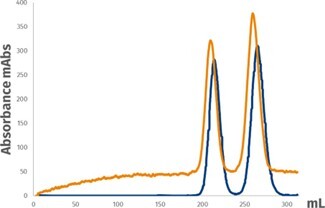
Figure 3. shows the effect of silica entering the flow path (orange) and the subsequent purification after the system has been cleaned to remove the silica contamination.
Figure 3 shows the effect of silica present in the UV flow cell, that is bleeding out from the low quality column, Competitor B as show in figure 2, during the run.
This altered baseline is caused by silica contamination blocking some of the light when the instrument performs its baseline correction (UV zeroing) at the start of a purification. The orange trace shows, as the subsequent purification is being carried out some of this silica contamination accumulating in the flow cell.
This silica reduces the UV sensitivity of the system and even if the UV cell is not blocked completely, a small amount of loose silica can cause permanent damage to the flow cell. As a result, compound detection and isolation are impaired, and chemists will likely obtain lower isolated yields than expected.
Silica contamination shortens instrument lifespan and increases the likelihood of breakdowns, necessitating more frequent maintenance and repair. Silica contamination blocks or obstructs tubes, flow cell and internal valves as illustrated in Figure 4. If a valve is affected, it can prevent the value from fully opening or closing, . As a result, the system may leak externally, where the issue is easier to detect, or internally divert sample to waste, leading to poor recovery where the issues is less noticeable.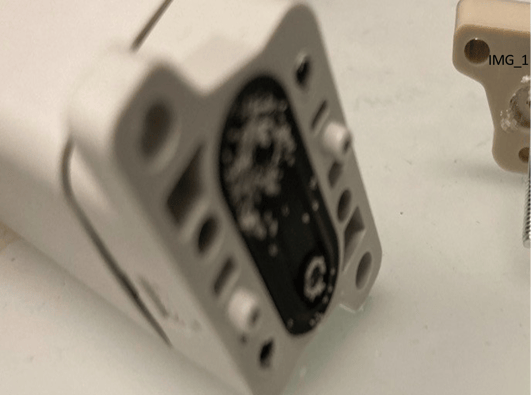
Figure 4. Shows silica deposits on the sample collection value of a Biotage® Selekt, resulting from silica passing through the system
Conclusion
These findings demonstrate that high-quality columns, as Biotage® Sfär, with consistent column packing directly improves separation efficiency. Additionally, it minimizes the potential for system clogs and silica contamination. Together, these factors enhance system reliability and reduce maintenance costs.
Choosing high-quality columns like Biotage® Sfär ensures:
- Superior separation efficiency
- Reduced risk of system contamination
- Lower maintenance costs
- Reliable, reproducible results
Therefore, prioritizing high-quality flash chromatography columns, is essential for laboratories aiming to maximize purification efficiency, ensure reliable system performance and achieve consistent, reproducible results.
Investing in quality columns protects your instruments and improves purification outcomes, making it a smart choice for any lab.
Literature number: AN1018
