
Summary
This application note highlights how simple Gradient Optimization and single vessel product collection – enabled by a collection bed bypass function - minimized solvent use and reduced the number of collection vessels during a 2.2-gram purification.
Background
A common purification goal for chemists is to isolate the target compound with the least amount of solvent and in a single collection vessel for one compound. Achieving this can significantly reduce purification costs – both in solvent use and processing time – while also minimizing the risk of product loss due to the need for multiple collection tubes.
The Biotage® Selekt flash chromatography system delivers these capabilities, as demonstrated in this example.
Results and discussion
A Biotage® Initiator+ microwave was used to create a 3.3-gram reaction mixture, which was then dissolved in 15 mL of dichloromethane (DCM) producing a concentration of 221 mg/mL.
The reaction mixture was analyzed by TLC in 20% acetone/heptane, Figure 1. The Rf data was used to create a linear gradient (5-40% EtOAc over 10 CV) for purification on a 10-gram Biotage® Sfär silica column. A beneficial feature of the Biotage® Selekt system is its ability to suggest an appropriate sample load based on TLC data. For this reaction mixture, the suggested load was 281 mg, Figure 2.
 Figure 1. Reaction mixture TLC in 20% acetone/heptane shows the product is well retained and separated from major byproducts.
 Figure 2. Sample load estimation of 281 mg for a 10-gram Biotage® Sfär silica column, based on TLC data.
For simplicity, a 1 mL (221 mg) sample was purified using the 10-gram column and the 5-40% linear gradient. The resulting chromatography showed the product eluting between 7-9 column volumes (CV), collected in two 16x150 mm culture tubes, and well separated from byproducts, Figure 3.
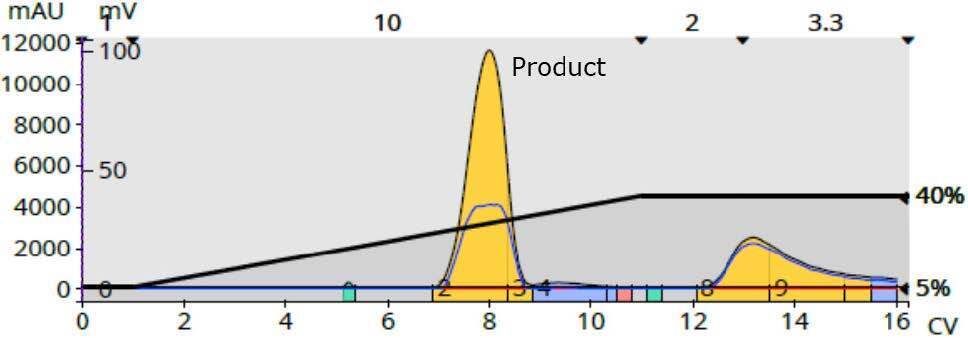 Figure 3. TLC-based linear gradient purification of 221 mg of reaction mixture.
TLC-based linear gradients always create 13 CV methods which, when sample load suggestions are followed, will typically provide satisfactory results. However, these gradients often consume more solvent than necessary. In this case, the programmed method length was 195 mL, but due to UV absorbance triggering an auto-extension at the end of the method, the total volume increased to 16.3 CV, or 245 mL, to complete the purification. Figure 4.
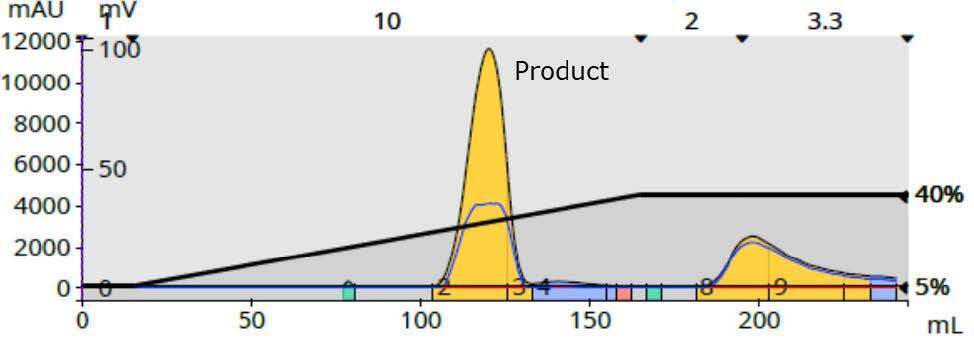 Figure 4. Linear gradient results in terms of solvent volume consumed (245 mL).
The Gradient Optimization feature was used to reduce purification solvent volume. It converts a successful linear gradient separation into an environmentally friendly, cost-efficient step gradient. In this case, the optimized gradient was an isocratic method of just 4.8 CV. A 50-gram Biotage® Sfär silica column was used to purify 2.2-grams of the reaction mixture, as suggested by the Biotage® Selekt system. The 4.8 CV isocratic method with the 50-gram column required only 384 mL of solvent.
Since the 50-gram column is five times larger than the 10-gram column, the estimated peak volume was estimated to be at least five times greater. The peak volume from the 10-gram column was ~30 mL, so the 50-gram column was expected to be 150 mL. Given that each 16x150 mm collection tube holds 22 mL, seven tubes would be required to collect the product.
To collect the entire peak volume in a single vessel, the Bypass Tray Collection feature was used. This feature allows the chemist to redirect the effluent through the waste line into a larger vessel, in this case a 480 mL bottle, Figure 5.
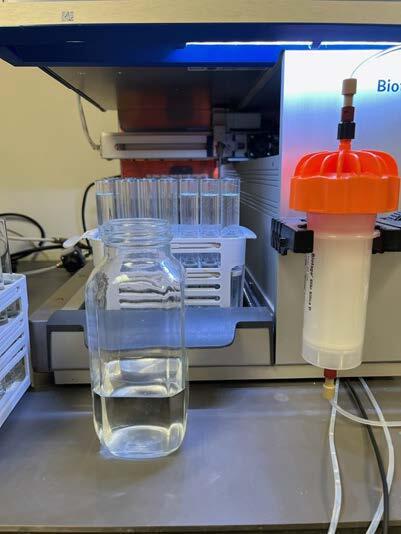 Figure 5. Product collected into a single vessel using the Bypass Tray Collection feature.
When the product started to elute, the Bypass Tray Collection button was manually activated, and the desired collection volume was entered (150 mL). Once the product peak was fully eluted, the system was prompted to resume tray collection, Figure 6.
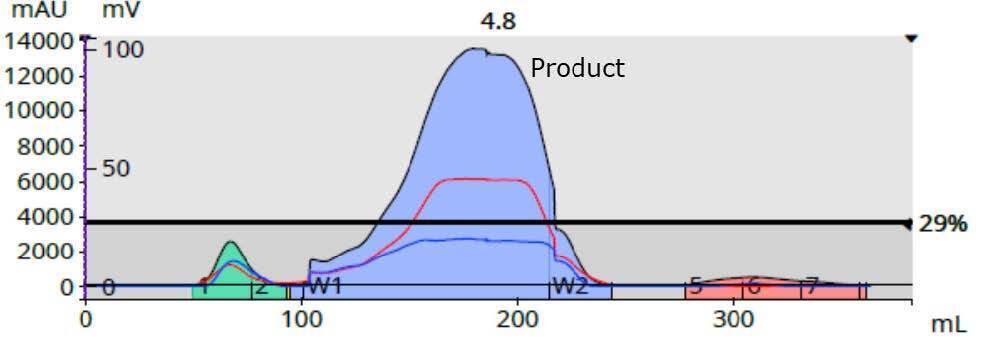
Figure 6. Scaled purification (2.2 grams) using a 50-gram Biotage® Sfär silica column with Gradient Optimization and Bypass Tray Collection.
Conclusion
With advanced flash purification features like Bypass Tray Collection and Gradient Optimization, medium and large-scale purification runs can be significantly shortened, reducing waste and enabling product isolation in a single vessel.
Literature Number: AN1011
