
Introduction
The detection of per- and polyfluoroalkyl substances (PFAS) within our air, water, and soil has confirmed their place as persistent pollutants that pose significant health risks upon human exposure, including metabolic changes, elevated cholesterol levels, and increased cancer risks.
There are multiple sample preparation methods used as a basis for PFAS testing around the world, depending on local regulations, matrix and the specific laboratory's needs. Biotage provides a wide range of consumables that can be used for PFAS extraction in compliance with multiple methods.
A common frustration while navigating the different methods in the lack of a common naming convention for the different PFAS analytes.
To help you out, we have compiled a handy table of information with the most common PFAS analytes, various aliases that they go by, CAS (Chemical Abstract Service) number, chemical structure, as well as a breakdown of which methods each of the analytes is relevant for.
Drinking water
 ISOLUTE® 101 SPE cartridges for EPA 537.1
ISOLUTE® 101 is a high-performance polymeric polystyrene-divinylbenzene (PS-DVB) SPE cartridge designed for compliance with EPA method 537.1. The PS-DVB media in ISOLUTE® 101 is meticulously manufactured to ensure sorbent cleanliness surpasses the EPA 537.1 PFAS background <1/3 MRL criteria. Through a specialized manufacturing process, ISOLUTE® 101 features optimized sorbent packing, which minimizes media channeling and enhances precision and accuracy in PFAS extraction.
Precision and accuracy for EPA 537.1
ISOLUTE® 101 demonstrates exceptional precision and accuracy for method 537.1. The results in figures 1 & 2 demonstrate eight LFB samples prepared at concentrations of 20 ppt. The average recovery for each target analyte was within 15% of the nominal value; comfortably meeting the ± 30% criteria specified within method 537.1. Additionally, the relative standard deviation (RSD) for each analyte averaged below 11%, well within the 20% requirement.
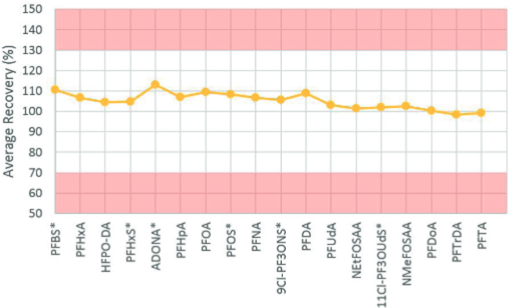
Figure 1. Demonstration of Accuracy with range of acceptance shown in white (20 ng/L, n=8). Compounds with an asterisk were used in salt form. For details, refer to application note AN958.
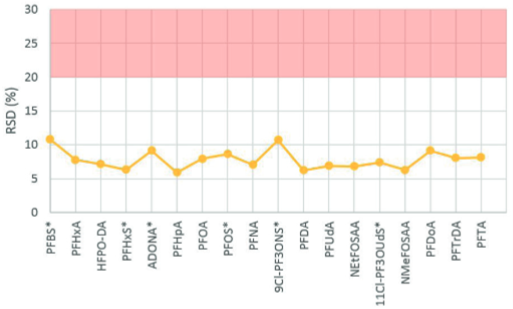 Figure 2. Demonstration of Precision with range of acceptance shown in white (20 ng/L, n=8). Compounds with an asterisk were used in salt form. For details, refer to application note AN958.
Improved evaporation efficiency for EPA 537.1
The final composition of all 537.1 calibration standards, QC, and sample extracts must be in a 96:4% (vol/vol) MeOH:Water solution prior to LC-MS/MS analysis. To ensure residual water is removed, method 537.1 requires the extract to be concentrated to dryness before reconstitution into the 96:4% (vol/vol) MeOH:Water solution. ISOLUTE® 101 has a narrow PS-DVB particle size distribution with a nominal average of 65 µm which minimizes sorbent void space and reduces residual water in the final extract. This results in a more efficient concentration process for EPA 537.1 compliance compared to alternative PS-DVB media with larger particle sizes (Figure 3).
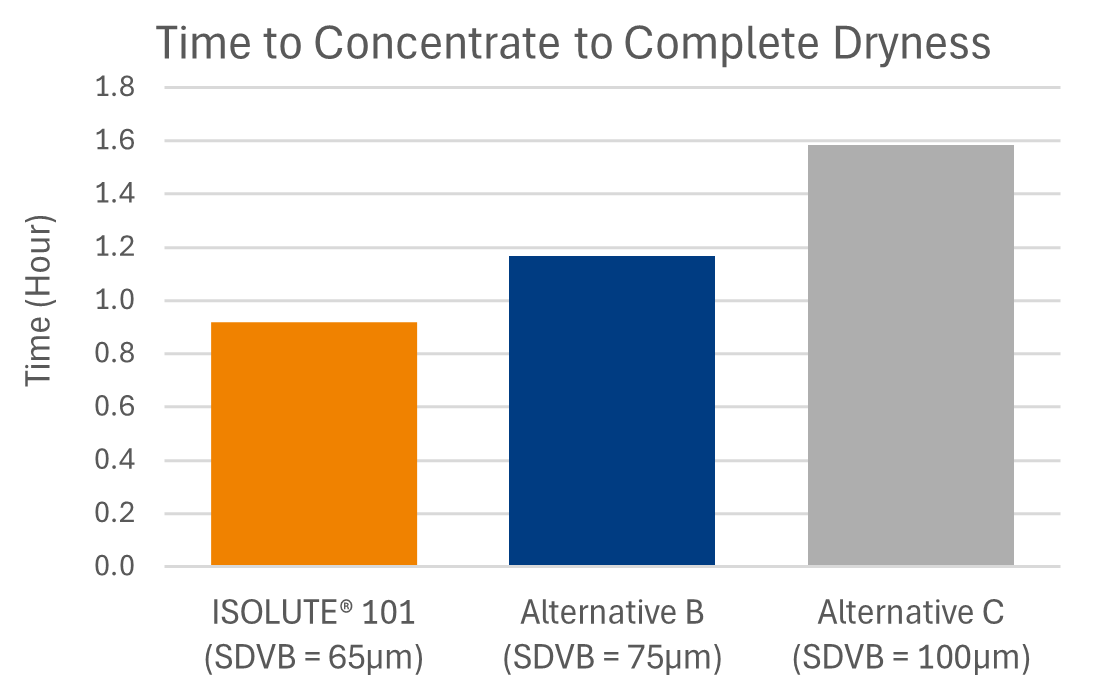
Figure 3. Effect of DVB particle size on total evaporation time to achieve complete dryness at 60°C. Larger particle sizes lead to increased co-eluted water in the final extract, resulting in longer concentration times.
To ensure residual water is removed from the extract, method 537.1 mandates that the first two eluting peaks on a mid-level calibration standard must have peak-asymmetry factors calculated within the range of 0.8-1.5. Figure 4 illustrates the first six eluting 537.1 compounds across multiple calibration levels, demonstrating that ISOLUTE® 101 consistently exceeds the peak-asymmetry factor requirements for acceptable chromatographic conditions.
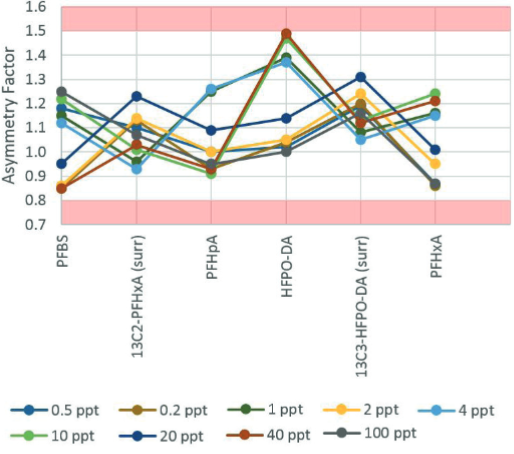
Figure 4. Peak asymmetry factor with the range of acceptance shown. For details, refer to application note AN958.
EVOLUTE® PFAS 533: SPE cartridges for EPA 533
EVOLUTE® PFAS 533 SPE cartridges are specifically optimized for compliance with EPA method 533. They contain high purity weak-anion exchange (WAX) mixed-mode polymeric sorbent, consisting of a polymeric backbone and a diamino ligand, with a particle size of approximately 33 μm. The WAX sorbent has a pKa above 8, ensuring it remains positively charged during extraction. EVOLUTE® PFAS 533 cartridges are available in 200 mg or 500 mg options, suitable for processing 100 mL or 250 mL sample volumes, respectively.
Precision and accuracy for EPA 533
EVOLUTE® PFAS 533 SPE cartridges exhibit outstanding precision and accuracy for EPA method 533. Using 250 mL sample volumes, four LFB samples were prepared at concentrations of 20 ppt for both 200 mg & 500 mg sorbent bed mass options. As shown in figure 5, the average recovery for each target analyte was within 15% of the nominal value, demonstrating both 200 mg & 500 mg options meet the ± 30% criteria specified in the method. Additionally, the relative standard deviation (RSD) for both cartridge options was below 10%; indicating excellent reproducibility in recoveries and surpassing the method requirement of ≤ 20% (Figure 6).
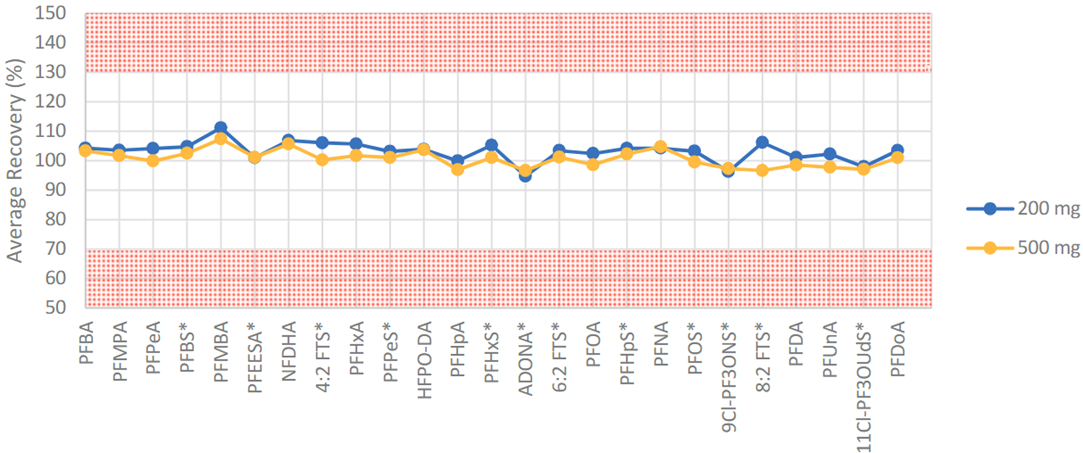 Figure 5. Demonstration of Accuracy (20 ng/L, n=4). Compounds with an asterisk were used in salt form. For details, refer to application note AN972.
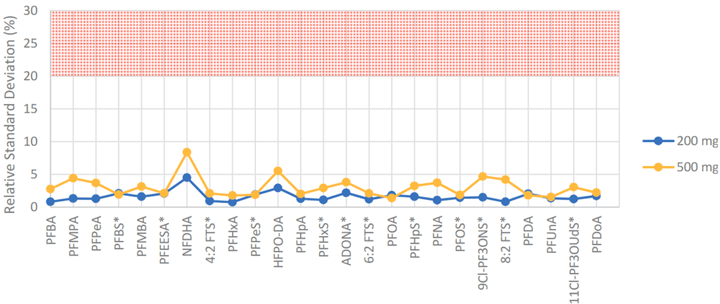
Figure 6. Demonstration of Precision (20 ng/L, n=4). Compounds with an asterisk were used in salt form. For details, refer to application note AN972.
Enhanced SPE cleanliness for EPA 533 compliance
EVOLUTE® PFAS 533 SPE Cartridges are manufactured utilizing a cleaning process that significantly enhances the cleanliness of the weak-anion exchange (WAX) sorbent. This ensures an acceptable background without additional cleaning steps, allowing laboratories to adhere to EPA method 533 as written(see Table 1), streamlining workflows and saving time. The cleanliness of EVOLUTE® PFAS 533 SPE cartridges was demonstrated through replicate extractions of 250 mL laboratory fortified blanks (LFB) using both 500 mg or 200 mg WAX sorbent bed mass options. Figures 7 and 8 illustrate that background levels for all PFAS analytes prescribed in EPA 533 were six times lower than the minimum reporting level (MRL) requirement for all LFB replicates extracted using EVOLUTE® PFAS 533.
Table 1. EPA Method 533 SPE extraction, concentration, & reconstitution procedure. *Note: This solution should be made daily.
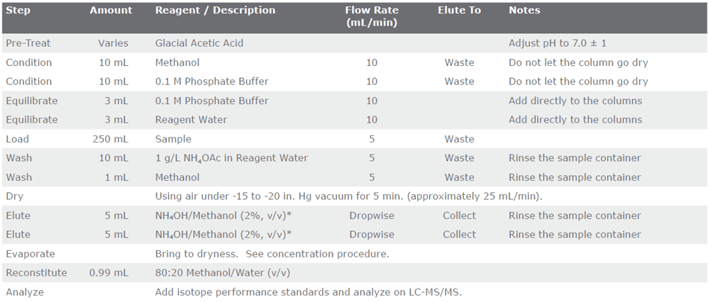
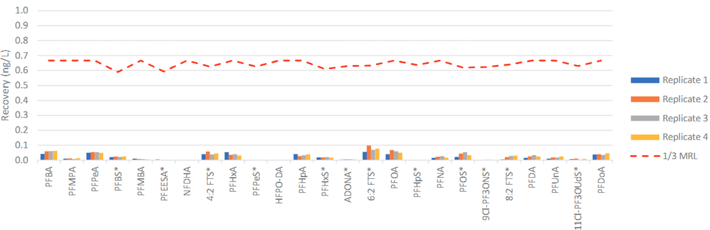
Figure 7. PFAS Background for full LFB using EVOLUTE ® PFAS 533 200 mg/6 mL cartridges. Compounds with an asterisk were used in salt form. For details, refer to application note AN972.
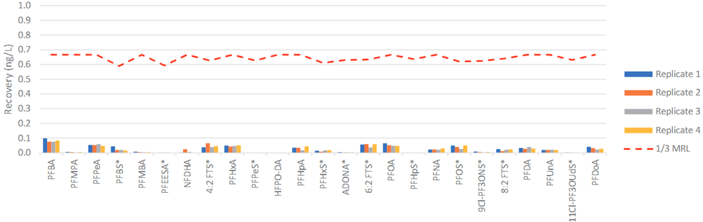
Figure 8. PFAS Background for full LFB using EVOLUTE ® PFAS 533 500 mg/6 mL cartridges. Compounds with an asterisk were used in salt form. For details, refer to application note AN972.
Learn more about EVOLUTE® PFAS
Surface, ground and wastewater
Processing challenging sample matrices
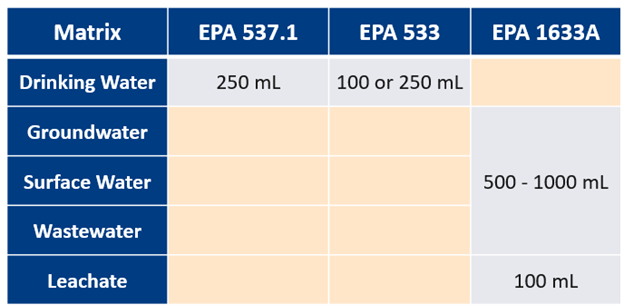
For aqueous samples, EPA 1633A requires processing volumes ≥ 100 mL, which when compared to drinking water, poses challenges for processing surface, ground and wastewater samples (Table 2).
Table 2. Applicable matrices and sample volumes for EPA methods 537.1, 533, & 1633A
 ISOLUTE® Depth filter reservoirs
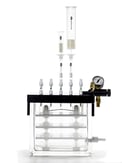
When aqueous samples with high concentrations of suspended solids pass through SPE cartridges, the top frit can become clogged, dramatically reducing the extractable sample volume. Attaching an ISOLUTE® Depth Filter Reservoir above an SPE column can overcome this issue. Additionally, depth filters can be layered above SPE media to enhance particulate loading capacity of any 6 or 70 mL SPE cartridge.
Learn more about ISOLUTE® Depth filter reservoirs
PFAS SPE cartridge options for EPA 1633A
Method 1633A mandates that the WAX sorbent must have a conjugate acid pKa above 8 to ensure it remains positively charged during extraction. While the method references using 150 mg WAX in a 6 mL cartridge, alternative bed masses (e.g., 500 mg) can be used if the laboratory meets the acceptance criteria for the initial demonstration of capability. In addition, EPA 1633A does not specify WAX particle size for the SPE sorbent, so it is important to consider particle size when evaluating WAX SPE options.
 EVOLUTE® PFAS: WAX particle size considerations
When considering WAX particle size options, large particle size can help prevent clogging the SPE column when processing samples with high particulate content. Conversely, WAX sorbent with smaller particle size has shown in cases to help improve recoveries of some of the longer chain neutral compounds (NMeFOSE, NMeFOSA, NEtFOSE, NEtFOSA) found in EPA 1633A. It is recommended to evaluate WAX SPE options with both large and small particle size to determine what best suites your laboratory. Biotage offers two SPE options for WAX particle sizes, 50um & 30 um.
Learn more about EVOLUTE® PFAS
 EVOLUTE® WAX/GCB: Dual sorbent SPE cartridge for streamlined sample processing
EPA method 1633A states that all sample matrices, along with the associated batch quality control (QC), must undergo weak-anion exchange (WAX) solid-phase extraction and graphitized carbon black (GCB) cleanup to eliminate interferences. Layered dual sorbent WAX/GCB SPE cartridges, stacked single sorbent SPE cartridges, containing WAX and GCB, or other cartridge configurations may be employed, provided they meet the quality control criteria outlined in the method. Dual sorbent cartridge SPE offer significant advantages, including a twofold increase in productivity, elimination of transfer steps, reduced consumables and operational costs. When comparing blended versus layered SPE cartridge formats, the blended format requires less GCB, thereby lowering cartridge costs while simultaneously mitigating the issue of PFAS compounds adhering to GCB. Additionally, the blended format eliminates voids and visible gaps commonly observed in layered formats, enhancing both precision and accuracy. Figures 9 & 10 illustrate the ongoing precision and recovery (OPR) of EPA 1633A extracted internal standards (EIS) for low-level OPR (2x the limit of quantitation, LOQ) and mid-level OPR (CS4 calibration point) spikes of the 40 target PFAS analytes.
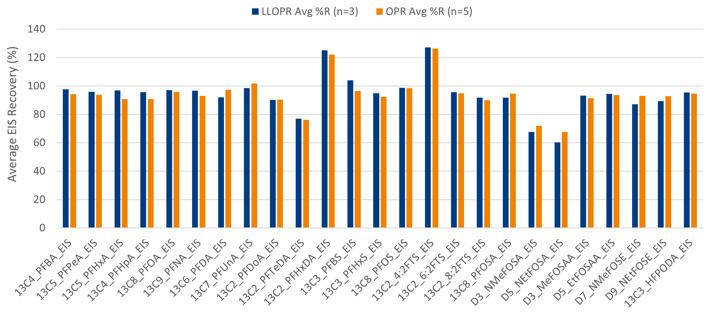
Figure 9. EPA method 1633A: Extracted Internal Standard (EIS) recoveries for low-level (LLOPR) and mid-level (OPR) spikes of 40 target PFAS. Samples processed on blended WAX/GCB. For details, refer to this webinar.
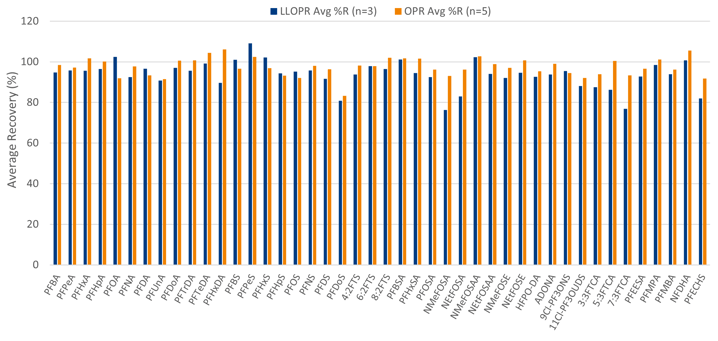
Figure 10. EPA Method 1633A PFAS Natives recoveries for low-level (LLOPR) and mid-level (OPR) spiked samples processed on blended WAX/GCB. For details, refer to this webinar.
Learn more about EVOLUTE® WAX/GCB
Soils, biosolids and tissue
Preparation of solid samples by EPA 1633A
Preparation of solid samples for PFAS analysis requires a multi-step process, including sample homogenization, liquid extraction, dispersive solid-phase extraction (dSPE), solvent evaporation, pre-treatment, & cartridge solid-phase extraction (cSPE). Figure 11 outlines the complete sample preparation workflow for both solid and liquid samples, detailing the additional steps required for solid samples.
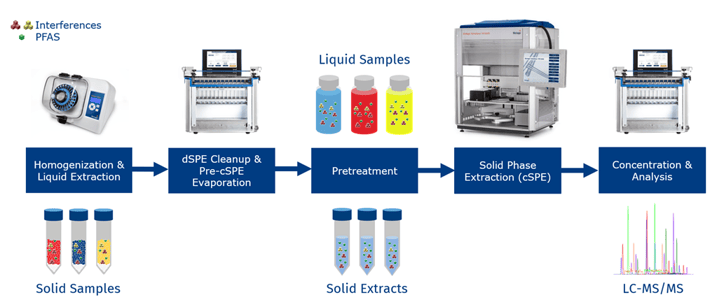
Figure 11. Sample preparation workflow for analyzing PFAS in solid and liquid samples.
Solvent extraction & dSPE clean-up
As illustrated in Figure 11, EPA method 1633A specifies that soils, biosolids and tissue samples must undergo a two-step clean-up process, an initial dSPE loose carbon cleanup, followed by WAX cartridge SPE. After the initial solvent extraction of the solid sample (see Table 3), the method recommends adding loose GCB sorbent and performing clean-up via physical shaking of the solvent extract. This dispersive solid phase extraction (dSPE) process helps to remove unwanted sample components prior to WAX cartridge-based clean-up.
Table 3. Solvent extraction process for extraction of PFAS from solids, biosolids, and tissue samples.
|
Solvent Extraction |
Soils & Biosolids |
Tissue |
|
First |
0.3% NH4OH in MeOH |
0.05M KOH in MeOH |
|
Second |
0.3% NH4OH in MeOH |
Acetonitrile |
|
Third |
0.3% NH4OH in MeOH |
0.05M KOH in MeOH |
ISOLUTE® GCB: Simplified clean-up of solvent extracts from solid samples
To address the challenges of handling loose GCB, pass-through column cleanups have been demonstrated to offer a streamlined alternative approach to the dSPE technique. ISOLUTE® GCB cartridges are available in both tabbed and tab-less formats. Tab-less formats are recommended for use the Biotage® Extrahera™ HV-5000 to accommodate automated batch processing of 24 samples in less than 1 hour. Figure 12 demonstrates that the initial precision & recoveries (IPR) for codfish samples, using pass-through cleanup with ISOLUTE® GCB fall within the range of 70-130%, meeting the method requirements of 1633A.
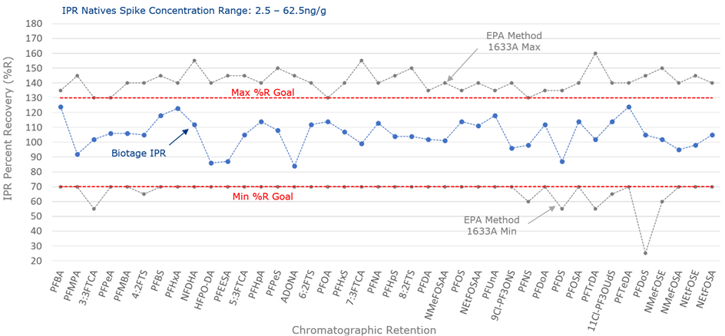
Figure 12. EPA 1633A recoveries using ISOLUTE® GCB cartridges, for 2 g codfish samples, processed with Biotage Lysera, Extrahera HV-5000, & TurboVap® LV. For details, refer to this webinar.
EVOLUTE® WAX/GCB: Layered and blended WAX/GCB performance for tissue samples
As with ground, surface and wastewater samples, the use of layered WAX/GCB SPE cartridges, or other cartridge configurations may be employed, provided the quality control specifications outlined in the method are met. However, matrix complexity creates limitations for samples containing fats, oils and lipids. Graphitized carbon black (GCB) is primarily utilized for removal of constituents such as pigments and inorganic species.
Figure 13 illustrates the performance comparison between layered and blended WAX/GCB cartridges for tilapia and salmon fish samples. Overall, the average recoveries of extracted internal standard (EIS) are comparable across all WAX/GCB formats. However, the layered cartridge with GCB as the top layer exhibited less reproducibility compared to configurations with WAX on top or blended formats. In addition, the results highlight the negative impact of challenging sample matrices, such as tilapia and salmon, on EIS recoveries for all WAX/GCB configurations. It is suspected that longer chain neutral PFAS compounds (NMeFOSE, NMeFOSA, NEtFOSE, NEtFOSA) experience non-specific binding to the matrix components, causing interference during analysis.
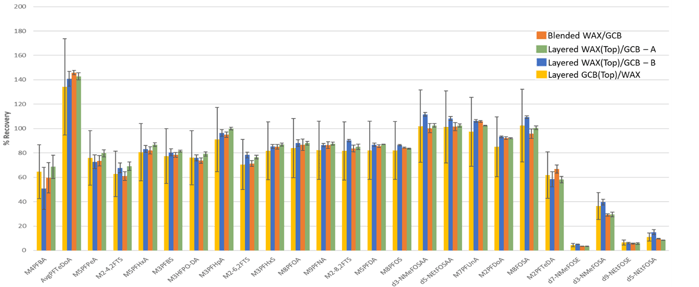
Figure 13. EPA 1633A: EIS recoveries for a 1:1 mixture of tilapia and salmon. For details, refer to this webinar.
Learn more about EVOLUTE® WAX/GCB
Food and agriculture
Consumables for PFAS analysis in food and agricultural products
USFDA method C-010.03 is a validated analytical method developed by the U.S. Food and Drug Administration (FDA) for detecting and quantifying 30 per- and polyfluoroalkyl substances (PFAS) in various food and feed matrices. This method ensures accurate identification and measurement of PFAS, addressing potential matrix interferences to minimize false positives. As seen with EPA method 1633A, the USFDA method C-010.03 employs a two-part SPE approach:
- Traditional QuEChERS extraction with dispersive SPE (dSPE).
- Cartridge SPE (cSPE) using weak anion exchange (WAX) sorbent.
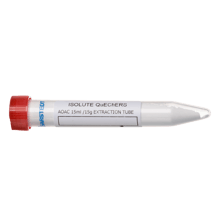 1. dSPE clean-up: ISOLUTE® QuEChERS for USFDA C-010.03
Food, animal feed & dry powder samples are initially extracted in water and acetonitrile buffered with formic acid. Following extraction, salt-induced phase separation is achieved by adding anhydrous magnesium sulfate (MgSO₄) and sodium chloride (NaCl) to the sample-solvent mixture. MgSO₄ absorbs water, promoting phase separation between the aqueous and organic (acetonitrile) layers, while NaCl enhances the partitioning of PFAS into the organic phase. The acetonitrile layer is then transferred to a tube containing dSPE sorbents, such as primary secondary amine (PSA), C18, and/or graphitized carbon black (GCB). The goal of the initial dSPE cleanup step is to remove unnecessary matrix components:
- Primary Secondary Amine (PSA): Removes organic acids, sugars, and polar pigments.
- Octadecyl Functionalized Silica (C18): Removes lipids, fats, and non-polar compounds.
- Graphitized Carbon Black (GCB): Removes chlorophyll, pigments, and inorganic species
Learn more about ISOLUTE® QuEChERS
2. Cartridge SPE clean-up: EVOLUTE® PFAS for USFDA C-010.03
After the initial dSPE cleanup step, the cleaned acetonitrile extract undergoes filtration, concentration, and aqueous dilution, followed by Part 2) cSPE cleanup. The cartridge based SPE procedure recommends using 200 mg weak anion exchange (WAX) sorbent packed in a 6 mL cartridge to concentrate PFAS compounds and remove residual interferences.
Table 4 outlines the USFDA C-010.03 cartridge solid phase extraction procedure, applicable to a wide range of matrices, including dry powders, as well as food & feed with varying moisture content.
Table 4. USFDA C-010.03 cartridge solid phase extraction procedure for food, feed, & dry powders.
|
Procedure |
Cartridge (cSPE) clean-up - USFDA C-010.03 |
||
|
Matrix |
Food > 25% H2O |
Food & Feed < 25% H2O |
Food - Dry powders |
|
Step 1 |
Condition with 6 mL of 0.3% w/w ammonium hydroxide in methanol. |
||
|
Step 2 |
Equilibrate with 5 mL reagent water |
||
|
Step 3 |
Pass 12 mL sample through SPE column |
||
|
Step 4 |
Wash column with 5 mL reagent water |
||
|
Step 5 |
Dry column under vacuum for 1 minute |
||
|
Step 6 |
Rinse empty sample tube with 4 mL 0.3% NH4OH in MeOH |
||
|
Step 7 |
Add rinsate to SPE column |
||
|
Step 8 |
Elute analytes into a clean PP tube |
||
|
Step 9 |
Concentrate to just below 1 mL with N2 in a 60 °C water bath |
||
|
Step 10 |
Add 5 μL of 200 ng/mL d5 N-EtFOSAA and bring volume to 1 mL with MeOH |
||
|
Step 11 |
Filter with 0.2 μm nylon® filter and cap for LC-MS/MS analysis |
||
Learn more about EVOLUTE® PFAS
Biological fluids
Exposure to PFAS is associated with metabolic changes, elevated cholesterol levels, and increased risk of certain cancers. In analytical laboratories, PFAS pose challenges as they are present in common consumables and hardware. ISOLUTE® PLD+ for PFAS can be used to reproducibly quantitate multiple PFAS classes with low matrix effects at clinically relevant levels in biological fluids, such as serum, plasma, blood, and urine.
ISOLUTE® PLD+ for PFAS
Protein and lipid depletion using ISOLUTE® PLD+ plates and cartridges ensures clean, matrix-free extracts for accurate, reliable LC-MS/MS quantitation of PFAS at clinically relevant levels. ISOLUTE® PLD+ for PFAS components are manufactured to reduce background PFAS levels and prevent introduction of contamination during the sample preparation process.
Extract a diverse range of PFAS molecules
ISOLUTE® PLD+ for PFAS utilizes a simplified ‘crash and filter’ approach to retain unwanted matrix components from the sample extract while target PFAS analytes are passed through the sorbent and collected. This technique eliminates the need for conditioning, wash steps, rinse, and elute steps commonly required for traditional SPE techniques. This ‘crash and filter’ mechanism allows isolation of PFAS from the biological matrices, ensuring analyte recovery is not constrained by structural considerations. Table 5 demonstrates recovery across several classes of PFAS compounds when utilizing ISOLUTE® PLD+ for PFAS in serum samples. In addition high recoveries and consistent performance, the simple ‘crash and filter’ based methodology of ISOLUTE® PLD+ for PFAS allows for easy automation and rapid processing of up to 96 samples in 35 minutes.
Table 5. Typical recoveries of different classes of PFAS from serum using ISOLUTE® PLD+ for PFAS
|
PFAS Class |
ISOLUTE® PLD+ for PFAS, % recovery |
|
Alkane carboxylic acids (C5-C9) |
83-91 |
|
Alkane/alkene carboxylic acids (C10-C12) |
81-84 |
|
Ethoxy carboxylic acids |
82-88 |
|
Sulfonic acids, inc. ethoxy/telomers (C4-C8) |
84-94 |
|
Sulfonic acids, inc. ethoxy/telomers (>C8) |
85-86 |
|
Sulfonamides (and substituted) |
83-85 |
|
Cl substituted ethoxysulfonates |
85-87 |
Extract cleanliness
Biological fluids contain matrix components such as proteins and phospholipids which can adversely impact analytical sensitivity and instrument performance, if not removed during sample preparation. The effective matrix scavenging approach employed by ISOLUTE® PLD+ for PFAS removes >99.9% of serum proteins and phospholipids (see figure 14) resulting in cleaner extracts, improved analytical sensitivity and reduced instrument downtime.
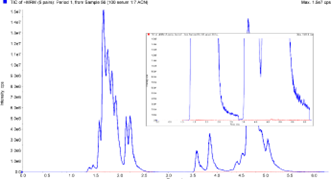
Figure 14. Comparison of phospholipid reduction in a serum sample using ISOLUTE® PLD+ for PFAS, vs sample prepared by protein crash alone. The combined phospholipid (PL) and lysophospholipid(LPL) profile is generated from the TICs of phosphatidylcholine and lysophosphatidylcholine MRM transitions, respectively, with an expanded inset of 1.5E7>1.5E5, protein crash (blue) v. ISOLUTE® ® PLD+ for PFAS (red). For details, refer to application note AN991.
Learn more about ISOLUTE® PLD+ for PFAS
