
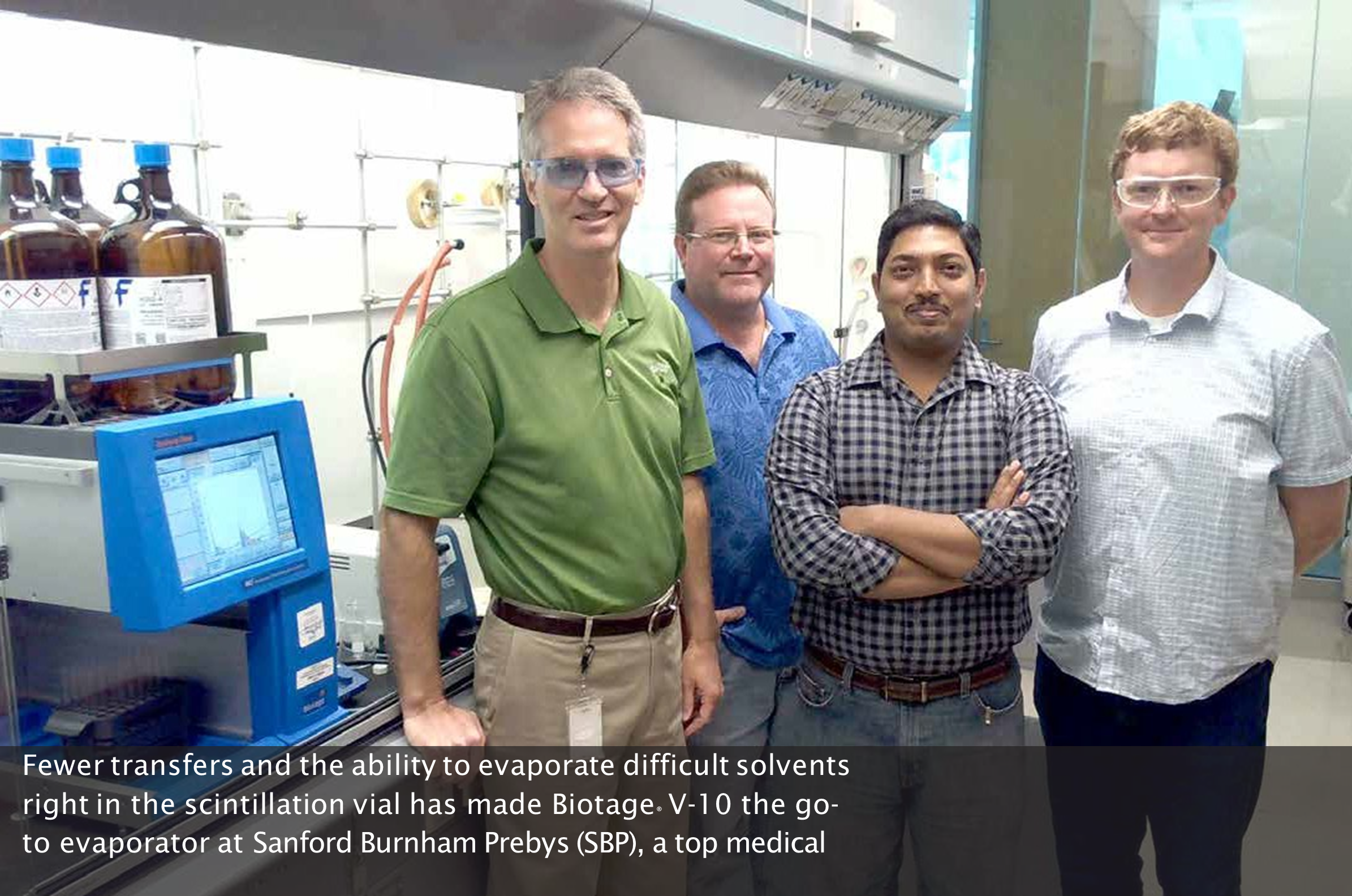
Figure 1: Pictured, left to right, Paul Hershberger, Patrick Maloney, Mahesh Peddibhotla, and Hampton Sessions. Not pictured, Daniela Divlianska
“I really don’t use my rotary evaporator that much anymore,” is what Paul Hershberger told us when we visited him at SBP Medical Discovery Institute. “As a matter of fact, the five chemists in our group only occasionally use their rotary evaporators.” This is pretty remarkable given that Paul and his colleagues are working on creating libraries of small molecules.
It wasn’t always this way. Back in 2007, Mahesh Peddibhotla and Daniela Divlianska established an organic synthetic laboratory and equipped it as most laboratories are, with one rotary evaporator for every chemist, three Biotage® SP1 flash chromatography systems, and a microwave synthesizer in addition to the typical glassware and vacuum manifolds. With this gear they produced compounds needed by scientists at SBP and elsewhere.
Over the next couple of years, the scope of work expanded to include translational research where hundreds of compounds would be needed, typically in 10 milligram quantities. As Paul says, “Our customers, the biologists, were now capable of the automated assay of hundreds of compounds a day” and the output of the organic chemists needed to come up as well.
As these changes were occurring, Mahesh and Daniela attended a Biotage workshop where they learned about the automated Biotage® V-10 evaporator and its unique ability to rapidly remove solvent without the need to constantly monitor the progress of the evaporation.
A fully automated V-10 was purchased to enable the team to meet the increased demand for dry samples. The group initially envisioned the V-10 as a convenient machine for preparing finished samples to hand over to the biologists. However, the group quickly recognized the V-10’s value for routine evaporation of solvent from synthetic intermediates and for preparation of reaction aliquots prior to analysis by NMR.
They started to use the V-10 as a walk up evaporator, in place of their rotary evaporators. Because the V-10 could evaporate directly from a scintillation vial without being monitored for “bumping,” it quickly became the method of choice for isolating both purified and crude products. This capability enables most experiments to go through reaction and liquid/liquid extraction in a single vial such that traditional reaction flasks are only used for scale up work.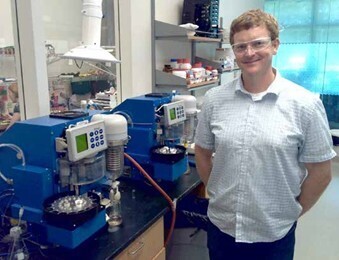
Figure 2: Biotage® V-10 is a key enabling tool at SBP, with its ability to rapidly remove solvent from the same scintillation vials used in the entire synthetic workflow. This application is so successful that the five chemists now keep two V-10s very busy.
Paul explains, “Using the V-10 in combination with the Biotage® Initiator+ microwave synthesizer and an Isolera™ flash chromatography system really facilitates the whole process. I can iterate faster and have the ability to use higher temperatures, pressures and higher boiling solvents, to drive difficult reactions more successfully.”
SBP relies heavily on Biotage products to positively impact their ability to complete projects more rapidly. The V-10 has influenced their selection of scintillation vials as the first choice for containing reactions, evaporating, refluxing, and storing final products.
Traditional organic synthetic equipment, vacuum manifolds, round bottom flasks, lyophilizers, rotary evaporators, and centrifugal evaporators are still in use. But, often the medicinal chemists at SBP find that scintillation vials and the V-10 are better suited to facilitate their workflow.
SBP’s dedication to curing diseases is impressive, and it is humbling that Biotage is able to play a small part in that effort.
SBP
Sanford Burnham Prebys Medical Discovery Institute (SBP) is an independent non-profit research organization that blends cutting-edge fundamental research with robust drug discovery to address unmet clinical needs in the areas of cancer, neuroscience, immunity, and metabolic disorders. The Institute invests in talent, technology, and partnerships to accelerate the translation of laboratory discoveries that will have the greatest impact on patients. Recognized for its world-class NCI-designated Cancer Centre and the Conrad Prebys Centre for Chemical Genomics, SBP employs more than 1,100 scientists and staff in San Diego (La Jolla), Calif., and Orlando (Lake Nona), Fla.
Literature number: PPS436
