
Introduction
In chemical synthesis, heat is an essential ingredient. Some reactions require low temperatures, for example those that create large exotherms, but in the vast majority of synthetic procedures heating a reaction to elevated temperatures is extremely beneficial, hence the prevalence of round bottom flasks, oil baths and condensers in chemistry, the hallmarks of every chemical laboratory across the globe. But convection heating is not the only way in which heat can be introduced to a reaction. Other methods can be utilised, such as UV heating. Perhaps one of the most versatile and beneficial alternative heating technologies is the use of microwaves, which have become common in many laboratories, especially those where large numbers of compounds are synthesised, such as medicinal chemistry research and design and peptide research. However, when assessing microwave technology, the introduction of heat is only one aspect to be considered.
This whitepaper discusses the utilisation of micro- wave technology in synthesis, with a focus on practicalities that must be accounted for in implementing such technology in a chemical laboratory.

Figure 1. Microwaves are electro magnetic radiation with wavelengths in the range 1 to 300 mm, or 1–100 GHz frequency.
Microwaves as a heat source
Just as in the kitchen, microwaves provide heating through absorption of microwave energy, a form of electromagnetic (EM) waves. The position of microwaves on the EM spectrum is shown in Figure 1. Heating occurs through movement induced by the switching electro-magnetic dipole, which creates frictional energy transfer through the movement of molecules. One of the major benefits of microwaves is that assuming the sample being irradiated has a dipole, heating occurs of the sample itself, and is not reliant on heating of the outer part of the vessel and then the sample through conduction. This creates much more uniform heating profile for a sample, and a greater degree of control.
The benefits of microwave heating and the benefits of heating chemical reactions in general are outside of the scope of this whitepaper, instead we shall focus on the practical requirements of the technology and how this shapes the design of a microwave system for chemical synthesis.
Superheating
One of the major benefits of microwave heating that places strict requirements on the design of a microwave for chemical synthesis is the possibility of performing superheating, that is to say heating a sample to a temperature greater than its boiling point without it boiling (Figure 2). By continually irradiating a sample, it is possible to induce temperature rises above the boiling point of the sample, assuming it is contained and unable to escape as vapour. In chemical synthesis, the Arrhenius equation states that for every ten degrees rise in temperature, the reaction rate doubles, so superheating reactions induces exceptionally fast reaction rates. Safely maintaining sealing of reaction samples superheated beyond their boiling points is perhaps the defining requirement of a microwave system for chemical synthesis.
Design of a microwave synthesiser
Considering the purpose of a microwave (heating samples) and the result of heating (superheated sealed samples), there are several considerations that have to be taken into account when designing a microwave synthesiser for chemical reactions. This white paper describes the Biotage approach to microwave chemistry, and outlines the solutions to the difficulties of superheating samples to very high temperatures.
Microwave mode and sample size
Microwaves have a wavelength in the region of a few centimetres. Any microwave cavity larger than this (such as a commercial kitchen microwave oven) will have a multimodal microwave input – several positive and negative waves will propagate within the cavity and depending on reflections of the cavity walls will create constructive and destructive interference. Thus in a kitchen microwave a turntable is required to ensure even heating of the sample. In a microwave for chemical synthesis, one of the benefits is that we get even and highly reproducible heating of reactions. We therefore need to make the cavity smaller than the wavelength of the microwave, a so-called monomodal microwave. This limits the cavity size to a few centimetres, and therefore the sample size to the mL scale.
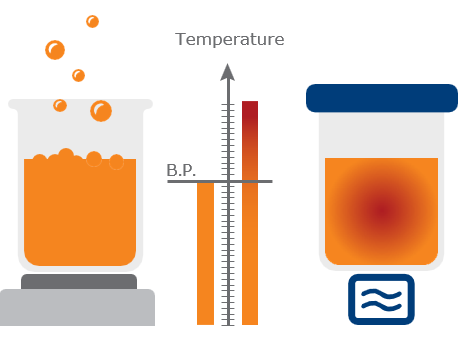
Figure 2. Liquid in an open container can only be heated to its boiling point (B.P.). A sealed vessel will not allow vapour to escape, thus increasing the pressure and allowing temperatures beyond the boiling point, leading to faster chemical reactions
Control
One of the critical aspects of superheating samples is the control that can be applied to the reaction conditions. When superheating samples, it is absolutely critical that the maximum safe temperature and pressure are not exceeded, so that the reaction progresses as desired and the container holding the reaction mixture remains intact. Needless to say heating solvents to extremes of temperature can be dangerous without robust monitoring protocols. There is also a further requirement to monitor the reaction conditions, as accurate reporting of reaction conditions is essential to making synthetic procedures reproducible, and also to allow synthetic routes to be published for dissemination to the wider scientific audience (Figure 3).
There are four parameters that must be controlled in order to make reaction conditions safe, reproducible and reportable – time, power, temperature and pressure. We shall now discuss each in turn.
Time control
Any system for applying heat to a sample in an automated fashion needs to control that heat on the basis of time first and foremost – how long do you wish to heat the sample for? This is especially critical to microwave systems where reactions that might traditionally take hours can be done in minutes.
It is also useful to measure time from either the start or the experiment or the point at which the desired set temperature (or other parameter) is reached, as these can vary. This allows full control over the reaction taking place and therefore much more predictable results.
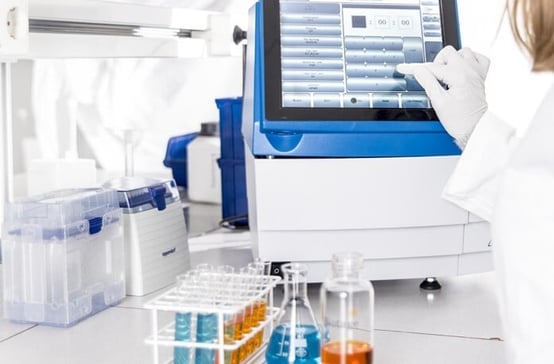
Figure 3. Solid control over all parameters in microwave-heated reactions is vital both for safety reasons and reproducibility.
Power control
Microwave systems produce a certain wattage of power, representing the degree of irradiative output they produce. Measuring and controlling this output is essential in controlling other parameters such as heat and, by extension, pressure.
Moderating the power output of a microwave and therefore the degree of irradiation is therefore critical to temperature control, as shall be discussed. However, for publishing purposes, power is not a good method of describing a reaction profile – different instruments with different magnetron and deflector setups will require different power levels to achieve set temperature profiles. Power output is therefore key to monitoring and controlling the heating profile of a microwave, but not for disseminating methodologies.
Temperature control
In chemical synthesis, temperature control is critical – heating is the reason why a microwave is employed in the first place. Controlling the temperature of a reaction is vital to ensuring that the reaction proceeds as desired. Typically, this means automatic alteration of the power levels in the microwave to ensure that the set temperature is achieved but not exceeded. At the start of the reaction, high power is required to get the reaction up to temperature, but once at the set temperature, much less power is needed to maintain it. Therefore, an algorithm to vary power as a function of the measured temperature is important.
Measurement of temperature can be of any means that penetrates the reaction container – the contents of the reactor are heated directly, not the reactor itself, so measurements
of surface temperature of the reactor are misleading. Ideally, the temperature probe should be set where the most accurate measurement can be made. For this reason, a reactor material is desired that can be penetrated by a temperature probe. Glass is one such material, which can be transparent to an infrared probe.
Increased temperature also results in increased pressure, so the ability to limit temperature should one approach the pressure limit of the reactor is vital to safe operation.
Pressure control
Control of pressure is an important safety feature of any super- heating system. The reactor containing the reaction mixture can only withstand a certain pressure before rupturing. Monitoring of the pressure is critical, and the ability to limit power input as one nears a set maximum pressure (for example, the pressure safety limits of the vial) is essential to safe operation.
Venting and cooling
In any system to superheat a sample, there will be safe limits of temperature and pressure that can be attained before the risk of damage to the reactor becomes an issue. However, a new chemical reaction is an unknown process, so it is possible that one of the temperature or pressure limits will be reached before the desired conditions for both have been obtained, for example, the pressure limit being hit before the desired temperature is reached. It is therefore important as previously stated to monitor and control on both temperature and pressure, so that a reaction can proceed even if the parameters reach unexpected levels by limiting the reaction conditions on either parameter. It is also vital that should the reactor overheat or the pressure obtain too high a level, the reactor is not vented, but cooled safely. Venting hot reactor contents is potentially very dangerous (superheated chemicals such as solvents carry high risk), and results in the loss of the reactor contents. Cooling is therefore a much preferred option, and a requirement of any safe microwave heating system, and venting should be avoided at all costs.
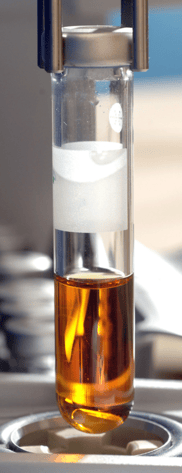
Figure 4. Safe and effective microwave heating of a reaction mixture requires a sealed, clear glass vessel in a secure explosion-proof cavity.
Explosions and cleaning
In any superheating system there is always the risk of explosions, especially if the reactor containing the reaction mixture is made of a material that can be probed for internal heat, such as glass. Any microwave system therefore needs to be able to withstand an explosion without damage to sensitive components such as the temperature probe, if present. Also, in the aftermath, the broken reactor and contents must be cleaned from the system and the microwave prepared for further use. It is good to choose a system which is prepared for that and has some sort of inherent safety.
Reliability
Finally, as with all instruments used in a high value workflow, reliability and robustness is critical. The system must be able to operate with minimal service requirements, and be robust enough to work in a research and development environment. Reliability means that the system must operate as expected when it is needed.
The Biotage® Initiator+
Considering all of the requirements outlined above, Biotage have designed a system for the microwave heating of chemical syntheses called the Initiator+ (Figure 5). This instrument has been designed to accommodate the requirements outlined in this white paper.
- A monomodal microwave cavity design to ensure uniform and reproducible heating.
- Control of a microwave reaction on the basis of power, time, temperature and pressure.
- A glass reactor vial design, which allows temperature measurement by an infrared probe.
- Mounting of the temperature probe at the side of the microwave cavity, so that in the event on an explosion, the probe is not damaged.
- The user can set limits on any or all of these parameters, and regulate heating such that limits set for any of them are not exceeded, so reactions can be performed safely even when the pressure change is not known.
- On the occasion of exceeding pressure limits, the reactor content is not vented, a potentially dangerous operation, but rapidly cooled to within the desired pressure limits.
- A simple cleaning procedure in the event of an explosion, whereby the whole cavity area can be simply detached and cleaned within a few moments by the user, without the need for intervention by service.
- Reliability built into the robust design, so that service requirements are low.
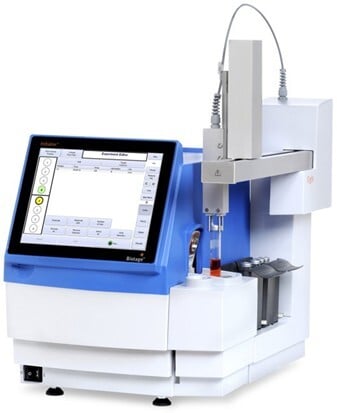
Figure 5. Biotage® Initiator+ microwave synthesizer.
Conclusions
This white paper has discussed design criteria for an effective high-performance microwave for chemical synthesis. Criteria have been outlined for the safe and effective operation or any system that superheats chemical reactions, and the reasons for these requirements have been discussed. Using these considerations Biotage have developed their Initiator+ system.
Literature number: PPS626
